Calling the Croom Gatehouse Before You Drive
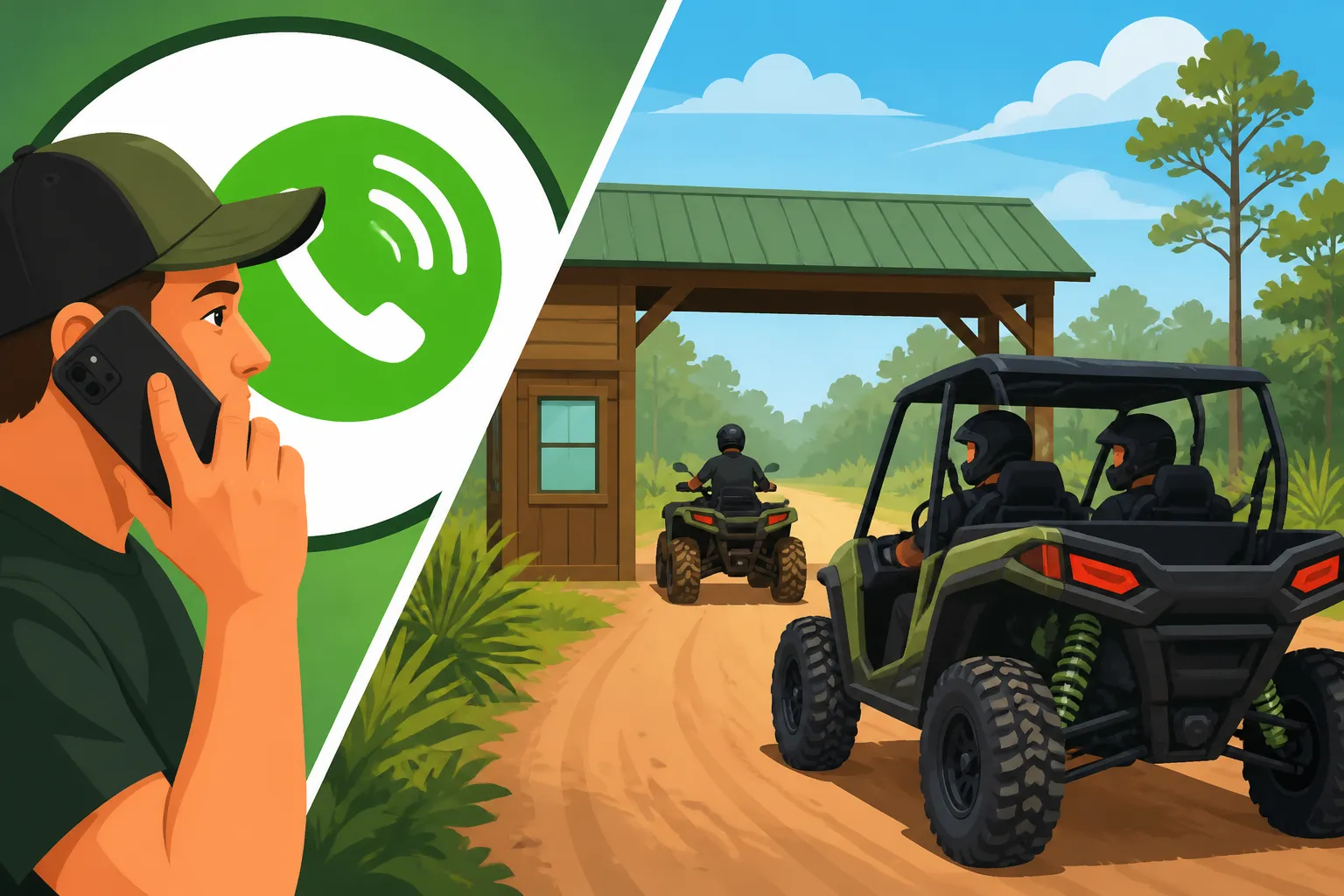
A long drive to Croom can turn frustrating fast if you arrive to find a trail closed, your machine doesn’t meet an access rule, or you’re missing a required pass. Calling the gatehouse before leaving gives you a chance to confirm the details that matter for your specific ride. This guide covers what to ask, what to have ready, and what still deserves a second check.
Why calling the Croom gatehouse is worth the effort
Conditions can change between planning and arrival
A trail map can help you understand the layout, but it may not tell you whether a route is open today. Weather, maintenance, land-management needs, and other operating decisions can affect access. That matters in Florida, where a wet stretch or a storm can change trail conditions quickly.
A short call before a trip can help you find out whether the riding area is open, whether a particular section has a closure, and whether any current restrictions affect the type of machine you plan to bring. If you’re taking a long drive from Tampa, Orlando, or farther away, even a small detail can determine whether the trip is worth making.
For broader planning, keep [Florida Trail Closures You Should Check First] handy. A gatehouse call is useful for a current, specific question, while general closure information can help you build a backup plan if Croom isn’t suitable that day.
Your machine may not fit the rules you assumed
“ATV” and “UTV” can cover machines with very different widths, weights, and configurations. Don’t rely on a friend’s experience with a different model as proof that yours can enter or use the same routes. Ask staff what access rules apply to your exact machine and where those rules are checked.
Croom is known for width-related access checks, so measure your machine before calling and explain how you measured it. Ask whether the facility uses a specific measurement method, and whether accessories such as tires, wheels, or other additions affect the result. The guide [Croom's 55-Inch Width Check at the Gate] is useful background, but the gatehouse is the place to confirm how a rule applies to your machine and planned visit.
This is especially important if you have a side-by-side. A machine that seems narrow enough in a brochure may measure differently once you account for its actual setup. If staff say your vehicle does not meet the requirements, ask whether there are any alternatives or permitted areas before you load the trailer.
A call can prevent avoidable problems at the entrance
The point of calling isn’t to make the trip perfectly predictable. It’s to avoid surprises you could have caught before leaving home: an access restriction, a required pass, a change in operating arrangements, or a question about whether a particular machine is allowed.
Croom Motorcycle Area is a popular destination in the Brooksville area, and arriving prepared is easier than trying to sort out an uncertain detail at the entrance. For an overview of the riding area, read [Croom Motorcycle Area: Florida's Biggest OHV Park]. Then use the gatehouse call to confirm the details for your own visit rather than assuming general descriptions cover today’s conditions.
What to ask when you call
Check access, closures, and operating details
Start with the practical question: “Is the riding area open for the type of visit I’m planning?” Then give the date and approximate arrival time. If you’re hoping to ride a particular section or loop, name it and ask whether it is open, accessible, or affected by any current restriction.
Ask how late visitors can enter, whether anyone needs to arrive before a particular time, and whether the operating schedule differs on weekends or holidays. Don’t assume that information you saw on an old post or a map is still accurate. For general background, [Croom Gate Hours From 8 to 5] may help you frame your question, but confirm the schedule directly before setting out.
It’s also worth asking what happens if conditions change after you call. Staff may not be able to predict weather or future closures, but they can tell you where to look for updates and whether a later check is sensible. If rain is in the forecast, ask specifically whether weather has affected access or trail conditions.
Confirm machine eligibility and where you can ride
Describe your machine clearly: ATV or UTV, make and model if you know them, approximate width, and any modifications that could affect its dimensions. Ask whether it is eligible to enter and whether all trails or areas are open to that class of machine. A yes to entry does not necessarily mean every route is suitable or permitted.
If you’re unsure how to measure width, ask what measurement the staff rely on. Avoid giving only the manufacturer’s advertised number if your machine has been modified. You can also ask whether the restriction is checked at the gate and what documentation, if any, you should have available.
For families or groups with different vehicles, ask about each machine separately. One rider’s ATV may fit the rules while a companion’s side-by-side does not. If you plan to ride the [Croom's Sand Hill Day-Use Loop], check that the route is open and suitable for the machines in your group rather than assuming access is identical throughout the area.
Ask about passes, payment, and facilities
Before you leave, find out what pass or permit is required for your planned visit, whether you can obtain it on site, and what payment methods are accepted. These details can change, so avoid relying on an old receipt, an outdated forum post, or a friend’s recollection. The overview [Florida OHV Permits: What You Need Before You Ride] can help you identify the types of requirements to ask about.
You can also ask which services are available that day. For example, confirm whether restrooms, camping facilities, or other visitor amenities are open if those affect your plan. If you’re considering an overnight stay, ask separately about camping availability and rules; don’t assume a riding pass automatically covers camping. [Croom Camping at Buttgenbach Mine] is a useful companion topic for planning that part of a visit.
Here’s a simple call checklist:
| Topic | What to ask |
|---|---|
| Access | Is the riding area open on my planned date and arrival time? |
| Closures | Are any trails, loops, or facilities closed or restricted? |
| Machine | Is my ATV or UTV allowed, and how is its width measured? |
| Pass | What pass or permit do I need, and where can I get it? |
| Payment | Which payment methods are accepted? |
| Timing | Are there entry cutoffs or schedule changes I should know about? |
| Backup | Where should I check for updates if conditions change? |
How to prepare before you pick up the phone
Have your trip details and machine information ready
A call goes more smoothly when you can answer basic questions without rummaging through messages or guessing. Write down your intended visit date, expected arrival time, number of riders, and whether you’re bringing an ATV, a side-by-side, or a mix of machines.
For each vehicle, note the make and model, approximate width, and any modifications. If you’re traveling with a group, ask everyone for their machine details in advance. It can be awkward to call back because one person’s tires, accessories, or model information was left out, especially when that detail affects access.
Be specific about what you want to know. “Can I ride there?” is harder to answer than “I’m bringing this model of side-by-side, and I want to confirm that it is allowed and ask which areas it can use.” A clear question helps staff direct you to the right information.
Keep a map, but don’t treat it as live confirmation
Maps are helpful for understanding where trails and access points sit in relation to one another. Tools such as onX Offroad can help you plan a route, orient yourself, and keep track of nearby roads or points of interest. Still, a map should not be treated as proof that a route is open or that your vehicle is permitted on it.
Before your trip, compare your planned route with official access information and ask the gatehouse about anything unclear. If a map shows a trail you want to ride, mention its name or location during the call and ask whether it’s currently available to your machine. Download or save what you need before leaving, too; cell service can be limited in some riding areas, and an online map may not load when you need it.
Use onX Offroad as a planning aid, not as a replacement for posted signs, staff instructions, or current land-management information. On the day of your visit, follow the signs at the entrance and along the trails even if they differ from what you expected from a saved map.
Record the answer and leave room for changes
Write down the time of the call, the main answers, and any instructions about where to check for updates. If the person who answers directs you to another office or official information page, note that detail. This can save you from repeating the same search later.
A call is a snapshot, not a guarantee that nothing will change. If you’re making a long trip, call again shortly before departure when weather or access conditions are uncertain. You can also check [Florida Trailhead Cell Service and Getting Help] as part of your safety planning, particularly if your group will be spread out or you’re unfamiliar with the area.
If the gatehouse cannot confirm a detail, don’t fill the gap with a guess. Ask who handles that question or where the official rule is posted. It’s better to spend a few extra minutes confirming access than to arrive with a machine or plan that doesn’t qualify.
What to do if the answer changes your plans
Adjust the trip instead of gambling on access
If staff say your machine is not permitted, a trail is closed, or a facility is unavailable, take the answer seriously. Ask whether a different vehicle class, area, or date would work. If there’s no suitable alternative at Croom, you may decide to postpone or choose another riding destination rather than drive there hoping the restriction won’t apply.
That can be disappointing, especially after arranging a trailer, coordinating friends, or packing for a weekend. But finding out before departure is still better than discovering the problem at the entrance. If you’re considering another location, confirm that it allows your exact machine and check its own access, permit, and operating requirements rather than assuming rules carry over from Croom.
If the issue is a temporary closure, ask where updates will appear and when it makes sense to check again. Avoid treating a past opening schedule as a promise that conditions will be the same on your rescheduled date.
Build a backup plan for the people and equipment
A practical backup plan does not need to be elaborate. Decide in advance whether your group would rather choose another legal riding area, switch to a different activity, or reschedule. If riders are bringing several machines, agree on who makes the call so no one is left waiting while everyone debates the options at the trailhead.
Check the towing and parking plan as well. If your group changes destinations, make sure the alternative site can accommodate your trailer and vehicle combination. Keep any required documents, passes, and machine information accessible, and remind the group to bring protective gear and supplies appropriate for the day.
For a final pre-departure check, review the essentials: current access information, machine eligibility, permits, route plan, weather, fuel, water, and a way to contact your group. A call to the gatehouse can answer several of those questions, but it works best as one part of a careful trip plan—not the only one.
Disclaimer
This article is for general informational purposes only and does not constitute professional advice. Laws, prices and regulations vary by location and change over time. Consult a qualified professional for guidance on your specific situation.