Why 3,500 Pounds Is the Side-by-Side Ceiling
Florida recreational off-highway vehicle regulations explain why the 3,500 pound ceiling determines side-by-side titling rules.
Start here, or nothing else is legal.
Resident registration, titling and renewal, and public-use versus private-land fees — plus the age and safety-course rules that decide who may ride.

Florida recreational off-highway vehicle regulations explain why the 3,500 pound ceiling determines side-by-side titling rules.

Florida law sets a fifteen hundred pound dry weight limit for titling motorized off-highway vehicles as all-terrain vehicles.

Florida legal definitions for off-highway motorcycles explain official titling, registration rules, and paperwork for dirt bikes.

Florida two-rider ATV class rules define manufacturer design specifications, dedicated passenger seats, and legal requirements for carrying passengers.

Florida law requires ATVs to have a straddle seat, handlebars, a width under 55 inches, and a dry weight of 1,500 pounds or less.

Florida law defining ATVs by non-highway tires, explaining how tire types impact state titling rules and legal riding locations.
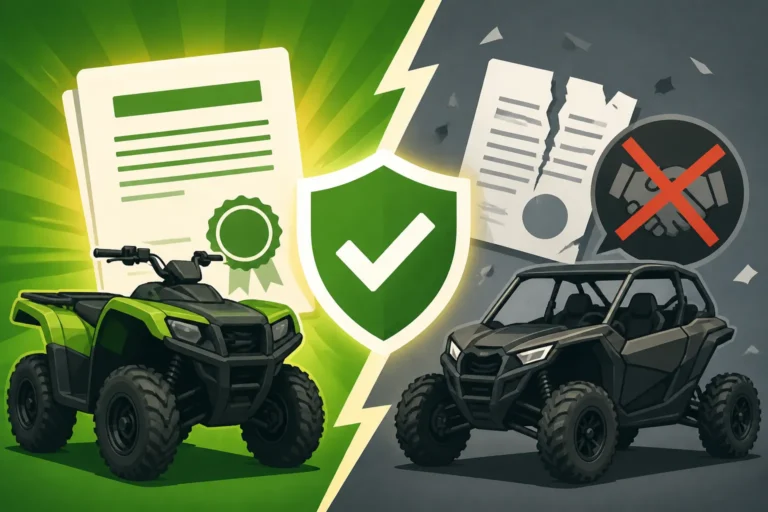
Manufacturer’s Statement of Origin ownership rules explain when Florida tax collectors require an MSO instead of a bill of sale.

Florida licensed dealers submit off-highway vehicle title paperwork and collect required sales tax for buyers.
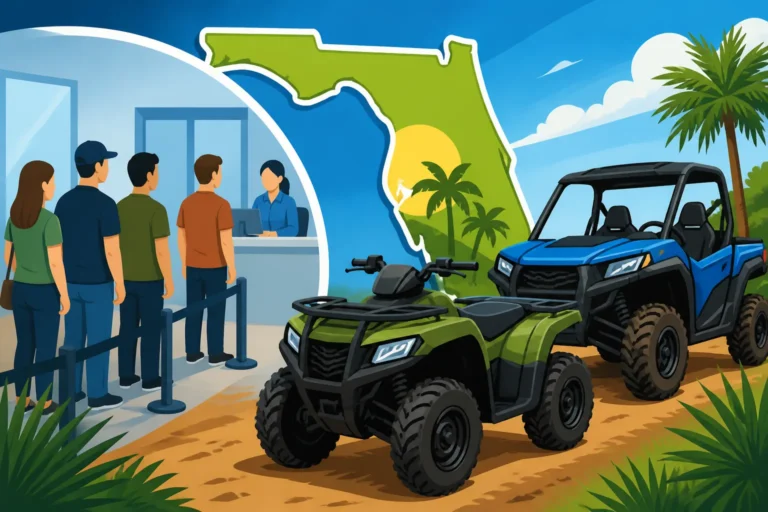
Polk County tax collector walk-in procedures for ATV and UTV titling, required paperwork details, and tips to reduce wait times.

Marion County Tax Collector weekday operating hours and office locations for titling off highway vehicles in Florida.