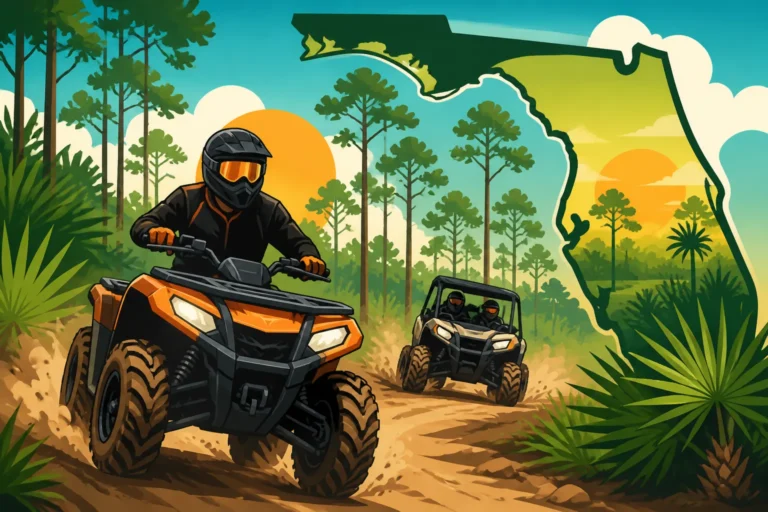
Florida ATV Trails With Sand Whoops
Florida’s sugar sand can turn an ordinary trail ride into a tiring series of bumps, especially when repeated whoops build up along a route. The challenge is finding places where that terrain is likely without assuming every trail suits every machine. This guide explains where to look, how to check access and conditions, and how to ride whoops more comfortably and safely.
Where to look for sand whoops in Florida
Sand whoops are repeated, rounded bumps formed by tires and ongoing trail traffic. Riders may use the term casually, so a trail described as “whooped out” can mean anything from a few sandy ripples to long, closely spaced bumps that demand steady attention. Conditions change with use, weather, maintenance, and closures.
Ocala National Forest and the Big Scrub
The Ocala area is a natural place to start if you are looking for sandy riding. The forest’s OHV opportunities include designated routes around the Big Scrub, where loose sand and repeated traffic can create a noticeably rough ride. That does not mean every route has whoops, or that a route described that way will feel the same each weekend. Check the current trail information and permitted vehicle types before you load up.
If you are staying near Ocala, Fort McCoy, or a trailhead in the forest, use a map to plan around the routes you are actually allowed to ride. onX Offroad can help you review trail networks and orient yourself, but always compare app information with official land-manager notices and signs on the ground. A line on a map is not permission to ride every road or spur nearby.
For a broader look at the area, see [Florida ATV Trails Near Ocala] and [Ocala National Forest ATV Trails in Florida]. If you are new to the forest, also review [Florida National Forest Riding vs State Forest Riding] so you know to check the rules for the specific land you plan to visit.
Croom and other riding areas
Croom Motorcycle Area, near Brooksville, is another name riders may encounter when looking for sandy terrain. Its riding surface and traffic can make some sections feel choppy, but whoops are not a guaranteed feature of every route or visit. Croom has specific access rules and machine restrictions, so confirm that your ATV or UTV is eligible before driving there. In particular, do not assume a wide side-by-side can enter simply because it is an off-road vehicle.
For background on the riding area, see [Croom Motorcycle Area: Florida's Biggest OHV Park]. If you ride a side-by-side, check [Florida ATV Trails That Allow Side-by-Sides] before choosing a destination. A route that is suitable for a narrower ATV may not be open to a wider UTV.
| Area to investigate | Why riders consider it | What to confirm before leaving |
|---|---|---|
| Ocala National Forest and Big Scrub routes | Sandy terrain and designated OHV riding opportunities | Current route access, vehicle eligibility, passes, and closures |
| Croom Motorcycle Area near Brooksville | Sand and heavily used riding areas can create rough sections | Machine-width limits, access rules, operating conditions, and current notices |
| Other public or private OHV areas | Terrain and maintenance vary by property | Whether the area is open, what machines it accepts, and its current riding rules |
Use this as a starting point, not a promise that a particular trail will have whoops. A quick search in onX Offroad may help you identify nearby trail networks, but the final check should be with the land manager or park operator.
Treat trail descriptions as clues, not guarantees
A route can be sandy without being deeply whooped. Conversely, a section that was smooth last month may become rough after repeated use. Trail descriptions, rider conversations, and map notes can help you decide where to investigate, but they cannot guarantee present conditions.
It is also worth separating “rough” from “rideable for my group.” A confident adult on a sport ATV may find a bumpy section manageable, while a young rider or someone on a utility machine may find it tiring or uncomfortable. If you are bringing children or inexperienced riders, begin with easier routes and let the group build confidence gradually. [Best Florida ATV Trails for Beginners] can help you think through that choice.
How to find a suitable trail before you go
A little planning can prevent a long drive followed by a frustrating surprise at the trailhead. Check the area, the machine rules, and the conditions separately. Each answers a different question: where you can ride, what you can ride, and what the trail may feel like.
Check maps and official access information
Start by identifying a riding area and its designated routes. Use an app such as onX Offroad to orient yourself, compare route options, and keep track of where you are. Then verify access with the appropriate forest, state agency, county, or private park. Pay attention to seasonal closures, construction or logging notices, and signs posted at trail entrances.
Do not treat every visible track as an open OHV trail. Public land can include roads or paths that are closed to motorized recreation, and private property can border a permitted riding area. Stay on designated routes and do not cross gates or barriers just because a route appears to continue on the map. For downloadable map options, see [Florida ATV Trail Map Downloads].
Before you leave, save useful maps or directions for offline access if your phone may lose service. Tell someone where you plan to ride and when you expect to return. A map app can be useful for orientation, but it is not a replacement for signs, posted rules, or an emergency plan.
Check the machine rules before choosing the route
ATV and UTV access is not interchangeable. Trail width limits, vehicle classifications, and local operating rules can all affect whether your machine is allowed. Measure your vehicle as the land manager requires rather than relying on the model name or a remembered specification. If you have a side-by-side with accessories that add width, account for the machine as it will arrive at the gate.
Ask about access for the exact vehicle type you have. A place that welcomes ATVs may not allow side-by-sides, and a trail suitable for a small youth quad may not be a good choice for a full-size machine. Check whether the area requires a pass, safety documentation, or other paperwork as well.
Look for recent condition information
Recent reports can help you spot issues such as trail closures, deep standing water, damaged routes, or unusually rough sections. Use them as context, not a guarantee: a report from another rider may describe a different route, and conditions can change quickly after heavy rain or a busy weekend.
For more on interpreting conditions, see [Florida ATV Trail Conditions After Heavy Rain]. Rain can soften or reshape sandy sections, but it can also create puddles, washouts, or muddy approaches. If the weather has been unsettled, check current notices rather than assuming the trail will be better—or worse—than usual.
How to ride sand whoops with more control
Whoops often punish rushed inputs. The goal is not to make every bump disappear; it is to stay in control, keep a pace you can manage, and avoid tiring yourself out early. If a section feels beyond your ability, slow down, stop somewhere safe, or turn back if the route allows it.
Set your pace before the bumps begin
Approach a rough section with enough distance to choose a line and settle into a steady speed. Avoid charging into whoops because another rider makes them look easy. A pace that works for a more experienced rider, a different machine, or a lighter load may not suit you.
Keep your eyes ahead rather than staring at the bump directly in front of the tires. Look for a clear line, changing depth, loose edges, and other riders. Leave room between machines so you have time to react if the person ahead slows or loses control. If dust or poor visibility hides the trail, create more space rather than following close behind.
Stay relaxed and adjust your body position
Grip the machine securely, but avoid locking your arms and shoulders. A rigid posture can make repeated impacts feel harsher and make it harder to respond to the terrain. Use your legs and body to absorb movement while keeping your hands ready to steer and control the throttle.
On a suitable ATV, riders may shift their weight slightly to stay balanced over changing terrain. The right position depends on the machine, the slope, and the bumps, so practice on easier ground first. Do not stand unless your machine’s design and the conditions make that appropriate, and never let a technique you have seen online override the owner’s manual or your comfort level.
For a UTV, keep everyone seated and properly restrained as required by the machine and park rules. A passenger’s weight can affect handling, and a passenger may not anticipate sudden changes in speed. Talk through the plan before you enter a rough section, and stop if anyone feels uncomfortable.
Take breaks and avoid chasing another rider’s pace
Whoops can be physically demanding even when the ride looks short on a map. Repeated jolts can tire your arms, legs, and attention. Take breaks before you feel exhausted, drink water, and check in with the group. In Florida heat, tiredness can creep up faster than expected; [Florida Trail Riding Gear for the Heat] offers useful preparation ideas.
If a section becomes too rough, do not feel pressured to keep going just because you have already started. Turn around where it is safe, choose another route, or wait for the group. Riding within your limits is not a failure. It is how you make it more likely that everyone finishes the day safely.
Choose the right setup and manage expectations
You do not need an elaborate modification list to ride sand, but machine condition and sensible preparation matter. A worn tire, loose component, or poor riding position can turn a manageable trail into a miserable one.
Check tires, suspension, and basic maintenance
Before leaving, inspect tires for damage and check pressure against the manufacturer’s guidance for your machine and intended use. There is no one pressure that is right for every ATV, UTV, rider, and trail. Avoid copying a setting from someone with a different vehicle or setup. If you are uncertain, consult your owner’s manual or a qualified mechanic.
Look over the suspension and steering for obvious damage or looseness, and check the machine’s controls, brakes, lights, and fluid levels. Bring basic tools and the recovery or repair items appropriate for your vehicle and trip. If a machine has been sitting for months, test it close to home before towing it to a remote trailhead.
Match the trail to the group
A family group with youth riders may need a different route plan than a group of experienced adults. Choose routes with room to stop and regroup, and agree on a turnaround point before setting out. Keep riders together without crowding one another, and make sure everyone knows what to do if they become separated.
If your group includes both ATV and UTV riders, confirm that the selected route allows every machine. Then consider whether a bumpy, narrow, or crowded section is comfortable for all riders—not just technically passable. A trail that is physically open to your UTV might still be a poor choice for a passenger who is new to off-road riding.
Plan for a good day even if the whoops are elsewhere
There is no reliable way to guarantee that a specific Florida route will have the exact kind of sand whoops you want on the day you arrive. Keep a backup plan: another permitted route, a different riding area, or an easier loop if the conditions are rougher than expected. A flexible plan reduces the temptation to push through terrain that is not a good fit.
Before heading out, check access and closures, confirm your machine is allowed, pack for heat and changing weather, and make sure your group understands the route. With those basics covered, you can enjoy the ride for what it is—even if the sand is smoother, deeper, or bumpier than you expected.
Disclaimer
This article is for general informational purposes only and does not constitute professional advice. Laws, prices and regulations vary by location and change over time. Consult a qualified professional for guidance on your specific situation.