How to Title an ATV in Florida
So, you've just bought an ATV, or maybe you're finally getting around to making your long-loved quad officially yours in the eyes of the Sunshine State. The process of titling an ATV in Florida can feel a bit like navigating a muddy trail blindfolded – confusing, with unexpected bumps, and a lot of paperwork you might not even realize you need. But don't you worry, because this guide is going to strip away the mystery and walk you through every step of getting that Florida title in your hands, ensuring you're ready for whatever adventures lie ahead.
Understanding Florida's ATV Titling Requirement
Let's face it, Florida isn't just about sandy beaches; it's also a paradise for off-road enthusiasts. But before you hit those beautiful trails in the Ocala National Forest or the Croom Motorcycle Area, there's a crucial piece of paperwork you absolutely need to sort out: your ATV's title.
Why Titling Your ATV Matters and When It's Required
Many folks assume that because an ATV isn't driven on paved roads like a car, it doesn't need a title. This is a super common misconception, and it can lead to some real headaches down the line. In Florida, titling your ATV is primarily about establishing legal ownership. Think of it as your quad's birth certificate and deed rolled into one. Without it, proving you own the machine can be incredibly difficult, especially if it's ever stolen or if you decide to sell it.
But beyond just proving ownership, there's a very practical reason for titling: public land use. Florida law is clear: if you plan on riding your ATV on designated public lands, like those managed by the Florida Forest Service or the Water Management Districts, your ATV must be titled. This isn't just a suggestion; it's a requirement. Trying to ride an untitled ATV on public land can result in fines and other penalties, which no one wants when they're out trying to have a good time. While you can typically ride an untitled ATV on your own private property, or on private land where you have explicit permission, that public land access is a huge draw for many riders, and titling is your ticket in. It's a key part of [Riding Public Land as the Trigger for a Title].
What Exactly Is an "ATV" in Florida's Eyes?
Here's where it gets a little technical, but understanding the precise definition Florida uses for an ATV is vital because it determines if your machine even qualifies for an "off-highway vehicle" (OHV) title. The state has specific criteria that your machine needs to meet:
- Width: Your ATV must be 55 inches or less in width. This is a critical measurement, as anything wider often falls into the "utility vehicle" (UTV) or "recreational off-highway vehicle" (ROV) category, which has different titling rules. If your side-by-side is a little wider, you might be looking at [Florida UTV Titling for Side-by-Sides Over 55 Inches] instead.
- Dry Weight: The machine's dry weight (without fuel or fluids) needs to be 1,500 pounds or less. Again, heavier machines might be classified differently. For a deeper dive, check out [Why 1,500 Pounds Dry Weight Is the ATV Ceiling].
- Wheels: It needs to have three or four wheels. Most ATVs are quads, but three-wheelers still qualify.
- Tires: It must be equipped with non-highway tires. These are generally knobby, low-pressure tires designed for off-road traction, not pavement.
- Seating: Designed for use by a single operator, though some are specifically manufactured and designated for a passenger. For more on this, see [Florida Two-Rider ATV Titling Rules].
Why does this matter so much? Because the moment your machine exceeds these dimensions or weights, it stops being an "ATV" in the eyes of the state and often becomes an ROV. ROVs, while similar in spirit, have their own set of rules and potentially different forms to fill out. So, before you even start gathering paperwork, it’s a good idea to measure and check your machine's specs. [Florida's 55-Inch ATV Definition and Why It Matters] truly explains the impact of this measurement.
Gathering Your Essential Documents for a Florida ATV Title
Okay, so you understand why you need a title and that your machine fits the Florida definition of an ATV. Now comes the exciting part: collecting all the paperwork! This can often feel like a scavenger hunt, but with a clear checklist, you'll be well on your way. The documents you need will vary slightly depending on how you acquired your ATV – new, used, or even gifted.
Proof of Ownership: New vs. Used ATVs
This is arguably the most critical piece of the puzzle. Without valid proof of ownership, the state simply can't issue you a title.
New ATV Purchase
If you're the proud owner of a brand-new ATV straight from a dealership, your primary document of ownership is the Manufacturer's Certificate of Origin (MSO). This is basically the ATV's birth certificate, issued by the factory. The dealer should provide this to you, often along with a bill of sale. Make sure the MSO is correctly filled out by the dealer, showing your name as the purchaser and all the correct vehicle identification numbers (VINs). This document is essential because it traces the machine's origin directly from the manufacturer to you. The dealer will typically handle a lot of the initial paperwork for you, but you should still be aware of what they're filing. For details on that, check out [What a Dealer Files on Your Behalf After a Sale].
Used ATV Purchased from a Florida Owner
For a used ATV that already has a Florida title, the process is usually pretty straightforward. You'll need the original, properly assigned Florida title from the previous owner. This means the seller must have signed and dated the "assignment of title" section, usually on the back of the title certificate, and filled in your information as the buyer. Any liens noted on the title must also be satisfied and released. Always make sure the VIN on the title matches the VIN on the ATV itself! This is a standard part of [Buying a Used ATV in Florida: Transferring the Title].
Used ATV Purchased from an Out-of-State Owner
If you moved to Florida with an ATV you titled elsewhere, or if you bought one from a seller in Georgia or Alabama, you'll need the original out-of-state title. This title will then be used to apply for a new Florida title. The process for [Titling an Out-of-State ATV After Moving to Florida] or [Florida ATV Title for a Machine Bought Out of State] involves transferring that out-of-state ownership into Florida's system. Make sure the seller has properly assigned that out-of-state title to you, just like with a Florida title.
Used ATV Purchased Without a Title or MSO
This is often where riders run into the most trouble. It's not uncommon to find a great deal on an ATV from a private seller, only to discover they've lost the title or never bothered to get one themselves. While it's generally best to only buy titled ATVs, it's not always impossible to title one without a traditional title or MSO.
- Bill of Sale: If you're buying an untitled quad, a comprehensive bill of sale becomes absolutely paramount. This document should clearly identify both the buyer and seller, the ATV's make, model, year, and most importantly, its VIN. It should also state the purchase price and be signed and dated by both parties. While not a title, it serves as crucial proof of the transaction. You can find reliable templates online for this, even from resources like LawDepot, which offers customizable legal documents to ensure you cover all your bases for a proper bill of sale. Make sure it contains all the necessary elements mentioned in [Florida ATV Bill of Sale: What It Needs to Say]. Without a title, a strong bill of sale is your best friend.
- Proof of Ownership When the MSO Is Missing: If the MSO is lost for a new-ish quad, you might need to go back to the dealer or manufacturer for a duplicate. This can be a hassle, so always try to secure the MSO at the point of sale.
- Bonded Title: In some very specific cases, if you can't get a traditional title or MSO, you might be able to apply for a bonded title. This involves purchasing a surety bond for a certain value of the ATV, which protects previous owners or lienholders if a claim of ownership arises. It's a more complex process and usually a last resort for [What a Bonded Title Takes in Florida].
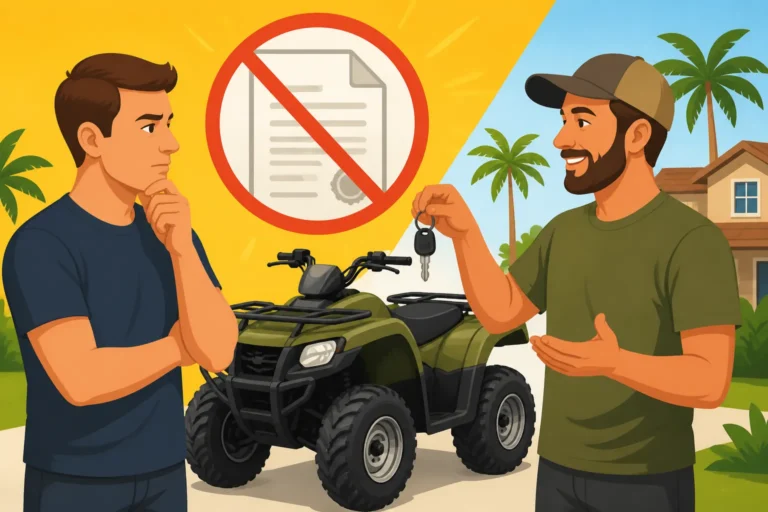
Honestly, buying an ATV without a title, or [Buying a Quad With No Title From a Neighbor] can be risky business, so proceed with caution and gather as much documentation as possible.
Identifying Your ATV: VIN Verification and Other Details
Beyond the ownership documents, the state needs to be absolutely sure that the ATV you're titling is indeed the machine you claim it is.
- VIN Verification: Every ATV has a unique Vehicle Identification Number (VIN), usually stamped on the frame. For any ATV being titled for the first time in Florida (whether new, out-of-state, or even some used Florida machines), the VIN must be verified. This verification confirms that the VIN on your paperwork matches the physical VIN on the machine and that it hasn't been altered or stolen. Who can do this? Usually, a Florida law enforcement officer, a notary public, a licensed dealer, or a specific Motor Vehicle Department (DMV) employee. It's important to know [Who Can Verify an ATV VIN in Florida?].
- Odometer Reading: While ATVs aren't subject to the same strict odometer disclosure laws as cars for titling, it's still good practice to note the odometer or hour meter reading on your application, especially for newer machines. It helps track usage and can be relevant for resale value.
- Accuracy is Key: Double-check every number and letter. A single typo in a VIN or owner's name can cause your application to be rejected and delay the entire process.
Personal Identification and Residency Proof
Finally, the state needs to know who you are and that you're a legitimate Florida resident (if you claim to be).
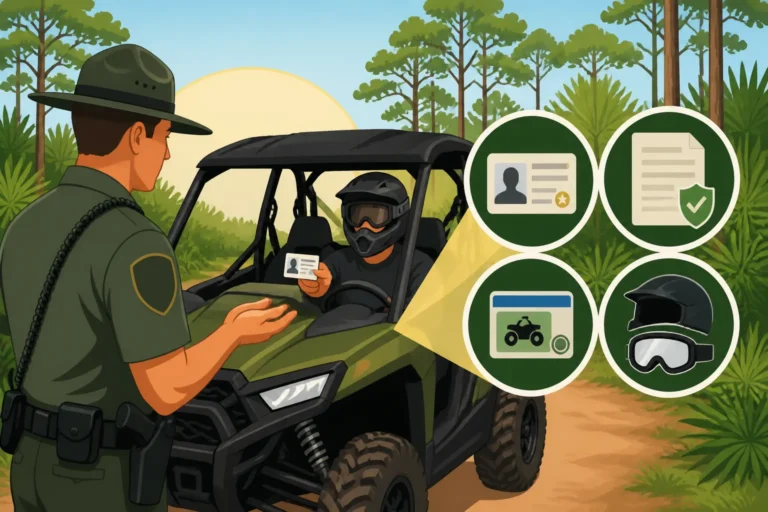
- Valid Photo ID: You'll need to present a valid form of identification, typically a Florida driver's license or state ID card. Make sure it's current and matches the name you're using on the application.
- Proof of Florida Residency: If you're a new resident to Florida, or if your identification doesn't clearly establish your residency, you might need to provide additional proof. This could include a utility bill, a lease agreement, or a Florida voter registration card. Knowing [Proving Florida Residency at the Counter] with the right documents will save you a lot of time.
The Titling Application Process: Step-by-Step
You’ve got your documents in hand, your VIN is verified, and you're ready to make it official. The next step is tackling the actual application and getting it submitted to the right place. This part can feel like the final stretch of a challenging trail – it requires attention to detail, but the finish line is in sight!
Completing the Application Form
Florida utilizes specific forms for vehicle transactions, and your ATV is no exception. While the exact form number can sometimes change, you'll generally be looking for something similar to the "Application for Certificate of Title With/Without Registration" or the "Application for Certificate of Title." The best approach is to ask for the "Off-Highway Vehicle Title Application" at your local tax collector's office or find it on their official website. [Which Florida Title Form to Use for an ATV] can clear up any confusion about the exact form.
When filling out the form, pay close attention to every field:
- Owner Information: Your full legal name, current address, and contact details. If there are multiple owners, ensure all names are accurately listed.
- Vehicle Information: This is where you'll put your ATV's make, model, year, and most importantly, the VIN. Double-check this against your MSO or previous title.
- Lienholder Details: If you financed your ATV, the lending institution (bank, credit union, etc.) will be recorded as a lienholder on the title. You'll need their full name and address. Don't skip this, as it's a critical part of [Florida ATV Title With a Lien Recorded].
- Sales Price/Gifted: Clearly state the purchase price. If the ATV was a gift, you'll note that as well, which can impact sales tax implications.
- Signatures: Ensure all required signatures are present. Sometimes, a notary might be needed, especially if certain supporting documents require notarization.
Remember, the goal is to make it as easy as possible for the clerk to process your application without needing to ask for clarifications or corrections. If you're dealing with a situation where a traditional proof of ownership document like an MSO is missing, you might need additional affidavits. Tools like LawDepot can be incredibly helpful here, allowing you to create legally sound affidavits or declarations of ownership that can strengthen your application package. It’s better to have too much documentation than too little!
Calculating and Paying Fees and Taxes
Ah, the dreaded fees! While no one loves paying them, they are a necessary part of the titling process. Florida's ATV titling fees are generally quite reasonable, but it's important to understand what you're paying for.
- Initial Title Application Fee: This is the base cost to process your new title. While specific amounts can vary slightly over time and by location, expect a standard fee for issuing a new title. For a deeper breakdown of the common charges, refer to [Florida ATV Title Fee Breakdown: $29 Plus Service Charges].
- Service Charges: On top of the title fee, you'll typically see a small service charge tacked on. This is usually a flat fee that helps cover the administrative costs of the tax collector's office. It might seem minor, but it's always there. Look for the details in [The $4.25 Service Charge on an OHV Title].
- Sales Tax: This is often the largest portion of your overall cost. If you bought your ATV from a dealer, they would have likely collected sales tax at the time of purchase. However, if you bought it in a private sale, you'll be responsible for paying sales tax at the time of titling. The tax is calculated based on the purchase price you declared on your bill of sale or title application. Even if it was a gift, in some cases, sales tax might still be due on the fair market value of the ATV. Understanding [Florida Sales Tax When You Title an ATV] is key to avoiding surprises.
- Optional Expedited Service (Fast Title): If you're in a hurry to get your physical title in hand, Florida offers an expedited "Fast Title" service for an additional fee. This can significantly reduce the waiting time for your paper title to arrive in the mail. Is it worth the extra few bucks? That depends on your urgency! Learn more about [Florida Fast Title for an ATV: The $7 Expedited Option].
It's a good idea to call your local County Tax Collector's office beforehand or check their website to get the most current fee schedule. This way, you can arrive prepared with the exact amount, often payable by cash, check, or credit/debit card (though credit card payments may incur a convenience fee).
Where to Submit Your Paperwork
Once all your forms are filled out, your documents gathered, and your wallet ready, it's time to submit everything.
- Your Local County Tax Collector's Office: This is the primary and most common place to title your ATV in Florida. Each county has one, and they handle all motor vehicle and OHV titling. You can usually find their addresses and hours on your county's official website. You can find more specific information on [Where to File an ATV Title in Florida].
- Authorized Agents: Some counties may have authorized tag and title service centers or express lanes that can also process ATV titles, often for an additional convenience fee. These can sometimes offer quicker service than the main tax collector's office, but always confirm they handle OHV titles specifically. It's good to know the difference between [Florida County Tax Collector vs Service Center for ATV Titles].
When you go, be prepared for a bit of a wait, especially during peak hours. Make sure you have all your original documents with you, as the clerk will need to review them. They'll scrutinize your application to ensure everything is correct and complete. For an idea of what they'll be looking for, check out [What a County Clerk Checks on Your Application]. Patience and politeness go a long way in these situations!
After You Apply: What Comes Next
You've made it through the application process, handed over your paperwork, and paid your fees. Congratulations! Now, what should you expect as you wait for your official Florida ATV title to arrive? The good news is, the hardest part is usually behind you, but there are still a few things to keep in mind.
Processing Times and Receiving Your Title
Once your application is submitted and approved, the Florida Department of Highway Safety and Motor Vehicles (FLHSMV) will begin processing your title.
- Standard Processing: Typically, if you opted for standard processing, your physical paper title will be mailed to you within a few weeks. The exact timeframe can fluctuate based on the volume of applications and current state processing speeds. It's always a good idea to allow a little extra time, especially around holidays or busy seasons. For a general idea, you might find [How Long a Florida ATV Title Takes to Arrive] helpful.
- Electronic Titles (E-titles): Florida largely operates with an electronic titling system. This means that for many transactions, especially if there's a lienholder involved, your title may initially be issued as an electronic title (e-title). With an e-title, there's no physical paper document printed until the lien is satisfied or you specifically request a paper copy. This system is designed for efficiency and security. If you want a deeper dive into this, check out [Electronic Title vs Paper Title for a Quad].
- Checking Your Application Status: If you're getting antsy and want to know where your title stands, the FLHSMV often provides online tools where you can check the status of your title application using your VIN or other identifying information. This can be a real lifesaver if you're eagerly awaiting that piece of paper. You can find out more about [Checking Where Your Florida Title Application Stands] through the state's resources.
Common Hurdles and How to Overcome Them
Even with the best preparation, sometimes things don't go perfectly. Here are a few common issues riders encounter and how to deal with them:
- Missing or Incorrect Paperwork: This is the most frequent reason for delays. A missing signature, an incorrectly filled-out date, or a document left at home can mean your application is rejected. Always double-check everything before you leave the house and again at the counter. If your application is rejected, the clerk should tell you exactly what's wrong so you can correct it.
- VIN Issues: If the VIN on your documents doesn't match the physical VIN on the ATV, or if the VIN verification form is improperly completed, it will halt the process. Ensure the VIN is clean, legible, and matches perfectly across all documents.
- Lienholder Information: If your financing information isn't accurately recorded, or if a previous lien wasn't properly released, it can create a holdup. Work closely with your lender (or the previous owner's lender) to ensure all lien documentation is correct. [Florida ATV Title With a Lien Recorded] has more on this.
- Seller Lost the Paperwork: This is a pain point for many. If you bought an ATV and the seller later misplaced the title or MSO before assigning it to you, it puts you in a tough spot. In such cases, the seller is usually responsible for obtaining a duplicate title (or MSO) before they can legally transfer ownership to you. Don't try to title it yourself if the seller hasn't done their part, as this can lead to issues like "title jumping." For guidance, see [Florida ATV Title When the Seller Lost the Paperwork].
- Buying an Untitled Quad: As mentioned earlier, while possible, it's often more complicated. [Selling an Untitled ATV in Florida] outlines why it's a problem for sellers and how it complicates things for buyers. You might need to rely heavily on a well-crafted bill of sale (perhaps one you got from a service like LawDepot) and potentially pursue a bonded title if no other proof of ownership can be established.
What an ATV Title Does and Doesn't Permit
It's super important to distinguish what your shiny new ATV title actually does for you. Many people confuse titling with registration or permission to ride anywhere.
- A Title Proves Ownership: First and foremost, your Florida ATV title is legal proof that you are the rightful owner of the machine. This is invaluable for resale, insurance purposes, and especially if your ATV is ever stolen. An official title can be critical in [What an OHV Title Proves in a Theft Claim].
- It Is Not a Registration for Street Use: Unlike cars, ATVs in Florida are generally not street legal. A title does not give you permission to ride your ATV on public paved roads, highways, or even most unpaved county roads unless specifically designated and signed for ATV use. Your title is for off-highway use only. For the legal distinctions, read [Florida ATV Title vs Registration: The Difference].
- It Is Often a Prerequisite for Public Land Riding: As discussed, for many public trails and riding areas in Florida, having a title is a requirement. However, the title itself isn't your entry pass. You may still need to purchase specific day-use or annual permits for state or national forests (like a [Florida State Forest OHV Day Use and Annual Passes] or a [Florida National Forest OHV Pass Prices]), and possibly complete a safety course if you're under 16. The title is the first step, not the last, for [Riding Public Land as the Trigger for a Title].
- What an OHV Title Does Not Let You Do: It does not allow you to skip helmet laws, ignore passenger restrictions, or exceed speed limits on permitted trails. It merely confirms your ownership status and, in conjunction with other permits, enables you to access public riding areas.
So, while getting your ATV titled in Florida is a necessary and important step, remember it's just one piece of the puzzle for responsible and legal off-road enjoyment. Make sure you understand all the rules and regulations for where and how you plan to ride.
Here's a quick summary of the documentation needed for various ATV purchase scenarios:
| Scenario | Primary Proof of Ownership | Required Supporting Documents (Always bring these too) |
|---|---|---|
| New ATV | Manufacturer's Certificate of Origin (MSO) | Photo ID, Proof of Florida residency (if new resident), Completed Title Application Form, Funds for fees/taxes. |
| Used ATV (Florida Titled) | Properly Assigned Florida Title | Photo ID, Proof of Florida residency (if new resident), Completed Title Application Form, Funds for fees/taxes. Ensure lien release if applicable. |
| Used ATV (Out-of-State Title) | Properly Assigned Out-of-State Title | VIN Verification (from law enforcement, dealer, etc.), Photo ID, Proof of Florida residency, Completed Title Application Form, Funds for fees/taxes. |
| Used ATV (No Title/MSO) | Comprehensive Bill of Sale | VIN Verification, Photo ID, Proof of Florida residency, Completed Title Application Form, Funds for fees/taxes. May require additional affidavits or a bonded title. |
Disclaimer
This article is for general informational purposes only and does not constitute professional advice. Laws, prices and regulations vary by location and change over time. Consult a qualified professional for guidance on your specific situation.