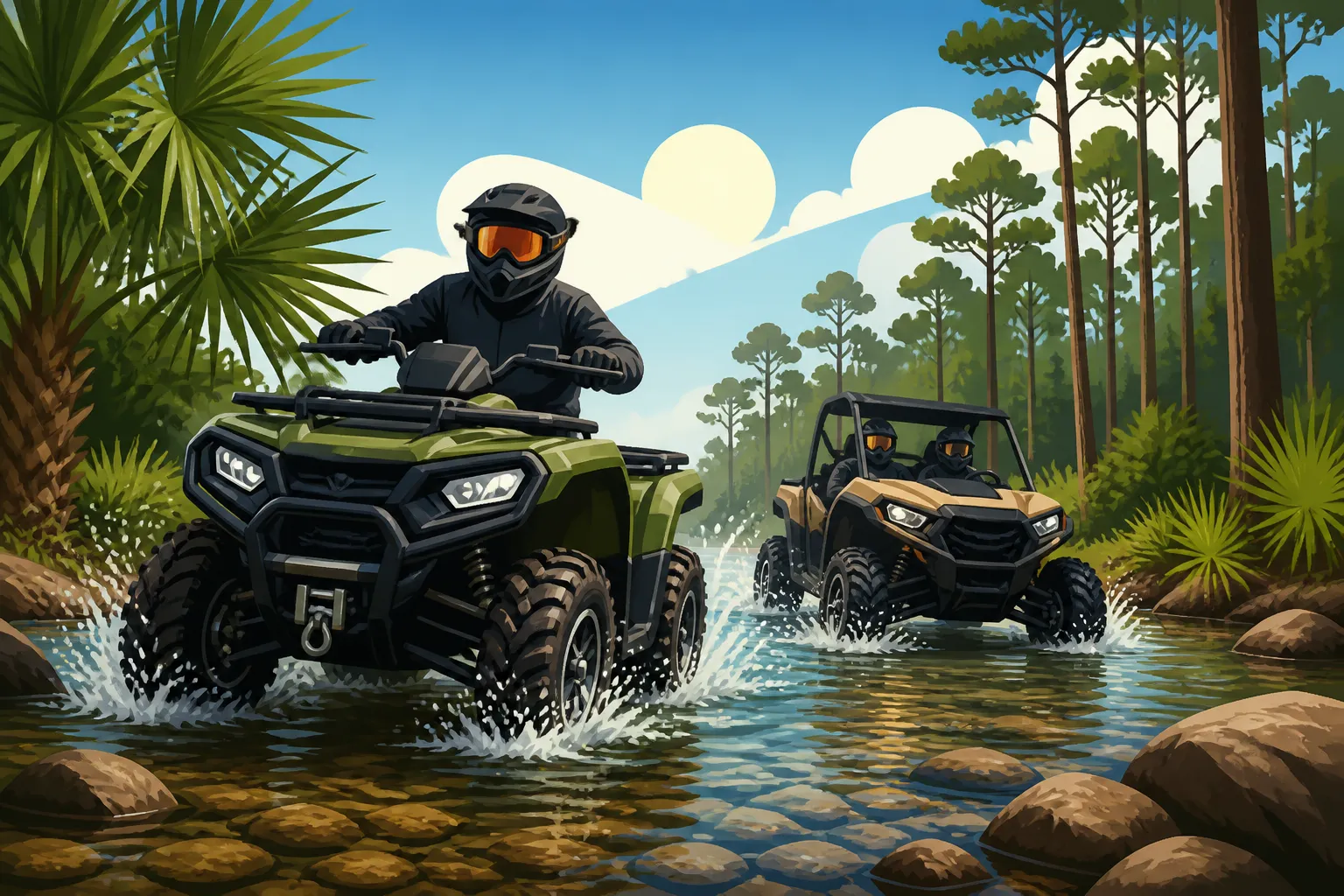
Riding Clear Creek in the Blackwater River Forest
Clear Creek is a popular place to ride in Blackwater River State Forest, but a good day depends on more than finding the trailhead. Riders need to confirm which routes are open and suitable for their machine, understand pass and safety requirements, and prepare for sandy, wet conditions. This guide explains how to plan a safer, smoother Clear Creek ride.
Planning a Ride at Clear Creek
Where the riding area is and what to expect
Clear Creek OHV Area is in Blackwater River State Forest in Florida’s Panhandle, within driving distance of Milton. It offers designated off-highway riding routes in a forest setting, rather than an open area where riders can choose any path they see. Stay on signed, authorized routes: an unmarked track or tempting turnoff is not automatically open to motorized use.
Expect changing surfaces and conditions. A route that feels straightforward when dry may become slippery or deeply rutted after rain. Sand, roots, standing water, and narrow sections can all affect how a machine handles. If you’re new to the area, start conservatively and give yourself time to learn the trail layout before taking on more challenging terrain.
For a broader overview of the location and its riding opportunities, see Clear Creek OHV Area at Blackwater River State Forest. Riders exploring the region can also compare nearby Panhandle options in Blackwater River Riding in the Panhandle. Forests and riding areas don’t all use the same access rules, so don’t assume a pass or a route approval for one place automatically applies somewhere else.
Check access, closures, and machine fit before leaving
Before you load up, check the official state forest information for Clear Creek’s current access status, trail notices, and rules. Closures may be related to weather, maintenance, resource protection, or other conditions. A trail shown on a map can still be temporarily closed, and a social post or older map may not reflect a recent change. Florida Trail Closures You Should Check First offers a useful checklist for making this part of your planning routine.
Make sure your machine is appropriate for the routes you intend to ride. An ATV and a side-by-side may not have the same access on every trail system, and width can matter. Confirm the area’s machine restrictions rather than relying on a broad label such as “OHV friendly.” For additional context, see Florida ATV Trails That Allow Side-by-Sides.
A mapping tool such as onX Offroad can help you review route options, orient yourself, and plan where to turn around. Treat it as a navigation aid, not as proof that a route is open or legally accessible. Cross-check mapped information against current forest notices and signs at the trailhead. If your phone loses service, downloaded maps and a backup plan are more useful than hoping the signal returns at the next junction.
Passes, Paperwork, and Safety Requirements
Separate the forest pass from title and ownership paperwork
A state forest OHV pass and an ATV title serve different purposes. A pass is related to access or use under the forest’s rules; a title is a legal document showing ownership. Having one does not replace the other. Florida residents riding on public land may have additional title obligations, so check how the state’s rules apply to your machine and situation before the trip.
State forest pass options and purchase procedures can vary by riding area and pass type. Review the requirements for Clear Creek specifically, including whether each machine needs its own pass, how the pass must be displayed, and whether a day-use or longer-term option suits your visit. The guide Florida State Forest OHV Day Use and Annual Passes explains the general distinction between pass types, while Florida State Forest OHV Areas Explained provides broader context about riding in Florida state forests.
Keep your paperwork organized before you reach the trailhead. If you’re riding a borrowed, newly purchased, or out-of-state machine, don’t leave ownership questions until a ranger asks. Check the relevant rules in advance and carry any required documents in a secure, dry place. For a refresher on what a public-land visit may involve, What to Carry Into a Florida State Forest is a helpful companion.
Prepare younger riders and the whole group
If a rider under 16 will be on a public trail, look up Florida’s safety-course and supervision requirements before setting out. Rules can depend on the rider’s age and the land where they’re riding, so don’t rely on what another park or private riding area allows. Start with Florida ATV Safety Course Requirements for Riders Under 16 and confirm the current requirements for Clear Creek.
Even when every rider is experienced, agree on basic group habits before the engines start. Decide who will lead, who will ride at the back, and where the group will stop if someone falls behind. Keep a pace that allows everyone to react to turns and surface changes; a fast rider disappearing around a bend can leave newer riders unsure which route to take.
Set a clear turnaround point and make sure everyone knows what to do if the group gets separated. Carry water, a small first-aid kit, and a charged phone, but don’t count on reliable service throughout a forest ride. A downloaded map in onX Offroad or another navigation app can help with orientation, but the group should also understand trail signs and follow posted directions.
| Before you go | Why it matters | What to check |
|---|---|---|
| Trail status | Routes may close or change | Current forest notices and signs at the entrance |
| Machine access | Not every route suits every vehicle | ATV or side-by-side rules, including width restrictions |
| Pass requirements | Access rules apply separately from ownership paperwork | Pass type, machine-specific rules, and display instructions |
| Title and documents | Public-land riding can involve separate legal requirements | Applicable Florida title rules and proof of ownership |
| Group plan | A simple plan helps prevent separation | Leader, tail rider, meeting point, and turnaround time |
| Weather and trail conditions | Rain can change traction and route difficulty | Forecast, recent rainfall, and any related advisories |
Riding Conditions and Trail Etiquette
Adjust your riding to sand, rain, and changing terrain
Florida sand can feel deceptively easy until it gets loose or deep. Keep your speed controlled, look ahead, and avoid abrupt steering or braking when the surface changes. If your machine begins to wander, a smooth correction is usually safer than a sudden one. Riders who are unfamiliar with the area should leave extra space between machines so dust, spray, or a sudden stop does not catch someone by surprise.
Rain can make roots, mud, and low spots harder to judge. Don’t assume a puddle is shallow because it looks small from the trail. If you can’t assess a crossing safely, turn around rather than risking a stuck machine or water damage. Avoid spinning tires to force a way through: it can deepen ruts, damage the trail, and make the route more difficult for the next rider.
Pay attention to fatigue, too. Heat, vibration, noise, and concentration demands can wear people down earlier than expected, especially on a long drive followed by a full day outdoors. Take breaks, drink regularly, and be willing to shorten the ride. A conservative decision to head back while everyone is still feeling good is better than pushing through when someone is tired or uncomfortable.
Share the forest and protect the riding area
Stay on designated routes and follow posted speed, direction, and equipment rules. Shortcuts around wet spots can widen a trail and disturb surrounding vegetation. If a route is blocked or appears damaged, don’t create a new path around the obstruction. Turn back and report the issue through the appropriate forest contact or visitor information channel.
Give other users room. Slow down when approaching people on foot, horseback, or other vehicles, and follow any posted right-of-way guidance. Keep noise under control and avoid revving unnecessarily near trailheads or other recreation areas. Pack out food wrappers, broken gear, and any other rubbish; even small items are easy to lose in grass or sand and difficult for someone else to clean up.
Respect gates, signs, and closures even if the route beyond them looks inviting. A closed trail may be protecting a sensitive area or allowing maintenance work, and riding around a barrier can create safety and legal problems. Leave the area in the condition you’d want to find it on your next visit.
A Practical Clear Creek Ride Plan
Use a simple checklist from driveway to trail
A little preparation makes it easier to focus on the ride rather than sorting out problems at the entrance. The day before, verify the forest’s current notices, confirm pass and machine requirements, and check the weather. If you’re bringing a side-by-side or a machine you haven’t ridden there before, confirm route suitability rather than guessing based on its size or capability.
Before loading, inspect the machine’s tires, brakes, controls, lights, and fuel level. Secure it properly for transport and bring basic recovery supplies suited to your vehicle and riding plan. Pack water, protective gear, a first-aid kit, and any paperwork you may need. Download the map area you plan to use in onX Offroad or another navigation app, then make sure everyone knows that mapped routes still need to be checked against official signs and closures.
At the trailhead, pause before riding off. Read posted information, confirm the group has the right passes, and agree on a route and turnaround time. If conditions look worse than expected, choose a shorter ride or postpone. That may feel frustrating after packing the trailer and making the drive, but it’s better than turning a recreational day into a recovery job.
Know when to stop or change the plan
A good ride plan includes more than the route. Decide in advance what conditions will make you turn back: a sudden storm, rising water, a mechanical issue, a rider who is exhausted, or a trail that doesn’t match your group’s experience. Having those limits in mind makes it easier to act calmly instead of debating the decision in the moment.
If someone gets separated, stop in a safe place and use the group’s agreed meeting procedure. Don’t have everyone scatter down different trails searching independently. Use your map and the trail’s signs to orient yourselves, and contact emergency services if the situation involves injury or immediate danger. Tell someone at home where you plan to ride and when you expect to return.
Clear Creek can be an enjoyable way to experience the Panhandle’s forest riding, but the best outing is one that respects changing conditions and the rules of the land. Check the official information before each visit, choose routes that fit your machine and group, and leave enough time to ride back without rushing.
Disclaimer
This article is for general informational purposes only and does not constitute professional advice. Laws, prices and regulations vary by location and change over time. Consult a qualified professional for guidance on your specific situation.