What a Florida ATV Title Fee Covers
If you're a Floridian who loves the thrill of an ATV or UTV, you've likely dipped your toes into the sometimes murky waters of vehicle titling. It can feel like a maze of paperwork, fees, and rules, leaving you wondering exactly what you're paying for when you finally get that coveted title in hand. This guide is here to untangle the confusion, breaking down every common charge associated with a Florida ATV title so you understand where your money goes and what each fee actually covers.
Deconstructing the Core Florida ATV Title Fee
When you first bring home that shiny new quad or used side-by-side, one of the very first things on your to-do list is getting it legally titled. This is where the core fees come into play, and understanding them from the outset can save you a lot of head-scratching. It's not just one lump sum; it's a collection of essential charges that make up the total.
The Initial Application Charge
This is the bedrock of your titling costs. Think of it as the fundamental fee for the state of Florida to process your application and officially record your ownership of the ATV or UTV. When you hand over your paperwork at the county tax collector's office or a licensed tag agency, this is the charge that gets the ball rolling. It covers the administrative effort involved in creating that official document that proves your machine belongs to you. Without this initial application fee, your journey to legal ownership simply can't begin. It’s the gatekeeper to getting your off-highway vehicle recognized by the state.
Many riders, especially those new to Florida's specific rules for off-highway vehicles, sometimes confuse this with a "registration" fee, but it's important to remember that Florida titles ATVs and UTVs but does not require annual registration for them in the same way it does for cars. This initial fee is purely for the title itself, establishing a clear chain of ownership. It's a one-time cost for each machine, unless you need to apply for a new title due to major changes like rebuilding it. For a deeper dive into this specific charge, you can check out [The $29 Initial Title Application Fee Explained].
Understanding Service Charges
Beyond the initial application charge, you'll often see an additional line item on your receipt for a "service charge." This isn't a hidden fee; it's a standard operational cost that county tax collectors and licensed tag agencies are authorized to collect. Essentially, it helps cover the overhead of providing the titling service itself. These offices are dealing with a huge volume of transactions every day, from car tags to boat titles and, of course, your ATV title. The service charge ensures that these local offices have the resources to process your paperwork efficiently, maintain their systems, and provide the customer service you need.
It's a small but consistent fee that applies to most transactions processed at these locations, not just ATV titles. So, whether you're titling your quad, renewing your car registration, or getting a new driver's license, you'll likely encounter a similar service charge. This fee is a part of the operational cost of making these services accessible to the public. For more information on this particular charge, you might find [The $4.25 Service Charge on an OHV Title] to be very insightful. It's a small amount, but it adds up across the millions of transactions Florida handles annually.
Expedited Title Options and Costs
Sometimes, you need that title yesterday. Maybe you're selling your ATV quickly, or perhaps you're using it as collateral for a loan, and the lender requires a physical title in hand ASAP. Florida understands that sometimes speed is of the essence, and that's where the expedited or "Fast Title" option comes in. For an additional fee, the state offers a service to process your title application much faster than the standard timeframe. Instead of waiting weeks for your paper title to arrive in the mail, you could potentially walk out of the office with it the same day, or have it processed and mailed within a few business days.
This extra charge covers the priority handling of your paperwork. It means your application gets moved to the front of the queue, and extra administrative resources are deployed to ensure its swift completion. It's a convenience fee, plain and simple, for those times when time is more critical than saving a few dollars. While most people are happy to wait for the standard processing, if you're in a pinch, knowing this option exists can be a lifesaver. You can learn more about this premium service by reading [Florida Fast Title for an ATV: The $7 Expedited Option]. It's certainly a valuable option for certain scenarios.
Beyond the Basic Title: Other Fees You Might Encounter
The initial title application is usually straightforward, but the world of ATV ownership isn't always simple. There are several other fees that might pop up depending on your specific situation, like if you financed your purchase, lost your original title, or bought a used machine. Being aware of these potential costs prevents unpleasant surprises down the road.
Lien Recording Fees
If you financed your ATV or UTV purchase, meaning you took out a loan from a bank, credit union, or even the dealership itself, then the lender will want their financial interest recorded on the title. This is known as a lien. A lien essentially states that while you possess the machine, the lender technically has a claim on it until you pay off the loan in full. When the lien is recorded, there's a specific fee for that administrative action. This fee covers the cost of adding the lienholder's information to the electronic title record and, if applicable, printing a paper title that shows the lien.
It’s an important step for lenders because it protects their investment. If you were to sell the ATV before paying off the loan, the recorded lien would prevent a clean title transfer until the lender is satisfied. Once you pay off your loan, the lender will then notify the state that the lien has been satisfied, and you can then request a clean title in your name. This process might involve another small fee to update the title and remove the lien. For a comprehensive look at how liens are handled, check out [Florida ATV Title With a Lien Recorded].
Duplicate or Corrected Title Fees
Life happens. Maybe your paper title got accidentally shredded, lost in a move, or even damaged beyond recognition in a flood. Or perhaps, when you received your title, you noticed a typo in your name or the VIN, and it needs to be corrected. In these instances, Florida charges a fee for issuing a duplicate title or correcting an existing one. This fee covers the administrative cost of searching records, verifying ownership, and issuing a new, accurate document. It's a necessary service to ensure the integrity of ownership records.
The process for getting a duplicate often involves submitting an application, and sometimes a sworn statement, to confirm the circumstances of the original's disappearance or the need for a correction. It’s always best to keep your title in a safe place, like a fireproof safe, but if the worst happens, know that there's a clear process and a modest fee to get a replacement. You can find more specific details on this by checking out [Florida Duplicate ATV Title Cost]. It’s a small price to pay for peace of mind and proof of ownership.
Transfer Fees for Used ATVs
When you buy a used ATV or UTV from another person or even a dealership, you're not applying for a new title in the traditional sense; you're transferring ownership of an existing title. This transfer also comes with a fee. This charge covers the administrative process of updating the state's records to reflect you as the new legal owner. The old owner's name is removed, and your name (or your business's name, if you're titling it under an entity) is added.
This fee is crucial because it legally severs the previous owner's connection to the machine and establishes yours. Without a proper title transfer, you could run into all sorts of legal headaches down the line, from proving ownership if the machine is stolen to selling it yourself in the future. It’s a fundamental part of the transaction, ensuring that the state's records are always up-to-date and accurate, which is vital for consumer protection and law enforcement. Make sure this step is always completed when buying a used machine, no matter how good of a deal you think you're getting.
The Tax Side of the Equation: Sales Tax and Incidental Trust Fund
Beyond the direct titling fees, there are other financial considerations that often accompany the titling process. These aren't technically "title fees," but they are usually collected at the same time and are a mandatory part of becoming a legal owner in Florida. Understanding these distinct charges helps paint a complete picture of your financial outlay.
Florida Sales Tax on ATV Purchases
Ah, sales tax. It’s the ubiquitous companion to almost any significant purchase, and ATVs and UTVs are no exception. When you buy a new or used ATV in Florida, whether from a dealership or a private seller, you are generally required to pay sales tax. This tax is calculated as a percentage of the purchase price (or the fair market value, if the purchase price seems unusually low, especially in private sales). The county tax collector's office or the licensed tag agency where you process your title transfer is responsible for collecting this sales tax on behalf of the state. It's not a fee for the title itself, but rather a tax on the transaction of acquiring the vehicle.
Even if you purchased your ATV from a private individual, don't think you can avoid sales tax. Florida law typically requires it, and the amount is often based on the bill of sale. Sometimes, if the sale price on the bill of sale seems suspiciously low, the tax collector might even refer to valuation guides to determine a fair market value for taxation purposes. This prevents people from artificially lowering the reported sale price to avoid paying their fair share of taxes. It’s a significant part of your overall cost of acquisition. For more details on this, you can refer to [Florida Sales Tax When You Title an ATV].
The Incidental Trust Fund Fee
This is one of those small line items that can often leave people scratching their heads, wondering "What exactly is an 'incidental trust fund,' and why am I paying for it?" The Incidental Trust Fund fee is a small, statutory charge – usually just a couple of dollars – that Florida assesses on various motor vehicle transactions, including ATV titles. This fund is used for specific purposes as determined by the state legislature, often related to supporting the Florida Highway Patrol, traffic enforcement, or other essential state services that indirectly benefit all road users, including those who trailer their ATVs on public roads.
It’s a micro-contribution to a larger public good, similar to how other small fees are collected for various state trust funds. While it might seem negligible on its own, when collected across hundreds of thousands of transactions annually, it provides meaningful funding for important state programs. It's not a fee for titling directly, but rather a mandatory contribution collected during the titling process. Many legal documents and services, including those available through resources like LawDepot, will outline similar statutory fees depending on the type of transaction. For a more precise explanation, check out [Incidental Trust Fund: The $2 Line on Your Title].
When Specific Situations Impact Your Title Fees
The standard titling process covers most scenarios, but life isn't always standard. Certain situations, like moving to Florida with an existing ATV or receiving one as a gift, can introduce unique twists to the titling fees and the required documentation. These situations often involve slightly different paperwork or considerations that influence the final cost.
Titling an Out-of-State ATV
Moving to a new state is exciting, but it often comes with a mountain of administrative tasks, and titling your out-of-state ATV in Florida is one of them. While the core titling fee for Florida will still apply, there might be additional steps or requirements because you're bringing a vehicle from another jurisdiction. For instance, Florida will need to verify the VIN (Vehicle Identification Number) to ensure it matches the paperwork and to check for any discrepancies or stolen vehicle reports. This VIN verification process itself may involve a small fee if performed by a licensed professional, though some state-approved entities or law enforcement might do it for free.
You'll also need to provide your previous state's title and sometimes a bill of sale to prove continuous ownership. Depending on how long you've owned the ATV and if you paid sales tax in your previous state, Florida might assess a use tax or require you to pay the difference if Florida's sales tax rate is higher. It's not about paying double, but about ensuring that the state receives its fair share of tax on the vehicle now residing within its borders. Preparing all your original documents from the previous state is key to a smooth transfer. More information on this specific process is available at [Titling an Out-of-State ATV After Moving to Florida].
Titling a Gifted or Inherited ATV
Receiving an ATV as a gift or inheriting one can be a wonderful surprise, but it also means navigating the titling process without a traditional "purchase price" or MSO (Manufacturer's Statement of Origin) if it's an older machine. For a gifted ATV, you'll still need to apply for a Florida title, which means the standard application fee and service charge will apply. The biggest difference usually comes with sales tax. In many cases, if an ATV is genuinely gifted (not sold for a nominal fee), you may be exempt from sales tax. However, you'll typically need to submit a sworn affidavit or a specific form confirming the gift. Legal templates available through services like LawDepot can help ensure you have the correct documentation for such declarations.
For inherited ATVs, the process can be a bit more complex, depending on the specifics of the deceased's estate. You'll need documents like the death certificate, potentially a will, or court orders to prove your legal right to inherit the vehicle. Again, the core titling fees apply, but sales tax might be waived. The key here is proving the legal transfer of ownership without a cash transaction. It's important to gather all relevant legal documentation to present to the tax collector.
Fees for Homemade or Rebuilt Quads
For the truly hands-on enthusiasts who've built their own custom quad or extensively rebuilt an existing one from multiple parts, the titling process has its own unique set of fees and requirements. Because there's no original MSO from a manufacturer for a homemade machine, or the original VIN might be altered for a rebuilt one, Florida needs to ensure the machine is safe and that its components aren't stolen. This often involves a physical inspection by a state-certified official, which may incur an inspection fee. The purpose of this inspection is to verify the origin of parts, assign a new VIN if necessary, and ensure the vehicle meets basic safety standards for off-highway use.
The fees here might include the standard title application, service charges, and potentially a new VIN plate fee if one needs to be issued. The process is more rigorous than titling a factory-built machine because the state has to establish its identity from scratch or verify its legitimacy after significant modifications. It’s a critical step to ensure that all vehicles on Florida's trails (where titles are required) are legitimate and safe.
Why These Fees Matter: What an ATV Title Provides
It's easy to see these fees as just another bureaucratic hurdle, but each one contributes to a system that ultimately benefits you as an ATV or UTV owner. The title itself is far more than just a piece of paper; it’s a foundational document that underpins your ownership and rights. Understanding what these fees secure helps justify the cost and effort.
Proof of Ownership and Theft Protection
At its most fundamental, your Florida ATV title is the undisputed legal proof that you own your off-highway vehicle. Think of it as the deed to your machine. If your quad were ever stolen, having a title makes it infinitely easier to report the theft to law enforcement, track it, and reclaim it if recovered. Without a title, proving ownership can become a tangled, frustrating, and often expensive legal battle. The fees you pay ensure that your ownership is officially recorded in a state database, providing a clear and verifiable paper trail. This record is invaluable in protecting your investment against fraud and theft.
In the unfortunate event of a theft, the title number links your specific machine to you, making it a critical piece of information for police reports and insurance claims. It adds a layer of security that a simple bill of sale or receipt cannot provide. The small fees associated with titling are a worthwhile investment in safeguarding your property. This is why [What an OHV Title Proves in a Theft Claim] emphasizes the critical nature of this document.
Eligibility for Public Land Riding
Florida has specific rules about where and how you can ride your ATV or UTV on public lands, such as state forests and national forests. A key requirement for many of these designated riding areas is that your off-highway vehicle must be titled in Florida. The fees you pay for your title directly contribute to meeting this legal prerequisite. Without a valid Florida title, you could be denied access to these public trails, or worse, face fines and penalties if caught riding untitled where a title is required. This isn't just about showing a piece of paper; it's about adhering to the state's framework for managing and maintaining these recreational resources.
The state uses the titling system to track off-highway vehicles and ensure compliance with various regulations, many of which are designed to protect both riders and the environment. So, when you pay your title fees, you're not just getting a document; you're securing your right to legally explore many of Florida's fantastic public trails. This link between titling and riding access is crucial, as highlighted in [Riding Public Land as the Trigger for a Title].
Facilitating Resale and Future Transfers
Imagine trying to sell an ATV without a title. It's a nightmare scenario that often deters legitimate buyers and can significantly reduce the resale value of your machine. A clean, properly transferred title assures a potential buyer that they are purchasing a legally owned vehicle, free of hidden liens or ownership disputes. The fees you pay when you originally title your ATV, and any subsequent transfer fees, simplify this process immensely. They ensure that a clear chain of ownership can always be traced, making future sales and transfers smooth and efficient.
Without a title, you might find yourself only able to sell to cash buyers willing to take on the risk, or at a much lower price. The titling system, with its associated fees, creates a standardized and trustworthy mechanism for buying and selling vehicles, which ultimately benefits everyone in the market. It provides confidence for both seller and buyer. For advice on this, check out [Buying a Used ATV in Florida: Transferring the Title].
Navigating the Process and Minimizing Surprises
Knowing what the fees cover is one thing, but actually navigating the titling process can still feel daunting. By understanding the steps and being prepared, you can ensure a smooth experience and avoid unnecessary delays or unexpected costs. A little preparation goes a long way.
Gathering Your Documentation
The most common reason for delays or extra trips to the tax collector's office is incomplete documentation. Before you even set foot in the door, you need to gather all the required paperwork. This typically includes:
- Proof of ownership: This could be the Manufacturer's Statement of Origin (MSO) for a new ATV, or a properly endorsed title from the previous owner for a used machine.
- Bill of Sale: Even if you have an MSO or an old title, a bill of sale detailing the purchase price is crucial, especially for calculating sales tax. You can find customizable bill of sale templates through services like LawDepot.
- Odometer Disclosure: While not all ATVs have odometers, if yours does, you might need to complete an odometer disclosure statement.
- VIN Verification: For out-of-state vehicles or homemade/rebuilt ATVs, a VIN verification form completed by an authorized party is essential.
- Photo ID: A valid Florida driver's license or state ID is always required to prove your identity.
- Proof of Florida Residency: If you're a new resident, you might need to show utility bills or other documents.
Having these documents neatly organized and filled out correctly will save you immense time and frustration. It allows the clerk to process your application efficiently without having to send you home for missing items.
Choosing Your Titling Location
In Florida, you typically have two main options for titling your ATV: your local county tax collector's office or a licensed private tag agency. Both are authorized to process ATV titles and collect the associated fees. The core state fees (like the initial title application fee, lien fees, and sales tax) will be the same regardless of where you go, as these are set by state statute. However, private tag agencies often charge an additional convenience fee on top of the state and county service charges. This extra fee covers the cost of their operations and the value of faster service, potentially shorter wait times, or more convenient hours.
Consider your priorities. If saving every dollar is paramount and you don't mind potentially longer wait times, the county tax collector's office is often the most cost-effective. If convenience, speed, and potentially a more streamlined experience are worth a small extra fee, a private tag agency might be a better fit. Always check their hours of operation and any specific requirements before you visit. [Where to File an ATV Title in Florida] can offer more guidance on this decision.
Being Prepared for Payment
Once all your paperwork is in order, the final step is payment. Most county tax collector offices and private tag agencies accept various forms of payment, including cash, checks, debit cards, and credit cards. However, it's always wise to confirm their accepted payment methods beforehand, especially if you plan to use a credit card, as some offices might charge a small processing fee for card transactions. Make sure you have enough funds available to cover all fees, including the title application, service charges, sales tax, and any other applicable fees like lien recording or expedited service charges.
Knowing the approximate total amount beforehand helps avoid any last-minute surprises at the counter. Having your payment ready simplifies the transaction and allows you to walk out with confidence, knowing your ATV is on its way to being legally titled.
Common Misconceptions About Florida ATV Title Fees
The world of vehicle titling is ripe with misunderstandings, and ATVs and UTVs are no exception. Many riders come to the titling office with preconceived notions based on car titling or rules from other states. Clarifying these common misconceptions can save you time, confusion, and potential frustration.
Title vs. Registration: A Clear Distinction
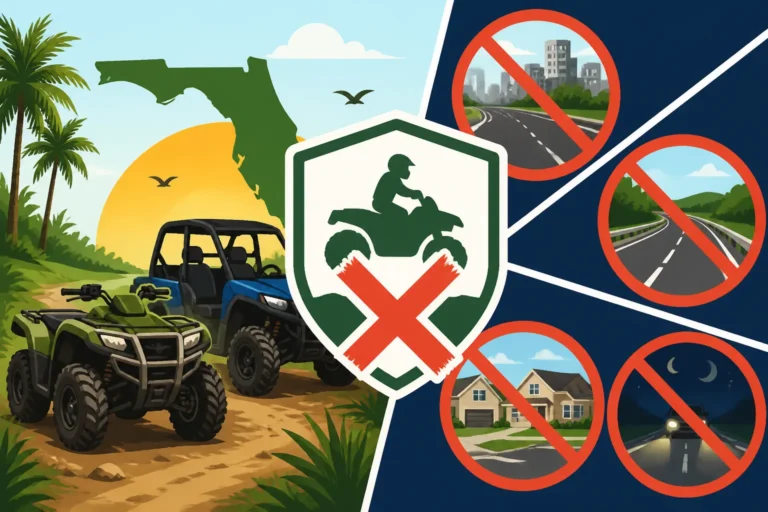
Perhaps the most common misconception among ATV and UTV owners in Florida is confusing a title with a registration. For cars, trucks, and motorcycles that operate on public roads, you typically have both a title (proof of ownership) and an annual registration (permission to operate on public roads, evidenced by a license plate and decal). Florida's rules for ATVs and UTVs are different. While you must title your ATV or UTV if you plan to ride it on public lands, Florida does not issue annual registrations, license plates, or decals for off-highway vehicles in the same way it does for street-legal vehicles.
The fees you pay are purely for the title itself. They do not grant you the right to drive your ATV on public paved roads or issue you an annual tag. Understanding this distinction is crucial for staying within the bounds of Florida law and avoiding fines. An ATV title simply establishes ownership and makes your machine eligible for use in designated off-highway areas that require it. For more clarity, see [Florida ATV Title vs Registration: The Difference].
Insurance Requirements and Title Fees
Another common question revolves around insurance: "Do I need insurance to title my ATV in Florida, and are those fees tied together?" Generally speaking, for the purpose of titling an ATV or UTV in Florida, you are typically not required to show proof of insurance. Unlike street-legal vehicles, which often require Personal Injury Protection (PIP) and Property Damage Liability (PDL) insurance before they can be registered, off-highway vehicles used strictly off-road usually don't have this requirement for titling.
However, this does not mean insurance is unnecessary. While not a prerequisite for the title itself, carrying ATV insurance is highly recommended for your own financial protection. Many private riding parks or organized events might require you to have insurance, and it's always smart to protect yourself in case of an accident, theft, or damage. But in terms of the actual titling fees and process at the tax collector's office, insurance is usually not a factor. It's an important distinction to make between state titling requirements and responsible ownership practices.
The Difference Between ATV and UTV Fees
Many new buyers wonder if there's a difference in titling fees between an ATV (All-Terrain Vehicle, often a quad) and a UTV (Utility Task Vehicle, often a side-by-side). For the most part, the core titling fees in Florida are the same for both types of off-highway vehicles. The state's titling laws for OHVs generally apply universally across these categories, provided they meet the definition of an off-highway vehicle as outlined in Florida statutes. This means the initial application charge, service fees, lien recording fees, and duplicate title fees typically do not differ based on whether your machine is an ATV or a UTV.
The important distinction for fees, if any, often comes down to classification for sales tax purposes or if a vehicle falls into a "recreational off-highway vehicle" (ROV) category that might have slightly different definitions in other contexts (like width limits for trails), but the fundamental cost to apply for and process the title usually remains consistent. The state is primarily concerned with establishing legal ownership for an off-highway vehicle, regardless of its specific configuration as a quad or a side-by-side.
Table of Common Florida ATV/UTV Titling Fees and What They Cover
To help consolidate this information, here's a quick overview of the typical fees you might encounter when titling an ATV or UTV in Florida:
| Fee Type | What It Covers | When It Applies |
|---|---|---|
| Initial Title Application | The basic cost to process and issue a new Florida ATV/UTV title. | First-time titling of a new or used machine in Florida. |
| Service Charge | Administrative fee collected by the county tax collector or tag agency. | Most transactions, including initial titles, transfers, duplicates. |
| Fast Title Fee | Expedited processing for same-day or quicker title issuance. | When you need your paper title faster than standard mail delivery. |
| Lien Recording Fee | Recording a financial interest of a lender on your title. | If you financed your ATV/UTV purchase. |
| Duplicate Title Fee | Issuing a replacement title for lost, stolen, or damaged originals. | If your original paper title is lost, stolen, or damaged. |
| Title Transfer Fee | Changing ownership records from a previous owner to you. | When buying a used ATV/UTV from a private party or dealer. |
| Sales Tax | State tax on the purchase price of the ATV/UTV. | Almost all purchases, new or used, private or dealer. |
| Incidental Trust Fund | A small statutory fee contributing to specific state programs. | Collected on various motor vehicle transactions, including ATV titles. |
| VIN Verification Fee | Cost for a certified professional to inspect and verify the VIN. | For out-of-state vehicles or homemade/rebuilt ATVs/UTVs. |
Disclaimer
This article is for general informational purposes only and does not constitute professional advice. Laws, prices and regulations vary by location and change over time. Consult a qualified professional for guidance on your specific situation.