Why Annual Passes Are Per Vehicle, Not Per Rider
An annual OHV pass can feel like a rider permit, especially when one family or group shares a trip. In Florida, many annual passes are tied to a specific machine instead. Knowing why—and what that means when you bring a second ATV, carry passengers, or change machines—helps you buy the right pass and avoid a problem at the trailhead.
Why Florida annual passes are tied to the vehicle
A vehicle-specific pass authorizes use of a particular ATV or UTV at participating public riding areas. It is not simply a personal membership that follows whoever is riding that day. The pass may be serialized or otherwise associated with the machine, so staff can check that the vehicle being used is covered.
That approach gives land managers a practical way to manage OHV use. The machine is the thing being operated on the trail: it takes up space, travels over the surface, and can cause wear or damage. Linking the authorization to the machine also makes it easier to check compliance when different people take turns riding the same ATV.
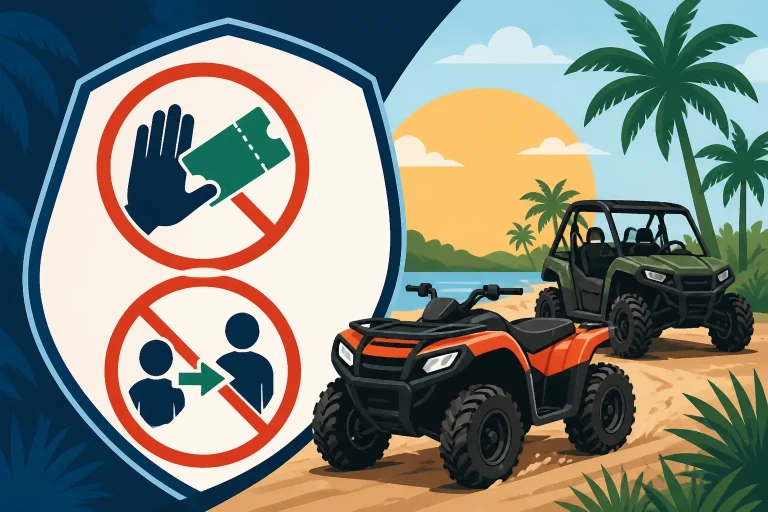
This is why buying one annual pass for a household does not automatically cover every machine in the household. If you take two ATVs, each may need its own vehicle-specific pass even if one person owns both or only one person in your group purchased the passes. The details depend on the program and the land you plan to use, so check the current instructions for that specific riding area.
The distinction between rider and vehicle passes is also important because a passenger is not a second machine. A passenger riding on an ATV or UTV that has the required pass generally does not need another vehicle pass just for occupying a seat. But separate admission, camping, or other recreation rules may apply. A pass for one machine should not be assumed to cover every activity or fee at a site.
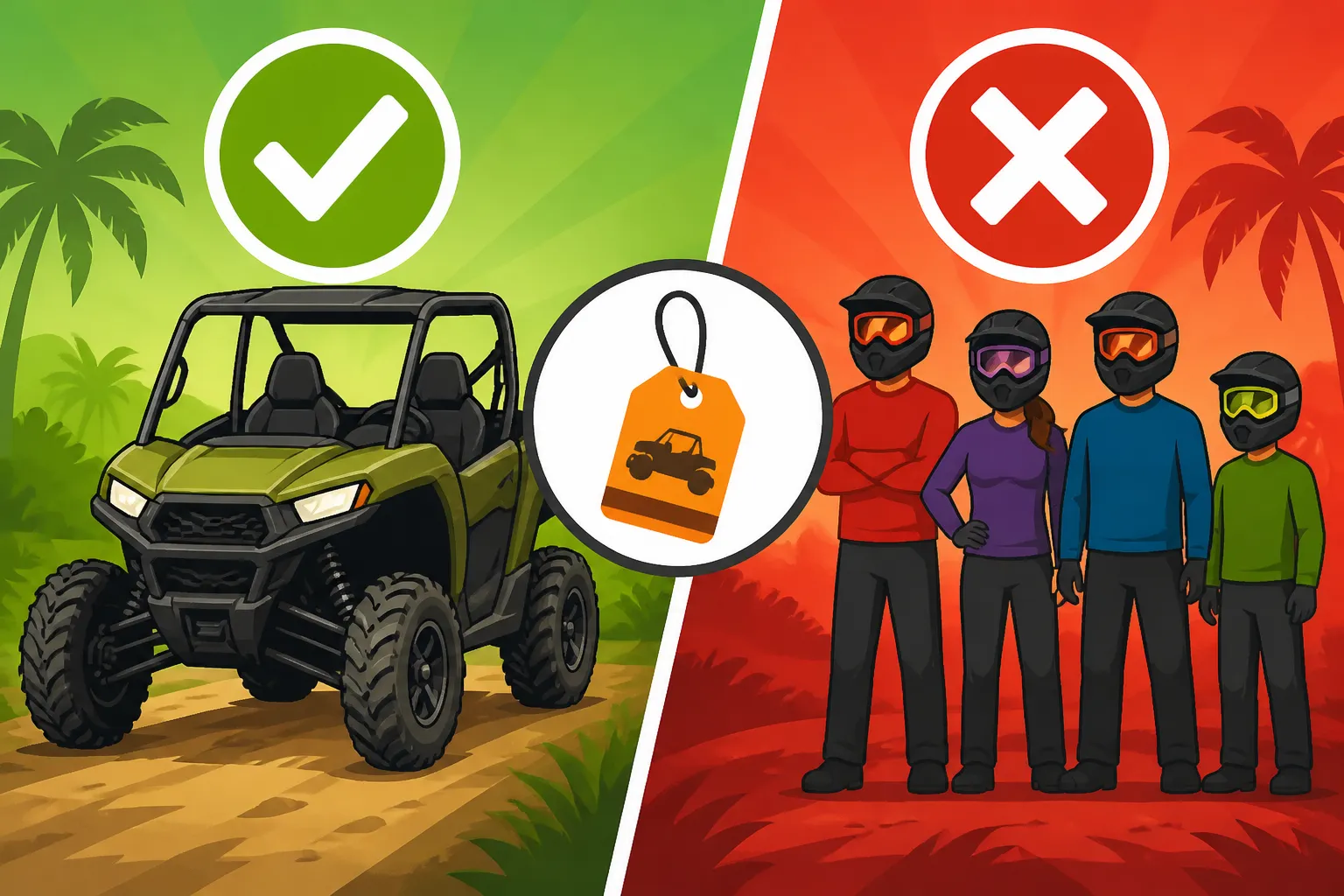
The general rule is summarized in Florida Annual OHV Passes Are Per Vehicle. Treat each vehicle you plan to ride as a separate pass question, then confirm the requirements for the specific program before you leave.
| Your riding plan | What to check |
|---|---|
| One ATV with one or more riders taking turns | Whether the annual pass is assigned to that ATV and how it must be displayed or carried |
| Two ATVs in the same group | Whether each machine needs its own pass |
| One ATV carrying a passenger | Whether the vehicle pass covers the machine and whether the site has separate passenger or entry rules |
| A replacement or newly purchased ATV | Whether the pass can be transferred or the new machine needs a different pass |
| A visit to more than one riding area | Whether the pass is accepted at each location and covers the type of use planned |
What “per vehicle” means for groups and families
The easiest way to plan is to count machines, not riders. If four people share one covered ATV, that is one vehicle to check for pass purposes. If four people arrive on four ATVs, do not assume a single annual pass covers all four just because the group bought it together.
This matters especially when a group mixes machines. A family might bring one ATV and one side-by-side, while friends arrive with additional quads. The machines may fall under different classes or have different access restrictions, even if the same pass program is involved. Verify that each vehicle is eligible and covered; a pass is not a substitute for meeting the riding area’s size, type, or operating requirements.
One vehicle, several riders
When riders take turns using one machine, the pass normally stays with the vehicle under the terms of the relevant program. It does not become invalid because a different eligible person is operating the ATV. However, riders still need to meet applicable age, safety, supervision, and trail rules. A vehicle pass does not replace a required safety certificate or make an otherwise ineligible rider eligible.
Passengers should be checked separately from vehicle-pass coverage. Some sites may have rules about passenger capacity, age, helmets, or whether a particular machine may carry a passenger. Those are operating rules, not proof that each person needs an OHV pass. For questions about whether a passenger changes what you must pay or carry, see Florida OHV Pass and Passenger Fees.
Two or more machines
A pass intended for one machine generally should not be moved between vehicles so that several machines can ride under it. That defeats the vehicle-specific system and may leave one or more machines uncovered during a check. If you regularly ride more than one ATV, the right approach is to confirm whether each needs a separate pass, rather than relying on the fact that the same owner is riding them.
The details for a second machine are covered in [Florida OHV Pass for a Second Machine]. Pay attention to the type of pass and its identification requirements: the answer may differ between a day-use authorization and an annual pass, or between one land manager’s program and another’s.
Camping or parking with a group
An OHV pass is not necessarily an all-purpose recreation pass. It may authorize a machine to use designated OHV trails without covering camping, a campsite, general entrance fees, or other activities. Conversely, a camping reservation or general entry payment does not necessarily authorize the ATV or UTV to use an OHV trail.
If your trip includes camping, look at the camping rules and OHV rules as separate parts of the plan. Florida Camping Pass vs Florida OHV Pass explains why the two should not be treated as interchangeable. At a campground or staging area, also check whether the rules apply per person, per vehicle, per campsite, or per machine. Those are separate charging units and can coexist.
Buying, moving, or replacing a vehicle
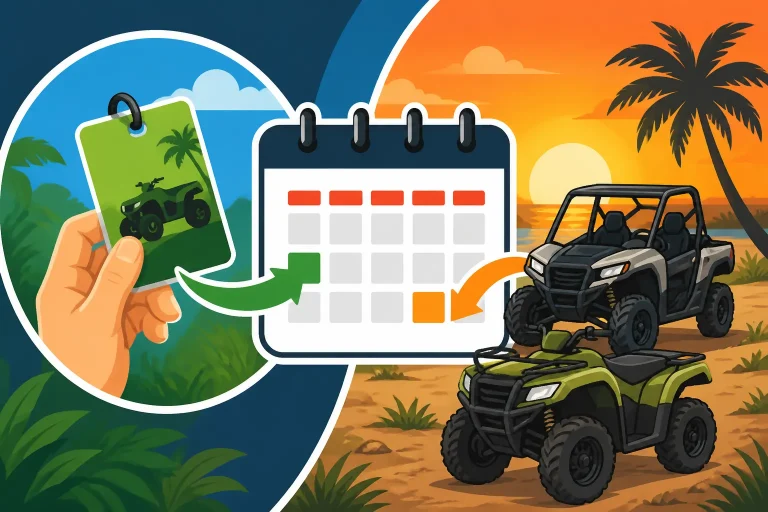
Because an annual pass may be connected to one machine, it is worth checking the transfer policy before buying a pass for a vehicle you may soon replace. A pass that is valid for the remainder of its term may not automatically follow you to a different ATV or UTV. The same is true if you sell the machine, borrow another one, or bring a newly acquired vehicle on a later trip.
Do not rely on a seller’s verbal assurance that a pass comes with the ATV. Confirm whether the pass is transferable and whether it is valid for the new owner or new vehicle. The transfer rules are explained in Florida OHV Pass Transfer to a New Quad. If transfer is not allowed, budget and plan on obtaining the authorization required for the replacement machine.
Before you buy, gather the details for every machine you expect to ride. Read the program’s instructions for how the vehicle is identified, whether a pass must be attached or displayed, and what proof you should keep with you. Avoid altering, moving, or copying a pass unless the program specifically allows it. If a pass is damaged, lost, or difficult to read, contact the issuing program rather than improvising a replacement.
A pass may also be limited to a particular vehicle class or riding area. A covered ATV does not necessarily mean a wider UTV is covered under the same access rules, and a pass accepted at one location may not be accepted at another. For example, One Forest Pass Covers Both Ocala and Apalachicola addresses a specific forest-pass arrangement; do not assume every Florida pass works across all public lands.
A simple pre-trip check can prevent most mix-ups:
- List each ATV and UTV you plan to take.
- Identify the land manager and riding area for each part of the trip.
- Check whether that program requires a separate pass for each machine.
- Confirm that each machine meets the site’s access and class requirements.
- Follow the instructions for displaying or carrying the pass and any required proof.
- Check whether camping, passenger, or general entry rules involve separate requirements.
- Confirm current details with the official program before departure.
If you are taking multiple machines to a campground or staging area, do not assume that one vehicle’s pass covers the others. Every Machine at Buttgenbach Needs Its Own Pass is a useful example of why the machine count can matter even when a group arrives and camps together.
Public land, visitors, and what a pass does not prove
An annual pass answers a limited question: whether the covered machine has the required authorization for the activity and location specified by that pass program. It does not, by itself, prove ownership, replace a title, or authorize riding on every road or trail. It also does not grant access to private property or override closures, posted restrictions, or local rules.
This is particularly important for visitors. A pass purchased for a machine does not necessarily settle separate questions about out-of-state ownership, title requirements, or rider eligibility. Visitors should review Florida OHV Permit Rules for Out-of-State Riders as well as the pass terms. For an overview of the other requirements that may apply before riding public land, see Florida Riding on Public Land: Permits and Proof.
Before departure, keep the pass information accessible and make sure the machine it covers is identifiable in the way the program requires. At the trailhead, follow posted signs and staff directions. If a vehicle has changed since you bought the pass, or you cannot tell whether the pass matches it, pause and verify the situation with the issuing agency or site operator rather than assuming that ownership of the pass is enough.
The key takeaway is straightforward: count the machines first, then check each machine against the riding area’s rules. Riders may share a covered ATV when allowed, but an annual pass tied to one vehicle should not be treated as a group pass for several ATVs or UTVs. Separate fees or requirements for people, camping, and other activities should be checked independently.
Disclaimer
This article is for general informational purposes only and does not constitute professional advice. Laws, prices and regulations vary by location and change over time. Consult a qualified professional for guidance on your specific situation.