Passenger Rules at a Private Park
Private riding parks in Florida set many of their own passenger rules, so a passenger who is allowed on one machine or at one park may not be allowed on another. The safest approach is to check both the vehicle’s seating design and the park’s current requirements before you arrive, especially when children, rentals, or side-by-sides are involved.
Who Sets Passenger Rules at a Private Park
A private park’s passenger policy is not necessarily the same as the rules for riding public land or using an ATV on a road. The park can set operating conditions for its property, including which vehicles may carry passengers, who may ride, what equipment is required, and where passengers may go. Applicable state and local laws still matter, but permission to enter a private park is not permission to ignore them.
That distinction is important for visitors who have a permit or have checked rules for a national forest. A pass may authorize access to a particular public riding area, but it does not decide whether a private park allows a passenger on a particular quad. Likewise, a park’s approval to carry a passenger does not automatically make that setup legal on a public road or trail elsewhere.
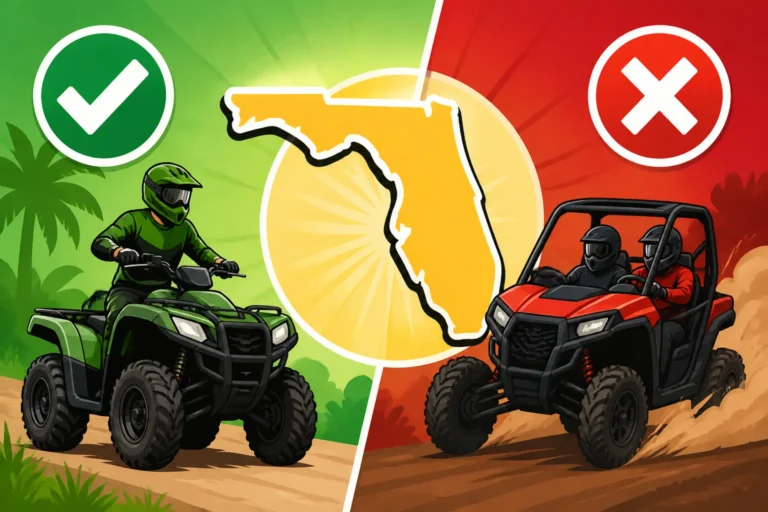
Passenger requirements can differ between parks because of the terrain, vehicle types, insurance conditions, rental arrangements, and the operator’s safety policy. One property may allow passengers only in properly equipped two-seat vehicles. Another may permit passengers in certain side-by-sides but restrict them from single-rider ATVs, youth machines, or particular trails.
If you are comparing a private park with a public riding area, review each set of rules separately. Florida Waivers Riders Sign at Private Parks explains why a waiver is only one part of the park’s conditions, while Florida ATV Passenger Rules covers the broader passenger question. A waiver does not replace the need to follow posted rules or instructions from park staff.
Before planning a ride, ask the operator directly:
- Which machine types may carry passengers?
- Must the vehicle have a separate passenger seat, handholds, and footrests?
- Are there age, height, or size limits for passengers?
- Can passengers ride on every trail, or only in designated areas?
- Do the rules differ for park-owned rentals and personally owned machines?
- What protective equipment must each passenger wear?
- Are there extra requirements for children or first-time riders?
Get clear answers for the exact park and vehicle you intend to use. A general statement such as “passengers are allowed” may not answer whether your child can ride on your quad, whether a rental side-by-side can take a back-seat passenger, or whether that passenger can join a particular route.
Match the Passenger to the Vehicle
Start with the vehicle’s design, not just the number of people who want to ride. A machine intended for one rider should not be treated as a two-person vehicle simply because someone can sit behind the driver. A passenger needs a proper seating position and a way to remain stable when the machine accelerates, turns, or crosses uneven ground.
For a quad, check the owner’s manual and the manufacturer’s seating designation. Passenger equipment can include a separate seat area, footrests, and handholds. The park may also inspect the machine or ask what the manufacturer allows. If the vehicle is labeled for one rider, do not assume that a private park’s general passenger policy overrides that design limitation. See Can You Carry a Passenger on a Single-Rider Quad? for more on why the distinction matters.
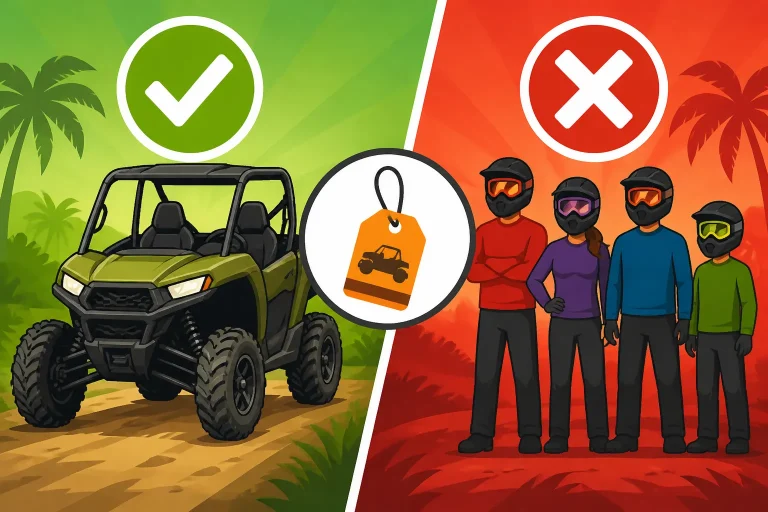
Side-by-sides are built around seats for more than one occupant, but capacity still matters. A two-seat model is not a four-seat model, and available space does not mean every occupant can ride safely without the proper seat and restraint. Use the seating positions the vehicle was designed for, and follow the park’s requirements for seat belts or other restraints. Don’t carry an extra person in a cargo bed, on a lap, or in an improvised seat.
| Vehicle or setup | What to verify before riding |
|---|---|
| Single-rider quad | Whether the manufacturer allows a passenger; do not add one to a single-rider seat |
| Two-rider quad | Separate passenger seat, footrests, handholds, and the park’s approval |
| Two-seat side-by-side | Correct passenger capacity, seating position, restraints, and any age restrictions |
| Four-seat side-by-side | Approved seating for each occupant and whether the park allows the full group on the chosen route |
| Youth machine | Whether the machine is sized for the rider and whether the park permits a passenger at all |
| Rental vehicle | The rental operator’s passenger limit, age rules, restraints, and waiver conditions |
The park may distinguish between an ATV and a side-by-side rather than treating all off-highway vehicles alike. Florida’s vehicle classifications can matter in other settings, too; What Florida’s Two-Rider ATV Class Means for Passengers explains one classification issue, and Florida UTV Titling for Side-by-Sides Over 55 Inches covers a separate title question. Neither classification should be taken as a substitute for the park’s own operating policy.
Keep the passenger’s physical ability in mind as well as the stated rules. A passenger should be able to sit in the designated position, use the required handholds, keep feet on the footrests, and understand how to follow the driver’s directions. A child who is technically permitted by a park may still be too small to stay secure in a particular machine. If a child cannot fit the seat and restraints correctly, choose another activity or vehicle instead of trying to make the fit work.
For a passenger on a quad, the driver should be able to operate the vehicle without being distracted or having the passenger shift unpredictably. For a side-by-side, check that each occupant can use the correct seat and restraint. Never assume that a passenger can safely ride while standing, sitting on a lap, or holding onto the driver instead of using the designated equipment.
Age, Safety Gear, and Park Conditions
Private parks may set their own minimum ages for passengers, drivers, or both. These limits can differ by vehicle type and activity. Some parks may use age rules for all passengers; others may set separate requirements for youth machines, rentals, or guided rides. Ask the operator for the current policy instead of relying on another park’s rules or a booking page that may describe a different vehicle.
A park’s age minimum is not the same as a judgment about whether a passenger is ready. Consider the passenger’s size, ability to stay seated, comfort with noise and uneven terrain, and capacity to follow instructions. A ride that feels manageable to an adult can be intimidating or physically demanding for a child. If the passenger is anxious or cannot maintain a safe riding position, stop and reassess rather than continuing because the ride has already started.
Protective gear is another area where requirements vary. The park may specify helmets, eye protection, closed-toe footwear, or other gear for passengers as well as drivers. Ask what the operator provides and what you must bring. For a child, check whether the available helmet fits securely and is suitable for that rider. If you buy equipment through a retailer such as Amazon, check the product’s sizing, fit guidance, and applicable safety markings rather than choosing by appearance alone. A helmet that shifts around or leaves the rider’s vision obstructed is not a good fit.
If children will ride, check the relevant legal requirements as well as the park policy. Florida ATV Helmet Law for Riders Under 16 and Florida ATV Safety Course Requirements for Riders Under 16 address rules that may apply in specific circumstances. The park may impose stricter conditions than the minimum that applies elsewhere, and requirements can differ between private property and public land.
The passenger should know a few basic instructions before the vehicle moves:
- Sit only in the designated seat.
- Keep feet on the footrests and hands on the specified handholds.
- Keep arms and legs inside the vehicle.
- Stay seated unless the driver or staff tells everyone to stop and dismount.
- Tell the driver immediately if a restraint feels loose or if the passenger feels unwell.
- Do not distract the driver or lean out to take a photo.
The driver and passenger should also agree on a simple way to communicate over engine noise. A passenger should be able to signal that they need to stop without reaching for controls or startling the driver. For a group ride, follow the guide’s instructions about spacing and stopping. A passenger who is uncomfortable should not be pressured to continue.
A private park may restrict passengers from certain trails even when it allows them elsewhere. Steep sections, mud holes, narrow routes, or more technical terrain may have different operating limits. Ask whether the planned route is appropriate for the vehicle and passenger, and whether staff recommend a beginner area or a shorter loop. Do not assume that permission to carry a passenger means every trail is suitable.
How to Check the Rules Before You Go
Passenger policies can be scattered across a park’s website, rental terms, waiver, posted signs, and check-in instructions. Read the documents for the specific activity you booked, then contact the operator if anything is unclear. If you are bringing your own machine, make that clear; the requirements for a privately owned vehicle may not match those for a rental.
Use this checklist before travel:
- Confirm the vehicle and seating capacity. Identify the exact ATV or side-by-side and how many designated seats it has. Check the owner’s manual where needed.
- Ask about the passenger’s age and size. Confirm any minimum age, height, or other condition that applies to your passenger and machine.
- Check required gear and restraints. Find out what the park supplies and whether each passenger must bring a helmet, eye protection, or other equipment.
- Ask about route limits. Verify that passengers may ride on the trails or activity you plan to use.
- Review rental terms and waivers. Check whether the booking is for a one-rider or multi-rider vehicle, who may drive, and what rules apply to passengers.
- Check access and permit requirements separately. A park admission or riding pass addresses access, not necessarily passenger eligibility. For public areas, review the relevant permit rules, including Florida OHV Permit Rules for Out-of-State Riders if you are visiting from elsewhere.
- Reconfirm close to the visit. Rules can change, and a special event or temporary trail condition may affect what is open or allowed.
When you contact the park, be specific: “Can a child of this age ride as a passenger on this two-seat side-by-side, and can we take that vehicle on the trail we booked?” That is more useful than asking only whether the park “allows passengers.” If the answer depends on equipment, send the make and model or ask what information staff need to confirm it.
For rentals, ask the rental provider and the riding park if they are separate businesses. A rental company may set its own passenger conditions, while the park controls access to trails and areas. Confirm that the vehicle’s capacity, the rental agreement, and the park’s rules all align. Do not rely on a verbal assumption that the machine will be suitable when you arrive.
At check-in, listen for any safety briefing and follow staff directions even if you have ridden elsewhere. Keep the passenger within the vehicle’s rated seating capacity, use required restraints, and stop if conditions or the passenger’s comfort change. If the rules are unclear or the vehicle does not fit the passenger safely, do not ride two-up. Choosing a properly equipped vehicle, a different route, or a no-passenger ride is safer than improvising.
Disclaimer
This article is for general informational purposes only and does not constitute professional advice. Laws, prices and regulations vary by location and change over time. Consult a qualified professional for guidance on your specific situation.