Florida ATV Title When the Seller Lost the Paperwork
It's a frustrating situation, isn't it? You've found what seems like the perfect used ATV or UTV in Florida, maybe it's been sitting in someone's garage for a while, and the price is right. But then comes the kicker: the seller admits they can't find the title. This guide is here to walk you through exactly what happens when you're trying to title an ATV in Florida and the seller has lost the paperwork, outlining your options and what to watch out for.
Understanding Florida's ATV Titling Requirements
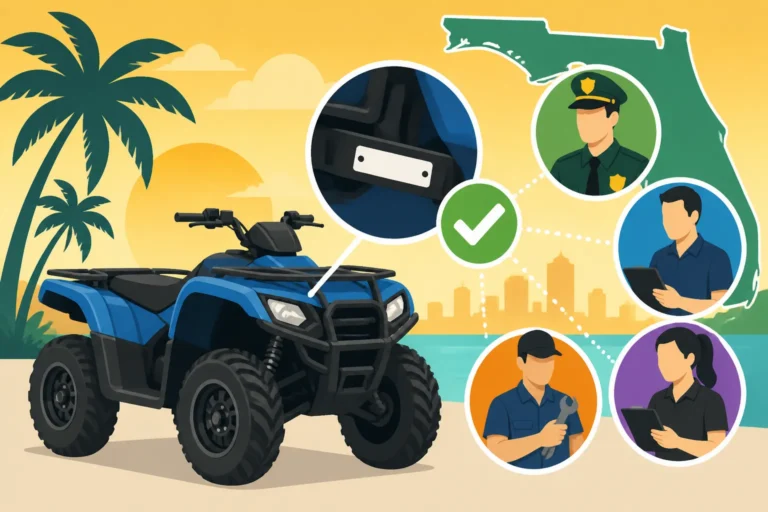
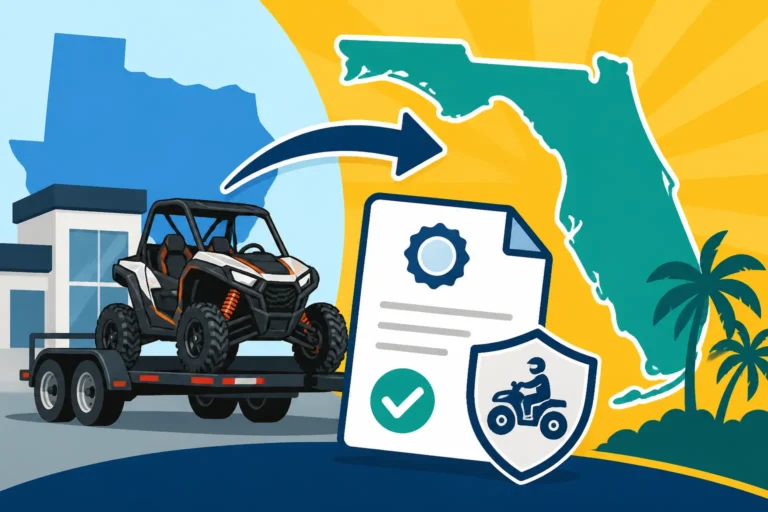
First things first, let's understand why that title is such a big deal in Florida. Many states consider ATVs and UTVs recreational vehicles that don't need formal titling, but Florida isn't one of them. The Sunshine State requires an off-highway vehicle (OHV) title for most ATVs and UTVs that are going to be operated on public lands or trails. This title serves as the official proof of ownership, much like a car title. It's how the state tracks who legally owns the machine, which is crucial for preventing theft and for ensuring proper transfer of ownership when a sale happens.
When you're buying a used ATV, the seller is legally obligated to transfer that title to you. They need to sign it over, and you then take that signed title to a Florida tax collector's office to complete the [Florida ATV Title Transfer After a Private Sale]. Without that physical piece of paper, or an electronic record that can be transferred, the whole process grinds to a halt. It's not just a formality; it's the foundation of legal ownership. If the seller legitimately titled the ATV at some point but simply misplaced the document, that's one scenario. If the machine was never titled, or if the seller was never the rightful owner, that opens up a whole different can of worms. You need to know the specific [Florida Off-Highway Vehicle Title Rules Explained] to navigate this.
The importance of a title extends beyond just ownership. If you plan to ride your ATV on any of Florida's fantastic public trails, like those in the Ocala National Forest or Croom Motorcycle Area, you absolutely need to have it titled. Riding an untitled ATV on public land can lead to fines and other penalties. The title also becomes vital if you ever need to prove ownership for insurance purposes or in the unfortunate event of theft. Without a title, these processes become significantly more complicated, if not impossible. A bill of sale, while important, doesn't replace the title as proof of ownership in Florida for titling purposes.
Immediate Steps When the Seller Lacks the Title
When you discover the seller doesn't have the title, your first course of action should be to get them to rectify the situation before you hand over any money. This is the cleanest and safest path for you as the buyer.
The simplest solution is for the seller to apply for a duplicate title. If they previously held a valid Florida title for the ATV, they can easily request a replacement from the Department of Highway Safety and Motor Vehicles (DHSMV) or their local tax collector's office. This process involves filling out specific forms, potentially providing their ID, and paying a fee for the duplicate. It's essentially the same process as described in [Florida ATV Title Lost or Damaged: Getting a Duplicate]. Once they receive the duplicate title, they can then sign it over to you as usual. This might add a week or two to your purchase timeline, but it completely safeguards your investment and ensures a smooth title transfer.
Now, if the seller is hesitant or outright refuses to get a duplicate title, that's a huge red flag. This is where the old adage "buyer beware" really comes into play. You need to be extremely cautious. Insist on a comprehensive bill of sale, even if there's no title. This document should clearly state the ATV's make, model, year, VIN, the purchase price, the date of sale, and both the seller's and buyer's full names and addresses. It should also explicitly state that the seller does not possess the title and ideally, include a clause where the seller affirms they are the legal owner and have the right to sell the machine. You can find robust bill of sale templates from resources like LawDepot, which can help ensure you don't miss any critical details. While a bill of sale alone won't get you a title, it's a vital piece of documentation if you need to pursue other avenues or prove your purchase later.
Before you consider moving forward without a title in hand, always verify the Vehicle Identification Number (VIN). This is critical for several reasons:
- Theft Check: Run the VIN through online databases or contact law enforcement to ensure the ATV hasn't been reported stolen. A stolen ATV, even if purchased innocently, will never be able to be legally titled by you. [Who Can Verify an ATV VIN in Florida?] can offer some guidance on this.
- Machine Identification: Confirm that the VIN on the machine matches any existing paperwork (like an old registration, if the seller has it). Discrepancies are another major red flag.
- Eligibility: Ensure the VIN corresponds to an ATV or UTV that is eligible for titling in Florida. Some unusual off-road vehicles might fall outside the specific definitions.
If the seller claims they never titled the ATV because it was new and they only rode it on private land, they might still have the Manufacturer's Certificate of Origin (MSO). This document is essentially the "birth certificate" for a new vehicle and acts as the initial proof of ownership before the first title is issued. If the MSO is available and properly signed over to you by the dealer or the original owner, you can often use this to apply for the first Florida title in your name. However, if the MSO is missing too, you're in a much tougher spot, as discussed in [Proof of Ownership When the MSO Is Missing].
Exploring Alternative Proof of Ownership
When a seller cannot produce a physical title, and a duplicate isn't forthcoming, you're left looking at alternative methods to establish ownership in Florida. These paths are generally more complicated and require more effort, but they can be successful depending on your situation.
1. Using the Manufacturer's Certificate of Origin (MSO):
If the ATV was brand new and never titled by the original purchaser, they should have received an MSO from the dealer. This document is a crucial piece of paper. If the seller can provide the original MSO, properly assigned to them (or, ideally, directly to you if it's a very quick resale from the original buyer who never titled), you can present this to the DHSMV or your local tax collector's office. The MSO acts as the primary proof of ownership for a new vehicle before its first title is issued. It typically includes the ATV's VIN, make, model, and year, along with the manufacturer's certification. Ensure the MSO is not damaged or altered, and that any assignments on the back are correctly filled out. The process is similar to titling a new ATV, as you'd be applying for the first-ever Florida title.
2. Bonded Titles:
This is often the route taken when there's absolutely no title, no MSO, and no way to get a duplicate from a previous titled owner. A bonded title, sometimes called a certificate of title bond, is essentially a title issued by the state based on a surety bond. The bond protects previous owners and the state against claims if it turns out the ATV was stolen or there's another legitimate owner who comes forward after you've titled it.
The process for obtaining a bonded title in Florida is not quick or simple. It usually involves:
- Application: Submitting a specific application to the DHSMV.
- Proof of Ownership: Providing as much documentation as you have, such as a detailed bill of sale (again, a robust template from LawDepot can be invaluable here), previous registration cards (even if expired), or any repair records.
- VIN Verification: Having a law enforcement officer or DMV official verify the VIN to ensure it matches the application and hasn't been tampered with.
- Appraisal: Getting the ATV appraised to determine its value, as the bond amount is usually a percentage of the vehicle's value.
- Surety Bond: Purchasing a surety bond from an insurance company. The cost of the bond will vary based on the ATV's value and your creditworthiness. This bond typically remains in effect for a certain number of years (often three), after which the title becomes "clean."
- Inspection: The state may require an inspection to ensure the ATV is not stolen and the VIN is legitimate.
This process can be lengthy and involves fees for the application, appraisal, and the bond itself. It's a last resort, but it can be a viable one for legitimate buyers who inadvertently purchased a machine without proper paperwork. You can learn more about the specifics in [What a Bonded Title Takes in Florida].
3. Affidavit of Ownership:
In very specific, limited circumstances, an affidavit of ownership might be accepted, particularly if the vehicle was very old, had an unusual history, or was purchased from an estate where official documents were truly lost and unreachable. This is less common for modern ATVs that typically have a clear titling history. An affidavit is a sworn statement, notarized, where you attest to how you came into possession of the ATV and that you are the rightful owner. However, this alone is rarely enough for a full Florida title without additional supporting evidence or a bond. It often functions as supporting documentation for a bonded title application, rather than a standalone solution.
Dealing with Difficult Scenarios and What to Avoid
Navigating the waters of an untitled ATV purchase can be tricky, and there are several scenarios and pitfalls you absolutely need to be aware of to protect yourself.
The "Untitled for Private Use" Claim:
Many sellers will try to tell you they never titled the ATV because they "only rode it on private land." While it's true that Florida doesn't require a title solely for private land use, as soon as that machine touches public land (like a state forest trail or certain designated unpaved roads), a title is required. The bigger issue is that if the seller never titled it, and they don't have the MSO, how do they prove they own it? And more importantly, how do you prove you own it after purchase? This situation often leads to the need for a bonded title, a process that can be costly and time-consuming. Don't let this common excuse lull you into a false sense of security about the simplicity of the purchase. The moment you want to ride legally on public land, or resell the machine, you'll hit a wall.
Title Jumping:
This is an illegal practice where a person buys an ATV, often without getting the title transferred into their name, and then resells it to you, leaving the original owner's name on the title. They then try to "jump" the title directly from the original owner to you by signing a bill of sale or sometimes even forging signatures. This avoids them paying sales tax and transfer fees, but it leaves you in a precarious legal position. If caught, you could face fines, and the title could be invalidated. The state won't recognize your ownership if the chain of title is broken or appears fraudulent. You can read more about this deceptive practice in [Title Jumping and Why It Bites the Buyer]. Always insist on a title in the seller's name, or a proper MSO, that they can legally transfer to you.
Buying a Machine with No MSO and No Title:
This is perhaps the riskiest scenario. If a seller has neither the MSO nor a previous title, you have very little to go on to prove legitimate ownership. Unless you are absolutely prepared to go through the bonded title process, with all its complexities and costs, it's generally advisable to walk away from such a deal. Without any official paperwork, you run a very high risk of buying a stolen machine, or one that has a hidden lien against it. [Buying a Florida Quad That Has No MSO] delves deeper into these dangers.
Consequences of Operating an Untitled ATV:
Remember, if you proceed with a purchase without a title, and you cannot secure one afterward, you will be severely limited in where you can legally ride. [Penalties for Operating Untitled on Public Land] can range from fines to your ATV being impounded. Beyond the legal ramifications, trying to resell an untitled ATV will be incredibly difficult, often only attracting buyers willing to pay significantly less for the risk involved. It essentially traps the machine on private property.
What to Avoid:
- Cash-Only Deals with No Paperwork: This is a classic indicator of a sketchy sale. Always get a bill of sale, even if informal, and be wary of sellers who push for cash and discourage any formal documentation.
- Pressure Tactics: If a seller is rushing you or making it seem like you'll lose out if you don't buy immediately despite the lack of paperwork, take a step back. A legitimate seller with nothing to hide will be patient.
- "Salvage" or "Parts Only" Claims: While these machines might be cheap, understanding Florida's titling process for rebuilt or salvaged ATVs is another layer of complexity. Unless you're an experienced mechanic planning to only use it for parts on private land, these are often more trouble than they're worth for titling.
- No VIN: If an ATV's VIN plate is missing, damaged, or appears tampered with, do not buy it. It's almost guaranteed to be either stolen or have a history that will prevent any legal titling.
Here's a quick comparison of common situations and the best approach:
| Situation | Best Initial Action | Potential Next Steps (If Initial Fails) | What to Avoid |
|---|---|---|---|
| Seller has previous FL title, but lost it | Insist seller applies for a [Florida ATV Title Lost or Damaged: Getting a Duplicate] | Documented Bill of Sale (from LawDepot), Bonded Title route | Purchasing without ANY paperwork, cash only |
| Seller never titled, has original MSO | Ensure MSO is original, properly assigned. Apply for 1st FL title | N/A (MSO is primary proof) | Forged MSO, MSO with incorrect assignments |
| Seller never titled, no MSO | Documented Bill of Sale (from LawDepot), VIN check | Bonded Title, consult DHSMV | Accepting "private land only" excuse, no VIN check |
| Seller bought from someone else, never titled (title jumping) | Walk away. This is a red flag. | N/A (Risky, potentially illegal for you) | Proceeding with an incomplete chain of title |
| VIN appears altered or missing | Walk away immediately. | N/A | Any machine with a compromised VIN |
Ultimately, while it can be frustrating to find an ATV you love with missing paperwork, it's crucial to prioritize legal ownership. If a seller is unwilling or unable to provide the necessary documents for a clear title transfer, be prepared to walk away. The hassle and potential legal issues down the road are often not worth the initial savings or convenience. Always aim for a clear, legitimate title transfer process to ensure your peace of mind and full enjoyment of your Florida ATV.
Disclaimer
This article is for general informational purposes only and does not constitute professional advice. Laws, prices and regulations vary by location and change over time. Consult a qualified professional for guidance on your specific situation.