Recording a Lien Release on an OHV Title
Paying off that loan on your ATV or UTV feels amazing, doesn't it? You’ve worked hard, made all your payments, and now that machine is finally, truly yours. But then comes the often-frustrating next step: making sure the state actually knows it's yours, free and clear. This guide will walk you through the precise steps to officially record that lien release on your Florida off-highway vehicle (OHV) title, saving you headaches down the road.
Understanding Liens and Why Releasing Them Matters
First off, let’s talk about what a lien actually is. When you finance an ATV or UTV, the lender — be it a bank, credit union, or dealership financing arm — places a lien on your title. This simply means they have a legal claim to your machine until you’ve paid off the loan in full. Think of it as collateral; it’s how they protect their investment. While that lien is active, you can’t legally sell the OHV, trade it in, or even gift it without involving the lienholder. It’s a pretty big deal.
The True Meaning of a Clear Title
A "clear title" means there are no liens recorded against your vehicle. It’s the ultimate proof that you are the sole, undisputed owner. Until that lien is officially removed from your Florida OHV title, the state's records still show that someone else has a financial stake in your machine. This can create all sorts of headaches later on. Imagine trying to sell your quad only to find out the title isn't clear! It’s a frustrating scenario many Floridians face, and it’s why taking the extra step to formally release the lien is so crucial. Don’t let all your hard work paying off that loan go to waste by skipping this final piece of paperwork. You might also be interested in understanding [Florida ATV Title With a Lien Recorded] for more details on initial lien recording.
What Happens If You Don't Release the Lien?
Let's dive into some common problems that can crop up if you neglect to officially record your lien release. The most immediate issue is when you decide to sell your ATV or UTV. A potential buyer, especially a savvy one, will ask to see a clear title. If the title still shows an active lien, even if you’ve paid it off, it looks like you don't fully own the machine. This can instantly kill a sale or, at the very least, cause significant delays as you scramble to get the paperwork sorted out. You might even find yourself in a situation where the buyer backs out because they don't want to deal with the uncertainty. Similarly, if you plan to trade your machine in at a dealership, they'll check the title status, and an unreleased lien will halt the trade-in process until it's resolved. It’s an extra layer of hassle that you simply don’t need.
Getting Your Hands on the Official Lien Release Document
The first step in clearing your title is obtaining the actual lien release document from your lender. This isn't something you can just conjure up; it has to come from the financial institution that held the lien. Without this specific piece of paper (or electronic notification), the Florida Highway Safety and Motor Vehicles (FLHSMV) simply won't remove the lien from your OHV title records.
What to Expect from Your Lender
Ideally, once you make that final payment on your ATV or UTV loan, your lender should automatically send you a physical or electronic lien release document. Many banks and credit unions are pretty good about this, often mailing it within a few weeks of the loan being satisfied. This document will typically be on their official letterhead, clearly state that the lien for your specific vehicle (identified by VIN) has been paid in full, and be signed by an authorized representative. Sometimes, it might be a specific form the state provides that they fill out.
However, sometimes life happens, and things don't go as smoothly. Maybe your lender is slow, or perhaps they're a smaller institution that isn't as familiar with the process for OHVs. If you haven't received anything within 30 days of paying off your loan, it's absolutely crucial to reach out to them directly. Don't wait! A simple phone call to their loan department is usually all it takes to prompt them to send it. Make sure you have your loan account number and the OHV's VIN handy to speed up the process. For more information on dealing with different title types, check out [Electronic Liens on a Florida Quad].
What If Your Lender Is No Longer Around or Unresponsive?
This is where things can get a bit trickier, and it's a frustration many people encounter. What if the bank that held your loan went out of business, merged with another institution, or is simply unresponsive to your requests? Don't panic, but be prepared for a bit more legwork.
If the lender merged, the new entity usually assumes responsibility for releasing liens. You’ll need to track down their loan servicing department. If the lender completely ceased operations, you might need to find out who acquired their loan portfolio. In some rare cases, where a lender is truly uncontactable, Florida has provisions for a bond to be posted to clear a title, but this is a complex and usually last-resort option. Before going down that route, consider gathering any proof of payment you have—canceled checks, bank statements, or loan payoff letters. These can be helpful in making your case, either to a successor lender or, if absolutely necessary, to the FLHSMV. Sometimes, having a template for official correspondence can help, and resources like LawDepot offer various legal document templates that could be adapted for formal requests if you're struggling to get a response.
Recording the Lien Release with Florida DHSMV
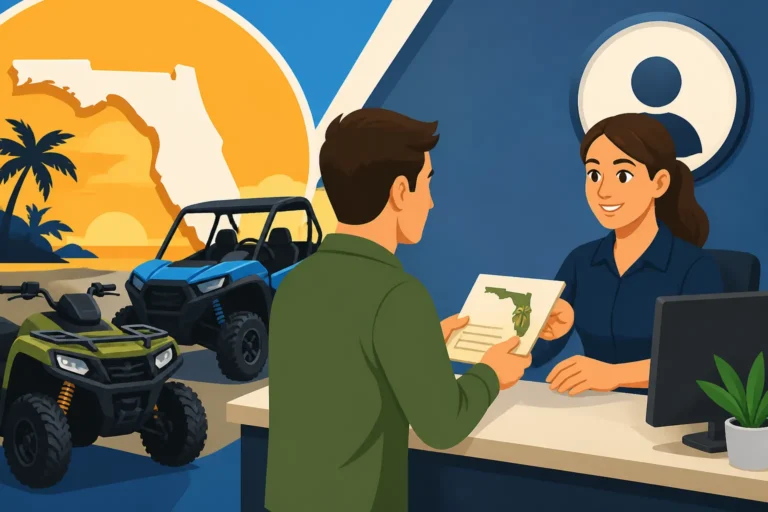
Once you have that official lien release document in hand, the next crucial step is to formally record it with the Florida Department of Highway Safety and Motor Vehicles (FLHSMV). This is the action that officially updates your OHV title records, making your machine truly free and clear in the eyes of the state. It's not enough to just have the document; you have to file it.
Required Documents and Forms
To successfully record your lien release, you'll need a few key items when you visit your local Florida County Tax Collector's office or a designated FLHSMV service center. It’s always best to be over-prepared than under-prepared!
- Original Lien Release Document: This is the absolute most critical piece of paper. It must be the original, official document from your lender, indicating that the lien has been satisfied. Copies are generally not accepted unless specifically approved under unusual circumstances.
- Your Florida OHV Title: Bring the existing title certificate for your ATV or UTV. Even if the lienholder typically holds this, they should return it to you once the loan is paid. If your title is electronic, the process will be slightly different, as the lienholder would electronically release the lien directly to the FLHSMV. However, if you originally requested a paper title, bring that. You might also need to request a paper title if yours is electronic. Find out more about [Requesting a Paper Copy of an Electronic Title].
- Application for Certificate of Title With/Without Registration (HSMV Form 82040): While this form is often used for new titles or title transfers, it's also applicable for recording changes to an existing title, such as a lien release. You'll fill out the relevant sections to indicate that a lien is being released. You can usually download this form from the FLHSMV website or pick one up at the Tax Collector's office.
- Proof of Identity: Your current Florida driver's license or state ID card.
- Payment for Fees: There will be a nominal fee for recording the lien release and, if applicable, issuing a new, clear title. While I can't provide exact current figures, anticipate a service charge and possibly a small title fee. It's always a good idea to call your specific county's Tax Collector's office beforehand to confirm the exact amount and accepted payment methods.
Where to File Your Paperwork
In Florida, ATV and UTV title transactions, including recording a lien release, are handled by your local County Tax Collector's office or a designated FLHSMV service center. You cannot do this directly at a state FLHSMV office.
You’ll want to visit the Tax Collector’s office in the county where you reside. For instance, if you live near Ocala, you’d head to the Marion County Tax Collector's office. If you're in the Panhandle, perhaps the Escambia County Tax Collector. It’s usually a walk-in service, but some offices might offer appointments, especially for more complex transactions. Be prepared for potential wait times, particularly during peak hours. You can usually find the nearest office and their operating hours on your county's official website. For an overview of the process, you can refer to [How to Title an ATV in Florida], which often shares similarities with lien release procedures.
The Actual Filing Process
Once you arrive at the Tax Collector’s office with all your documents, here’s a general rundown of what to expect:
- Check-In: You’ll likely take a number and wait your turn.
- Counter Service: When your number is called, present all your required documents to the clerk. They will review everything carefully to ensure it's complete and correct. This is where having the original lien release document is crucial.
- Form Completion: The clerk may help you ensure that HSMV Form 82040 is filled out correctly, specifically section 4 where you’re notifying them of a lien satisfaction.
- Fee Payment: You will pay the necessary fees. This usually includes a title fee (if a new title is being issued) and a service charge. Remember, specific dollar amounts can change, so always verify beforehand.
- Processing: The clerk will process your paperwork. If everything is in order, they will stamp your documents and provide you with a receipt.
- New Title Issuance: If you have a paper title, they will typically either invalidate the old title and issue a new, clear title, or they will simply update the electronic record and indicate the lien release on your existing paper title. If your title was electronic, the lien will be removed from the digital record, and you may opt to request a new paper title showing "NO LIENS."
The processing time for your updated title to arrive in the mail can vary. Sometimes, you might receive a temporary document, and the official title arrives later. For general timelines, you might find [Florida ATV Title Application Processing Time] helpful as a reference.
Here’s a quick summary table of what you'll generally need:
| Document/Item | Description | Importance |
|---|---|---|
| Original Lien Release | Official document from your lender stating the loan is paid off and the lien is released. | Absolutely essential. The FLHSMV requires this as proof. |
| Existing OHV Title | The current title certificate for your ATV/UTV (either paper or electronic reference). | Needed to identify the vehicle and update its record. |
| HSMV Form 82040 | Application for Certificate of Title With/Without Registration. | Official form to request title changes. |
| Valid Photo ID | Florida Driver's License or State ID. | For identity verification. |
| Payment for Fees | Funds for the title fee and service charges (check with Tax Collector for exact amount/methods). | To cover the administrative costs of processing. |
Electronic vs. Paper Titles and Common Pitfalls
Navigating the world of titles can be confusing, especially with the difference between electronic and paper formats. Understanding how each impacts the lien release process, along with avoiding common mistakes, can save you a lot of grief.
Electronic Liens and How They Differ
Florida heavily utilizes electronic titles and electronic liens. This system is designed to streamline the process, but it can feel a bit invisible to the average owner. If your OHV has an electronic title (many new vehicles purchased from dealerships will), your lender will also hold an electronic lien.
When you pay off your loan, the lender is supposed to electronically notify the FLHSMV that the lien has been satisfied. This electronic notification then automatically removes the lien from your digital title record. You, the owner, don't necessarily have to do anything physically with a lien release document. However, it's still good practice to follow up with your lender to confirm they've sent the electronic release and then to check with the FLHSMV (or your county's Tax Collector's office) to ensure the lien has been removed from your record. You can often do this by calling or checking online if your county offers such a service. If you prefer to have a physical paper title after the electronic lien is cleared, you'll need to request one from the Tax Collector's office, which will involve a small fee. This ties into understanding [Electronic Liens on a Florida Quad].
What If the Paperwork Has Missing Information?
This is a classic headache. You get the lien release from your bank, you show up at the Tax Collector's office, and the clerk points out a missing VIN digit, a misspelled name, or a missing signature. It's incredibly frustrating, but it happens.
The best defense is a good offense: scrutinize the lien release document the moment you receive it from your lender. Check the following:
- Correct VIN: Does it perfectly match your OHV's VIN?
- Your Name: Is your name spelled correctly and does it match the name on your title?
- Lender Information: Is the lender's name clear, and is it signed by an authorized representative?
- Date: Is there a date of release?
If anything looks off, contact your lender immediately to get a corrected document. Don't try to "make it work" at the Tax Collector's office; they will likely turn you away. Having to go back to the lender, wait for a new document, and then return to the Tax Collector's office is a significant time sink you want to avoid. If you're encountering resistance, having a professional letter template, perhaps from a service like LawDepot, to formally request corrections could be beneficial.
Timing Issues and Delays
Another common pitfall is underestimating the time it takes for everything to process.
- Lender Delays: As mentioned, lenders can take weeks to send out a physical lien release or process an electronic one. Factor this in, especially if you have a deadline for selling or trading your OHV.
- Mail Delays: Once the FLHSMV processes your lien release and issues a new title, it still needs to travel through the mail system. This can add another week or two.
- Tax Collector Office Volume: Your local Tax Collector's office can have busy periods. Going during mid-morning or mid-afternoon on a weekday, if possible, might reduce your wait time.
Always give yourself ample time, especially if you're planning a sale or need a clear title for another transaction. It's better to get the lien released as soon as your loan is paid off, rather than waiting until you absolutely need it, only to find yourself in a bind. Knowing about the [Florida ATV Title Application Processing Time] can help manage expectations.
Lost Lien Release Document
It's a common fear: you finally get that precious lien release document, and then it vanishes into thin air. Perhaps it got lost in a pile of mail, or misplaced during a move. If this happens, you must contact your former lender again and request a duplicate. Most lenders can issue a second copy, but it might take some additional time, as they'll need to verify the original release. Be prepared to provide all your loan details and the OHV's VIN again. Do not show up at the Tax Collector's office hoping they can find a record without the physical document; they typically require it for paper title releases.
Remember, keeping a clear title ensures your ownership rights are fully recognized and prevents future headaches. Take the time to dot your i's and cross your t's, and enjoy your lien-free ride!
Disclaimer
This article is for general informational purposes only and does not constitute professional advice. Laws, prices and regulations vary by location and change over time. Consult a qualified professional for guidance on your specific situation.