What a Bonded Title Takes in Florida
It’s a frustrating scenario many of us in Florida have faced: you’ve got a fantastic ATV or UTV, maybe you bought it from a buddy, at an estate sale, or found a killer deal online, but there’s a problem – you don't have a clean title. This guide is here to walk you through exactly what a bonded title is, why you might need one in the Sunshine State for your off-highway vehicle (OHV), and the detailed steps involved in getting one, turning that untitled machine into a legal part of your adventure fleet.
When a Florida Bonded Title Becomes Your Best Friend
Imagine this: you've just brought home a sweet quad, ready to hit the trails, but the seller couldn't produce the original title or a manufacturer's certificate of origin (MSO). Perhaps they claimed they lost it years ago, or maybe the machine has changed hands so many times that the paper trail simply vanished. This isn't just an inconvenience; in Florida, if you ever want to ride your ATV on public lands, you’ll need to title it. Without proper proof of ownership, you're stuck. That's where the bonded title steps in, acting as a crucial safeguard and a pathway to legal ownership.
The Nightmare Scenario: No Title, No Proof
So, you're itching to get your ATV or UTV officially titled, but you don't have the necessary paperwork. Maybe the previous owner swore they had the title but then disappeared after the sale, leaving you high and dry. Or perhaps you inherited an older machine, and the family just can't locate the original document. These situations are surprisingly common, and they leave many riders feeling defeated. A standard title transfer requires a clear chain of ownership, usually starting with the MSO from the manufacturer, and then a series of properly endorsed titles. When any link in that chain is missing, broken, or unverifiable, the standard process grinds to a halt. You can't just walk into the tax collector's office with a handshake deal and expect them to hand you a title.
Consider a hypothetical: you bought an older Kawasaki KFX400 from a guy on Craigslist. He seemed legit, provided a basic bill of sale, and said he'd "mail the title later." It never arrived, and now his phone number is disconnected. Or, maybe you found a classic Honda FourTrax 300 at an auction, but the auction house only provided an invoice, stating they never received a title. In both cases, you have possession, but no legal proof of ownership that Florida recognizes for titling purposes. This lack of clear ownership makes it impossible to legally sell the machine later, record a lien if you finance it, or even report it stolen with proper documentation. You’re essentially in limbo, and that’s a frustrating place to be for any off-road enthusiast.
Why a Standard Title is Out of Reach
The Florida Highway Safety and Motor Vehicles (FLHSMV) has very specific requirements for titling an ATV or UTV. When you buy a new machine from a dealer, they handle the initial titling using the [Florida Dealer Paperwork When You Buy a New ATV]. For a private sale, you typically need the original, properly endorsed title from the seller. If you're coming from out of state, you'll need your out-of-state title and potentially a VIN verification. Check out [Titling an Out-of-State ATV After Moving to Florida] for more details on that process.
But what if you don't have any of those core documents? What if the seller only had a copy, or claimed the title was lost and then never followed through on getting a duplicate? Florida's system is designed to prevent fraud and ensure clear ownership. If there's a possibility that your machine is stolen, or if there's an undisclosed lien on it, the state isn't going to issue a clean title just because you have possession. This is why the typical route of simply presenting a bill of sale often isn't enough when a valid title is nowhere to be found. The system needs assurance that you are the rightful owner, and if physical documents are missing, a different kind of proof is required – the kind that a surety bond provides.
The Purpose of a Bonded Title
A bonded title, often referred to as a "certificate of title with bond," serves as a legal substitute for a standard certificate of title when the original ownership documents for an ATV or UTV are missing, defective, or cannot be obtained. Think of it as a temporary title, backed by a financial guarantee, that eventually becomes permanent.
Here’s the core idea: the state of Florida requires you to obtain a surety bond. This bond is essentially an insurance policy, but it’s not for you. Instead, it protects previous owners, lienholders, or even the state itself, from any financial loss should it turn out that you weren't the rightful owner, or if there were outstanding claims against the vehicle that were unknown at the time the bonded title was issued. For example, if six months down the road, the original owner suddenly appears with a valid, lost title and proves the ATV was stolen from them, the surety bond would then pay out to that rightful owner for the value of the ATV.
By requiring this bond, Florida mitigates its risk when issuing a title without the usual paper trail. It allows you, the current possessor, to legally obtain a title for your machine, register it, get insurance, and eventually sell it, even when the traditional titling avenues are blocked. After a certain period (typically three years in Florida), if no claims are made against the bond, the bonded title can then be converted into a standard, clear title, and the bond is no longer needed. It’s a bridge from a messy ownership situation to clear, undisputed legal status.
The Steps to Securing a Florida Bonded Title for Your OHV
Getting a bonded title isn't as straightforward as a regular title transfer, but it's a defined process. It requires patience and diligence, but it's absolutely doable if you have a legitimate claim to the machine. Let's break down the journey into actionable steps.
Step One: Proving Ownership (or the Attempt Thereof)
Even without a formal title, the FLHSMV will want to see some evidence that you have a legitimate claim to the ATV or UTV. This is your chance to gather everything you have, however informal it might seem.
Start with a bill of sale. Even a handwritten one is better than nothing, as long as it includes the buyer's name and address, seller's name and address, the date of sale, the purchase price, and a detailed description of the ATV or UTV, including its Vehicle Identification Number (VIN). If you don't have one, or if it's incomplete, try to get a sworn affidavit from the seller (if you can locate them) stating they sold the machine to you. You can often find generic templates for bills of sale or affidavits online, or through legal document services like LawDepot, which can provide a good starting point for ensuring all necessary information is included.
Beyond a bill of sale, think about any other supporting documents:
- Old Registration: Did the seller provide an old registration card, even if expired? That shows previous ownership.
- Maintenance Records: Repair receipts with the VIN and your name on them can help.
- Photos: Pictures of you with the ATV at the time of purchase, or even social media posts documenting the acquisition, can be submitted as supplementary evidence.
- Previous Title Search: Sometimes, a VIN check through the FLHSMV might reveal a previous title or lien record, which, while not a clear title for you, can help establish a history. This might be part of the state’s process, but any information you can provide upfront helps. You'll definitely want to know if there's a [Florida ATV Title With a Lien Recorded] that needs to be addressed.
- Affidavits from Witnesses: If someone witnessed the sale, their sworn statement could also strengthen your case.
The goal here isn't necessarily to prove absolute ownership in the traditional sense, but to convince the state that you have a reasonable, good-faith claim to the machine and that you've made a genuine effort to obtain the proper title without success. This initial evidence forms the foundation for why the state should consider issuing a bonded title in the first place.
Step Two: The DMV's Investigation and Bond Requirement
Once you've compiled your ownership evidence, you'll need to contact your local Florida Tax Collector's office – the same place you'd go to file your regular [Florida ATV Title Application Explained]. Inform them that you need to apply for a bonded title for your ATV or UTV because you lack a proper certificate of title. They will provide you with the necessary forms and walk you through their specific requirements, which may vary slightly by county.
The FLHSMV, or your local tax collector acting on its behalf, will then conduct its own investigation. This typically involves:
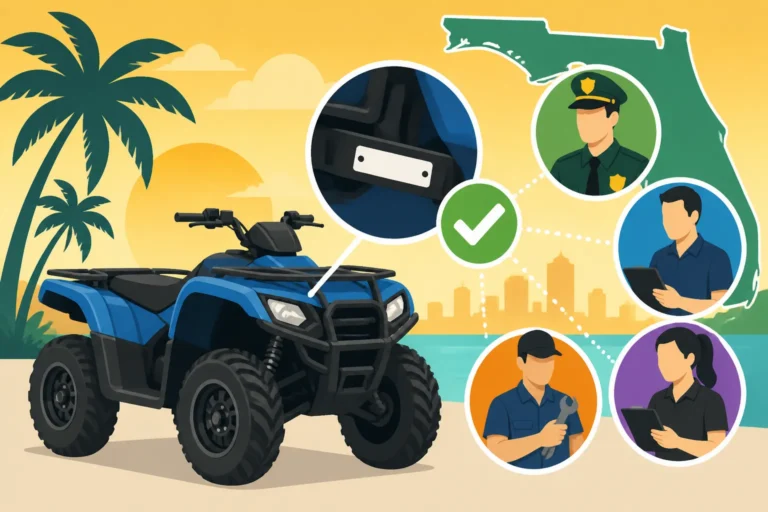
- VIN Verification: Ensuring the VIN on the machine matches your paperwork and isn't reported stolen. This usually requires a physical inspection by a law enforcement officer, a licensed dealer, or a notary public with specific certification. You can learn more about [Who Can Verify an ATV VIN in Florida?].
- Lien Search: Checking state and national databases for any existing liens or brands on the VIN.
- Contacting Previous Owners/Dealers: In some cases, they may attempt to contact the last recorded owner or dealer if that information is available in their system.
Based on this investigation and the fair market value of your ATV or UTV, the state will determine the required amount for your surety bond. The bond amount is usually 1.5 or 2 times the fair market value of the vehicle. So, if your quad is valued at $3,000, you might need a bond for $4,500 to $6,000. This amount isn't what you pay for the bond, but rather the maximum amount the bond company would pay out if a claim is made against it. The tax collector's office will give you an official letter or form stating the required bond amount once their investigation is complete.
Step Three: Purchasing the Surety Bond
With the required bond amount in hand, your next step is to actually purchase the surety bond. A surety bond is a contract among three parties:
- The Principal: That's you, the applicant for the bonded title.
- The Obligee: This is the State of Florida, requiring the bond.
- The Surety: This is the insurance company that issues the bond.
You won't pay the full bond amount. Instead, you'll pay a premium to the surety company, which is typically a small percentage of the total bond amount – often 1% to 5% or a minimum flat fee, depending on the bond amount and your creditworthiness. For example, if you need a $5,000 bond, you might pay a premium of $50 to $250.
You can find surety bond providers through a quick online search for "Florida title surety bond" or by asking your local tax collector for recommendations. Many insurance agencies also offer surety bonds. When contacting a surety company, be prepared to provide:
- The FLHSMV letter stating the required bond amount.
- Information about your ATV/UTV (make, model, VIN, year).
- Your personal information for a credit check (this affects your premium rate).
Once approved and you pay the premium, the surety company will issue the bond, usually in a specific format required by the FLHSMV. This document is crucial and must be included with your application. It acts as the financial guarantee that Florida needs to move forward with issuing your title.
Step Four: Submitting Your Application
With your surety bond secured and all your supporting documents organized, it’s time to formally submit your application for the bonded title.
You'll need to return to your local Florida Tax Collector's office with a complete package that typically includes:
- Florida Title Application Form: Often Form HSMV 82040, "Application for Certificate of Title With/Without Registration." Make sure it's filled out accurately and completely. Pay close attention to sections regarding the vehicle description and your applicant information.
- Original Surety Bond: The document issued by the surety company, in the exact amount specified by the state.
- Bill of Sale or Affidavit of Ownership: All the evidence you gathered in Step One.
- Proof of VIN Verification: The completed verification form (often HSMV 84682) by an authorized verifier.
- Fees: There will be various fees associated with the title application. This typically includes the [Florida ATV Title Application Fee vs Duplicate Fee], a service charge, and potentially sales tax if it hasn't been paid. Be prepared for the [Florida ATV Title Fee Breakdown: $29 Plus Service Charges], which includes the initial title fee and the [The $4.25 Service Charge on an OHV Title]. You’ll also be paying sales tax on the purchase price of the machine, unless you can prove it was already paid. For a private sale, Florida assesses 6% sales tax, which you pay at the time of titling. If you use a resource like LawDepot for a bill of sale, ensure it clearly outlines the purchase price to streamline the tax calculation.
Once submitted, the tax collector’s office will process your application. The processing time can vary, but generally, expect it to take a few weeks. You can inquire about [Florida ATV Title Application Processing Time] when you submit your paperwork. If everything is in order, you will eventually receive a "Certificate of Title With Bond" for your ATV or UTV.
Navigating the Challenges and What Comes Next
While getting a bonded title is a clear path to legal ownership, it's not always a perfectly smooth road. Being prepared for potential hiccups and understanding the long-term implications will save you stress.
Potential Roadblocks and Delays
Even with all your ducks in a row, the process can hit a snag. One common issue is insufficient proof of ownership. If your bill of sale is too vague, or if there's absolutely no other supporting evidence, the FLHSMV might deem your claim too weak to proceed with a bonded title. This is why gathering every scrap of paper and detail in Step One is so critical.
Another potential hurdle could be an existing lien or a reported stolen status on the VIN. The state's investigation in Step Two is designed to uncover these. If a lien is found, you might need to satisfy that lien before a bonded title can be issued, or at least have a clear plan for how it will be resolved. If the vehicle is reported stolen, you will likely lose possession of it, and a bonded title will not be an option. This is a tough pill to swallow but highlights why the state takes this process seriously.
Delays can also arise from administrative backlogs at the tax collector's office or with the FLHSMV. Ensure all forms are filled out meticulously; even a small error can send your application back for correction, adding weeks to the timeline. Double-check all VINs, names, and addresses. Your local office will be your best resource for specific questions, so don't hesitate to call them if you have concerns about your application's progress.
The Temporary Nature of a Bonded Title
It's important to understand that the initial "Certificate of Title With Bond" is not a permanent, clear title right away. In Florida, your surety bond typically remains in effect for three years from the date the bonded title was issued. During this three-year period, if anyone comes forward with a superior claim to the ATV or UTV – for instance, a legitimate previous owner with a lost title, or a lienholder whose interest was not satisfied – they can make a claim against your bond. If their claim is validated, the surety company would pay them out up to the bond amount.
However, if those three years pass without any claims being made against your bond, then your bonded title essentially "matures" into a standard, clear certificate of title. At this point, you typically don't need to do anything specific; the bond simply expires, and your title is now considered a regular, unencumbered title. You will not have to continue paying premiums to the surety company, and you won't receive a new paper title unless you specifically [Requesting a Paper Copy of an Electronic Title] for an updated version or if your original was [Florida ATV Title Lost or Damaged: Getting a Duplicate]. This transition from temporary to permanent is the ultimate goal and provides true peace of mind.
Selling an ATV/UTV with a Bonded Title
You can sell an ATV or UTV that has a bonded title, even within the three-year bond period. However, you must disclose to the buyer that the title is a bonded title. Transparency is key here. A bonded title is perfectly legal, but some buyers might be hesitant or misunderstand what it means. Be prepared to explain the process you went through and the security the bond provides.
When you sell the machine, you will endorse the bonded title over to the new owner, just like you would with a standard title. The new owner will then apply for a title transfer in their name. The original surety bond typically remains in effect for the full three years from its initial issue date, regardless of how many times the machine changes hands during that period. The liability for any claims against the bond typically rests with the original applicant (you), though the bond itself protects subsequent owners from claims against prior ownership. Therefore, clear communication and a well-documented bill of sale using templates from resources like LawDepot can prevent future headaches for both parties. Once the three-year period is up and the title becomes clear, selling the ATV or UTV becomes as straightforward as selling any other titled vehicle.
Standard vs. Bonded Florida ATV/UTV Title Requirements
| Feature | Standard Florida ATV/UTV Title | Bonded Florida ATV/UTV Title |
|---|---|---|
| Primary Proof | Original title, MSO, or out-of-state title. | Bill of sale, affidavits, old registrations, any other proof of ownership. |
| VIN Verification | Often required if out-of-state or new. | Always required. |
| Lien Search | Standard procedure. | Standard procedure, critical for bond amount. |
| Surety Bond | Not required. | Required, typically 1.5 to 2 times vehicle value. |
| Cost | Title fees, sales tax, service charges (e.g., [The $29 Initial Title Application Fee Explained]). | Title fees, sales tax, service charges, plus surety bond premium. |
| Processing Time | Generally faster, days to a few weeks. | Longer, involving investigation, bond acquisition, weeks to months. |
| Legal Status | Immediate clear, permanent ownership. | Temporary "Title with Bond" for 3 years, then becomes permanent. |
| Risk Protection | State relies on prior clear ownership. | Surety bond protects against prior claims or undisclosed liens. |
| Sale Implications | Straightforward title transfer. | Must disclose bonded title status to buyer during 3-year period. |
Disclaimer
This article is for general informational purposes only and does not constitute professional advice. Laws, prices and regulations vary by location and change over time. Consult a qualified professional for guidance on your specific situation.