Why 1,500 Pounds Dry Weight Is the ATV Ceiling
It can be incredibly confusing when you buy a new off-highway vehicle, or even a used one, and suddenly realize that what you thought was an ATV might not be classified as such by the State of Florida. Many riders hit a wall when their machine exceeds a specific dry weight, throwing a wrench into the titling process. This guide is here to clear up that frustration and explain exactly why Florida sets a 1,500-pound dry weight ceiling for what it considers an All-Terrain Vehicle (ATV) for titling purposes, and what that means for you.
Understanding Florida's ATV Definition by Dry Weight
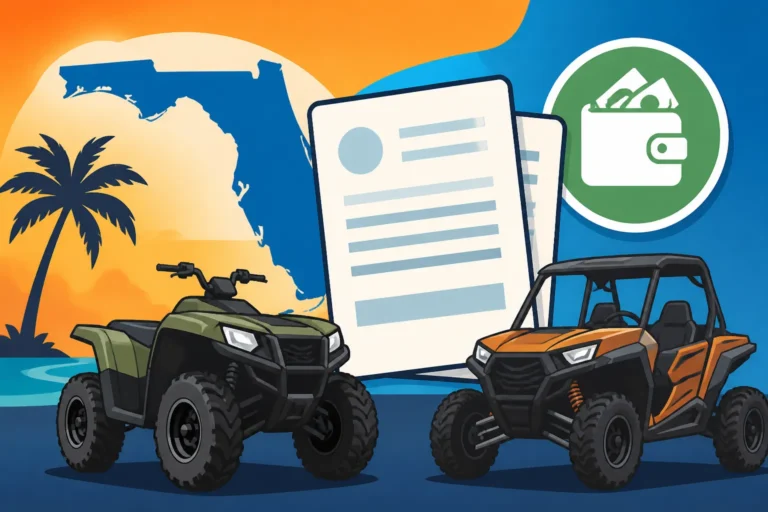
Florida's legal framework for off-highway vehicles (OHVs) is pretty specific, and it's designed to categorize these machines for titling, registration, and operational rules. When it comes to ATVs, one of the most crucial distinguishing factors is its dry weight. The state statute explicitly defines an ATV as a motorized off-highway vehicle 55 inches or less in width, having a dry weight of 1,500 pounds or less, designed to travel on three or more non-highway tires, and manufactured for recreational use by a single operator or a single operator and passenger. That 1,500-pound dry weight limit isn't just a suggestion; it's a hard cutoff.
For many new owners, especially those upgrading to larger, more powerful machines, this weight limit can come as a surprise. You might have always called your machine a "quad" or an "ATV," but if it tips the scales past that 1,500-pound mark (before you add fuel, oil, or any accessories), Florida considers it something else entirely. This distinction impacts everything from the forms you fill out at the tax collector's office to how your machine is officially identified on its title. It's not about what you call it in your garage, but what the state calls it on paper.
What 'Dry Weight' Really Means for Your Machine
The term "dry weight" is important here, and it's something many folks misunderstand. It doesn't mean the weight of your machine after you've ridden it through a mud bog and scraped off all the grime! In the context of vehicle manufacturing, dry weight refers to the weight of the vehicle as it leaves the factory, without any fluids like fuel, engine oil, coolant, or hydraulic fluid, and without any cargo, accessories, or riders. Think of it as the barebones weight of the machine itself.
Why does the state use dry weight? It provides a consistent, factory-spec measurement that isn't influenced by how much gas you just put in the tank or the aftermarket winch you bolted on. This makes it easier for manufacturers to classify their vehicles and for the state to enforce its definitions. You can usually find your machine's dry weight listed on its Manufacturer's Certificate of Origin (MSO) or in the owner's manual. When you're dealing with titling, especially if you're trying to figure out if your machine falls into the ATV category, checking the MSO is your first and most reliable step. [Reading a Manufacturer's Certificate of Origin] will give you all the details you need to locate this crucial information.
Other Defining Characteristics of an ATV
While dry weight is a major player, it's not the only thing that defines an ATV in Florida. The statute also specifies that an ATV must have three or four non-highway tires. This immediately rules out two-wheeled dirt bikes or motorcycles, which have their own titling process, as detailed in [Off-Highway Motorcycle Titles in Florida]. Additionally, ATVs are characterized by handlebars for steering and a straddle seat, meaning you sit astride the machine like you would a horse or a motorcycle, rather than sitting in it with a steering wheel and bucket seats.
These combined characteristics – the width, the dry weight, the number of wheels, and the seating/steering configuration – all work together to create the legal definition of an ATV. If your machine meets all these criteria, it's an ATV. If it misses even one, particularly the dry weight or width, it shifts into a different classification, which has significant implications for you as an owner.
The Critical Difference: ATV vs. ROV Titling
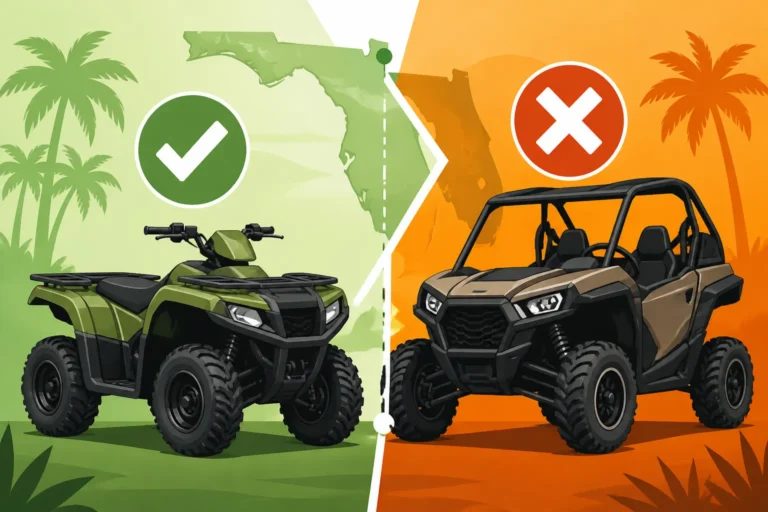
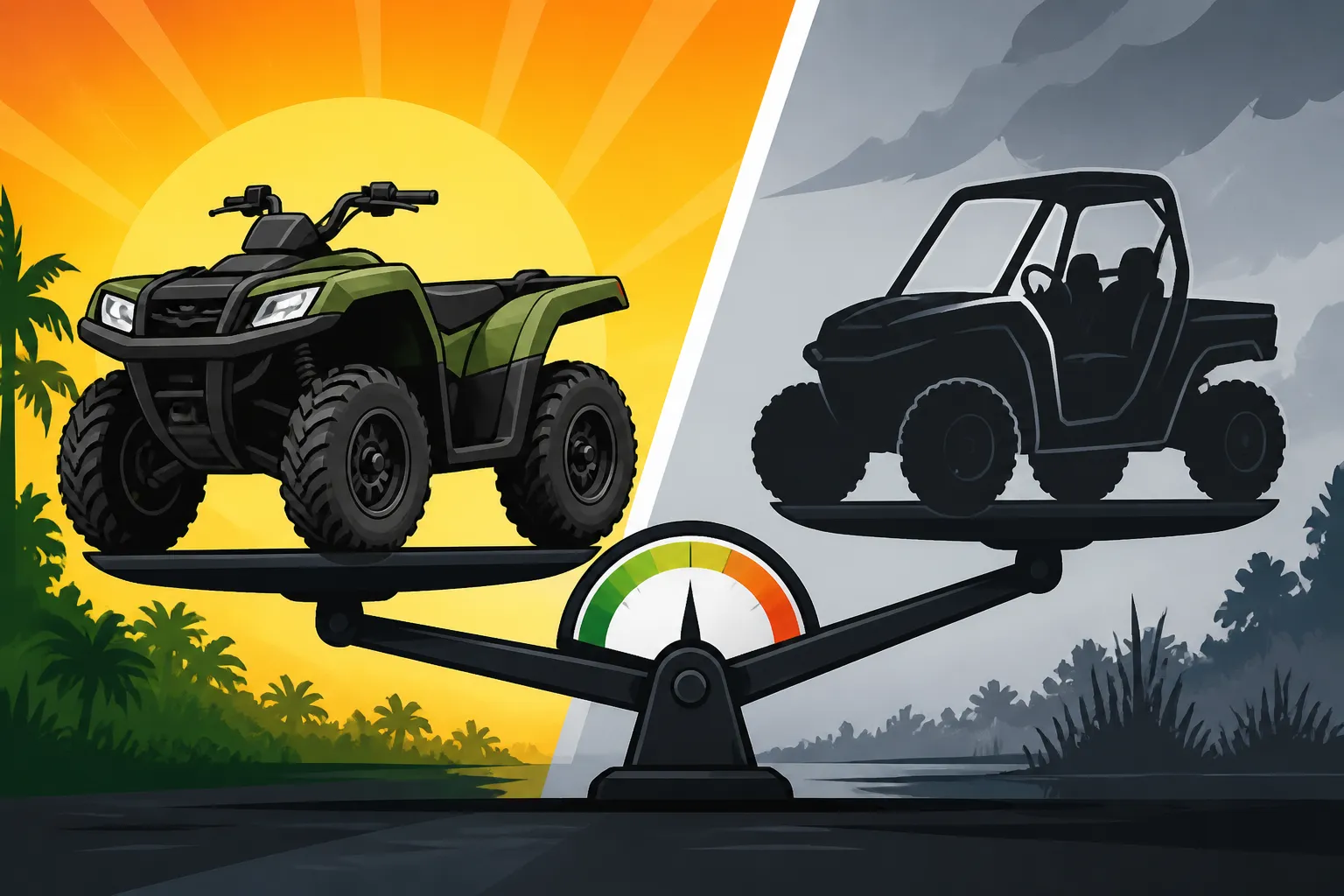
So, what happens if your machine, though you might call it an ATV, exceeds that 1,500-pound dry weight limit? In Florida, it’s no longer titled as an ATV. Instead, it typically falls into the category of a Recreational Off-Highway Vehicle (ROV), often referred to by common names like UTVs or side-by-sides. This reclassification isn't just a matter of semantics; it triggers different titling requirements and can impact certain aspects of ownership and operation.
The state has a separate legal definition for ROVs, which generally covers machines that are over 55 inches wide but not more than 80 inches wide, and have a dry weight of 1,500 pounds but not more than 3,500 pounds. They usually feature a steering wheel and non-straddle seating, often side-by-side (hence the common name!). This means that if your new beefy quad comes in at 1,600 pounds dry weight, even if it has handlebars and a straddle seat, it legally falls outside the ATV definition for titling. It’s a common point of confusion that causes headaches at the tax collector's office.
What Changes When Your Machine Is an ROV?
The biggest direct change for you as an owner when your machine is classified as an ROV instead of an ATV relates to the titling process itself. While both types of vehicles require an off-highway vehicle title in Florida, the specific application of rules and forms might vary slightly, and it clarifies which legal definition applies to your machine. [Florida's Off-Highway Vehicle Title Law Explained] dives deeper into the overall framework. The core fees for an initial title application are generally consistent, but understanding the classification ensures you're applying for the correct type of OHV title.
Beyond titling, while both ATVs and ROVs are considered off-highway vehicles, there can be subtle differences in their operational rules on specific public lands or designated trails. For example, some trail systems might have width restrictions that impact wider ROVs more than narrower ATVs. It's always crucial to check the specific rules of any riding area you plan to visit. Understanding your machine's exact classification prevents misunderstandings and ensures you comply with all state and local regulations, whether you’re riding at Croom or in the Ocala National Forest.
The 3,500-Pound Dry Weight Ceiling for ROVs
Just as ATVs have a 1,500-pound dry weight ceiling, ROVs have their own limit: 3,500 pounds. This is explored further in [Florida ROV Definition: 80 Inches and 3,500 Pounds]. If your side-by-side or UTV exceeds this 3,500-pound dry weight, it then moves into yet another category, potentially impacting its titling and classification even further, sometimes requiring different forms or even more scrutiny. Florida's system is very precise, aiming to classify every type of off-highway vehicle based on its physical attributes. Knowing these ceilings ensures you file the correct paperwork from day one.
Navigating the Titling Process with Weight in Mind
When you’re ready to title your off-highway vehicle in Florida, understanding its exact classification based on factors like dry weight and width is paramount. Showing up at the tax collector's office with a machine you think is an ATV, only to be told it's actually an ROV, can be frustrating and cause delays. It's much better to be prepared and know exactly what you're dealing with.
The good news is that for most recreational off-highway vehicles – whether they're legally classified as ATVs or ROVs – the titling process generally follows a similar path. You'll need proof of ownership, such as a Manufacturer's Certificate of Origin (MSO) for a new machine, or a properly endorsed title from the previous owner for a used one. A bill of sale is also a crucial document, especially for private sales. Resources like LawDepot can help you generate a robust bill of sale or other legal documents if you're buying or selling privately, ensuring you have all the necessary information covered. Just remember, a bill of sale proves the transaction, but the MSO or previous title provides the official vehicle details the state needs for classification.
Essential Documents and Information
When you head to your local Florida county tax collector's office – whether it’s in Putnam County or Marion County – you'll need a few key pieces of paperwork. For any new OHV, the Manufacturer’s Certificate of Origin (MSO) is vital. This document contains the vehicle's dry weight, width, VIN, and other factory specifications that the state uses to determine its classification. If you're buying a used machine, you'll need the seller's original, properly signed-over title. A complete [Florida ATV Bill of Sale: What It Needs to Say] is also essential, detailing the transaction and identifying both parties and the vehicle.
Beyond these, you'll fill out a Florida title application form, often HSMV 82040. This form will ask for detailed information about your vehicle, including its type, make, model, year, and of course, its VIN. This is where the dry weight and width come into play, as the tax collector's staff will cross-reference this information with state statutes to ensure your machine is correctly classified and titled. Don't worry if it sounds like a lot; the staff are generally very helpful in guiding you through the process, but coming prepared saves a lot of time and potential re-visits. [Florida's ATV Title Application Explained] can walk you through the form line by line.
What if My Machine Falls Between the Cracks?
Sometimes, you might encounter a machine that seems to defy easy classification. Perhaps it's an older model, or a custom build, or a specific brand has a unique design. For example, some specialized agricultural side-by-sides might have unique characteristics that place them outside the typical recreational definitions. In these rare cases, the best course of action is to contact your local Florida Department of Highway Safety and Motor Vehicles (FLHSMV) office or your county tax collector directly. They have the final say on classification and can advise you on the specific documentation required. They might ask for manufacturer specifications, or in some cases, even require a physical inspection of the vehicle, particularly for [Titling a Homemade or Rebuilt ATV in Florida].
Using resources for legal document creation, like a general power of attorney or affidavit, if needed, from platforms such as LawDepot, can be useful for other aspects of vehicle ownership or sale, but for classification specifics, always defer to the official state agencies and manufacturer documentation. Ultimately, knowing that 1,500-pound dry weight ceiling for ATVs is your key to understanding how your machine will be legally identified in Florida, ensuring a smooth path to getting it titled and ready for the trails.
Comparing ATV, ROV, and Other OHV Classes in Florida
Florida's system for categorizing off-highway vehicles can feel like navigating a maze, especially with the different terms used by manufacturers versus those used in state law. The 1,500-pound dry weight ceiling is a primary divider, but it's helpful to see how ATVs compare to ROVs and other vehicle types in a broader context. This helps you understand not just why your ATV is an ATV (or isn't), but also how other machines fit into the picture.
Understanding these distinctions is crucial because each classification can have different rules regarding titling, where you can ride, and even who can operate the vehicle. For example, the age restrictions for minors riding ATVs on public lands are very specific, and similar, but not identical, rules apply to ROVs. When you grasp the definitions, you can ensure compliance and avoid unexpected issues.
Key Classification Differences
Let's break down the main categories and their defining characteristics, with a focus on how weight and width play a role:
| Feature | All-Terrain Vehicle (ATV) | Recreational Off-Highway Vehicle (ROV) / UTV | Golf Cart / Low-Speed Vehicle (LSV) | Off-Highway Motorcycle / Dirt Bike |
|---|---|---|---|---|
| Wheels | 3 or 4 | 4 or more | 3 or 4 | 2 |
| Steering | Handlebars | Steering Wheel | Steering Wheel | Handlebars |
| Seating | Straddle seat (rider sits astride) | Non-straddle (side-by-side bench/bucket seats) | Non-straddle (bench/bucket seats) | Straddle seat |
| Max Width | 55 inches | 80 inches (for ROVs) | 80 inches (for Golf Carts) | Not specified by width, typically narrow |
| Max Dry Weight | 1,500 pounds | 3,500 pounds (for ROVs) | Not specified by weight (for Golf Carts) | Not specified by weight, typically lighter |
| Purpose | Recreational, off-road | Recreational, utility, off-road | Recreational, short-distance road travel | Recreational, off-road, racing |
| Titling | Required as an Off-Highway Vehicle (OHV) | Required as an Off-Highway Vehicle (OHV) | Not titled as OHV (LSV title required) | Required as an Off-Highway Vehicle (OHV) |
| Road Use | Highly restricted to specific unpaved roads | Highly restricted to specific unpaved roads | Limited to specific roads, lower speed limits | Highly restricted to specific unpaved roads |
This table clearly illustrates how Florida uses dry weight and width as primary differentiators. Your traditional "quad" is an ATV, but once it gets wider than 55 inches or heavier than 1,500 pounds dry, it officially shifts into the ROV category for titling purposes, even if it has handlebars (though most ROVs use steering wheels). This means the specific statute that applies to your vehicle will change, affecting how it's registered and the particular rules you must follow. For more on the width aspect, check out [Florida's 55-Inch ATV Definition and Why It Matters].
The Impact on Owners
For you, the owner, these distinctions primarily affect the initial titling process and, by extension, how your machine is recognized by law enforcement and land management agencies. If you present paperwork for an ATV when your machine is legally an ROV, you'll be asked to correct it. This isn't just bureaucratic red tape; it's about ensuring safety and accountability for different types of vehicles that have varying characteristics and operational risks.
Knowing your vehicle's correct classification from the start means you can confidently complete your [Florida ATV Title Application Explained], anticipate any specific requirements, and avoid delays. It also empowers you to understand the specific regulations that apply to your machine, whether it's regarding public land access, passenger limits ([Florida ATV Passenger Rules]), or even specific safety gear recommendations. This understanding helps ensure you're a responsible and compliant rider, ready to hit the trails legally and safely.
Final Thoughts for Florida Off-Highway Vehicle Owners
Navigating the rules for off-highway vehicles in Florida can certainly have its moments of confusion, and the 1,500-pound dry weight ceiling for ATVs is a perfect example of a detail that can trip up even experienced riders. But by understanding this specific definition, you're well on your way to ensuring your machine is properly titled and that you're in compliance with all state regulations. It's not about making things complicated; it's about making sure the right vehicle is in the right category for everyone's safety and enjoyment of Florida's incredible trails.
Always remember that official documents like the Manufacturer's Certificate of Origin (MSO) are your best friends when it comes to verifying your vehicle's specifications. If you’re ever in doubt, the professionals at your local Florida tax collector’s office are there to help guide you through the process, as outlined in [What a Florida Tax Collector Asks For]. Having your ducks in a row – the MSO, a proper bill of sale (which you can generate using resources like LawDepot if needed), and a clear understanding of your vehicle’s weight and width – will make the titling process as smooth as a fresh-groomed trail. Happy riding!
Disclaimer
This article is for general informational purposes only and does not constitute professional advice. Laws, prices and regulations vary by location and change over time. Consult a qualified professional for guidance on your specific situation.