Penalties for Operating Untitled on Public Land
It’s a scenario many of us in Florida have considered, or perhaps even found ourselves in: you’ve got a quad or side-by-side, you love hitting the trails, but maybe you haven’t quite gotten around to titling it. Perhaps you bought it used from a buddy or just never thought it was a big deal. However, if you plan on taking that machine onto public land here in the Sunshine State, you absolutely need to understand the serious penalties that come with operating an untitled ATV or UTV. This guide will walk you through exactly what those consequences are, why the state takes it so seriously, and why getting that title sorted is always your best bet.
Understanding Florida's ATV Titling Requirement
Navigating the rules for ATVs and UTVs in Florida can sometimes feel like trying to find your way through a particularly dense palmetto thicket. There are specific guidelines for just about everything, from where you can ride to how your machine needs to be registered. One of the most fundamental, and often misunderstood, requirements centers around titling your off-highway vehicle (OHV). Many folks assume if they're not riding on paved roads, they don't need all the "official" paperwork. But when it comes to public lands, that assumption can lead to a world of trouble.
What "Public Land" Really Means for Riders
In Florida, "public land" isn't just state parks or national forests. It can encompass a wide range of areas, including designated OHV trails within state forests like Croom Motorcycle Area or Ocala National Forest, or even certain county-managed recreational areas. The key distinction is that these lands are owned or managed by a governmental entity – federal, state, or local – and are generally open to the public for various activities, including off-road riding. This is distinctly different from a friend's private hunting lease, your own back forty, or a commercial mud park that operates on private property. The state's interest in public land is about safety, accountability, and proper management, and that's where titling comes in. If you're pondering [Riding Public Land as the Trigger for a Title], know that it's a very real and important distinction.
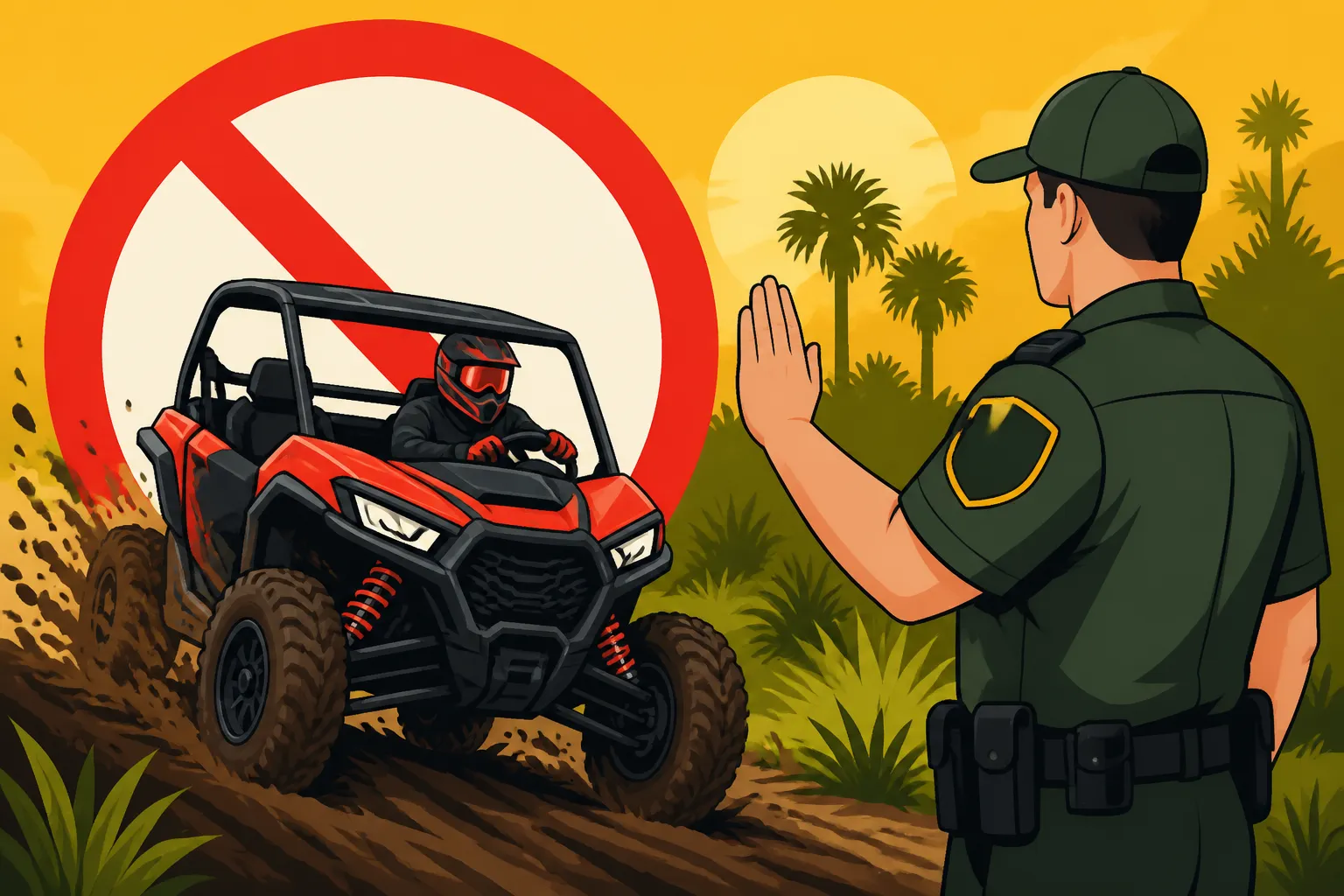
When you're riding on public trails, you're interacting with a system designed to protect both riders and the environment. This system includes regulations about permits, safety gear, and yes, proper documentation for your machine. It’s not just a suggestion; it’s a legal framework put in place by Florida Statute. The reason this distinction is so crucial is that law enforcement, whether it's a Florida Fish and Wildlife Conservation Commission (FWC) officer, a county sheriff's deputy, or a park ranger, has jurisdiction on these public lands and the authority to enforce these state laws. They aren't just looking for speeders; they're checking for compliance with all OHV regulations, including whether your vehicle is properly titled.
The Core Purpose of an OHV Title
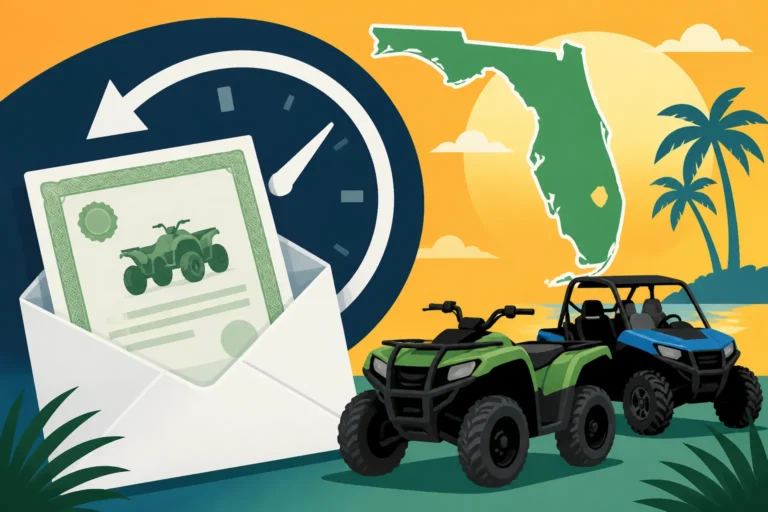
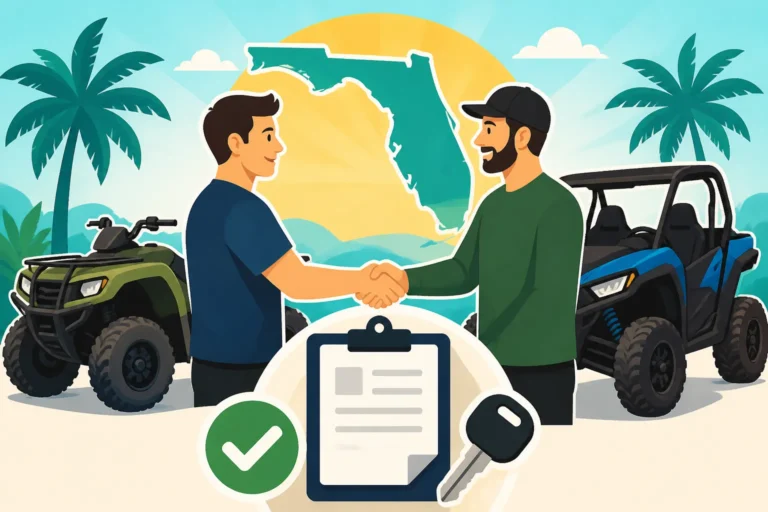
An OHV title in Florida serves several vital purposes, much like a title for a car, truck, or boat. First and foremost, it establishes legal ownership. This is critical for preventing theft and for proving that the machine you're riding actually belongs to you. Imagine if your quad goes missing from your campsite; without a title, proving it's yours to law enforcement or an insurance company becomes incredibly difficult, if not impossible. The title is the official document that says, unequivocally, "This machine belongs to this person." Understanding [Florida's Off-Highway Title Rules in Plain English] can clarify this further.
Beyond ownership, the title plays a role in tracking vehicles for safety and environmental reasons. While ATVs and UTVs don't typically get license plates for road use, the title creates a unique record for each machine. This record can be important in cases of recall, accident investigation, or even when tracking down machines used in illegal activities. It also provides a clear chain of custody when a machine changes hands, protecting both buyers and sellers from potential disputes or legal issues down the line. It's a foundational piece of paperwork that underpins the legality of your machine's existence within the state's official records.
The Specific Penalties You Could Face
Alright, let's get down to the nitty-gritty: what happens if you're caught riding an untitled ATV or UTV on public land in Florida? It's not just a gentle reminder to get your paperwork in order. The penalties can range from a hefty fine to the temporary, or even permanent, loss of your machine. It's a situation you absolutely want to avoid, as the repercussions can be both financially painful and a major hassle.
Fines and Citations: What to Expect
The most immediate consequence of operating an untitled ATV or UTV on public land is typically a civil infraction, which results in a citation and a fine. While I can't give you exact dollar amounts, these fines are generally comparable to other non-moving traffic violations. They're not insignificant, often running into the hundreds of dollars, and can quickly stack up if there are other violations discovered during the stop (like not having a spark arrestor, riding in a closed area, or a minor not wearing a helmet). An officer might issue a warning, but that's entirely at their discretion; you should always be prepared for the full enforcement of the law.
Think about the expense: if you're hit with a fine, that money could have easily gone towards the actual titling fees, safety equipment, or even some well-deserved upgrades for your machine. Plus, the time spent dealing with a citation – whether it's paying the fine or potentially appearing in court to contest it – is time you could have spent enjoying the trails. It's a clear instance where a bit of proactive paperwork, such as understanding [The $29 Initial Title Application Fee Explained], could save you a lot more money and stress in the long run.
Potential for Impoundment: A Real Headache
This is where things can get seriously inconvenient and expensive. Depending on the specific circumstances and the discretion of the enforcing officer, your untitled ATV or UTV could be impounded. This means your machine is loaded up and hauled away, often to a county impound lot or a tow yard. Getting it back isn't a simple matter of walking in and asking for it. You'll likely need to first prove ownership (which is difficult without a title!), pay any outstanding fines from the citation, and then pay the towing and storage fees, which can accumulate rapidly. These fees alone can quickly climb into hundreds, even thousands, of dollars, making the initial fine seem minor by comparison.
The process of recovering an impounded vehicle is a bureaucratic maze. You might have to jump through hoops to secure a title, which involves its own set of requirements and timeframes, especially if you're missing previous ownership documents like a Manufacturer's Certificate of Origin (MSO) or a bill of sale. Sometimes, if the machine was purchased from a private seller without proper documentation, you might even have to pursue a bonded title, adding further cost and complexity. If you've ever dealt with [Buying a Quad With No Title From a Neighbor], you know the challenges this can present. The impoundment scenario isn't just about the money; it's about the significant disruption to your plans and the potential for a really sour memory of your riding trip.
Other Legal Ramifications and Your Record
Beyond fines and impoundment, there can be other, less immediate, but equally impactful legal ramifications. While operating an untitled OHV is generally a civil infraction, repeated offenses or combination with more serious violations could escalate the situation. For instance, if the machine is found to be stolen, or if you're involved in an accident on public land with an untitled vehicle, the legal consequences become much more severe, potentially involving criminal charges. Even if it's "just" an untitled machine, it reflects poorly on your compliance with state laws and could potentially impact your record, especially if you have other traffic or legal issues.
Furthermore, an untitled machine makes proving legal ownership a nightmare if it's ever stolen. Without that piece of paper, [Reporting a Stolen Quad With Title in Hand] is impossible because you don't have a title. This severely hinders law enforcement's ability to help you recover your property and complicates any insurance claims. While Florida doesn't require ATV insurance for titling, having a title provides that official proof of ownership that insurance companies and law enforcement rely on. It’s about more than just avoiding a ticket; it's about establishing your legal standing as an owner and a responsible citizen.
Why Risking It Isn't Worth It
At the end of the day, the temptation to skip the titling process might seem appealing to some. It's an extra step, an extra fee, and sometimes finding all the right paperwork can feel like a chore. However, the potential headaches, financial burdens, and legal troubles that come with operating an untitled ATV or UTV on Florida's public lands far outweigh any perceived convenience or savings. It truly is one of those situations where an ounce of prevention is worth a pound of cure.
Protecting Your Investment with a Title
Your ATV or UTV is an investment, plain and simple. Whether it cost you a few thousand dollars or tens of thousands, it represents a significant purchase. A title is the most fundamental way to protect that investment. Without it, your ownership is flimsy at best. If you ever need to sell the machine, a clear title makes the transaction smooth and legitimate. Buyers are, rightly so, wary of untitled machines because they understand the risks involved for them. A clean title ensures you can get fair market value and avoid suspicion. When you're ready to sell, a document like a bill of sale, which you can often find templates for on sites like LawDepot, combined with a clear title, provides a rock-solid foundation for the transaction. This also ties into [Florida ATV Title Transfer After a Private Sale].
Moreover, in any dispute over ownership – perhaps a claim by a previous owner or a family squabble – the title is the definitive proof of who legally owns the machine. It removes ambiguity and protects you from potential legal battles that could arise from a murky ownership history. Think of it as a deed to your vehicle; you wouldn't buy a house without one, so why treat your substantial ATV investment any differently?
Future Hassles Without Proper Paperwork
Life throws curveballs, and sometimes those curveballs involve your off-road machine. Imagine needing to move out of state and re-titling your ATV, or trying to secure financing using your quad as collateral. Without a proper Florida title, these tasks become exponentially more difficult, if not impossible. Each administrative hurdle you face will likely require you to go back and get that initial title anyway, but by then you'll be doing it under pressure and possibly facing additional fees or requirements.
The state provides clear guidance on [Florida's ATV Title Application Explained] precisely to make this process as straightforward as possible. Procrastinating only digs a deeper hole for future you. It's far better to handle it upfront, ensuring your machine is legally recognized and ready for whatever adventures – or administrative tasks – come your way. This avoids the stress of chasing down paperwork or dealing with complicated legal issues when you least expect it.
The Importance of Responsible Riding
Beyond the legal and financial aspects, having your ATV or UTV properly titled is a part of being a responsible rider. It demonstrates that you respect the laws put in place to manage our public lands and ensure the safety and enjoyment of all users. When you ride responsibly, with all your paperwork in order, you contribute positively to the off-road riding community and help preserve access to the trails we all love.
Unlicensed and untitled machines can cast a shadow on the entire OHV community, potentially leading to stricter regulations or reduced access if problems become widespread. By adhering to the titling requirements, you're doing your part to ensure that these incredible outdoor experiences remain available for everyone. So, take the time, gather your documents – perhaps starting with a robust bill of sale from a reputable source like LawDepot if you bought it privately – and get your ATV or UTV titled. It’s a small step that pays huge dividends in peace of mind and hassle-free riding on Florida's beautiful public lands.
| Violation Type | Potential Consequences | Ease of Resolution (if caught) |
|---|---|---|
| Operating Untitled OHV on Public Land | Civil Infraction, Monetary Fine | Relatively straightforward (pay fine) |
| Subsequent Untitled OHV Offenses | Increased Fines, Potential Impoundment | Difficult (fines + towing/storage) |
| No Proof of Ownership (Untitled) | Impoundment, Difficulty Recovering Machine | Very Difficult (prove ownership, title) |
| Involved in Accident (Untitled) | Increased Legal Liability, Insurance Complications | Extremely Difficult (legal costs, claims) |
| Machine Reported Stolen (Untitled) | Near Impossible to Prove Ownership or Recover | Nearly Impossible (no official record) |
Disclaimer
This article is for general informational purposes only and does not constitute professional advice. Laws, prices and regulations vary by location and change over time. Consult a qualified professional for guidance on your specific situation.