Does Florida Require ATV Insurance for Road Use?
Navigating the rules and regulations for ATVs and UTVs in Florida can feel like trying to ride through a thick patch of palmettos – confusing, full of hidden snags, and easy to get turned around. Many riders wonder if they need special insurance when their quad briefly touches a public road, and the answer isn't as straightforward as it is for cars. This guide will cut through the legal underbrush, helping you understand Florida's unique stance on ATV insurance for those moments your machine rolls onto an unpaved road or crosses a highway.
Understanding Florida's ATV Road Use Rules (and Why It's Tricky)
Florida's relationship with ATVs on public roads is, shall we say, complicated. Unlike many states that have a blanket ban or very clear street-legal conversion paths, Florida operates on a system of specific exceptions and local control. This unique approach often leaves riders scratching their heads, especially when it comes to something as crucial as insurance.
The Fundamental "Off-Highway" Designation
At its core, an All-Terrain Vehicle (ATV) in Florida is classified as an "off-highway vehicle." This designation is key because it dictates its primary purpose: riding off the paved road. These machines are engineered for dirt, mud, sand, and challenging trails, not asphalt highways or city streets. Because of this fundamental classification, the general rule is that ATVs are not permitted on public paved roads, streets, or highways.
This isn't just about what the manufacturer intended; it's deeply ingrained in Florida law. ATVs typically lack many of the safety features required for road-going vehicles, like turn signals, specific headlight and taillight configurations, and often, even proper mirrors for seeing traffic behind you. The very design that makes them so capable off-road – their suspension, tires, and open chassis – also makes them unsuitable and unsafe for mixing with cars and trucks at higher speeds on pavement. This is why you'll often hear deputies explain that an ATV isn't a car, and therefore, shouldn't be treated like one on the road.
Limited Exceptions for Road Use: When it Might Matter
While the general rule is "no public roads," Florida statutes do carve out a few very specific, narrow exceptions where an ATV can legally operate on or across public ways. It's crucial to understand these distinctions, as they are the only scenarios where "road use" even enters the conversation, let alone insurance requirements.
First, Florida allows ATVs on unpaved roads maintained by a county or municipality where the posted speed limit is 35 mph or less. However, this isn't a free pass for every dirt road in the state. Counties have the power to "opt out" and prohibit ATVs on all their unpaved roads, or conversely, to specifically designate certain unpaved roads where ATVs are allowed. This means that what's legal in one county, say Osceola, might be strictly forbidden just over the line in Orange. You can ride your ATV to your favorite fishing spot down a sandy track in one area, but in another, that same type of road could get you a ticket. Knowing your local county ordinances is paramount; don't assume. To learn more, check out [Florida Counties That Designated ATV Roads] and [Florida ATV Road Rules by County].
Beyond unpaved roads, ATVs are generally permitted to cross a paved public road, street, or highway, but only at a right angle and only if the crossing can be made safely and without unduly interfering with vehicular traffic. This is for getting from one trail segment to another, or from private land to an approved riding area, not for traveling along the road. Additionally, there are exceptions for ATVs used for agricultural purposes or by utility workers, but these are tied to specific tasks and locations, not general recreational riding. You can also explore [Florida ATV Road Rules: Where You Can Legally Ride] for further insights.
How "Street Legal" Conversions Factor In (or Don't)
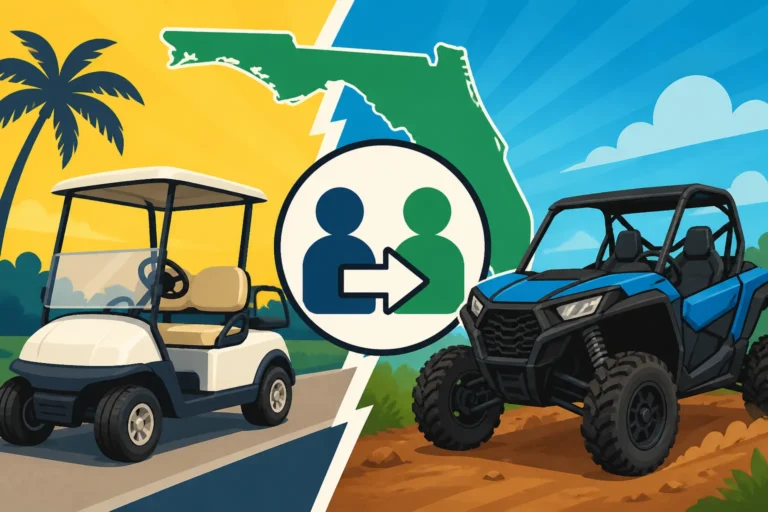
This is a common point of confusion for riders, especially with the rise of UTVs and side-by-sides. Many people wonder if they can simply add a few lights and mirrors to their ATV and call it "street legal" in Florida. For traditional ATVs, the answer is almost universally no. Florida law does not provide a practical pathway to register a typical ATV as a street-legal vehicle like a car or motorcycle. The state has specific classifications for Low-Speed Vehicles (LSVs) and has very clear rules about what constitutes an LSV, which often includes maximum speed limits, specific safety features, and often, a different vehicle class than a typical recreational ATV.
Some UTVs, particularly those designed to be wider and heavier, can sometimes be modified to meet the requirements of an LSV, but this is a complex and often costly process that requires specific equipment and certification. Even then, an LSV has severe restrictions on where and how fast it can operate. It's not a true "street legal" conversion in the sense of being able to cruise down any highway. For the vast majority of ATVs, even adding turn signals or a horn does not change their fundamental "off-highway" classification under Florida law.
Instead, many aftermarket parts often marketed by companies like SuperATV focus on enhancing the ATV's performance, safety, and durability for off-road use or to ensure compliance for riding within designated trail systems. For example, upgrading to brighter LED headlights or a robust set of mirrors can significantly improve visibility and safety on trails, or when making a legal road crossing, but these additions don't magically transform your ATV into a street-legal vehicle.
Does Florida Law Mandate ATV Insurance for Public Road Use?
Now for the million-dollar question: if you are legally permitted to operate your ATV on a designated unpaved road or across a paved one, does Florida require you to carry insurance specifically for that road use?
The Short Answer: No Specific Statewide Mandate for ATVs
Here's the often surprising truth for many riders: Florida does not have a statewide law specifically mandating liability insurance for ATVs operating in the limited scenarios where road use is permitted. This stands in stark contrast to automobiles, where Florida's financial responsibility law requires drivers to carry Personal Injury Protection (PIP) and Property Damage Liability (PDL) coverage.
Because ATVs are generally not considered "motor vehicles" in the same vein as cars for this type of broad road use, those specific insurance mandates typically don't apply to them. So, if you're riding your quad on a designated county dirt road where it's explicitly allowed, the state isn't going to pull you over and ask for proof of insurance in the same way they would if you were driving your truck. This might sound like a relief, but it's important not to confuse the absence of a mandate with the absence of risk.
Why Insurance is Still Crucial (Even Without a Mandate)
Even though Florida doesn't legally require you to carry ATV insurance for road use, riding without it is an incredibly risky gamble. The moment your ATV touches a public road, even legally, you are subject to the same potential for accidents and liabilities as any other vehicle operator.
Imagine this scenario: you're legally crossing a paved road to get from one section of trail to another. You misjudge the speed of an oncoming car, or perhaps another driver is distracted, and a collision occurs. Your ATV might only suffer minor damage, but the car could be totaled, and its occupants injured. Without insurance, you are personally responsible for all damages, medical bills, and potential legal fees. This could easily amount to tens, if not hundreds, of thousands of dollars, putting your home, savings, and future earnings at severe risk.
Furthermore, even if the accident is not your fault, dealing with the aftermath without your own insurance company to advocate for you can be a nightmare. A good ATV insurance policy provides a crucial safety net, protecting your financial well-being and giving you peace of mind that an unexpected incident won't derail your life. It's truly a case where being proactive can save you immense stress and financial hardship.
When Other Laws Might Indirectly Require Coverage
While no direct state mandate exists for ATV insurance on Florida roads, there are certainly situations where you'll find yourself needing coverage, often due to third-party requirements.
The most common scenario is when you finance your ATV. If you've taken out a loan from a bank or credit union to purchase your quad, they will almost certainly require you to carry comprehensive and collision insurance on the machine. This protects their investment in case of theft or damage. Even if you only ride on private land, if you have a lienholder, they'll want that machine insured.
Beyond financing, some private riding parks or organized events might require participants to show proof of liability insurance before entering. While this isn't a state law, it's a condition of access. Similarly, if you have an agreement to ride on private land that isn't your own, the landowner might stipulate that you carry insurance to protect them from liability in case of an accident on their property. Finally, if you're a new resident and are still sorting out your vehicle titling, you'll find that [Florida's Off-Highway Title Law Explained] primarily focuses on ownership, not insurance requirements for road use, but having insurance in place during any transition is always wise.
Types of Insurance to Consider for Your Florida ATV
Given that carrying insurance for your ATV is a smart move, even if not always legally mandated for limited road use, understanding your options is essential. Not all insurance is created equal, and what's right for a car often isn't comprehensive enough for an off-road machine.
Dedicated Off-Road Vehicle ORV Policies
The gold standard for ATV and UTV protection is a dedicated Off-Road Vehicle (ORV) insurance policy. These policies are specifically designed to cover the unique risks associated with off-road riding, but they can also extend to those moments your ATV legally touches a public road.
- Liability Coverage: This is perhaps the most critical component. It protects you financially if you're at fault in an accident that causes bodily injury or property damage to others. If you hit another vehicle while crossing a road or accidentally damage someone's fence on an unpaved county road, this coverage helps pay for those expenses, up to your policy limits.
- Collision Coverage: This covers the cost of repairing or replacing your ATV if it's damaged in a collision with another vehicle or object, regardless of who is at fault. Whether you hit a tree on the trail or get T-boned during a legal road crossing, collision coverage helps protect your investment.
- Comprehensive Coverage: This protects your ATV from non-collision damages, such as theft, vandalism, fire, or damage from natural disasters (think a Florida hurricane!). If your quad is stolen from your garage or gets caught in a brush fire, comprehensive coverage steps in.
- Uninsured/Underinsured Motorist (UM/UIM) Coverage: While not always available for ATVs, if you can get it, UM/UIM coverage protects you if you're involved in an accident with another motorist who either doesn't have insurance or doesn't have enough to cover your damages. This is especially valuable if you have to interact with other vehicles on public roads.
Many ORV policies also offer additional options like coverage for custom parts and accessories (important if you've invested in aftermarket upgrades like those from SuperATV), roadside assistance, and even coverage for your helmet and gear. When choosing a policy, be explicit with your insurance agent about how and where you plan to ride, including any legal road use, so they can tailor the coverage appropriately.
Homeowner's or Renter's Insurance Endorsements
You might be tempted to think your homeowner's or renter's insurance policy offers enough protection for your ATV, and in some very limited circumstances, it might provide a sliver of coverage. However, relying solely on these policies is often a dangerous gamble.
Most homeowner's or renter's policies are designed to cover personal property while it's on your premises. If your ATV is stolen from your garage, there might be some coverage for its value. However, the moment you take your ATV off your property, even to a public riding area or for a legal road crossing, the coverage often becomes extremely limited or vanishes altogether.
Crucially, homeowner's policies typically have very low limits for liability coverage related to recreational vehicles, and they often explicitly exclude liability for accidents that occur off your property or on public roads. So, if you cause an accident with another vehicle on a county road, your homeowner's policy is unlikely to cover the damages or legal costs, leaving you personally exposed.
While a homeowner's policy might offer a tiny umbrella, it's far from the robust storm shelter a dedicated ORV policy provides. For real peace of mind and comprehensive protection, especially when your ATV ventures anywhere near a public way, a specialized ATV policy is the way to go.
Comparing Coverage Options: What to Look For
When you're shopping for ATV insurance, it's important to compare quotes and understand what each policy offers. Don't just look at the premium; delve into the details of the coverage.
Here's a quick guide on what to ask and compare:
| Feature | Dedicated ORV Policy | Homeowner's/Renter's Endorsement (Typically) |
|---|---|---|
| Liability for Accidents | Broad coverage for injury/damage to others, on- or off-road, including legal road use. | Very limited or excluded for off-property accidents or road use. |
| Collision (Your ATV) | Covers damage to your ATV in an accident, on- or off-road. | Generally excluded for vehicle damage. |
| Comprehensive (Your ATV) | Covers theft, fire, vandalism, natural disasters. | Limited to theft/damage on your property; often specific vehicle exclusions. |
| Medical Payments | Often an option for rider/passenger injuries. | Unlikely to cover ATV-related injuries. |
| Custom Parts/Accessories | Option to include coverage for aftermarket upgrades. | Very unlikely to cover these specific items. |
| Roadside Assistance | Often available as an add-on. | Not typically offered for vehicles. |
| Deductibles | Customizable, often lower for major claims. | Might be high and not specific to vehicle claims. |
When speaking with insurance providers, be sure to clarify:
- Does the policy cover legal operation on unpaved county roads?
- Am I covered for crossing paved public roads?
- What are the liability limits, and are they sufficient for potential accidents involving other vehicles?
- Does it cover passengers? (Important if you have a two-rider quad; see [Florida Two-Rider ATV Titling Rules] for more on this.)
- Does it cover any custom modifications or expensive accessories you've added? (Many riders invest significantly in upgrades, from winches to specialized lighting, and you'll want those protected.)
Navigating Road Use Safely and Legally in Florida
Knowing the insurance landscape is one thing, but actually putting your tires on a Florida road requires adherence to very specific rules. Staying safe and legal is your best defense against potential trouble, insurance or not.
Know Your Local County Ordinances
This cannot be stressed enough: Florida's ATV road use laws are heavily influenced by local county ordinances. What's perfectly fine in one county might earn you a hefty fine and a stern lecture in the next. Even if state law allows ATVs on certain unpaved roads, your specific county might have exercised its right to "opt out" and prohibit all ATV use on its public roadways.
Before you even think about taking your quad from your property to that enticing dirt road down the street, do your homework. Check with your local county sheriff's office or the county's official website for their specific ATV regulations. Some counties have gone through a public hearing process to designate specific roads where ATVs are allowed, usually with speed restrictions and daytime-only rules. Others have a blanket ban. Don't assume that because your neighbor rides his quad down the county road, it's legal for you. You are responsible for knowing the rules where you ride. For instance, [Hernando County Roads Open to Riders] might have different rules than [Marion County Roads Near the Big Scrub].
Essential Safety Gear and Equipment
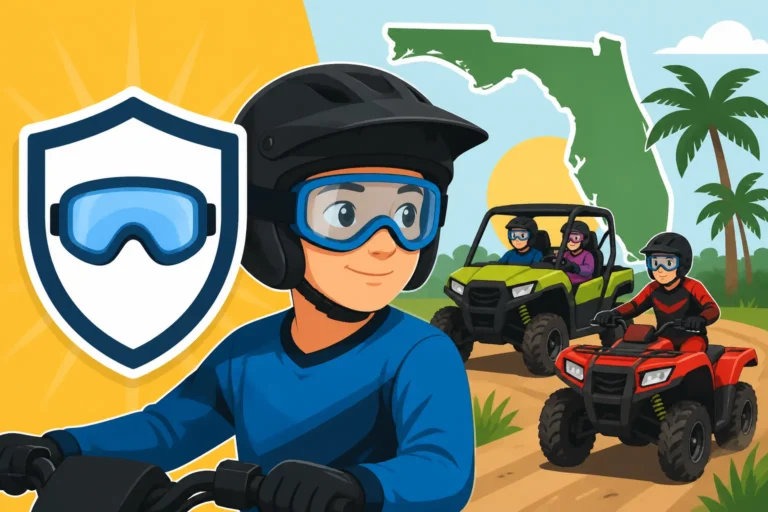
Even for those brief, legal moments on a public road, safety should be your absolute top priority. While Florida's helmet law for ATVs primarily applies to riders under 16 (see [Florida ATV Helmet Law for Riders Under 16]), and eye protection for young riders (as detailed in [Florida Eye Protection Rule for Young Riders]), wearing appropriate gear is always a smart choice for all riders, regardless of age, whenever you're on a public way.
- Helmet: A DOT-approved helmet is your best protection against head injury.
- Eye Protection: Goggles or a face shield protect your eyes from debris, bugs, and sun glare.
- Long Sleeves and Pants: Provide crucial skin protection in a slide or fall.
- Gloves and Boots: Offer grip, protection, and ankle support.
Beyond personal gear, ensure your ATV is in good working order. Even for limited road use, having functional brakes, tires with adequate tread, and any required lighting (even if it's primarily for off-road visibility, like extra LED lights from SuperATV) is essential. While ATVs don't require the same level of equipment as street-legal vehicles, visibility to other motorists, even on a dirt road, is paramount. If you're riding after dusk, even on a dirt road, make sure you have adequate lighting; [Florida ATV Lights and Equipment for Road Use] discusses this in more detail.
The Consequences of Illegal Road Riding
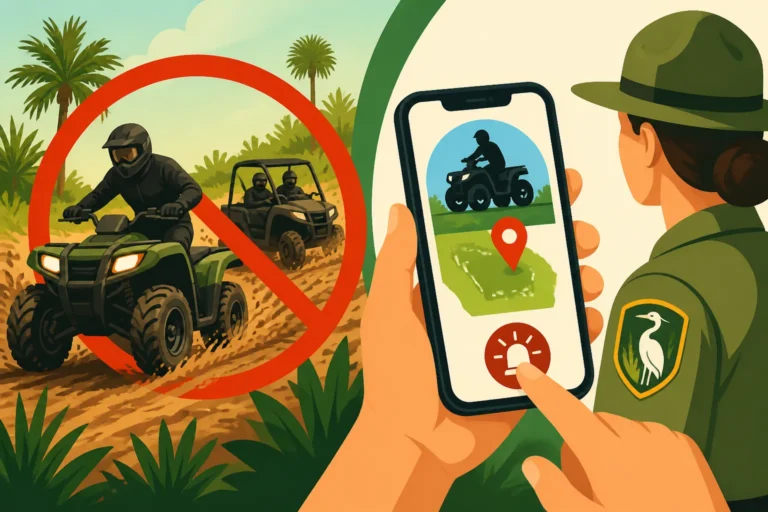
Ignorance of the law is not a valid defense, and the penalties for illegally riding an ATV on Florida's public roads can be steep and far-reaching.
- Fines and Citations: You can expect tickets for illegal operation, often categorized as moving violations, which can carry significant fines.
- Vehicle Impoundment: Law enforcement has the authority to impound your ATV if you're found operating it illegally on a public road. Getting it back means paying towing and storage fees on top of any fines, which can quickly add up.
- Criminal Charges: In some cases, especially if reckless operation is involved or if you cause an accident, you could face more serious criminal charges.
- Liability in an Accident: If you're riding illegally on a public road and cause or are involved in an accident, your personal liability skyrockets. Any insurance policy you do have might deny coverage because you were operating the vehicle outside of legal parameters. This means you could be personally responsible for all damages, medical bills, and legal fees, potentially leading to financial ruin. Check out [Florida Penalties for Illegal ATV Road Riding] for a deeper dive into this.
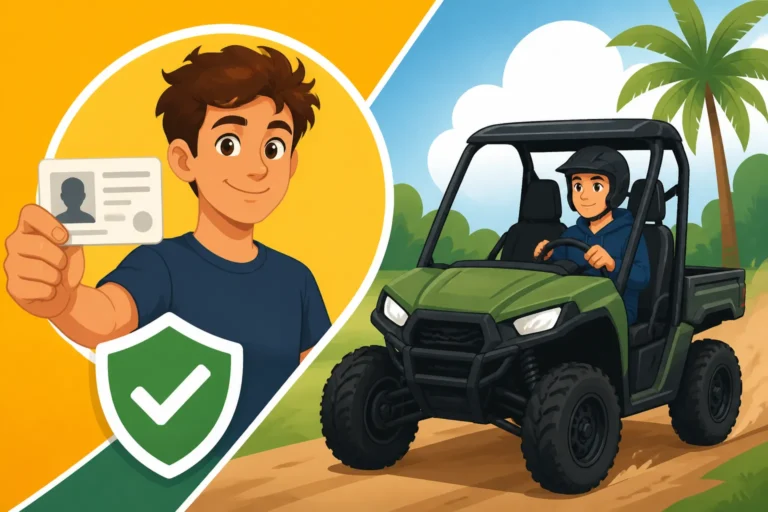
- Driver's License Impact: While you don't need a driver's license to operate an ATV in Florida off-road, you do need one if you're operating it on any public road where it's legally permitted. An illegal road riding citation could potentially impact your regular driver's license, depending on the severity and local jurisdiction. Understanding [Do You Need a Driver's License for an ATV in Florida?] is critical.
In short, the small convenience of illegally riding your ATV on a paved road is simply not worth the massive risks involved. Stick to the trails and legally designated areas, and ensure you have proper insurance coverage for every ride.
Disclaimer
This article is for general informational purposes only and does not constitute professional advice. Laws, prices and regulations vary by location and change over time. Consult a qualified professional for guidance on your specific situation.