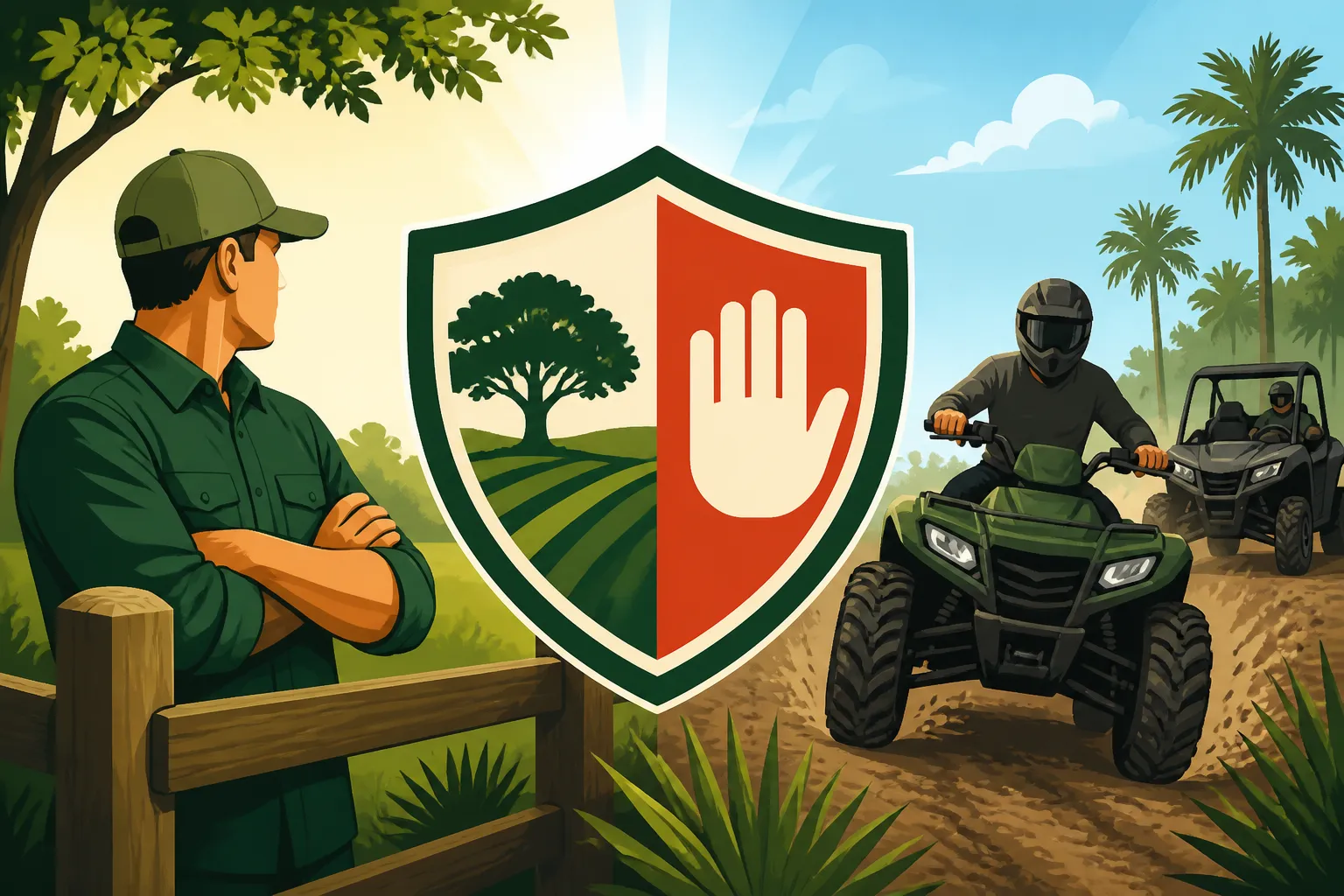
What a Landowner Can Do About Trespassing Riders
It's incredibly frustrating when you own property in Florida, whether it's vast ranch land, a secluded wooded parcel, or even just a sizable residential lot, and you discover people riding ATVs or UTVs across it without permission. You work hard to maintain your land, and having strangers tear through it can cause damage, create liability risks, and simply feel like a gross violation of your privacy and ownership rights. This guide is here to walk you through the clear steps you can take, from legal avenues to practical prevention strategies, to protect your property from unauthorized off-highway vehicle riders.
Understanding Trespassing Law in Florida for ATV and UTV Riders
When you encounter someone riding an ATV or UTV on your property without your consent, you're not just facing a minor nuisance; you're dealing with a violation of Florida law. It's crucial for landowners to understand the legal definitions and frameworks that govern trespassing, especially when it involves vehicles that can cause significant impact. The state of Florida takes property rights seriously, and there are specific statutes designed to protect landowners from unauthorized intrusion.
What Constitutes Trespassing on Private Land?
In Florida, trespassing generally occurs when a person enters or remains on private property without the express or implied consent of the owner or lawful occupant. For ATV and UTV riders, this means any time their tires cross your property line without you giving them permission to do so. It doesn't matter if they didn't see a "No Trespassing" sign, or if they thought it was "just a shortcut," or even if they claim they were "just looking for a lost pet." The moment they are on your land without your permission, they are trespassing. This applies whether the land is fenced, unfenced, developed, or wild. The key is the lack of consent. An ATV or UTV, by its nature, can cause ruts, damage sensitive ecosystems, disturb wildlife, and create significant noise, amplifying the impact of the trespass itself.
The Legal Framework: Florida Statutes Relevant to Trespassing
Florida law provides a robust framework to address trespassing. Specifically, Florida Statute 810.09, often referred to as the "trespass on property other than a structure or conveyance" statute, is highly relevant here. This statute outlines that anyone who willfully enters or remains on property without being authorized, licensed, or invited, and has been warned not to enter or remain, is committing a misdemeanor. The "warning" can be given orally by the owner, by posting signs, or by fencing. If the trespass causes damage or involves certain prohibited acts, the penalties can increase. For instance, causing damage to property during the trespass can elevate the severity of the charge. Understanding these specific laws is your foundation for taking effective action. It’s not just about shooing someone away; it’s about upholding a legal right.
Why Private Land is Different: Public vs. Private Riding Rules
Many ATV and UTV riders are accustomed to riding on public lands, such as designated trails in the Ocala National Forest or state forest OHV areas like Croom. On these public lands, there are specific rules, permits, and often designated trails where riding is allowed and even encouraged. However, the rules of private land are fundamentally different. On private property, the default is no entry unless specific permission has been granted. There's no expectation of open access, regardless of how well-maintained the trails appear or how tempting a shortcut might be. This distinction is vital because trespassers often blur the lines, assuming that if a trail exists, it must be public or open for use. It's important to educate yourself and your neighbors on this crucial difference.
Initial Steps for Landowners Dealing with Trespassers
Dealing with trespassers can be stressful, but having a clear plan can make the process much smoother and more effective. Before you even think about calling law enforcement, there are foundational steps every landowner should take to establish their property rights and deter unauthorized access. These steps not only help prevent trespassing but also strengthen your case if legal action becomes necessary.
Clear Posting and Fencing: Your First Line of Defense
Your property lines need to be unambiguous. The most effective initial defense against trespassing riders is clear "No Trespassing" signage and robust fencing. Don't rely on faded, tiny signs; invest in large, highly visible signs that are placed strategically at all common access points and along property lines where riders might try to enter. Make sure the signs explicitly state "No Trespassing" and ideally include language like "Private Property – No Motorized Vehicles." For areas where you've had recurring issues, consider signs that also mention Florida Statute numbers (like F.S. 810.09) to emphasize the legal consequences.
Fencing, whether barbed wire, high tensile, or even just a sturdy perimeter fence, serves as a physical barrier and a visual warning. If you have trails or access points that are particularly appealing to riders, consider installing gates. [Fence Lines, Gates and Riding Etiquette] are crucial considerations. Even if a fence isn't impenetrable, it sends a clear message that the land is private and entry is restricted. You can find durable gate solutions from companies like SuperATV, which offer robust products designed for off-road environments, making them suitable for securing rural or recreational properties.
Documenting Incidents: What Information to Collect
Should trespassing occur, documentation is your best friend. Start a logbook or a digital file dedicated to trespassing incidents. For each event, record the date, time, and a detailed description of what happened. Take photos or videos of the trespassers, their vehicles (license plates if visible, distinctive markings, colors, and models of ATVs/UTVs), and any damage caused. Note down how many individuals were present and any unique identifying features. If you speak to them, record their responses. This evidence is invaluable if you need to involve law enforcement or pursue civil action. It provides concrete proof of the trespass and can help establish a pattern of behavior, which might influence legal outcomes.
The Role of Communication: Sending a Clear Message
Sometimes, trespassers genuinely don't realize they're on private land, especially in areas where property lines might be ambiguous or poorly marked. If you feel safe and comfortable doing so, a direct, firm, but polite conversation can sometimes resolve the issue. Clearly state that they are on private property and do not have permission to be there. Ask them to leave immediately. If you have a written "no trespassing" notice, you can present it to them. Remember, your goal is to make it clear that this is private land and riding here is not permitted. However, if you feel threatened or the riders are confrontational, do not engage. Prioritize your safety and proceed to involve law enforcement. The goal is to avoid escalating a situation into a dangerous confrontation.
Involving Law Enforcement: When and How to Report Trespassing
There will be times when posting signs and direct communication aren't enough, or when the situation immediately warrants a higher level of intervention. When trespassers ignore your warnings, cause damage, or you feel unsafe confronting them, it's time to bring in the authorities. Law enforcement officers are trained to handle these situations and can enforce property laws.
Contacting Local Authorities: Sheriff's Office or Police Department
If you've identified trespassers on your property or found evidence of recent trespassing, contact your local sheriff's office or police department. In rural areas, this will almost always be the county sheriff. Do not attempt to physically detain or confront aggressive individuals. Provide the dispatcher with all the information you've documented: location, time, description of vehicles and individuals, and whether they are currently on your property. Be prepared to explain that you are the landowner and that the individuals do not have permission to be there. Emphasize any damage caused or if you feel threatened. The more detailed your report, the better equipped officers will be to respond appropriately. [Reporting Illegal Riders on Conservation Land] might offer some insights into the process, even though it focuses on public land.
Providing Evidence: What Helps Law Enforcement Act
When law enforcement arrives, your collected evidence will be crucial. Show them your property boundaries, your "No Trespassing" signs, and any gates or barriers that were breached. Provide your log of incidents, photographs, and videos. If you have security camera footage, share that as well. The officers will need to verify that the property is indeed private and that you are the rightful owner or authorized agent. A clear chain of evidence helps them establish the elements of trespassing under Florida law and makes it easier for them to take action, whether that involves issuing a warning, a citation, or making an arrest. Remember that [What Florida Deputies Check at a Roadside Stop] often includes proof of ownership or authorization to be on specific land, which helps in identifying those who lack such permission.
Understanding Penalties: What Riders Face if Caught
The penalties for trespassing on private land in Florida can vary depending on the specific circumstances and prior offenses. For a first offense, it's typically a misdemeanor. However, if the trespasser causes damage to the property, carries a firearm, or has been warned previously, the charges can be elevated, potentially to a felony. In addition to criminal charges, you, as the landowner, may also be able to pursue civil action to recover damages for any destruction caused to your property. This could include the cost of repairing fences, replanting damaged crops, or restoring natural habitats. Law enforcement can also issue citations for illegal operation of off-highway vehicles, which often accompanies trespassing. [Florida Penalties for Illegal ATV Road Riding] can give you an idea of the types of fines and legal consequences associated with unauthorized OHV use.
| Trespassing Scenario | Common Charge | Potential Penalties (General) | Landowner Action |
|---|---|---|---|
| Simple Trespass (No Damage, 1st Offense) | Misdemeanor of 1st Degree | Fines, possible jail time up to 1 year | Report to Sheriff, provide evidence |
| Trespass with Property Damage | Felony of 3rd Degree | Larger fines, prison time up to 5 years, restitution | Report to Sheriff, pursue civil damages |
| Trespass After Warning (Prior incident) | Misdemeanor of 1st Degree or higher | Increased fines, more likely jail time | Document all warnings, provide incident log |
| Trespass with Firearm | Felony of 3rd Degree | Significant fines, prison time up to 5 years | Call 911 immediately, do not confront |
Note: These are general guidelines; specific penalties are determined by courts based on individual case details and Florida Statutes.
Preventing Future Trespassing: Long-Term Strategies
While dealing with current trespassers is a priority, putting long-term prevention strategies in place can save you a lot of headache and property damage down the road. It’s about creating an environment where trespassing is not only difficult but also clearly understood to be unwelcomed and risky. Proactive measures are often the most effective deterrents.
Physical Deterrents Beyond Basic Fencing
Beyond standard fences and "No Trespassing" signs, consider additional physical barriers, especially in areas prone to repeat intrusions. Large boulders, strategically placed ditches, or even rows of thorny native plants can make it incredibly difficult or unappealing for ATVs and UTVs to gain access. These more robust deterrents can be particularly effective at choke points or wide-open entries. You might even consider installing heavy-duty gates with locks at all vehicle access points. Remember that many riders utilize aftermarket parts from companies like SuperATV to enhance their vehicles' capabilities, making it important to consider barriers that are genuinely challenging to bypass. These products often include strong components that might be useful for securing property, such as heavy-duty hinges or gate latches, ensuring your barriers are as tough as the machines trying to get around them.
Technology as a Deterrent: Cameras and Monitoring
Modern technology offers powerful tools for deterring and identifying trespassers. Installing motion-activated trail cameras or security cameras at vulnerable entry points can provide invaluable evidence. These cameras can capture clear images or video of trespassers, their vehicles, and the time of the incident, even when you're not there. Wildlife cameras, often used by hunters, are discreet and effective for remote areas. Posting signs that warn of video surveillance can also act as a deterrent, as many trespassers prefer anonymity. Some advanced systems allow for real-time monitoring and alerts to your phone, giving you immediate notification of any unauthorized activity.
Building Relationships: Community Engagement and Awareness
Sometimes, preventing trespassing is about more than just fences and cameras; it's about fostering a community where respecting private property is the norm. Engage with your neighbors, local riding clubs, and even local law enforcement to raise awareness about trespassing issues in your area. Share your concerns, describe the problems you've faced, and educate them about the legal implications. Some communities might even create "Neighborhood Watch" programs that extend to rural properties. Clear communication and a united front from landowners can make a significant difference in deterring casual riders who might not understand the impact of their actions. You might also explore whether local riding clubs would be interested in [Ranch Easements and Written Permission] to allow managed access to specific areas for a fee or in exchange for trail maintenance, turning a problem into a controlled benefit. This can be a viable option for some landowners, offering a legal and structured way for riders to enjoy the land while protecting your rights and minimizing damage.
Disclaimer
This article is for general informational purposes only and does not constitute professional advice. Laws, prices and regulations vary by location and change over time. Consult a qualified professional for guidance on your specific situation.