Florida Riding Areas With a Rock Garden
Finding a true rock garden in Florida can be frustrating: many places described as “technical” are really sand, mud, roots, or tight turns. This guide explains where to look for a purpose-built rocky challenge, how Florida’s terrain differs from a natural rock-crawling destination, and what to check before hauling your ATV or UTV to a riding area.
Where to Find Rock Gardens in Florida
Hard Rock Off Road Park in Ocala
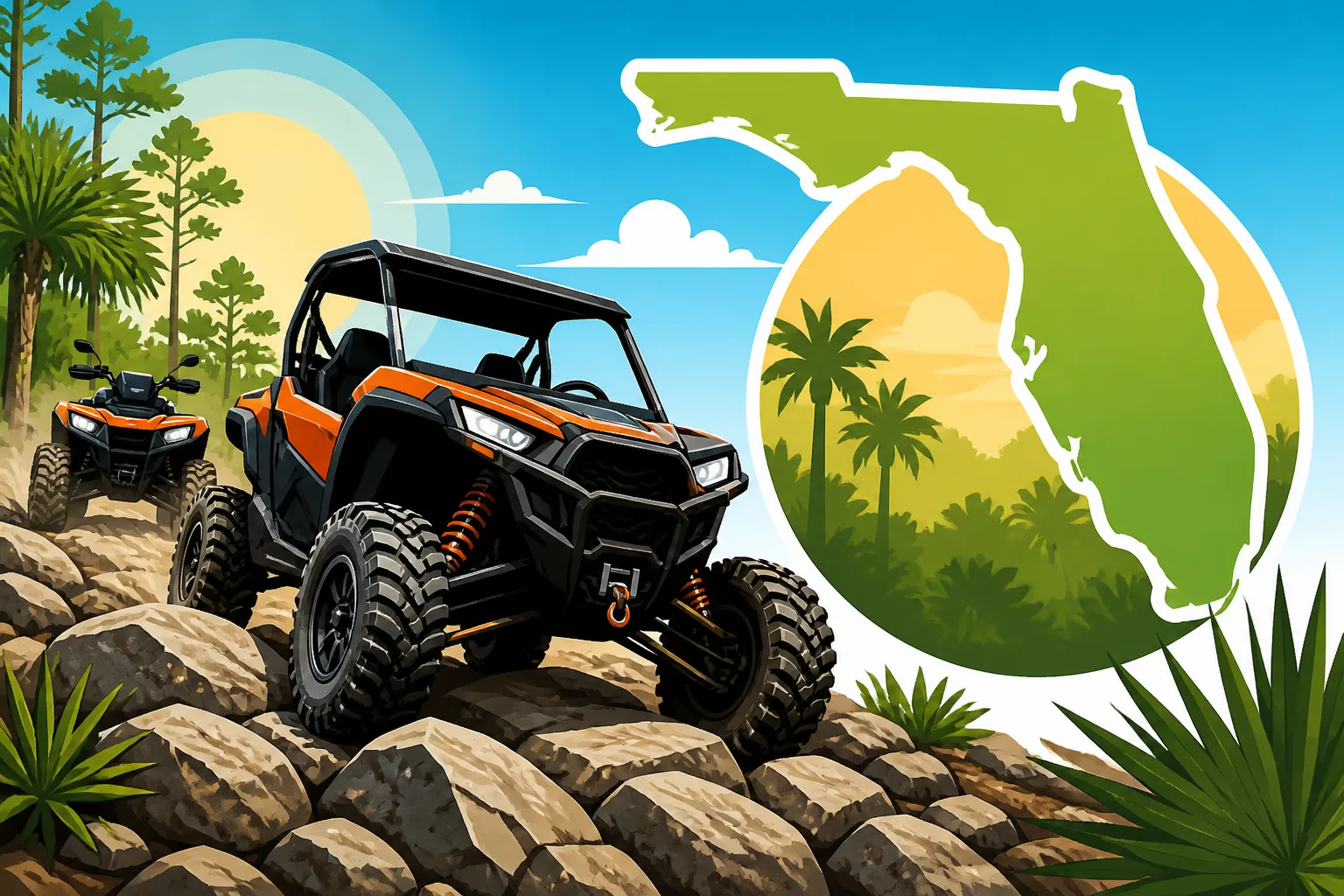
For riders specifically looking for a rock garden, Hard Rock Off Road Park in Ocala is the clearest place to start. The park is known for purpose-built technical features, including a rock garden and climbs. That makes it a more direct match for riders seeking obstacles that challenge their line choice, throttle control, and approach than a trail system where “technical” simply means narrow or uneven.
The park’s [Hard Rock's Rock Garden and Climbs] may suit experienced riders who want to test their machines, but a named obstacle is not automatically appropriate for every rider or vehicle. Rock features can vary in height, spacing, traction, and difficulty, and conditions can change with weather and use. Before visiting, check the park’s current rules and ask what the obstacle area is like for your machine and skill level. The broader overview at [Hard Rock Off Road Park in Ocala] can help you plan the visit beyond the obstacle itself.
It also helps to arrive with a flexible plan. If a rock feature feels too demanding, there is no benefit in forcing a line just because you drove a long way to reach it. Walk or inspect an obstacle from a safe location, watch how other riders approach it, and turn around if the route exceeds your comfort level. A good riding day is one you finish with your machine and your confidence intact.
Why Florida Has Fewer Natural Rock Gardens
Florida’s riding landscape is not generally known for long stretches of exposed, rugged bedrock. Many popular off-road areas are characterized instead by sand, sugar sand, mud, roots, and low, wet terrain. A trail can still be challenging, but the challenge may come from changing traction or water rather than a boulder field.
That difference matters when you are searching online. A listing might use words such as “technical,” “obstacles,” or “challenging” without promising a natural rock garden. If your goal is to pick through rocks or climb a constructed rocky feature, look for specific descriptions of that feature and confirm it directly with the riding area. A rocky section at a private park is not necessarily comparable to a natural rock-crawling route elsewhere.
For a broader sense of what Florida terrain tends to offer, compare the rock-focused experience with [Florida Mud Parks: Where Riders Actually Go] and [Florida ATV Trails Near Ocala]. Those options may offer enjoyable and demanding rides, but they should not be treated as substitutes for a confirmed rock garden. Matching the destination to the terrain you actually want can save a long drive and a disappointing day.
| Riding experience you want | What to look for in a Florida area | What to confirm before you go |
|---|---|---|
| Purpose-built rock obstacles | A named rock garden, rock course, or obstacle area | Current access, difficulty, machine suitability, and restrictions |
| Rocky climbs | Specific mention of climbs or elevation changes | Whether the route is open and appropriate for your vehicle |
| Sand and whoops | Trail descriptions that mention sandy terrain | Vehicle-width rules, trail conditions, and skill expectations |
| Mud and water | Mud park or wet-weather riding descriptions | Water depth, seasonal conditions, and recovery expectations |
| General technical riding | Narrow trails, roots, turns, or varied obstacles | What “technical” means at that particular property |
Choosing a Ride That Fits Your ATV or UTV
Match the Obstacle to Your Machine
An ATV and a UTV do not approach every obstacle in the same way. A narrower ATV may be easier to position on a tight line, while a wider or heavier side-by-side may need more room to turn and may place different demands on the ground and suspension. Even two machines in the same category can handle very differently depending on tires, clearance, wheelbase, load, and rider experience.
Before setting out, check the riding area’s vehicle rules rather than assuming that every trail or obstacle is open to every machine. Some parks or trail systems may have width, vehicle-type, or area-specific restrictions. If you ride a side-by-side, [Florida ATV Trails That Allow Side-by-Sides] is a useful starting point for understanding why access should be confirmed rather than assumed. The park’s own posted rules should be the final guide for that visit.
Be honest about your setup, too. A machine that is comfortable on familiar sand trails may not be ready for repeated impacts against rocks. A lift or aggressive tire can change clearance and traction, but it does not remove the need for careful line choice. If you are unsure whether a vehicle can fit or safely navigate a feature, ask the operator before unloading.
Choose a Difficulty Level You Can Manage
“Beginner-friendly” and “advanced” can mean different things from one riding area to another. One rider may find a short, uneven rock section manageable, while another may be uncomfortable with the same slope or the risk of underbody contact. Consider your experience with obstacles, not just the number of years you have owned an ATV or UTV.
If a property describes trails by color or rating, read the explanation of those ratings before you ride. [Florida Trail Ratings and What Green Means] can help frame the question, but trail labels are only useful when you understand how the individual area applies them. A rating does not account for every machine, modification, passenger, or day’s trail condition.
When riding with friends, agree on a conservative plan before anyone reaches the obstacle. It is easy to feel pressured when other riders are waiting or filming, especially if the group has traveled together. Decide that anyone can opt out without being teased or rushed. A spotter can help with visibility, but should stand where the driver can see them and well clear of the machine’s path if it slips or rolls.
Planning a Safer Rock Garden Visit
Check Access, Rules, and Conditions Before Driving
A place that had an obstacle open during one visit may have different access rules on another. Events, maintenance, weather, or temporary closures can change what is available. Check the park’s official channels before leaving, and contact the operator if the rock feature is the main reason for your trip. A general map pin or an old social media post may not tell you whether a particular area is open now.
If you are comparing a private park with public trails, be especially careful not to assume their rules are interchangeable. Public riding areas can have distinct vehicle, pass, and route requirements; private properties set their own access policies. [Florida Trail Closures You Should Check First] is a helpful reminder to confirm trail status rather than relying on a saved route or last season’s report.
Mapping apps can help you plan the route to a destination and keep track of where you intend to ride. Some riders use onX Offroad to review route information and prepare maps before heading out. Treat any app as a planning aid, not a guarantee that a route is open, legal for your vehicle, or passable on the day. Confirm access with the land manager or park and follow signs on site.
Prepare for Recovery and Changing Traction
Rocks can shift a machine unexpectedly, and traction can change from one section to the next. Mud, sand, rain, and worn surfaces may make an obstacle more slippery than it looks. Inspect your machine before riding, paying attention to tires, brakes, steering, suspension, and any visible damage. Bring appropriate recovery equipment for your group and know how to use it before you need it.
Avoid charging into a rock garden to “see what happens.” Approach slowly, stop where you have a clear view, and choose a line that does not place a tire or underbody component in an uncertain position. If the route is difficult to see from the driver’s seat, a spotter can help—but only if everyone agrees on clear signals and the spotter stays out of harm’s way. Keep other riders far enough back that a sudden stop or recovery does not create a second problem.
Heat and hydration matter in Florida, even when the riding area feels shaded. Wear protective gear suited to the activity and weather, and plan breaks instead of waiting until everyone is exhausted. [Florida Trail Riding Gear for the Heat] covers practical preparation for hot conditions. For group days, establish a meeting point and make sure every rider knows how to contact the others if the group becomes separated.
Making the Most of Your Ride
Use Maps as a Planning Tool, Not Permission
Before the trip, mark the riding area, your intended trailhead, and a backup route or meeting point. onX Offroad can be one tool for organizing route information and preparing for a ride, particularly when you want to review your plan before arriving. Check that the map covers the area you need and prepare for poor reception by saving whatever information the app makes available offline.
Still, map data cannot replace permission or local instructions. A line on a screen may not reflect a closure, a private boundary, a newly posted restriction, or a route that is unsuitable for your machine. Compare your digital plan with signs at the entrance and information from the land manager. If the directions conflict, follow the posted rules and ask staff rather than trying to prove that an app route is right.
When heading to a private riding area, confirm the entrance location and any check-in process. A pin can place you near a property without identifying the correct gate, and arriving at the wrong entrance can waste time or lead you onto land where riding is not allowed. Keep your plans modest if you are unfamiliar with the area: choose a known route first, then explore only where the property clearly permits it.
Ride with Courtesy and Leave Room for Others
Rock obstacles often concentrate riders in a small area. Give the person on the feature time and space to finish, and do not crowd a machine that is attempting a climb. If someone needs to back out or recover, pause your own ride and keep bystanders clear. Being patient is not just good etiquette; it reduces the chance of a collision or a rushed mistake.
Follow marked routes and avoid creating new bypasses around difficult sections. A bypass can widen damage, create erosion, or send riders into an area that was not intended for traffic. Pack out what you bring in, respect closures, and avoid spinning tires just to throw rocks or mud for entertainment. [Florida OHV Trail Etiquette Locals Expect] offers more context on the small habits that help keep riding areas usable.
A rock garden is only one part of a good ride. Plan time for the rest of the property, keep your group within its comfort zone, and be willing to change plans if the feature is closed or unsuitable. In Florida, a little advance checking goes a long way: confirm the obstacle exists, confirm your machine is allowed, and make sure the day’s route matches the terrain you came to ride.
Disclaimer
This article is for general informational purposes only and does not constitute professional advice. Laws, prices and regulations vary by location and change over time. Consult a qualified professional for guidance on your specific situation.