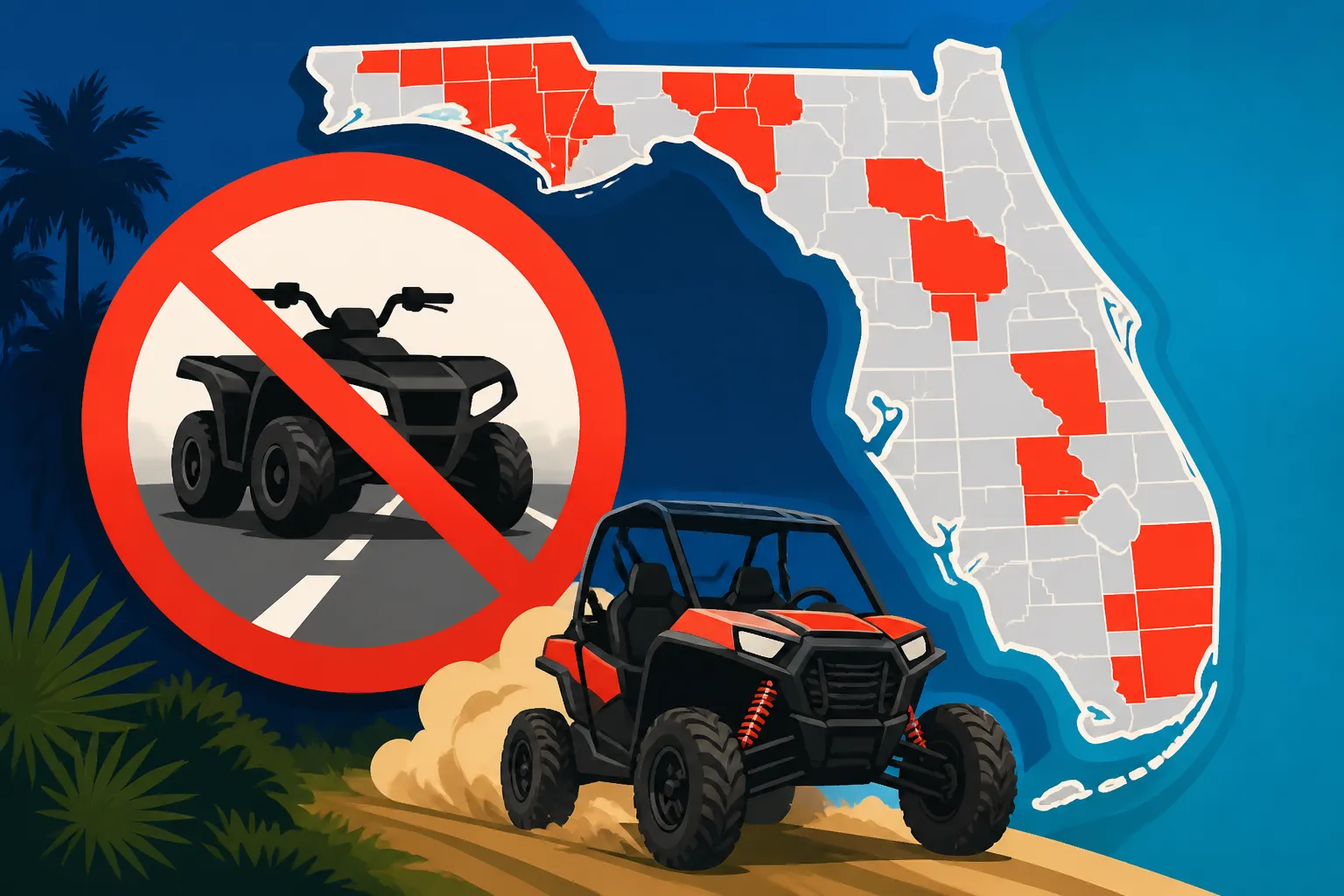
Florida Counties That Banned ATVs From Roads
Navigating where you can and cannot ride your ATV or UTV in Florida can feel like trying to solve a complicated puzzle, especially when you think you understand the state laws, only to hit a wall with local ordinances. Many riders experience the profound frustration of realizing that just because a state statute allows for certain types of road access, individual counties can — and often do — impose their own, much stricter bans. This guide will help you untangle the web of local rules, understand why these bans exist, and know what to look for to avoid a costly misunderstanding.
The Patchwork of Florida ATV Road Rules: Why It's So Confusing
Florida is a vast state with incredible diversity, from bustling urban centers to wide-open ranchlands and pristine natural forests. It stands to reason that the rules governing off-highway vehicles (OHVs) like ATVs and UTVs might also vary, but the sheer complexity of it can be a real headache for riders. You might ride legally in one county, cross an invisible line, and suddenly find yourself breaking the law. This isn't just an inconvenience; it can lead to hefty fines and even impoundment of your machine. The core of this confusion lies in the interplay between statewide regulations and the powerful local authority granted to counties.
State Law as a Baseline: What It Says and Doesn't
At the heart of Florida's ATV road regulations is Florida Statute 316.2123, which provides a general framework for off-highway vehicle operation. This statute is often the first place riders look for guidance, and it does offer some clear directives. For example, it generally permits the operation of ATVs and UTVs on unpaved roads during daylight hours, under specific conditions. Riders must be at least 16 years old, possess a valid driver's license (or be under the direct supervision of a licensed adult if under 16), and the vehicle must be equipped with essential safety gear like an approved spark arrestor and working brakes. This is the good news, the baseline of what might be allowed. For more detail, you can read [Florida's Unpaved Road Rule for ATVs Explained].
However, this state law is often misunderstood as an unconditional green light for all unpaved roads across Florida. And that's where the frustration sets in. While it sets a foundation, it crucially leaves room for local interpretation and, more significantly, local restriction. Many riders assume that if their machine meets the state's definition of an OHV and they follow the general rules, they're good to go. But this assumption can lead to serious trouble because the state's permission is conditional. It's not a blanket authorization; it's a default rule that can be overridden by local authorities, which leads us to the real source of the county-specific confusion.
County-Level Authority to Opt-Out or Restrict Access
This is the critical detail that often catches riders by surprise: Florida counties have the legal authority to enact ordinances that are more restrictive than state law. This power allows a county commission to "opt-out" of the general provisions of Florida Statute 316.2123 or to add further limitations, effectively banning ATVs from roads that would otherwise be permissible under state law. This local control means that the landscape of legal riding can shift dramatically from one county line to the next. What's perfectly legal in rural Osceola County, for instance, might be strictly prohibited just a short drive away in a more populated area like Pinellas.
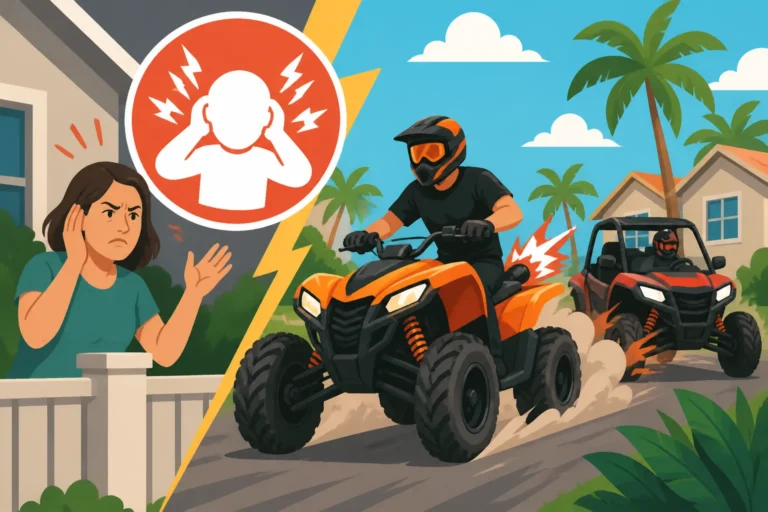
The reason for this local authority often stems from community concerns. High population density, increased traffic volume on unpaved roads, specific environmental sensitivities, or even noise complaints from residents can all prompt a county to take a stricter stance. The problem for riders is that these local ordinances aren't always widely advertised or clearly marked. You might not see a sign at the county line declaring "ATVs BANNED ON ALL COUNTY ROADS." Instead, you're expected to know the local laws, a burden that can feel unfair when the state offers seemingly permissive guidelines. Understanding [Florida County ATV Opt-Outs: Why Rules Change at the Line] is key to avoiding penalties. The result is a confusing, inconsistent system where research and vigilance become paramount for anyone wanting to ride their ATV responsibly on Florida's diverse road network.
Identifying Counties with Full ATV Road Bans
It's tempting to wish for a simple, comprehensive list of Florida counties that have outright banned ATVs from their roads. Unfortunately, such a static list would likely be out of date almost as soon as it's published, given how often local ordinances can change or be interpreted differently. The more productive approach for a rider is to understand how a county implements such a ban and what signs might indicate one, rather than relying on a potentially obsolete list. The process for a county to ban ATVs from certain roads is rooted in its local governance and responsiveness to community needs and concerns.
How a County Can "Opt Out" of State Provisions
When Florida Statute 316.2123 was established, it specifically included language that permitted counties to adopt ordinances that either allow or restrict ATV use on unpaved public roads within their jurisdiction. This means a county isn't necessarily rewriting state law but rather exercising its right to apply a more stringent rule within its own boundaries. The process usually involves several steps. First, there might be public outcry or a petition from residents concerned about safety, noise, or environmental impact. This often leads to a discussion at a county commission meeting, where the issue is debated.
Following this, the county might hold public hearings, inviting input from both ATV riders and concerned citizens. This is a crucial phase where riders have an opportunity to make their voices heard, though it requires active participation. Finally, the county commission will vote on a proposed ordinance. If passed, this ordinance officially becomes local law, prohibiting or severely restricting ATV access on county-maintained unpaved roads, effectively "opting out" of the state's more permissive default. These local bans are legally binding, and ignorance of them is not a defense if you're caught riding where you shouldn't be. It's imperative to remember that just because the state provides a basic allowance, local jurisdictions can, and often do, tighten those reins significantly.
Examples of Counties Known for Stricter Rules
While it's challenging to provide an exact, current list of every single county with a full ATV road ban, certain characteristics and historical trends can clue you into areas where you're more likely to encounter stricter regulations. Generally, counties with higher population densities, significant urban or suburban sprawl, or those with a large number of recreational visitors (especially those focused on quieter, less motorized outdoor activities) tend to have more restrictive ATV road use ordinances. These areas often experience more conflicts between OHV use and other community interests, leading local governments to prioritize public safety or peace and quiet over off-highway vehicle access on shared roads.
Consider counties bordering major metropolitan areas, or those known for their pristine natural environments or quiet residential communities. These are the kinds of places where local residents might have successfully lobbied their county commissions for blanket bans on ATV road use. They're trying to mitigate issues like excessive noise near homes, potential damage to sensitive ecosystems, or safety concerns on roads not built for mixed traffic, particularly with younger riders. While I won't name specific counties as having definitive current bans (as ordinances can change, and my data isn't live), it's a good rule of thumb to be extra cautious and thoroughly research any county that fits this description. Always assume stricter rules until you confirm otherwise, especially in developed or environmentally sensitive regions of Florida. This proactive approach can save you a lot of grief and legal trouble.
Understanding the Nuances of "Banned From Roads"
The phrase "banned from roads" might sound straightforward, but in the context of Florida ATV laws, it carries several important nuances. It's not always a blanket prohibition on every strip of asphalt and dirt; rather, it often targets specific types of roads or specific behaviors. For riders, understanding these distinctions is crucial to interpreting local ordinances correctly and staying within the bounds of the law. Mistaking one type of road for another or assuming a general rule applies everywhere can quickly lead to citations and vehicle impoundment.
Not All Roads Are Created Equal: Paved vs. Unpaved
Let's clarify a foundational point that often gets overlooked: state law already establishes a significant distinction between paved and unpaved roads for ATV use. Generally, under Florida Statute 316.2123, ATVs are explicitly prohibited from operating on paved public roads and highways, with very limited exceptions primarily for directly crossing a paved road where necessary to access an unpaved road or trail. Even then, specific safety precautions, like yielding to traffic, are mandatory. So, when a county discusses "banning ATVs from roads," they are almost always referring to the unpaved roads where state law might otherwise permit riding.
These county-level bans are designed to further restrict access on dirt, gravel, or shell rock roads that might be common in rural or semi-rural areas. The intention is often to prevent mixed traffic issues, reduce dust and noise for adjacent residents, or protect the integrity of roads not designed for heavy, high-speed off-highway vehicle traffic. It’s a common misconception among riders that "if it's not paved, I can ride it." However, a county ban can completely nullify that assumption for any unpaved public road within its jurisdiction. There are, of course, specific exemptions, often for agricultural purposes or for accessing private property. For example, a farmer may use a side-by-side to cross a county dirt road to get from one pasture to another, especially when [Florida Farm and Ranch ATV Road Exceptions] apply. But these are very specific, and typically not general recreational allowances.
What About Designated ATV-Friendly Roads or Corridors?
To add another layer of complexity, not all counties choose to implement blanket bans. Some, particularly in more rural or recreation-focused areas, might take the opposite approach and designate specific unpaved roads or corridors as permissible for ATV use. These designated roads are often clearly marked with signage, indicating that OHV operation is allowed under certain conditions, which usually mirror or expand upon the state's baseline requirements (daylight hours, licensed driver, safety equipment). This creates a highly localized "spot zoning" effect for ATV access, where one road is open, and a parallel one might be closed by a local ordinance.
This contrast makes it absolutely critical for riders to not only understand if a county has a ban but also to look for any designated areas. It's a testament to the idea that you can't just assume; you must check the local rules. These designated roads are typically found in areas with extensive public lands, like state forests or national forests, where ATV use is already a recognized activity. However, even on these designated roads, riders must still adhere to state and local rules regarding speed, safety gear, and environmental protection. For those interested in where such opportunities exist, [Florida Counties That Designated ATV Roads] might offer some direction, highlighting areas that have worked to create legal riding opportunities. It's a much more welcoming scenario than a complete ban, but it still requires diligence to ensure you're on the right path.
Navigating the Legal Landscape: Your Responsibilities as a Rider
The reality for ATV and UTV riders in Florida is that the burden of knowing where you can legally ride falls squarely on your shoulders. You can't just rely on general assumptions or what you've heard from a friend; the laws are too varied and too localized. Getting caught riding where you shouldn't be can quickly turn a fun day into a frustrating and expensive ordeal. Therefore, adopting a proactive and informed approach to understanding local ordinances is not just advisable, it's absolutely essential for any responsible off-highway vehicle enthusiast.
The Importance of Checking Local Ordinances Before You Ride
This cannot be stressed enough: before you even load your ATV onto a trailer and head out, you must verify the specific road rules for the county you intend to ride in. This isn't just about avoiding a ticket; it's about respecting local communities, ensuring your own safety, and preserving access for all riders. The process of checking local ordinances might seem daunting, but it's much simpler than dealing with the aftermath of a violation.
Here’s a practical step-by-step approach:
- Start with the County Website: Most Florida counties have a robust online presence. Look for sections related to "Ordinances," "Codes," "Public Safety," or "Traffic Regulations." Use the search function on the county's website with terms like "ATV," "OHV," "off-highway vehicle," or "all-terrain vehicle." You're looking for specific ordinances that either reference Florida Statute 316.2123 or directly address the use of ATVs on county roads.
- Contact the County Clerk of Court or Sheriff's Office: If the website is unclear or you can't find specific ordinances, a quick phone call can save you a lot of trouble. The County Clerk's office can often direct you to the exact ordinance or department that handles these regulations. The local Sheriff's office or highway patrol detachment for that specific county is also an excellent resource, as they are the ones tasked with enforcing these rules. They can usually tell you outright if ATVs are banned from county roads.
- Look for Posted Signage: While not foolproof, official signage at county lines or on specific roads can provide crucial clues. However, don't rely solely on this, as signs can be missing, obscured, or not present at every entry point. The absence of a "No ATV" sign doesn't automatically mean "ATV Permitted."
Remember, "ignorance of the law is no excuse." This legal principle means that even if you didn't know about a local ban, you're still liable for the consequences. Taking the time to do your homework before your wheels hit the dirt can prevent a costly mistake and ensure your riding experience is enjoyable and legal.
Consequences of Riding an ATV on a Banned Road
Riding an ATV on a road where it's prohibited by county ordinance can lead to a range of unpleasant and expensive consequences. The exact penalties can vary by county, the specific nature of the violation, and whether it's a first offense or a repeat issue, but none of them are minor inconveniences. Understanding these potential repercussions should reinforce the importance of checking those local rules.
The most common consequence is a citation or ticket. This is not just a slap on the wrist. [Florida ATV Ticket Cost for Illegal Road Riding] can be substantial, often comparable to moving violations for cars, and may also come with additional court costs and administrative fees. These fines can quickly add up, easily costing hundreds of dollars for a single incident. Depending on the severity and specific local laws, a violation could even be categorized as a misdemeanor, which carries more serious legal implications beyond just a monetary penalty.
Beyond financial penalties, there's the very real risk of vehicle impoundment. If law enforcement determines you're operating your ATV illegally on a banned road, they have the authority to seize your machine. Retrieving an impounded ATV can be a lengthy and expensive process. You'll likely face daily storage fees, towing charges, and administrative fees in addition to any fines. This means paying potentially thousands of dollars just to get your machine back, not to mention the immense hassle of arranging transport and dealing with paperwork. For more on this, check out [Florida ATV Impound After a Road Violation].
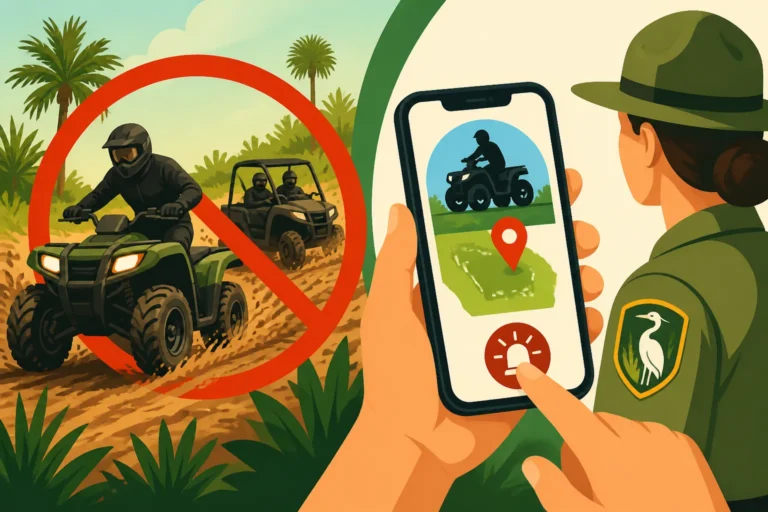
In some cases, particularly if the riding leads to property damage, environmental harm, or reckless endangerment, riders could face civil lawsuits or even more severe criminal charges. Law enforcement in Florida, particularly the Sheriff's departments in many counties, takes these rules seriously. They understand that unauthorized ATV use can be a nuisance and a safety hazard for other road users and residents, and they will enforce local ordinances rigorously. [Florida Sheriff Enforcement of ATV Road Rules] can be quite active, especially in areas with known problems. Ultimately, riding where you shouldn't can lead to a significant dent in your wallet, the loss of your riding time, and a damaged legal record, all of which are compelling reasons to always verify your route.
Alternatives to Road Riding in Florida
Given the complex and often restrictive nature of Florida's county-level road bans for ATVs, many riders find themselves looking for alternative, unequivocally legal places to enjoy their machines. The good news is that Florida, despite its urban development, still offers a wealth of opportunities for off-road enthusiasts. Focusing on these dedicated areas not only ensures compliance with the law but often provides a safer and more enjoyable riding experience tailored specifically for OHVs.
Dedicated Off-Road Parks and Trails
For most ATV and UTV riders in Florida, the best and most reliable solution is to seek out dedicated off-road parks and trail systems. These are areas specifically designated and maintained for off-highway vehicle use, where the rules are clear, consistent, and designed with riders in mind. Florida is home to several fantastic public and private options that cater to various riding styles, from challenging technical trails to wide-open mud pits.
Public Lands: The Florida Forest Service and the U.S. Forest Service manage several popular OHV areas. The most well-known include:
- Croom Motorcycle Area (Withlacoochee State Forest): Located in Brooksville, Croom offers over 2,600 acres of diverse terrain, from sandy scrambles to tight woods trails. It's incredibly popular and a go-to for many Florida riders.
- Ocala National Forest: This vast national forest provides extensive opportunities, including the Ocala Centennial OHV Trail system, with miles of sandy trails winding through the unique scrub habitat.
- Blackwater River State Forest (Clear Creek OHV Area): In the Panhandle, this area offers trails that contrast with central Florida's sand, featuring more clay and pine forest environments.
These public areas typically require an OHV permit or day-use fee, and specific rules apply regarding vehicle width (Croom, for instance, has a 55-inch width limit for many of its ATV trails), spark arrestors, and safety gear. However, the investment is well worth it for legitimate, well-maintained riding. For a comprehensive list, consult [Florida ATV Trails: Every Public Riding Area].
Private Mud Parks and Resorts: Beyond public lands, Florida also boasts a thriving scene of private mud parks and off-road resorts. Places like Hog Waller ATV Resort in Palatka and Redneck Mud Park near Punta Gorda offer massive tracts of land designed for mud bogging, trail riding, and large events. These parks often provide camping, wash stations, and amenities, making them popular weekend destinations. They set their own rules, often requiring waivers and sometimes specific safety equipment.
When riding in these dedicated areas, you can truly outfit your machine for optimal performance. Many riders look to companies like SuperATV for aftermarket parts, lifts, tires, and protection accessories specifically designed for aggressive trail riding and mud, enhancing their experience in these dedicated off-road environments. Whether it's a snorkel kit for the mud parks or heavy-duty suspension for the whoops in Ocala, these parks are where your machine can truly shine within legal bounds.
Private Property and Agricultural Exemptions
Another significant alternative to public road riding is operating your ATV or UTV on private land. If you own the property, or have explicit, written permission from the landowner, you are generally free to ride as you please, provided you're not creating a public nuisance, endangering others, or violating any specific local noise or environmental ordinances. This is often the simplest and most unrestricted way to enjoy your machine. Many rural residents, farmers, and ranchers utilize their ATVs and UTVs extensively on their own land for work and recreation.
Agricultural Exemptions: Florida law also provides specific exemptions for ATVs and UTVs used for agricultural purposes. These machines, often referred to as "farm vehicles," are frequently used to traverse properties, haul equipment, and assist with various farming tasks. Under certain conditions, these vehicles may even be allowed to operate on public roads, particularly unpaved ones, when directly related to agricultural operations. This means crossing roads between fields or accessing different parts of a large farm property. However, it's critical to understand that these exemptions are typically very narrow and do not apply to recreational riding. The vehicle must be actively engaged in an agricultural function, and the driver must still adhere to basic safety requirements. For a deeper dive into these specific allowances, you can refer to [Florida Farm and Ranch ATV Road Exceptions]. It's crucial not to conflate these work-related exemptions with general permission for recreational road use; they are distinctly different under the law.
Disclaimer
This article is for general informational purposes only and does not constitute professional advice. Laws, prices and regulations vary by location and change over time. Consult a qualified professional for guidance on your specific situation.