Why Florida ATVs Cannot Use Paved Streets
It's a common dilemma for Florida ATV and UTV riders: you're out enjoying a ride, maybe just finished a great session on the trails, and the quickest way home or to the gas station involves a stretch of paved road. It can be incredibly frustrating to feel like you're navigating a legal minefield just to get from point A to point B. This guide is here to clearly explain the legal and practical reasons why Florida generally prohibits ATVs from paved public streets, helping you understand the rules and avoid potential headaches.
Understanding Florida's ATV Definition and Road Rules
Before we dive into the "why," it’s crucial to understand how Florida legally defines an ATV and where those definitions intersect with road usage. The state's laws are very specific, and these definitions are the foundation for all the regulations you encounter as an off-road enthusiast. Ignoring these details can lead to some pretty significant misunderstandings and unfortunate run-ins with law enforcement.
What Exactly Qualifies as an ATV in Florida Law?
In Florida, an All-Terrain Vehicle (ATV) isn't just "any four-wheeler." The state has a precise definition that impacts where and how you can ride. Generally, an ATV is a motor vehicle, not a golf cart, that is designed for off-highway use and has: three or more low-pressure tires, a seat designed to be straddled by the operator, and handlebars for steering. The key phrase here is "designed for off-highway use." This design intent is central to why ATVs are restricted from paved streets.
Furthermore, Florida statutes specify other critical dimensions. An ATV cannot be wider than 55 inches and must have a dry weight of 1,500 pounds or less. These measurements are incredibly important because they help differentiate an ATV from a Low-Speed Vehicle (LSV) or even some smaller utility task vehicles (UTVs), which might have different road-use allowances. When a machine crosses that 55-inch width threshold or exceeds the 1,500-pound dry weight, it's generally no longer classified as an ATV in the eyes of the law, potentially moving into the "recreational off-highway vehicle" (ROV) category, which also has strict road limitations, or other vehicle classes. Understanding [Florida's 55-Inch ATV Definition and Why It Matters] is paramount for any rider. These design parameters, particularly the low-pressure, knobby tires and narrow wheelbase, immediately flag an ATV as unsuitable for typical road conditions.
The Core Prohibition: Why Paved Roads Are Off-Limits
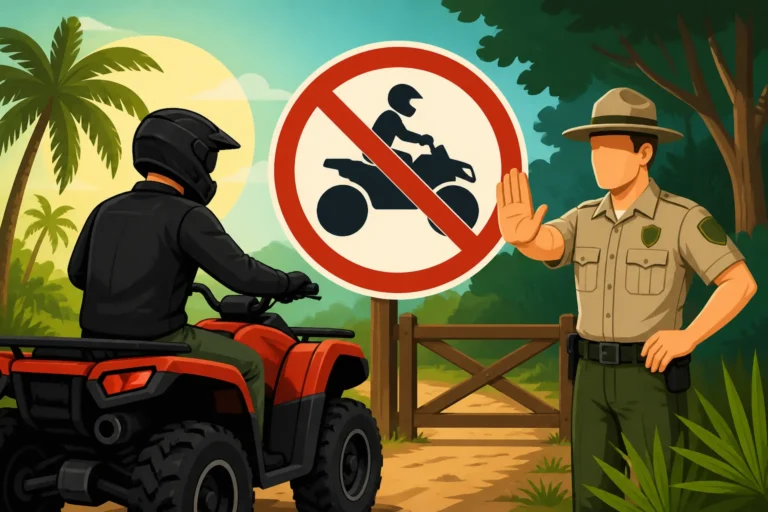
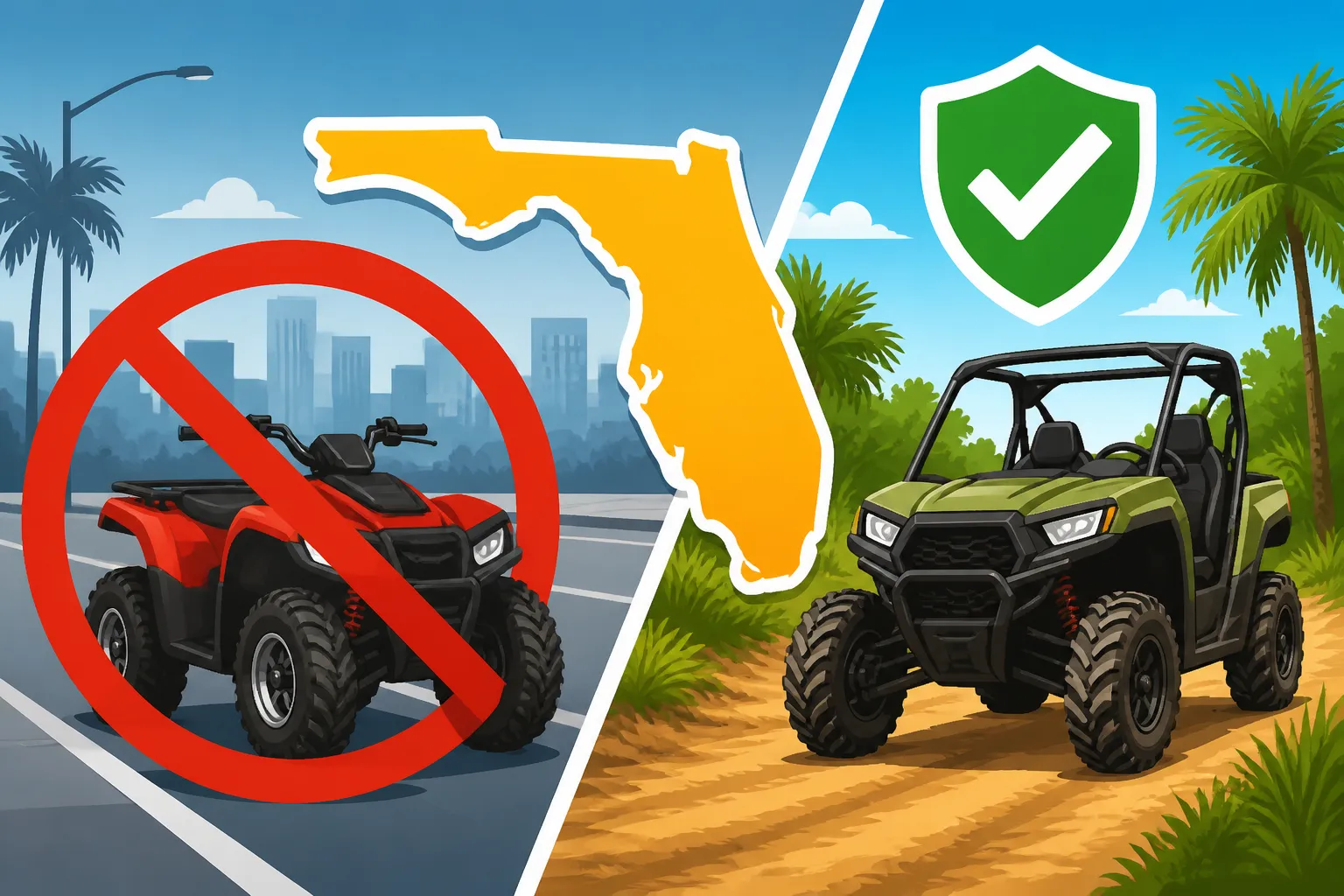
The primary reason Florida ATVs cannot use paved streets boils down to state law, specifically Florida Statute 316.2123, which clearly states that ATVs are not to be operated on paved public roads, streets, or highways. This isn't just a suggestion; it's a legal prohibition designed for public safety. The law recognizes that these machines are engineered for dirt, mud, sand, and uneven terrain, not for interacting with cars, trucks, and motorcycles on high-speed, hard-surface roads.
This strict rule can be a real point of frustration for riders. You might live just a mile down a paved road from an amazing trail system, or perhaps the only gas station for miles is on a busy highway. It feels like such a short distance, a quick hop, skip, and a jump. Yet, that short stretch of pavement is exactly where the law draws a hard line. The state's stance prioritizes the safety of both ATV riders and other motorists. While it might seem overly restrictive, the underlying logic is about minimizing the risk of severe accidents that often result when off-road machines are mixed with conventional road traffic. [Florida ATV Road Rules: Where You Can Legally Ride] are very clear on this core prohibition, and understanding the specific exceptions, which are few and far between, is key to staying out of trouble.
Design and Safety: Why ATVs Aren't Built for Pavement
Beyond the legal definitions, the very engineering of an ATV makes it fundamentally unsuited for paved road operation. It’s not just about a government telling you what you can’t do; it’s about recognizing the inherent safety risks that arise when you take a machine designed for one environment and force it into another. Think of it like trying to run a marathon in flip-flops—it might seem possible, but it’s certainly not optimal and definitely not safe for long.
Tires and Traction: A Mismatch for Hard Surfaces
One of the most obvious indicators that ATVs aren't meant for pavement is their tires. ATV tires are specifically designed with deep, aggressive treads and are inflated to low pressures. This design is fantastic for gripping loose surfaces like dirt, mud, and sand, providing the traction needed to navigate challenging off-road terrain. However, these same characteristics become major liabilities on paved roads.
On asphalt or concrete, those aggressive treads have far less contact patch with the road surface compared to a smooth highway tire. This drastically reduces traction, especially during braking or turning. Imagine trying to stop quickly on a knobby tire – it's like trying to stop on marbles. The low tire pressure, while great for absorbing bumps off-road, can cause the tire to flex and squirm excessively on hard surfaces, leading to instability and unpredictable handling. Not only does this wear out expensive ATV tires incredibly quickly, but it also creates a significant safety hazard, making it much harder to control the vehicle, particularly at higher speeds or in emergency situations.
Suspension, Steering, and Stability Concerns
The suspension system of an ATV is another critical design element optimized for off-road performance that poses problems on paved roads. ATV suspensions are built to absorb huge impacts from bumps, rocks, and jumps, allowing for significant wheel travel and ground clearance. While this makes for a comfortable and capable ride over rough terrain, it translates into a very "soft" and often "spongy" feel on smooth, paved surfaces.
This soft suspension combined with a relatively narrow wheelbase and a high center of gravity makes ATVs inherently unstable on pavement, especially during turns or evasive maneuvers. Unlike a car or even a motorcycle, an ATV's steering is very direct and responsive, designed for quick changes in direction on trails, not for smooth, gradual adjustments at road speeds. The lack of a differential in many ATVs means the rear wheels turn at the same speed, which can cause the inside wheel to "scrub" or push during turns on pavement, making the machine feel unpredictable and increasing the risk of rolling over. Products from companies like SuperATV excel at enhancing off-road performance with lifts and suspension kits, but these modifications actually increase the disparity between ATV design and what's needed for safe paved road travel, further highlighting the machine's intended use.
Braking and Visibility Limitations
When you're riding an ATV off-road, stopping distances are often less critical, and the ground itself can assist in slowing you down. However, on paved roads, effective and reliable braking is non-negotiable. ATV braking systems, while adequate for off-road use, often lack the power, fade resistance, and sophisticated anti-lock features found in street-legal vehicles. Attempting to stop an ATV quickly from road speeds can result in skidding, loss of control, and significantly longer stopping distances compared to a typical car or truck.
Visibility is another huge safety concern. ATVs are small, have minimal lighting compared to road vehicles, and usually lack essential street-legal equipment like turn signals, brake lights that are easily visible in traffic, and rearview mirrors. They are low to the ground, making them difficult for drivers of larger vehicles to spot, especially in busy traffic, at dusk, or in adverse weather conditions. The combination of limited braking capability and poor visibility dramatically increases the risk of serious accidents, which is a major contributing factor to the legal prohibition against riding ATVs on paved streets.
Legal Repercussions of Illegal Paved Street Use
The allure of a quick paved shortcut might be strong, but the potential legal consequences of riding an ATV on Florida's prohibited streets are severe and simply not worth the risk. Law enforcement takes these violations seriously, and what might seem like a minor infraction can quickly escalate into a costly and frustrating ordeal. It's not just a slap on the wrist; you could face significant financial penalties and even lose your ride.
Fines, Penalties, and Impoundment
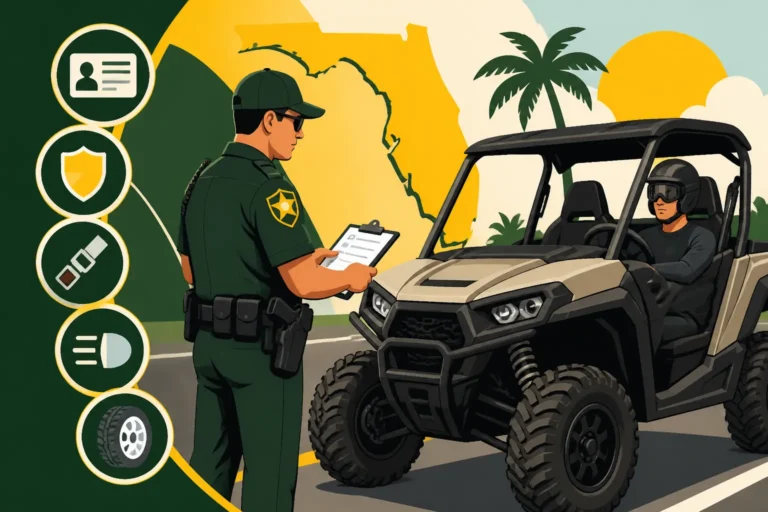
Getting caught operating an ATV on a paved public road in Florida will almost certainly result in a citation. The specific fines can vary, but you can expect them to be substantial, often hundreds of dollars, plus court costs. This isn't like a parking ticket; it's a moving violation with real financial implications. Beyond the immediate fine, repeated offenses can lead to escalating penalties, making it an even more expensive lesson. For a deeper understanding of the financial hit, check out [Florida ATV Ticket Cost for Illegal Road Riding].
Perhaps even more impactful than the fine is the very real possibility of your ATV being impounded. If law enforcement determines you are operating your machine illegally, they have the authority to seize it. This means your ATV will be towed to an impound lot, where it will rack up daily storage fees. Getting it back involves not only paying all outstanding fines and court costs but also the towing and impound fees, which can quickly add up to hundreds or even thousands of dollars. It's a logistical nightmare and a significant financial burden that far outweighs the convenience of a short paved ride.
Insurance Complications and Liability
Another critical, and often overlooked, consequence of riding an ATV on paved public roads is the impact on your insurance and personal liability. Most ATV insurance policies are specifically designed to cover off-road use only. If you have an accident on a paved public street, it's highly probable that your insurance company will deny your claim because you were operating the vehicle outside of its intended and legally permitted use. This leaves you completely exposed to all costs.
Imagine hitting another vehicle or, worse, injuring a pedestrian while illegally riding on a paved road. Without insurance coverage, you would be personally responsible for all damages, medical bills, and legal fees. This could be financially ruinous, potentially leading to lawsuits that impact your assets and future earnings. The personal liability in such a scenario is immense. Even if you're the only one involved in an accident, your medical bills and repair costs for your ATV would come directly out of your pocket. Understanding [Does Florida Require ATV Insurance for Road Use?] clarifies the expectations for off-road operation, but this typically doesn't extend to illegal road use.
Law Enforcement Scrutiny and Community Impact
Florida law enforcement agencies, including county sheriffs and municipal police departments, are increasingly aware of and actively enforcing ATV road-use laws. This is particularly true in residential areas where concerns about noise, reckless driving, and public safety are high. Communities often lodge complaints about ATVs on paved streets, leading to targeted patrols and zero-tolerance policies. [Florida Sheriff Enforcement of ATV Road Rules] is a direct response to these community concerns.
The actions of a few individuals riding illegally can unfortunately cast a negative light on the entire ATV community. When residents see ATVs flouting traffic laws, speeding, or making excessive noise on residential streets, it fuels public demand for stricter enforcement and can even lead to more restrictive local ordinances. This makes it harder for responsible riders to gain support for expanding legal riding areas or advocating for any changes to existing laws. Responsible riding, including adhering to the prohibition on paved streets, is essential for maintaining a positive image and ensuring the long-term enjoyment of the sport for everyone.
Limited Exceptions and Alternatives for Road-Adjacent Use
While the general rule is a resounding "no" for ATVs on paved Florida streets, there are very specific and narrow exceptions, along with alternative vehicle types that can operate on certain roads. It's vital to understand these distinctions to stay within the bounds of the law and avoid confusion. Don't assume that because you see one machine on the road, your ATV is automatically allowed.
Agricultural and Emergency Exemptions
Florida law does provide a few, very limited, circumstances where an ATV might be legally operated on a paved public road. These exceptions are primarily for agricultural purposes or in emergency situations, and they are not a loophole for general transportation. For instance, an ATV used exclusively for agricultural purposes by a farmer or rancher might be permitted to cross a paved road or operate on the shoulder for a very short distance to get from one part of their property to another. This is typically tied to active farming operations, like moving equipment between fields, and not for a leisurely ride to the store.
Similarly, in genuine emergency situations, such as disaster response or during search and rescue operations, law enforcement or authorized emergency personnel might use ATVs on roads. However, these are official capacities, not for the general public. It's crucial to understand that these are incidental uses directly related to specific tasks, not blanket permission to use paved roads. Attempting to claim an "agricultural purpose" when you're just trying to get to a friend's house will not hold up in court, and deputies are very well-versed in what constitutes legitimate agricultural use versus recreational riding.
Designated Unpaved Roads and County Ordinances
While paved streets are largely off-limits, some Florida counties have established ordinances that permit ATVs on designated unpaved county roads. These are rare, highly localized, and often come with their own set of rules regarding time of day, speed limits, and even rider age. It's not common, and you won't find this everywhere, but it does exist in a few specific rural areas where unpaved county roads are more common and traffic is minimal.
The key here is "designated unpaved roads." This means the county commission has specifically identified and possibly marked these roads as permissible for ATV use. You cannot simply assume any dirt or gravel road is open; it must be explicitly designated. This is where researching [Florida Counties That Designated ATV Roads] becomes important. Even then, these rules never extend to paved roads. Always check with the local county sheriff's office or tax collector for current and accurate information about specific local ordinances before venturing onto any road with your ATV, even if it's unpaved. The statute defining an [Unpaved Roadway: How the Statute Defines It] is also important here, as it differentiates what might seem like a dirt path from a regulated unpaved road.
Exploring Street-Legal Alternatives (UTVs, LSVs, Golf Carts)
If your primary desire is to operate a machine that offers an off-road feel but has limited street legality, then ATVs are generally not the answer. However, other categories of vehicles might fit the bill. Utility Task Vehicles (UTVs) or "side-by-sides" are larger and often more versatile than ATVs. While many UTVs also fall under the "off-highway vehicle" classification and are restricted from paved roads, some can be modified to meet the requirements for a Low-Speed Vehicle (LSV).
An LSV is a street-legal vehicle with a top speed of 20-25 mph, equipped with safety features like headlamps, tail lamps, stop lamps, turn signals, reflective devices, parking brake, rearview mirrors, a windshield, seat belts, and a Vehicle Identification Number (VIN). [Turning a Side-by-Side Into a Florida LSV] is a process that involves ensuring the vehicle meets all these specific requirements and then registering it as an LSV. Once classified as an LSV, these vehicles can legally be operated on public roads with a posted speed limit of 35 mph or less. However, the process can be involved and costly, and it’s important to understand that an LSV is not an ATV. Similarly, golf carts have their own set of rules, often allowing them on certain roads within designated communities, but they are distinct from ATVs and LSVs. While companies like SuperATV offer fantastic aftermarket accessories that enhance the off-road capability of your UTV or ATV, very few, if any, of these products inherently convert an off-road machine into a street-legal one under Florida law. The modifications required to make a UTV an LSV are quite specific and go beyond typical performance upgrades.
Safe and Responsible ATV Riding in Florida
Given the strict limitations on paved street use, the most enjoyable and legally sound way to ride your ATV in Florida is to embrace its true purpose: off-road adventure. Fortunately, our state boasts a fantastic array of dedicated trails and parks that cater specifically to off-highway vehicle enthusiasts. Focusing on these legitimate riding opportunities ensures your safety, protects your wallet from fines, and supports the broader ATV community.
Utilizing Florida's Dedicated Off-Road Trails and Parks
Florida is a paradise for off-road riders, offering diverse terrain from deep sand to challenging mud. Instead of trying to sneak your ATV on paved roads, funnel that energy into exploring the incredible network of public and private riding areas available. Places like the Croom Motorcycle Area in the Withlacoochee State Forest, the extensive Ocala National Forest ATV Trails, and various private mud parks like Hog Waller or Redneck Mud Park provide thousands of acres specifically designed for ATV and UTV enjoyment. These areas often have marked trails, varying difficulty levels, and amenities like parking, restrooms, and sometimes even camping.
Riding in these designated areas ensures you're operating within the law, which means no worries about fines or impoundment. More importantly, these environments are built for your machine, allowing you to truly push its capabilities safely without the inherent dangers of paved road interactions. You’ll find fellow enthusiasts, helpful staff, and a shared passion for the sport. Making these destinations your primary riding grounds is not just a legal choice, but a practical one for maximizing fun and minimizing risk. [Florida ATV Trails: Every Public Riding Area] offers a great starting point for discovering your next adventure.
Transporting Your ATV Safely
Since riding your ATV directly to the trail is generally not an option, safe and legal transportation becomes essential. This means investing in a suitable trailer and understanding how to secure your ATV properly for highway travel. Trailering your machine ensures you can access all the fantastic off-road parks and trails without ever having to risk a ticket or an accident on a paved street.
When trailering, always make sure your trailer is properly registered and has working lights. Secure your ATV with heavy-duty tie-down straps at all four corners, ensuring it cannot shift during transit. Check your tire pressure on both the tow vehicle and the trailer, and always double-check your hitch connection. It's also wise to check local speed limits for trailers, which can sometimes differ from regular vehicle limits. Following these simple steps ensures that the journey to and from the trails is as safe and stress-free as the ride itself. For more detailed guidance, consider resources like [Trailering a Quad on Florida Highways].
Advocating for Future Riding Opportunities
Being a responsible ATV rider in Florida involves more than just following the rules; it also means actively contributing to the community and advocating for the future of the sport. Every time a rider illegally operates an ATV on a paved street, it creates a negative perception that can hinder efforts to expand riding access or gain public support for new trails.
By consistently choosing to ride in designated areas, transporting your ATV legally, and adhering to all regulations, you help build a positive image for ATV enthusiasts. Consider joining a local ATV club or organization. These groups often work with local and state governments, land management agencies, and private landowners to maintain existing trails, develop new riding areas, and educate the public. Through collective, responsible action, we can ensure that future generations of Florida riders have even more opportunities to enjoy this thrilling sport in a safe and legal manner. Your responsible actions today lay the groundwork for a better riding environment tomorrow.
Disclaimer
This article is for general informational purposes only and does not constitute professional advice. Laws, prices and regulations vary by location and change over time. Consult a qualified professional for guidance on your specific situation.