Are ATVs Street Legal in Florida?
It’s a scene many of us have imagined: hopping on our ATV or UTV right from the driveway, cruising down a quiet street to a friend’s house, or simply taking the backroads to the nearest trail. But if you live in Florida, this dream often bumps up against a harsh reality: the Sunshine State has very specific, and often restrictive, rules about where and how you can ride your off-highway vehicle. The confusion is real, and the potential for costly mistakes is high. This guide is here to untangle the complexities of Florida's ATV and UTV road laws, helping you understand exactly what's permitted, what's definitely not, and what steps you might need to take if you want to operate a similar vehicle on public roads.
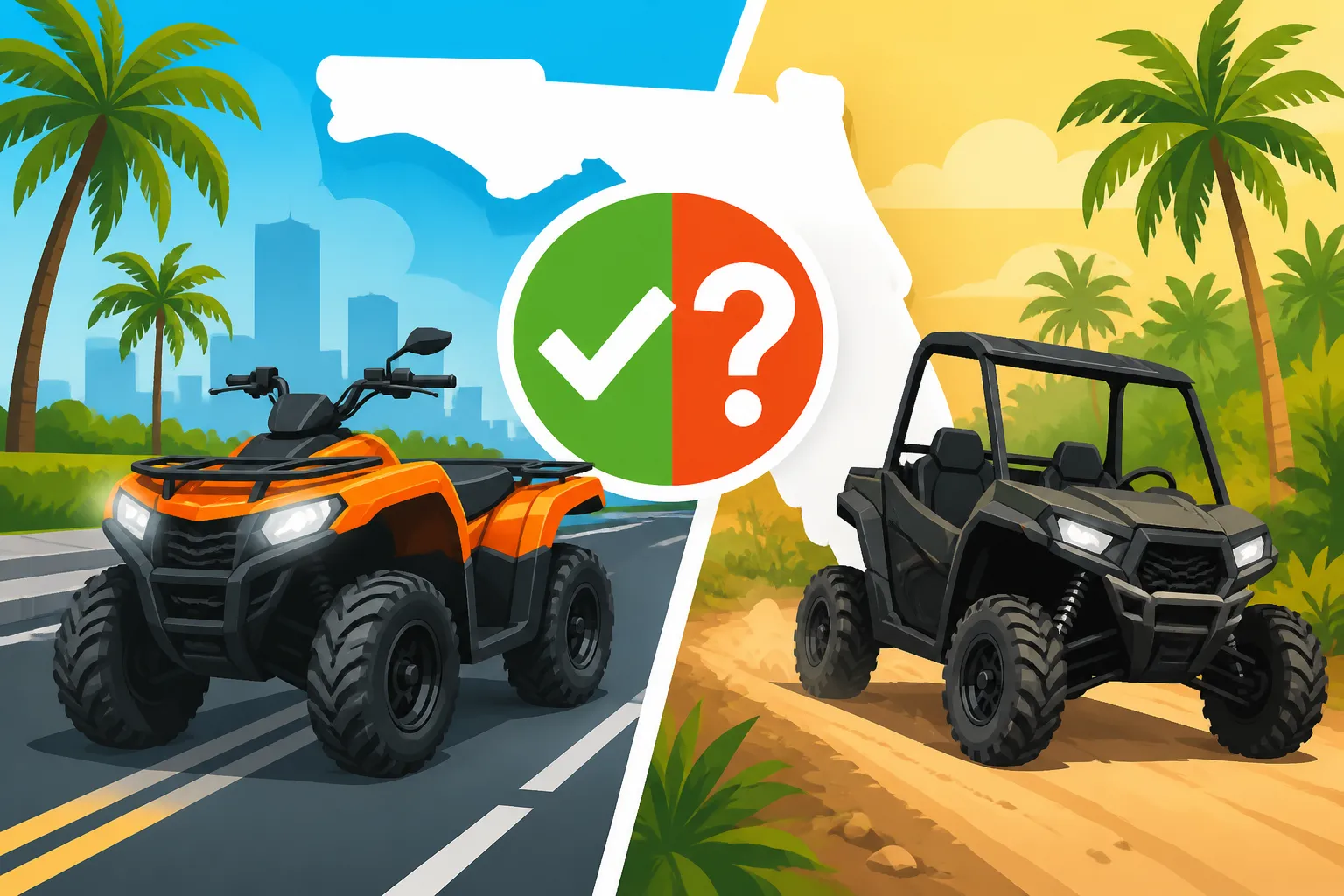
The Fundamental Rule: ATVs Are Generally NOT Street Legal in Florida
Let's get straight to the point because it's the biggest source of misunderstanding: in the vast majority of cases, ATVs are absolutely not street legal in Florida. This isn't just a suggestion; it's the law. Many riders, especially those new to the state or coming from areas with more relaxed rules, find this incredibly frustrating. You've invested in a powerful machine, and it feels like it should be able to go anywhere, right? Unfortunately, Florida's statutes draw a very clear line in the sand when it comes to off-highway vehicles and public paved roads.
The primary reason for this blanket prohibition comes down to how ATVs are classified by the state. They are designed for off-road use, lacking many of the safety features required for highway operation. Think about it: no turn signals, no brake lights in the traditional sense, no rearview mirrors, often no horn, and tires not rated for pavement. These are not minor details; they are fundamental differences that prevent an ATV from meeting the safety standards for street vehicles. The legislature created specific rules for these machines because their characteristics are simply not compatible with the flow of street traffic. Trying to bend these rules can lead to serious legal consequences, not to mention safety risks for both the rider and other motorists.
Understanding Florida's Definition of an ATV
To grasp why ATVs aren't street legal, you first need to understand Florida's legal definition of what an "all-terrain vehicle" actually is. The state statutes are pretty clear on this. An ATV is generally defined as any motorized off-highway vehicle 55 inches or less in width, having a dry weight of 1,500 pounds or less, designed to travel on four or more nonhighway tires, and manufactured for use by a single operator or, if specifically designed by the manufacturer, for use by a driver and one passenger. This definition is crucial because it sets ATVs apart from other vehicle types like golf carts, low-speed vehicles (LSVs), or even utility task vehicles (UTVs) that might be wider or heavier.
This specific definition is not just bureaucratic jargon; it's the foundation for all the rules that follow. For instance, the mention of "nonhighway tires" immediately flags ATVs as unsuitable for paved roads. These knobby, low-pressure tires are fantastic for gripping dirt, mud, and sand, but they wear rapidly and handle poorly on asphalt, especially at higher speeds. The narrow width and lighter weight also contribute to a higher center of gravity relative to the vehicle's track, making them less stable on paved surfaces and in traffic situations. Because of these inherent design characteristics, Florida's lawmakers have determined that ATVs simply don't belong on the same roads as cars, trucks, and motorcycles. It’s about ensuring public safety and maintaining a clear distinction between recreational off-road use and regulated highway travel.
Why the Distinction Matters for Road Use
The precise distinction Florida makes between an ATV and other vehicles like UTVs, golf carts, or even what it calls "recreational off-highway vehicles" (ROVs) is incredibly important when you're thinking about road use. For instance, a common question is, "What about my side-by-side?" Many UTVs, while still off-road focused, are wider than 55 inches and heavier than 1,500 pounds. This means they often fall into Florida's ROV category (up to 80 inches wide and 3,500 pounds dry weight) or even outside the OHV definitions entirely, potentially opening different avenues for road-legal conversion – which we'll discuss later. But for a traditional ATV, the narrow definition slams the door shut on standard street legality.
The state's strict definitions mean that your standard quad—whether it’s a sport quad, a utility quad, or a youth model—is explicitly excluded from being driven on public roads or highways. This includes county roads, city streets, and state routes. The only places an ATV is truly "at home" are designated off-highway vehicle trails, private property with permission, and very specific, limited exceptions on certain unpaved roads. Without this clear understanding, many riders find themselves in trouble, pulled over by law enforcement who are simply enforcing the statutes as written. It’s a legal framework designed to minimize accidents and ensure that vehicles operating on public roadways meet a baseline of safety and design standards that ATVs, by their very nature, do not. If you're wondering [Why a Florida Quad Title Is Electronic Only], it's also tied to these classifications.
Limited Exceptions: Where ATVs CAN Touch Florida Pavement
While the general rule is "no street riding for ATVs," Florida law does carve out a few very specific, highly regulated exceptions. These aren't loopholes to exploit, but rather carefully defined circumstances where an ATV might legally operate on a public road for a very short duration or under unique conditions. It's crucial to understand these exceptions precisely, as deviating from them by even a small margin can still result in a citation or worse. Always remember that even in these scenarios, you're expected to operate your ATV safely and follow all traffic laws applicable to your situation.
Crossing a Paved Public Highway
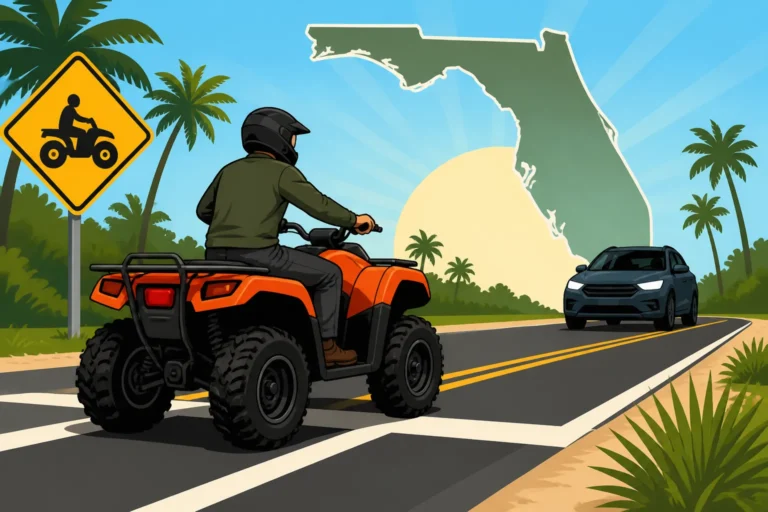
One of the most common and widely misunderstood exceptions allows an ATV to cross a paved public highway. This is not permission to ride on the highway, even for a short distance. It's strictly for traversing one side of a road to the other, typically to get to another section of trail or private property. However, this isn't a free-for-all. Florida law dictates specific conditions for such crossings. The operator must come to a complete stop before crossing, yield to all oncoming traffic, and proceed only when safe. The crossing must be made at approximately a 90-degree angle to the roadway, and the ATV must have its headlights and taillights on, even during daylight hours.
You might encounter this scenario if you're riding a trail system that is bisected by a paved county road, or if you need to access private land on the opposite side of a public road from where you're staging. It's a quick, direct maneuver, not a leisurely drive. Law enforcement officers are well aware of this specific statute and will be watching for riders who try to stretch "crossing" into "riding down the shoulder." It’s a brief moment of necessity, not convenience. Treat it with extreme caution and follow every rule to the letter. This is also where understanding [Florida's Off-Highway Vehicle Title Law Explained] becomes relevant, as you should still have proof of ownership even during a crossing.
Unpaved Roads and Designated County Use
Here's where things get a bit more nuanced and can vary significantly depending on your specific location within Florida. State law allows counties to designate certain unpaved roads for ATV use. Yes, unpaved. This means dirt, gravel, or shell roads, not paved asphalt or concrete. However, this isn't an automatic right; it requires a specific ordinance or resolution passed by the county commission. If a county has designated an unpaved road for ATV use, there will typically be signage indicating this, along with any specific rules of operation (like speed limits or hours of use).
The catch? Most counties have not designated vast networks of unpaved roads for ATVs. Some have "opted out" entirely from allowing ATVs on any public roads, while others might have very limited, specific sections where it's permitted, often tied to agricultural access or specific recreational areas. You absolutely cannot assume an unpaved road is open to ATVs just because it's unpaved. You must verify with the local county sheriff's office or county administration whether a specific road is designated. Without this official designation, even an unpaved road is still considered a "public road" under Florida law, and your ATV is generally prohibited. The rules here are quite different from, say, [Florida Golf Cart Laws vs ATV Laws]. When operating on designated unpaved roads, riders must typically possess a valid driver's license (if 16 or older) and adhere to speed limits. For those under 16, direct adult supervision by a licensed driver is usually required.
Agricultural and Emergency Use Exemptions
Florida law also provides a few specialized exemptions for ATVs used in agricultural operations or during emergencies. Farmers, ranchers, and those involved in bona fide agricultural pursuits can often use ATVs on public roads for very specific, job-related purposes, such as moving between fields or performing necessary tasks on remote sections of their property. These are not recreational exemptions; they are strictly for work directly tied to agriculture. Even then, such use is often restricted to certain times of day, requires specific safety equipment, and is generally limited to local, low-traffic roads.
Similarly, in genuine emergency situations, such as disaster relief, search and rescue, or utility restoration after a storm, an ATV might be authorized for temporary road use by emergency personnel or authorized volunteers. These are usually highly coordinated efforts where safety protocols are paramount, and the use is for an explicit, time-sensitive purpose. For the average recreational rider, these agricultural and emergency exemptions almost certainly won't apply. They exist to serve critical functions, not to expand the scope of general ATV riding on public roads. It's a very narrow lane, indeed, so don't mistake these essential exemptions for a free pass to drive your quad around town.
The Road to "Street Legal": Converting a UTV (or Not)
This is a hot topic, and it's where a lot of confusion, hope, and sometimes misinformation comes into play. Many riders, seeing their side-by-side or even their quad, wonder if they can just add some lights and a license plate and be street legal. The short answer for an ATV is almost always no. For UTVs, the path is more complex but potentially possible, specifically by converting them into a Low-Speed Vehicle (LSV). This distinction is critical because an ATV, by its very definition and design, simply cannot meet the Florida Department of Highway Safety and Motor Vehicles (FLHSMV) requirements to be registered as a street-legal vehicle.
Why a Standard ATV Cannot Be Converted to Street Legal
Let's address the ATV first. A standard ATV cannot be made "street legal" in Florida. Period. It's not just about adding a horn and turn signals. The foundational issue is the vehicle's original manufacturer certification. ATVs are manufactured for off-road use only and lack a Vehicle Identification Number (VIN) that would classify them for on-road registration as a car, truck, or even a motorcycle. They also lack crashworthiness standards, proper lighting configurations for highway speeds, windshields, seatbelts (beyond rudimentary restraints for a single operator), and emissions certifications required for on-road vehicles. Even if you bolted on every possible accessory, it still wouldn't fundamentally change its classification or get it past a state inspection for street legality.
Think of it like trying to make a dirt bike street legal by simply adding a headlight. While some dirt bikes can be converted with specific kits and certification, it’s because their underlying frame and engine design might be adaptable to meet the required standards. ATVs, however, are a different beast. Their design parameters, from suspension to steering geometry to tire type, are so distinctly off-road that they cannot be re-certified for highway use. Attempts to modify an ATV for street use are likely to lead to costly tickets, impoundment, and no legitimate path to registration. This is why when you read about [Florida's 55-Inch ATV Definition and Why It Matters], it’s a hard limit for on-road considerations.
Understanding Florida's Low-Speed Vehicle LSV Rules
Now, for UTVs (Utility Task Vehicles), also known as side-by-sides, there might be a path to limited street legality, but it's not as an ATV; it's by converting it into a Low-Speed Vehicle (LSV). Florida defines an LSV as any four-wheeled electric vehicle whose top speed is greater than 20 miles per hour but not greater than 25 miles per hour. While the law primarily focused on electric vehicles when it was written, some gas-powered UTVs can be modified to meet these stringent LSV requirements. This allows them to be registered, titled, and operated on public roads with a posted speed limit of 35 mph or less.
To qualify as an LSV, the UTV must be equipped with specific safety features that a standard ATV lacks. These include headlamps, stop lamps, turn signals, taillamps, reflex reflectors, parking brake, rearview mirrors, a windshield, seat belts, and a Vehicle Identification Number (VIN). The VIN is critical here, as the vehicle must be able to be titled and registered with the FLHSMV. Some manufacturers, like those who make components for UTVs such as SuperATV, offer accessory kits that can help a UTV meet some of these requirements, but the vehicle itself must be designed to accommodate them and ultimately pass inspection. LSVs are not allowed on roads with speed limits above 35 mph and are also typically restricted from bike paths or sidewalks. It's a very specific niche for road use.
The Costs and Requirements of an LSV Conversion
Converting a UTV into a Florida-legal Low-Speed Vehicle (LSV) is not a cheap or simple undertaking. First, you must start with a UTV that has a VIN and a Manufacturer's Certificate of Origin (MCO) or title that can be registered. If you bought your UTV from a dealer, they might have specific knowledge about models suitable for this. Then, you're looking at adding all the necessary safety equipment: DOT-approved windshield, headlights, taillights, brake lights, turn signals, horn, rearview mirror, side mirrors, seatbelts for all seating positions, and potentially speed restrictors if your UTV exceeds 25 mph. Companies like SuperATV offer many of these components, from DOT-approved windshields to universal turn signal kits.
The cost for parts alone can easily run into hundreds, if not thousands, of dollars, depending on how much equipment your UTV already has. Beyond the parts, there's the labor to install everything, plus the administrative hurdles. You'll need to submit an application to the FLHSMV, likely have the vehicle inspected by a law enforcement officer or authorized agent to verify it meets all LSV requirements, and then pay for a new title and registration. This process can be time-consuming and frustrating if you're not prepared for all the paperwork and inspections. It's a significant commitment, and for many UTV owners, the effort and expense might outweigh the benefits of limited road use, especially if their primary riding is off-road. Consider [Florida UTV Titling for Side-by-Sides Over 55 Inches] as a prerequisite for this.
County-Specific Rules: The Local Landscape for ATV Road Use
Florida is a large, diverse state, and while state law sets the baseline for ATV road use, counties have some limited ability to enact their own ordinances. This means that what's permitted (or explicitly prohibited) in one county might be different in another. This patchwork of rules can be incredibly confusing for riders, especially if you travel across county lines to access different riding areas or private property. It's why relying on what "someone told you" is never a good idea; you need to check the official sources for each specific county.
Counties That Have Opted Out or Designated Roads
Florida Statute 316.2123 allows counties to adopt ordinances to permit the operation of ATVs on unpaved roads owned or controlled by the county. However, counties also have the option to opt out of this provision entirely, meaning they can explicitly ban ATVs from all public roads, paved or unpaved, within their jurisdiction. Many counties have done one or the other, leading to a varied landscape for riders. For example, some rural counties, often those with significant agricultural activity, might have designated a few specific unpaved roads for limited ATV use, recognizing the practical needs of local residents. These roads are typically clearly marked.
On the other hand, more urbanized or environmentally sensitive counties might have outright bans on any ATV road use to minimize traffic conflicts, noise, or environmental impact. This can be a major headache if you're riding near a county line. You might be legally riding on an unpaved road in one county, cross into the next, and suddenly be in violation of a local ordinance. It’s imperative to do your homework before you venture out, especially if you plan on using any public roads, even unpaved ones, in a county you're unfamiliar with. This often comes down to reading through local county commission meeting minutes or contacting the county clerk's office.
How to Research Local Ordinances in Florida
So, how do you find out what the rules are for a specific county? It requires a bit of detective work, but it’s absolutely worth the effort to avoid fines and potential legal issues. The best place to start is the county's official website. Look for sections related to ordinances, codes, or local laws. Specifically, search for "ATV," "off-highway vehicle," "road use," or "vehicle operation." You might find the relevant information under the Sheriff's Office, Public Works, or County Clerk's department. Many counties will have their full code of ordinances published online.
If you can't find clear information online, don't hesitate to contact the county's Sheriff's Office (non-emergency line) or the County Clerk's office directly. Be specific about the type of vehicle (ATV, UTV, LSV) and the type of road you're inquiring about (paved, unpaved, specific road names if possible). They should be able to direct you to the relevant statute or ordinance. Keep in mind that staff at smaller, rural county offices might be more familiar with these specific rules than those in larger, more urban areas where ATV road use is rare. It’s better to make a few phone calls than to receive an expensive ticket or have your machine impounded. Knowing [Florida's Off-Highway Vehicle Title Law Explained] is the first step, but local rules are a close second. For instance, [Titling an ATV at the Hernando County Tax Collector] office might not cover all the specific road-use ordinances for Hernando County itself, which you'd need to find separately.
Important Safety and Operation Rules on Permitted Roads
Even in the rare instances where an ATV might legally operate on a public road in Florida—such as during a permitted crossing or on a designated unpaved county road—there are strict safety and operational rules that must be followed. These aren't optional; they are designed to protect you, your passengers, and other motorists. Ignoring these rules, even when you believe you're on a "legal" road, can still result in citations, accidents, and serious liability. Always prioritize safety and adhere to the letter of the law.
Driver's License and Age Requirements
One of the most critical rules concerns who can actually operate the ATV on a public road, even when permitted. Florida law requires anyone operating an ATV on a public road (including those brief crossings or designated unpaved roads) to possess a valid driver's license if they are 16 years of age or older. This means no unlicensed teens or adults can operate an ATV on public roads, even if they're just crossing or riding on a "legal" dirt road. For riders under the age of 16, the rules are even stricter. While they might be able to ride an ATV on private land under certain conditions, operating on any public road segment typically requires direct supervision by a licensed adult who is at least 18 years old.
This direct supervision usually means the adult must be within sight and hearing distance, actively monitoring the minor's operation. This isn't just a recommendation; it's a legal requirement designed to ensure inexperienced riders are protected and guided in potentially hazardous situations involving other traffic. So, if you're a parent thinking of letting your younger child cross a road on their ATV, ensure you have your license, and you're providing direct, active supervision. These rules are distinct from [Florida ATV Helmet Law for Riders Under 16], but both are crucial for youth safety.
Helmet and Eye Protection Laws
Florida has specific helmet and eye protection laws for ATV riders, and these rules absolutely apply, and often become even more critical, when operating on any public road. For anyone under 16 years of age, wearing a U.S. Department of Transportation (DOT) approved safety helmet is mandatory at all times when operating an ATV, regardless of whether it's on public or private land. This means if a 14-year-old is doing a legal road crossing, they must be wearing a proper helmet. This rule is non-negotiable and strictly enforced.
Beyond helmets, all ATV riders, regardless of age, must wear eye protection. This could be safety goggles, a face shield integrated into a helmet, or shatter-resistant glasses. The goal is to protect your eyes from debris, insects, and wind, which can impair vision and lead to accidents, especially when interacting with road traffic. These are basic safety precautions that should be followed even in off-road settings, but they become legally mandated and vitally important when you're momentarily sharing space with cars and trucks. For example, [Florida Eye Protection Rule for Young Riders] is a key component here.
Daytime Operation and Other Equipment Rules
Another critical restriction for any legal ATV road operation in Florida is that it must occur during "daytime hours only." This means from sunrise to sunset. There is no provision for operating an ATV on public roads at night, even if you have headlights and taillights installed. This is largely due to the limited visibility of ATVs to other motorists, their lack of comprehensive street-legal lighting systems, and the increased risk of accidents in low-light conditions. If you're caught riding an ATV on a public road after dusk or before dawn, you will likely face a citation, even if you were otherwise compliant with other rules.
Beyond timing, any ATV being operated on a public road must have at least one headlight and one taillight turned on, even during the day. While ATVs are generally not required to have turn signals, brake lights, or mirrors like street vehicles, the existing lighting must be functional and illuminated. It's also a good practice, though not always explicitly mandated for ATVs in these specific limited contexts, to have a working horn. For those instances where ATVs can use designated unpaved roads, specific county ordinances might add further equipment requirements, such as flags or additional reflective material. Always check local rules and ensure your machine is in top operational order before hitting any public thoroughfare.
Penalties and Enforcement: What Happens If You Break the Rules
Florida law enforcement officers take ATV road violations seriously. It's not just a minor infraction; operating an off-highway vehicle illegally on public roads is a direct violation of state statutes and local ordinances. The consequences can range from expensive fines to having your machine impounded, and in some cases, even more severe legal repercussions. It's far better to understand and abide by the rules than to face the unpleasant reality of enforcement.
Fines, Impoundment, and Legal Ramifications
If you're caught operating an ATV illegally on a Florida public road—whether it's a paved street, an undesignated dirt road, or failing to meet the conditions for a legal crossing—you're looking at a range of penalties. The most common immediate consequence is a traffic citation, which carries a hefty fine. These fines can easily run into several hundred dollars, often comparable to a moving violation in a car. But it doesn't stop there. Law enforcement officers have the authority to impound your ATV. This means your machine is towed away, and you'll be responsible for towing fees, daily storage fees, and potentially other administrative charges before you can even get it back. These costs can quickly add up to more than the original fine itself.
Beyond fines and impoundment, there can be more significant legal ramifications. If your illegal operation causes an accident, you could be held liable for damages to other vehicles or property, and for any injuries sustained. Your personal auto insurance policy is highly unlikely to cover an ATV being operated illegally on a public road, leaving you personally exposed to significant financial risk. If you are under the influence while operating an ATV on a public road, you could face DUI charges, just as if you were in a car. The legal system doesn't differentiate between an ATV and a car in this regard when it comes to impaired driving. Understanding these potential pitfalls highlights the importance of only riding your ATV where it's legally permitted. Knowing [Florida ATV Ticket Cost for Illegal Road Riding] might make you think twice.
What Florida Deputies Check at a Roadside Stop
When a Florida deputy or state trooper pulls over an ATV for a suspected road violation, they're looking for several key things to determine if a violation has occurred and what actions to take. First and foremost, they'll verify if the ATV is being operated on a prohibited roadway (e.g., a paved street). They'll also check if the operator meets the age and licensing requirements for public road use. If you're under 16, they'll check for direct adult supervision.
Beyond the "where" and "who," deputies will assess the "how." Are you doing a legal 90-degree crossing with lights on, or are you cruising down the shoulder? Is it daytime hours? They'll also look for basic safety equipment like helmets (for minors) and eye protection (for all riders). They might also check the vehicle's VIN, though an ATV typically doesn't have a title for road use, it needs one for ownership [Florida Off-Highway Vehicle Title Rules Explained]. If you're on a UTV that you believe is LSV-compliant, they'll be checking for all the required LSV safety equipment and proper registration/tag. Any missing element can quickly lead to a citation. Be prepared to show identification and cooperate fully. It’s a good idea to have your [Proof of Ownership When the MSO Is Missing] handy, even if you're just crossing a road.
Alternatives to Road Riding: Where to Legally Enjoy Your ATV
Given Florida's strict rules regarding ATV road legality, the best and safest approach for most riders is to stick to designated off-road areas. Florida offers a fantastic array of public and private options where you can legally and fully enjoy your ATV or UTV without the constant worry of breaking the law or encountering street traffic. These dedicated spaces are designed for off-road recreation, providing the terrain, challenges, and community that makes ATV riding so much fun.
Designated Public Land and OHV Parks
Florida boasts several excellent public lands with designated Off-Highway Vehicle (OHV) trail systems. The most well-known include the Croom Motorcycle Area within the Withlacoochee State Forest, and trails within the Ocala National Forest. These areas offer miles of varied terrain, from sandy scrub trails to challenging woods sections, all specifically managed for ATVs, UTVs, and dirt bikes. To ride in these public areas, you'll typically need to purchase a day pass or an annual pass, and there are often additional rules regarding spark arrestors, helmet use (for all riders, not just minors), and sometimes even width restrictions for UTVs. For example, Croom has a strict 55-inch width limit for many of its trails, which means many UTVs cannot enter.
Beyond state and national forests, Florida also has a growing number of private OHV parks and mud parks. These facilities are often designed with specific types of riding in mind, from technical trails to massive mud pits. They typically charge an entry fee, and some offer camping, wash stations, and other amenities. Examples include Hog Waller ATV Resort in Palatka and Redneck Mud Park near Punta Gorda. These private parks often have their own sets of rules, but they are generally more relaxed than public land rules regarding machine modifications or noise, though safety is always paramount. Riding in these areas is the quintessential Florida ATV experience, offering wide-open spaces and challenging trails without the headache of road-use regulations. You can explore places like [Ocala National Forest ATV Trails in Florida] for fantastic adventures.
Private Property with Owner Permission
One of the simplest and most common ways to enjoy your ATV legally in Florida is on private property, provided you have explicit permission from the landowner. This could be your own land, a friend's farm, or a leased parcel. When riding on private land, you are generally not subject to the same state and local road-use statutes, but you are still responsible for adhering to basic safety practices and any specific rules set by the landowner. It's always a good idea to have written permission if you're riding on someone else's property, just to avoid any misunderstandings or trespassing issues.
Even on private property, good judgment and safety should be your top priority. Always wear appropriate safety gear, don't ride under the influence, and be mindful of noise levels and environmental impact, especially if neighbors are nearby. While the legal restrictions on your machine are fewer, your responsibility for safe and respectful operation remains. This is often the ideal solution for casual riding, testing new modifications from SuperATV, or simply getting comfortable with a new machine without the complexities of public land passes or road rules. Just remember, private land does not exempt you from laws regarding reckless endangerment or property damage if you cause harm.
Disclaimer
This article is for general informational purposes only and does not constitute professional advice. Laws, prices and regulations vary by location and change over time. Consult a qualified professional for guidance on your specific situation.