Florida’s Unpaved Road Rule for ATVs Explained
It can be incredibly frustrating to own an ATV in Florida, eager to explore the beautiful backroads and natural landscapes, only to be constantly confused about where you can legally ride. The state's laws around off-highway vehicles and public roads are notoriously complex, leaving many riders scratching their heads and worried about inadvertently breaking the law. This guide is here to untangle the nuances of Florida's unpaved road rule for ATVs, helping you understand precisely when and where you can enjoy your machine without the fear of a ticket.
The Crux of Florida's Unpaved Road Rule: What It Really Means for ATV Riders
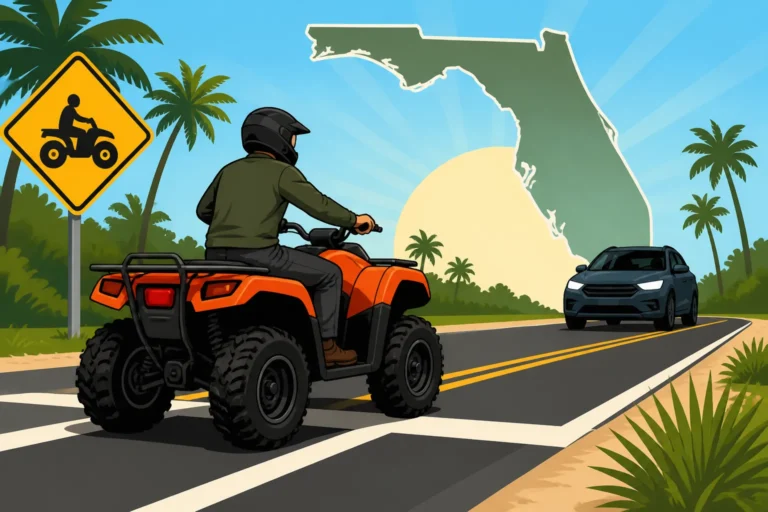
Florida's stance on ATVs on public roads is often misunderstood. Many assume that if it's not a paved highway, it's fair game. Unfortunately, it's not that simple. The core of the rule allows ATVs, under specific circumstances, to be operated on unpaved public roads within the state. This isn't a blanket permission for every dirt path or gravel lane, but a narrowly defined allowance designed to balance recreational access with public safety and infrastructure preservation. Riders need to be acutely aware of these distinctions, as operating an ATV where it's not permitted can lead to significant penalties, including fines and even impoundment of your machine.
Defining "Unpaved Roadway" in Florida Law
The first critical step in understanding where you can ride is to grasp what Florida law actually considers an "unpaved roadway." This isn't just any stretch of dirt. According to the statute, an unpaved road is typically a county-maintained road that lacks a hard, paved surface like asphalt or concrete. Think of the sandy two-track roads deep in the Ocala National Forest or the gravel access roads leading to farms in Polk County. These are distinct from private trails, designated OHV parks like Croom Motorcycle Area, or even shoulders of paved highways.
The key is that it must still be classified as a "roadway" for public use, even if it's unpaved. This means it's generally maintained by a governmental entity, has a right-of-way, and is intended for vehicular traffic, albeit slower-moving or specialized traffic. It's not a footpath, a bike trail, or a random shortcut through someone's property. If you're on a path that looks like it's exclusively for hiking or bicycling, or it's clearly not a public thoroughfare, your ATV likely doesn't belong there. Understanding [Unpaved Roadway: How the Statute Defines It] is crucial for any rider hoping to stay on the right side of the law.
Why This Rule Exists
You might wonder why Florida makes this exception for ATVs on unpaved roads, especially when they're generally banned from paved ones. The rule serves several practical purposes. Firstly, it provides essential access for residents living in rural areas where unpaved roads are common, allowing them to travel short distances or connect to main thoroughfares. Imagine someone living on a long dirt road in Marion County who needs to access a main road for supplies – an ATV might be their primary mode of transport for that short stretch.
Secondly, it supports agricultural and land management activities. Farmers and ranchers often use ATVs as utility vehicles on their properties, and the ability to traverse a short public unpaved road to get from one section of land to another, or to access equipment, is vital for their operations. This is a significant aspect of [Florida Farm and Ranch ATV Road Exceptions]. Lastly, the rule acknowledges the recreational aspect of ATV riding, providing limited opportunities for riders to connect between private properties or designated trails, assuming the county hasn't opted out of the provision. It's a pragmatic compromise to allow some mobility without fully opening up all public roads to ATVs.
The Difference Between Unpaved Roads and Designated Trails
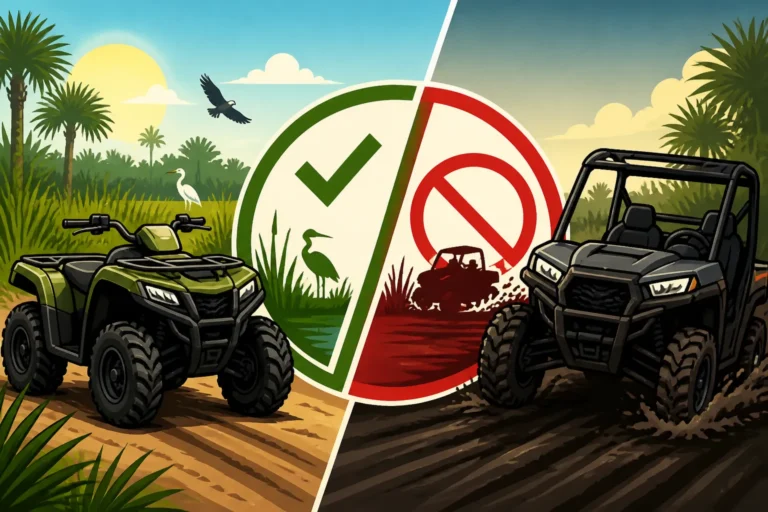
It's easy to confuse an unpaved public road with a designated ATV trail, but legally and practically, they are very different. Designated ATV trails, like those found in the Ocala National Forest or the Croom Motorcycle Area, are specifically designed and managed for off-highway vehicle recreation. They often have specific entry fees, permits, and rules tailored to trail riding, and are generally separate from the public road network. These trails are where you can really let loose and enjoy the full capabilities of your machine, often encountering challenging terrain, mud, and obstacles.
An unpaved public road, on the other hand, is still fundamentally a road. While it might be dirt or gravel, it's not primarily intended for recreational off-roading. You'll likely share it with other vehicles, including cars, trucks, and even farm equipment. The rules of the road, albeit adapted for unpaved surfaces, still apply. Speed limits, right-of-way, and other traffic laws are in effect. The expectation is that you're using the road for transit, not for tearing up the terrain. Confusing these two can lead to not only legal trouble but also dangerous situations, as a public unpaved road won't have the same safety considerations or dedicated space as a managed trail system.
Specific Conditions for Riding an ATV on Florida's Unpaved Roads
While the "unpaved road rule" sounds like a green light, it comes with a significant number of caveats and conditions. It's not a free-for-all. Florida law is very particular about who can ride, when they can ride, and what their ATV must be equipped with when venturing onto these public thoroughfares. Ignoring these specific conditions is a quick way to find yourself on the wrong side of a Florida Highway Patrol trooper or a county sheriff's deputy. These rules are in place not to spoil your fun, but to ensure safety for everyone using the roads and to minimize impact on local communities.
Age and Supervision Requirements
Florida has strict rules regarding the age of ATV operators on public lands and, by extension, public unpaved roads. Generally, a person must be at least 16 years old to operate an ATV on an unpaved public road. However, even if you're 16 or older, if you don't have a valid driver's license, you must be under the direct supervision of a licensed driver. This "direct supervision" means the licensed driver needs to be close enough to observe and influence the ATV operator, usually riding an ATV or other vehicle alongside them or immediately ahead/behind. It's not enough for them to be in the same general area. For riders under 16, the rules are even tighter. They are typically not permitted on public roads unless specific agricultural or private property exemptions apply, and even then, usually require specific safety course certification and direct adult supervision. For more detail, you should explore [Do You Need a Driver's License for an ATV in Florida?] and [Florida ATV Passenger Rules], which outlines rules for carrying any passengers.
Florida's Daytime-Only ATV Road Rule
One of the most critical restrictions for ATV use on unpaved public roads in Florida is that it must occur during "daytime hours only." This isn't just a suggestion; it's a legal requirement. Generally, "daytime hours" means from sunrise to sunset. You cannot operate an ATV on these unpaved roads during dawn, dusk, or nighttime hours. The reasoning behind this is primarily visibility and safety. ATVs are often smaller and less visible than other vehicles, and the lack of comprehensive lighting systems (like turn signals, brake lights, and standard headlights/taillights required for street-legal vehicles) makes them particularly dangerous to operate in low-light conditions.
This rule means you need to plan your rides carefully. If you're heading out for an afternoon adventure that might extend into the evening, you'll need to make sure you're off any public unpaved roads well before sunset. Getting caught even shortly after dusk can result in a citation. Even if your ATV has aftermarket lights, they typically don't meet the stringent requirements for night-time road use for street-legal vehicles. So, heed [Florida's Daytime-Only ATV Road Rule] and make sure you're riding with the sun high in the sky.
Equipment Requirements
While ATVs are not held to the same stringent equipment standards as street-legal vehicles, there are still some basic requirements if you plan to use them on unpaved public roads. All ATVs must be equipped with at least one headlight and one taillight. While these lights might be sufficient for trail riding, they are primarily for making your presence known to others, not necessarily for illuminating the road far ahead. Additionally, Florida law requires eye protection for all riders, regardless of age, when operating an ATV. This could be goggles, a face shield on a helmet, or even impact-resistant glasses.
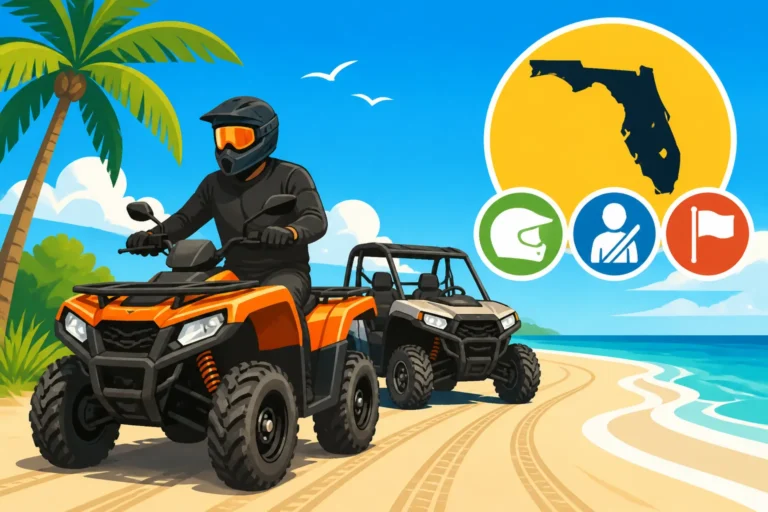
For riders under 16, a helmet that meets federal Department of Transportation (DOT) standards is mandatory. While not legally required for adult riders on unpaved roads, wearing a DOT-compliant helmet is always a wise safety precaution. Remember, an ATV is an open-air vehicle, and even a minor tumble can result in serious head injuries. Beyond the legal minimums, consider adding accessories like a horn, mirrors, and even a flag for increased visibility, especially if you anticipate encountering other traffic. These additions, readily available from aftermarket suppliers like SuperATV, significantly enhance safety on shared unpaved roads. More details can be found by researching [Florida ATV Lights and Equipment for Road Use] and [Florida ATV Helmet Law for Riders Under 16].
Navigating Local Variations: Florida County ATV Opt-Outs: Why Rules Change at the Line
One of the most confusing aspects of Florida's ATV laws, especially concerning unpaved roads, is the power granted to individual counties. While the state statute provides a general framework, it doesn't create a uniform, statewide rule that applies everywhere. Instead, it allows counties to have a significant say in whether ATVs can use their unpaved roads and under what specific conditions. This means that what's perfectly legal in one county, like Putnam County, might be strictly prohibited just across the county line in St. Johns County. This patchwork of regulations is where many riders get into trouble, as simply assuming the rules are the same everywhere is a common and costly mistake. Understanding [Florida County ATV Opt-Outs: Why Rules Change at the Line] is paramount for any rider venturing beyond their local area.
How Counties Can Designate or Restrict ATV Roads
The power for counties to designate or restrict ATV use on unpaved roads comes from the state statute itself. It allows county commissions to pass local ordinances that either specifically permit or explicitly prohibit ATV operation on certain unpaved roadways within their jurisdiction. This isn't a hasty decision; it usually involves public hearings, community input, and careful consideration of local traffic patterns, safety concerns, and the character of the community. For example, a rural county with many agricultural properties might be more inclined to designate certain unpaved roads for ATV use to facilitate farm access, while a more suburban county might opt to prohibit ATVs entirely to reduce noise complaints and enhance public safety in residential areas.
Some counties might designate specific roads for ATV use, clearly marking them with signage, while others might issue a blanket prohibition. Still, others might simply remain silent, in which case the state's general rule applies, subject to all its conditions. The crucial takeaway is that the absence of a "no ATVs" sign doesn't automatically mean "yes ATVs." It requires proactive research on the rider's part to verify the local rules before hitting the road.
Identifying Legal Unpaved Roads
So, how do you know if a specific unpaved road is legal for your ATV? This is where your inner detective needs to come out. The best place to start is the county's official website, specifically looking for ordinances related to off-highway vehicles, traffic, or public road use. Most counties publish their ordinances online, and a quick search for "ATV ordinance [County Name]" might yield results. Failing that, contacting the county clerk's office or the local sheriff's department (non-emergency line, of course) can provide clarification. They are typically the enforcing bodies and should be able to direct you to the relevant information.
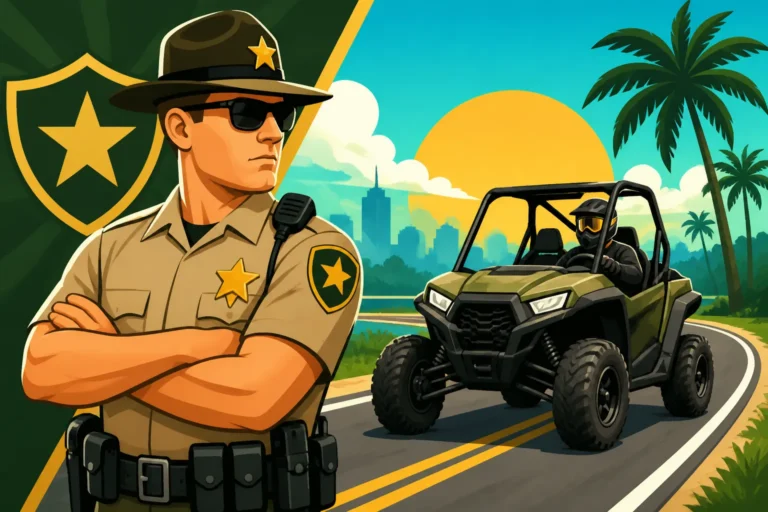
Another strategy is to look for official signage. Designated ATV roads, if permitted by the county, will often have specific signs indicating their allowance. Conversely, signs prohibiting ATVs will also be clearly posted. Don't rely solely on what you see others doing; local riders might be operating illegally or under specific exemptions you don't possess. Always verify the rules for yourself before riding. Getting it wrong can lead to significant headaches and expense, underscoring the importance of knowing what [Florida Sheriff Enforcement of ATV Road Rules] entails.
Understanding Posted Signage
When you're out riding, pay close attention to any road signs you encounter. Standard traffic signs still apply on unpaved roads, indicating speed limits, stop signs, and yield signs. Beyond that, look specifically for signs related to OHV or ATV use. A sign stating "ATV Permitted on Roadway" or similar wording would be a clear indicator that you're on a legal stretch. Conversely, signs like "No ATVs," "OHV Prohibited," or "Motorized Vehicles Restricted" clearly communicate a prohibition.
It's also important to understand that not all unpaved roads are created equal. Some might be public roads, while others are private drives or part of a larger private landholding. Signs indicating "Private Road," "No Trespassing," or "Residents Only" mean you should turn around, regardless of the surface. Always err on the side of caution. If there's no clear signage and you haven't been able to verify the rules beforehand, it's safer to assume ATVs are prohibited on that particular unpaved road. Relying on assumptions can lead to tickets and unpleasant encounters with law enforcement.
The Role of Private Land and Agricultural Exemptions
Beyond the public unpaved roads, a significant portion of ATV and UTV use in Florida occurs on private land, particularly in the state's vast agricultural areas. This is where the rules shift considerably, often allowing more freedom for machine operation. However, even on private property, there are still important legal considerations, primarily centered around permission and the specific purpose of the ATV's use. Many riders use their machines for work as much as play, and Florida law recognizes this utility, creating specific exemptions that are vital for farmers, ranchers, and land managers.
Florida Farm and Ranch ATV Road Exceptions
For those working in agriculture, Florida law provides specific exemptions that allow ATVs and UTVs to be operated on public roads, including unpaved ones, under certain conditions. These are not recreational allowances but are tied directly to agricultural work. For instance, an ATV can be operated on a public unpaved road during daylight hours by a person engaged in agricultural operations, provided the vehicle is being used for tasks related to farming, ranching, or managing the land. This could include moving equipment, checking fences, herding livestock, or accessing fields.
The key here is the "agricultural operations" clause. You can't just slap a bale of hay on your ATV and claim exemption for a joyride. The use must be legitimate and directly related to a working farm or ranch. These exemptions are critical for many of Florida's rural communities, where unpaved roads connect vast tracts of land. For example, a citrus farmer in Collier County might use their UTV to cross a county-maintained dirt road to get from one grove section to another. Understanding [Florida Farm and Ranch ATV Road Exceptions] can be invaluable for those whose livelihood depends on these machines.
Riding on Easements and Private Property
Riding on private property, whether it's your own land or someone else's, generally offers the most freedom for ATV use, but it's not without rules. If you own the land, you can typically ride your ATV as you see fit, adhering to local noise ordinances and any other specific property-use regulations. However, if you're riding on someone else's private property, you absolutely must have explicit permission. Verbal permission is a start, but written permission is always better, especially if you plan to ride there regularly. This simple step can save you from a trespassing charge, which is taken very seriously in Florida.
Easements present a trickier situation. An easement grants someone the right to use another person's land for a specific purpose, such as a utility company needing access to power lines or a neighbor needing a driveway across your property. While you might have an easement on your property, it doesn't automatically mean you can ride your ATV on it, nor does it give you the right to ride on an easement across someone else's land unless specifically stated in the easement agreement. Always consult the property deeds and, if necessary, legal counsel to understand your rights and restrictions regarding easements before riding your ATV on them. Getting caught trespassing, even inadvertently, can lead to fines, legal fees, and damaged relationships with landowners.
Comparing ATVs to Other Off-Highway Vehicles on Unpaved Roads
The world of off-highway vehicles (OHVs) is broader than just ATVs, encompassing UTVs (Utility Task Vehicles, often called side-by-sides), golf carts, and Low-Speed Vehicles (LSVs). While they all share some characteristics, their legal classifications and, consequently, their allowances on Florida's unpaved roads, vary significantly. It's easy to assume that if one type of OHV is allowed, they all are, but this is a dangerous assumption that can lead to legal trouble. Understanding the distinctions is crucial for responsible riding, especially as the popularity of UTVs and the changing laws around golf carts add layers of complexity.
Florida UTV Titling for Side-by-Sides Over 55 Inches and Road Use
UTVs, or side-by-sides, are increasingly popular, offering more passenger capacity and utility than traditional ATVs. However, their larger size and weight often place them in a different legal category in Florida. The state's definition of an ATV generally caps their width at 55 inches and dry weight at 1,500 pounds. Many UTVs exceed these dimensions. While [Florida UTV Titling for Side-by-Sides Over 55 Inches] is a separate issue, it's relevant because machines classified as "recreational off-highway vehicles" (ROVs) – which UTVs typically are if they exceed ATV dimensions – often face different restrictions on public roads.
Generally, UTVs (ROVs) are subject to the same unpaved road rules as ATVs, meaning they are allowed on county-maintained unpaved roads during daylight hours, provided the county hasn't opted out, and all other conditions (age, supervision, equipment) are met. However, their larger size can sometimes raise more concerns from local authorities regarding safety and road wear. Some counties might have specific ordinances that treat UTVs differently than smaller ATVs, so it's always critical to check local regulations for your specific machine. Products from SuperATV, like aftermarket accessories for UTVs, are widely available, but just because you can customize your machine doesn't mean it automatically becomes street-legal.
Florida Golf Cart Laws vs ATV Laws on Unpaved Surfaces
This is a point of frequent confusion for many Floridians, especially given recent changes to golf cart laws. A common sight in many Florida communities is golf carts zipping around on local roads, sometimes paved, sometimes unpaved. However, golf carts and ATVs are entirely different beasts in the eyes of the law, and their permitted road uses are distinct. Golf carts are generally permitted on certain public roads (including unpaved ones) where the speed limit is 25 mph or less, provided the local government has approved such use. They also have specific equipment requirements and, as of October 2023, new age and photo ID requirements for operators.
ATVs, conversely, are designed for off-road use and have far fewer allowances on public roads, even unpaved ones, than golf carts. An ATV is a powerful, high-performance machine, not a leisurely mode of transport for a planned community. The rules for [Florida Golf Cart Laws vs ATV Laws] are separate and should not be conflated. Just because you see golf carts on a specific unpaved road doesn't mean your ATV is welcome there. Always verify the rules for your specific vehicle type.
Florida Low-Speed Vehicle Rules for Side-by-Sides
For UTV owners who really want to use their side-by-side on public roads, converting it into a Low-Speed Vehicle (LSV) is an option, though it's a significant undertaking. An LSV is a street-legal vehicle with a top speed between 20 mph and 25 mph, equipped with specific safety features like headlights, taillights, brake lights, turn signals, reflective devices, a parking brake, a rearview mirror, a windshield, seat belts, and a vehicle identification number (VIN). Once properly converted, titled, registered, and insured as an LSV, your side-by-side can operate on public roads with speed limits of 35 mph or less, including unpaved ones.
This conversion effectively reclassifies your UTV from an off-highway vehicle to a street-legal one, subject to all the rules of the road that apply to other motor vehicles. It requires a driver's license to operate, and you must adhere to all traffic laws. While this allows for much greater road access, including on many unpaved roads, it's a costly and time-consuming process. It's not a solution for casual road use but rather for those who intend to use their side-by-side primarily as a street-legal utility or recreational vehicle. Understanding [Florida Low-Speed Vehicle Rules for Side-by-Sides] is key if you're considering this path.
Here's a quick comparison of OHV road rules:
| Vehicle Type | Unpaved Public Road Use (General FL Rule) | Paved Public Road Use (General FL Rule) | Key Distinctions |
|---|---|---|---|
| ATV | Permitted (daylight, 16+, supervision if no license, county opt-out) | Generally Prohibited (except for specific crossings or agricultural) | Designed for off-road. Limited road access, primarily unpaved, specific conditions. |
| UTV/ROV | Permitted (daylight, 16+, supervision if no license, county opt-out) | Generally Prohibited (except for specific crossings or agricultural) | Similar to ATVs, but often larger/heavier. Still OHV class. |
| Golf Cart | Permitted (local ordinance, 25 mph speed limit or less) | Permitted (local ordinance, 25 mph speed limit or less) | Specifically designed for low-speed communities. Different age/ID rules. |
| Low-Speed Vehicle | Permitted (35 mph speed limit or less) | Permitted (35 mph speed limit or less) | Street-legal classification, requires full vehicle registration/insurance, specific equipment. |
Potential Pitfalls and Penalties for Non-Compliance
Even with the best intentions, navigating Florida's ATV laws can be tricky. The complexities of state statutes combined with county-level variations create a minefield of potential violations. Many riders, either out of ignorance or by pushing the boundaries, find themselves facing citations, fines, and even the impoundment of their valuable machines. Understanding these potential pitfalls isn't just about avoiding trouble; it's about being a responsible and informed rider who contributes positively to the OHV community. The consequences of non-compliance can be far-reaching, affecting your finances, your driving record, and your ability to enjoy your machine.
Common Misconceptions That Lead to Tickets
Many ATV riders fall prey to common misconceptions about Florida's unpaved road rules. One of the biggest is the "if others are doing it, it must be legal" fallacy. Just because you see a local on an ATV heading down a dirt road doesn't mean they're riding legally, or that the same rules apply to you. They might have a specific agricultural exemption, or they might simply be breaking the law. Another misconception is that "any dirt road is an unpaved road." As discussed, the road must be a public, county-maintained roadway, not a private trail, a utility easement, or a random shortcut.
Additionally, assuming that aftermarket upgrades, like a robust light bar from SuperATV, magically make your ATV street-legal is a dangerous error. While these accessories enhance safety and visibility, they do not transform an off-highway vehicle into a street-legal one in the eyes of the law. Finally, many underestimate the "daytime hours only" rule, venturing out at dusk or dawn and getting caught. These seemingly minor infractions can quickly escalate into serious issues when encountered by law enforcement.
Florida ATV Ticket Cost for Illegal Road Riding
The financial repercussions of illegally riding your ATV on Florida's unpaved (or paved) roads can be substantial. A typical citation for operating an ATV on a prohibited roadway is often treated as a moving violation. While specific fines can vary by county and the discretion of the issuing officer, you can generally expect a base fine that could range from a couple of hundred dollars upwards. This base fine is usually compounded by court costs, administrative fees, and potential surcharges, quickly adding up to several hundred dollars.
Beyond the immediate fine, repeated violations or more serious offenses could lead to impoundment of your ATV. Recovering an impounded machine involves tow fees, storage fees (which accrue daily), and often requires proof of ownership and payment of all outstanding fines. These costs can easily run into the thousands of dollars, far exceeding the initial citation. Furthermore, a moving violation on your record could potentially impact your automobile insurance rates. For a full picture of the potential financial burden, it's wise to research [Florida ATV Ticket Cost for Illegal Road Riding] and understand the broader implications.
Safety Considerations for Unpaved Road Riding
Beyond the legal and financial penalties, the most crucial consideration for riding an ATV on any public road, paved or unpaved, is safety. ATVs are not designed for road use. Their suspension, tires, and steering are optimized for uneven, soft terrain, not hard, stable surfaces. This makes them inherently unstable on roads, especially when making sharp turns or sudden stops. The risk of rollover is significantly higher compared to a vehicle designed for road travel.
When sharing unpaved roads with other vehicles, visibility becomes a major concern. ATVs are low to the ground and can be easily obscured by dust, terrain, or other vehicles. The lack of standard safety features like seat belts (on many ATVs), airbags, and crush zones found in cars means that in the event of a collision, the ATV rider is extremely vulnerable. Always wear appropriate safety gear, including a helmet, eye protection, and sturdy clothing. Ride defensively, assume other drivers don't see you, and maintain a safe speed. Recognize that while the law may permit you on certain unpaved roads, it doesn't eliminate the inherent dangers of mixing off-road vehicles with road traffic. Your safety should always be your top priority.
Enhancing Your ATV for Permitted Unpaved Road Use
If you're going to take advantage of Florida's unpaved road rule, even occasionally, it makes sense to ensure your ATV is as safe and visible as possible. While no amount of aftermarket parts will magically make an ATV street-legal in the way a car is, thoughtful upgrades can significantly mitigate the risks associated with shared road use and ensure you meet the minimum legal requirements. It's about being proactive and responsible, recognizing that a trail machine isn't optimized for situations where you might encounter other vehicles or pedestrians.
Essential Upgrades for Safety and Compliance
To meet Florida's minimum requirements and enhance safety on unpaved public roads, several upgrades are essential. First and foremost, ensure your ATV has working headlights and taillights. Many older or purely recreational ATVs might have dim lights or only one of each. Consider upgrading to brighter LED lights for better visibility, both for you and for others to see you. While not strictly required for ATVs, adding turn signals can greatly improve communication with other road users, preventing confusion and potential accidents.
A horn is another invaluable safety device that can alert others to your presence, especially when coming around blind corners on dusty unpaved roads. Rearview mirrors, at least one, are crucial for being aware of traffic approaching from behind. Aftermarket kits, often available from reputable companies like SuperATV, can provide these components in a convenient package designed for ATVs. Investing in these items isn't just about compliance; it's about safeguarding yourself and others on shared roadways.
Maintaining Your Machine for Road Reliability
An ATV that sees occasional unpaved road use requires diligent maintenance, often more so than a machine used exclusively on trails. Road surfaces, even unpaved ones, put different stresses on components. Regularly check your tire pressure; running tires at trail pressure on harder surfaces can lead to excessive wear and reduced stability. Inspect your brakes frequently, as they're critical for stopping safely on mixed terrain. Ensure all your lights are functioning correctly before each ride.
Pay attention to your suspension components, steering linkages, and wheel bearings. Road vibration and consistent speeds can accelerate wear in these areas. Keeping your chain (if applicable) properly tensioned and lubricated is also important. A well-maintained ATV is not only safer but also more reliable, reducing the chances of a breakdown far from home. Regular cleaning, especially after dusty rides, will help you spot any potential issues before they become major problems, ensuring your machine is always ready for whatever Florida's unpaved roads throw at it.
Choosing the Right Tires for Mixed Terrain
Tires are arguably one of the most critical components for ATV safety and performance, especially when transitioning between varied terrains. Most stock ATV tires are designed primarily for off-road traction—think mud, sand, and loose dirt. While these excel on trails, they can be a liability on harder unpaved roads. Knobby mud tires, for example, wear down quickly on gravel and can make your ATV feel squirrelly and unstable at higher speeds.
If you frequently use unpaved roads to connect trails or access private property, consider a "hybrid" or "all-terrain" tire. These tires offer a more moderate tread pattern, providing better durability and a smoother ride on harder surfaces without completely sacrificing off-road grip. They'll wear more evenly and provide better handling characteristics when you're not in deep mud or climbing rocks. You might lose a tiny bit of extreme mud performance, but you'll gain significant safety and comfort on those stretches of dirt or gravel road. Reputable brands, often found through retailers like SuperATV, offer a wide range of tire options to suit different riding styles and terrain needs.
Disclaimer
This article is for general informational purposes only and does not constitute professional advice. Laws, prices and regulations vary by location and change over time. Consult a qualified professional for guidance on your specific situation.