Do Florida Snowbirds Need to Title Their ATV
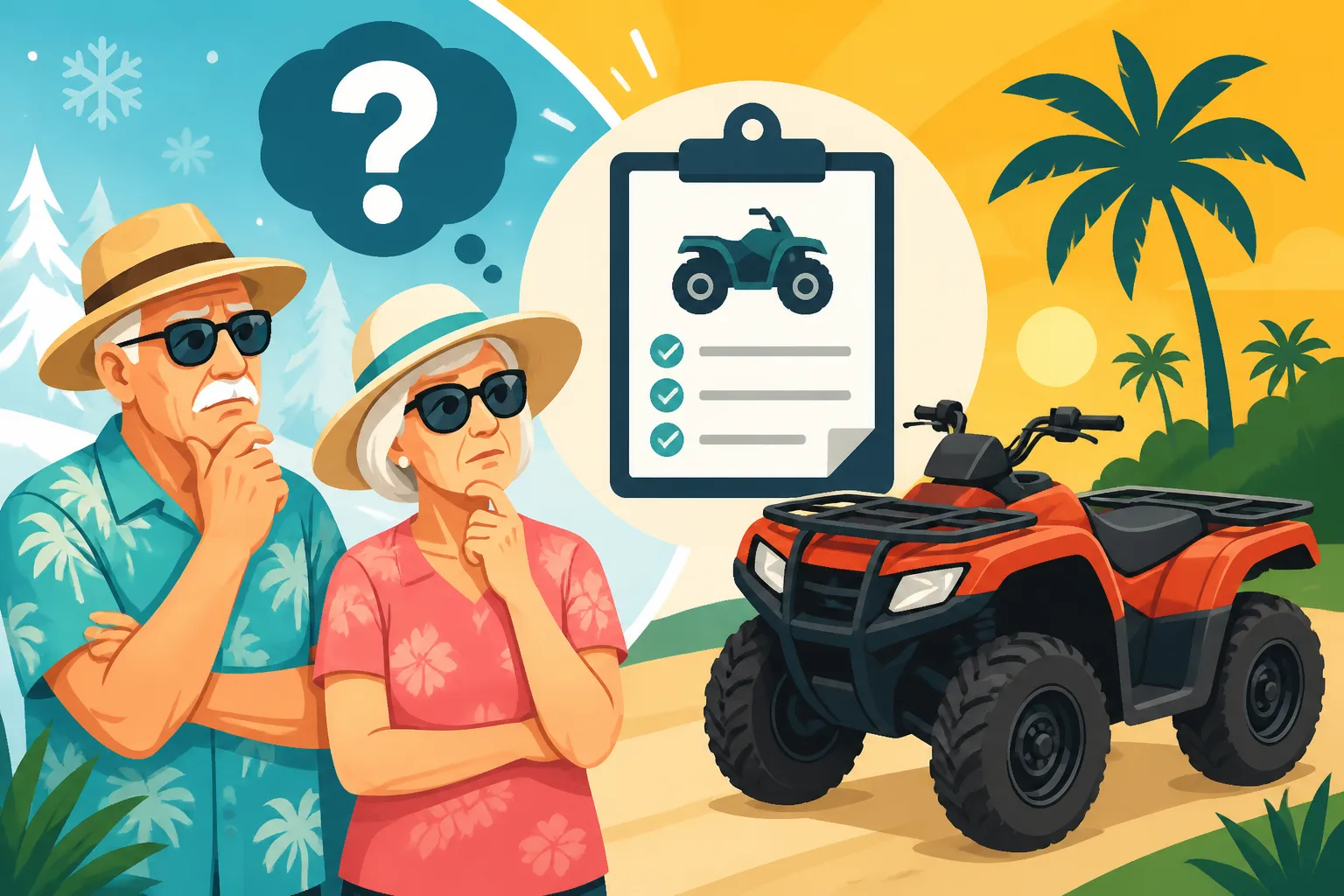
Ah, Florida snowbirds! You pack up your winter coats, swap them for shorts, and head south for those glorious cooler months, often bringing your beloved ATVs or UTVs with you. It's a dream, isn't it? Miles of trails, sunny days, and the freedom of the open scrub. But then that nagging question pops up: do you actually need to title your ATV here in Florida, even if you’re just visiting seasonally? This is a question that throws many folks for a loop, and honestly, the answer isn't always a simple "yes" or "no." It really depends on your specific situation, and this guide is going to walk you through all the ins and outs, so you can enjoy your time in the Sunshine State without any titling headaches.
Understanding Florida's Off-Highway Vehicle Titling Basics
Let's kick things off by understanding Florida's stance on titling off-highway vehicles (OHVs) in general. Unlike cars, which pretty much always need to be titled and registered, ATVs and UTVs have a slightly different set of rules, particularly if they're never going to see a paved road. But even with these differences, the core purpose of a title remains the same: proving ownership.
Why Florida Titles OHVs in the First Place
Think of a title as the birth certificate for your ATV or UTV. It’s a formal, legal document that establishes who the rightful owner is. For OHVs, this proof of ownership is incredibly important for several reasons. First and foremost, it helps deter theft. If your machine is stolen, having a title makes it much easier for law enforcement to track it down and verify that it belongs to you. Without a title, proving you own that shiny quad can become a real headache, especially if you only have a bill of sale.
Secondly, titles are often required if you ever plan to sell your machine, particularly in a private sale. A buyer wants to know they're purchasing from the legitimate owner, and a clear title provides that assurance. It also streamlines the process of recording liens if you financed your purchase, giving the lender a legal claim to the vehicle until it's paid off. This is also how the state keeps track of certain taxes and fees, ensuring that everyone is playing by the same rules when it comes to ownership transitions. The state wants to know who owns what, especially when transactions occur.
Defining an OHV for Titling Purposes
Florida has specific definitions for what constitutes an off-highway vehicle, or OHV, that falls under its titling laws. Generally, this includes all-terrain vehicles (ATVs), utility vehicles (UTVs), and off-highway motorcycles (like dirt bikes). The key is that these vehicles are designed not for highway use. They don't have all the safety equipment required for public roads, such as turn signals, brake lights, or DOT-approved tires, which makes them explicitly "off-highway."
For ATVs, Florida law often looks at factors like width and dry weight. For instance, an ATV is typically defined as a motorized, off-highway vehicle 55 inches or less in width, having a dry weight of 1,500 pounds or less, and designed to travel on four or more non-highway tires. If your UTV is wider or heavier, it might be classified as a recreational off-highway vehicle (ROV) or something else entirely, but the titling requirement generally still applies if it's not road-legal. Understanding these classifications is essential, as they determine which set of [Florida Off-Highway Vehicle Title Rules Explained] applies to your specific machine. Don't assume your state's definition is identical to Florida's; it pays to check.
The General Rule for Florida Residents and Public Land Use
Here’s where the rubber meets the trail, so to speak. If you are considered a permanent resident of Florida, the rule is pretty clear: you must title your ATV or UTV if you intend to operate it on public land. This includes designated OHV trails in state forests, national forests like the Ocala National Forest, or any other public property where OHV use is permitted. It also applies if you're just driving it on the shoulder of an unpaved county road, which is sometimes permitted in certain areas.
So, if you've put down roots in Florida, bought a home, changed your driver's license, and your ATV is going to be a regular companion on the state's amazing public trails, then yes, you absolutely need a Florida title for it. The state wants proof of ownership and a clear record for machines operating on its publicly managed lands. Without a title, you could face penalties, including fines or even having your machine impounded. Many riders have learned this the hard way after a friendly ranger check turns into a not-so-friendly citation. For more details on who falls under this umbrella, check out [Who Must Title an ATV in Florida] and [Florida Residents Who Ride Public Land Must Title].
The Snowbird Dilemma: When Does Your ATV Become a Florida ATV?
Now, let's dive into the heart of the matter for our snowbird community. You spend a good chunk of the year here, soaking up the sun and maybe hitting the trails a few times. Does that automatically mean your trusty ATV, already titled in your home state, needs a Florida title? This is where it gets a bit nuanced, and it largely hinges on the difference between being a temporary visitor and establishing legal residency in Florida.
Residency vs. Temporary Presence
The critical distinction for snowbirds boils down to whether Florida considers you a temporary visitor or a permanent resident. If you’re truly just visiting – perhaps for a few weeks or months each year, maintaining your primary residence, driver's license, and vehicle registrations in another state – then your ATV might not need a Florida title. In this scenario, your out-of-state title is typically recognized, much like your out-of-state driver's license. The state understands that people travel and bring their belongings with them for recreational purposes.
However, if you start doing things that indicate a more permanent stay, like changing your driver's license to Florida, registering other vehicles here, enrolling children in local schools, or claiming a homestead exemption, you're likely transitioning from a "visitor" to a "resident." At that point, the general rule for Florida residents kicks in, and your ATV would need a Florida title if you plan to ride it on public lands. It's not always a hard and fast line, but a combination of these actions paints a picture for the state. Think about where your true "home base" is, legally speaking.
Intent and Length of Stay: Key Considerations
Beyond just "residency," your intent and the length of your stay also play significant roles. Are you bringing your ATV down for a long weekend trip? Clearly, no Florida title needed. Are you bringing it down for six months every year, planning to ride regularly on public trails? This is where the waters get a little murkier, and you need to consider the intent behind your presence.
If your intent is purely recreational and temporary, and you consistently return to your home state, your original title should suffice. However, if your "temporary" stay starts to extend, or you decide to leave your ATV in Florida year-round, even if you go back north, you might be inching closer to the need for a Florida title. The state isn't trying to trick you; it's looking for genuine indications of where the machine is primarily domiciled and used. A great resource to help understand this transition is [Titling an Out-of-State ATV After Moving to Florida]. This can help clarify what triggers the move from "visitor" to "resident" in the eyes of the law.
Public vs. Private Land Riding: The Big Differentiator
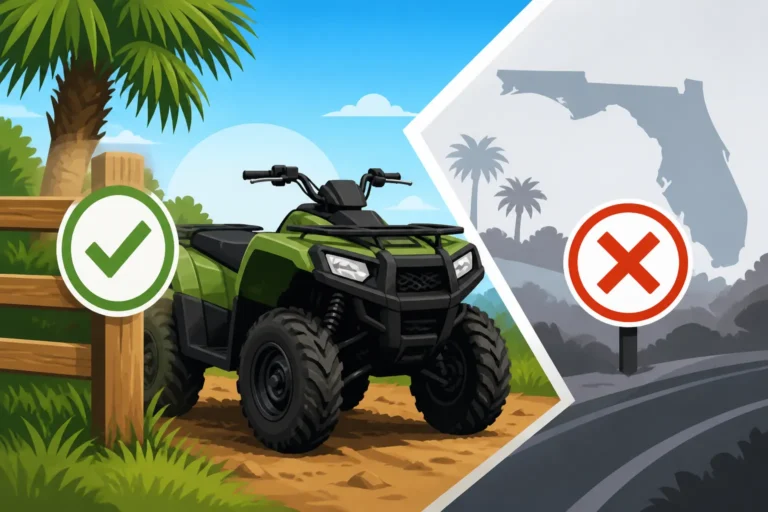
This is perhaps the most significant factor for snowbirds when deciding on titling. Florida's OHV titling law primarily mandates a title for machines operated on public lands.
- Private Land: If your ATV or UTV will only be ridden on private property – say, your own ranch, a friend's farm, or a private OHV park that doesn't require state titling for entry – then you generally do not need a Florida title, regardless of your residency status. Your out-of-state title or original proof of ownership from where you bought it should be sufficient for private transactions or proving ownership on private property. Many snowbirds come down specifically for private riding events or just to use their machines around their temporary homes, and in these cases, the state title isn't a concern.
- Public Land: The moment you plan to ride on state forests, national forests, designated county trails, or any other publicly accessible land where ATVs are allowed, the Florida titling requirement kicks in if you are considered a Florida resident. For temporary visitors, your out-of-state title, along with any required OHV passes for the specific riding area, usually suffices. Always check the specific rules of the public land you intend to visit, as some parks may have additional requirements beyond just the title. Remember, [What an OHV Title Does Not Let You Do] includes riding on paved public roads, even with a title!
What About Your Out-of-State Title?
If your ATV or UTV is properly titled in your home state (the one you consider your primary residence), Florida will generally recognize that title for temporary recreational use. You should always carry a copy of your out-of-state title, along with proof of ownership like a bill of sale, when operating your machine, even as a visitor. This documentation is crucial if you're ever stopped or if you need to prove ownership for any reason.
However, if you're moving to Florida permanently, or if your "snowbird" status starts to look more like permanent residency, then you will eventually need to transfer that out-of-state title to a Florida title. This process involves proving ownership, getting a VIN verification, and paying the necessary fees. The state wants its own record once you become a full-time part of the community.
Practical Steps for Snowbirds: Navigating the Titling Process
So, you've assessed your situation, and it looks like you do need to title your ATV or UTV in Florida. Don't fret! While government paperwork can sometimes feel overwhelming, the process is quite manageable once you know what to expect.
When a Snowbird Definitely Needs to Title
Let's clarify some specific scenarios where, even as a snowbird, you'd likely need to get a Florida title:
- You're Establishing Florida Residency: This is the big one. If you've obtained a Florida driver's license, registered other vehicles in Florida, or taken other steps to make Florida your legal primary residence, your ATV will eventually fall under the Florida titling rules if you plan to ride it publicly.
- Selling Your ATV in Florida: If you decide to sell your ATV to another individual while you are in Florida, especially if the buyer is a Florida resident, having a Florida title makes the transaction much smoother and more legitimate. While it's possible to [Selling an Untitled ATV in Florida] or sell one with an out-of-state title, it adds layers of complexity, and many buyers will prefer a clear Florida title.
- Prolonged or Permanent Stay: You initially came as a snowbird, but your plans changed, and now you're staying year-round, or for the foreseeable future, with your ATV here.
- Buying an ATV in Florida: If you, as a snowbird, purchase an ATV from a Florida dealer or a private seller in Florida, you will get a Florida title as part of the transaction, just like any other Florida resident.
Gathering Your Paperwork for a Florida Title
When it's time to get that Florida title, you'll need to gather a few key documents. Being prepared makes the visit to the tax collector's office much less stressful.
- Manufacturer's Certificate of Origin (MSO) or Out-of-State Title: If your ATV is brand new and has never been titled, you'll need the MSO from the dealer. If it's already titled in another state, you'll need that physical out-of-state title. Make sure it's signed over to you if you purchased it used. Sometimes, the MSO might be missing, and in those cases, you'll need to provide alternative [Proof of Ownership When the MSO Is Missing].
- Bill of Sale: If you purchased the ATV from a private seller, you'll need a bill of sale. This document should clearly list the buyer and seller's names and addresses, the ATV's make, model, year, VIN, purchase price, and date of sale. While you can find generic templates, using a Florida-compliant form can be helpful. Resources like LawDepot can assist you in creating a robust [Florida ATV Bill of Sale: What It Needs to Say] to ensure it meets all state requirements, especially if you need specific language for a private sale or proof of purchase.
- Proof of Florida Residency: A Florida driver's license, a utility bill in your name, or a voter registration card are common examples.
- VIN Verification: The Vehicle Identification Number (VIN) must be verified by an authorized person, such as a Florida law enforcement officer or a licensed dealer. This ensures the VIN on your paperwork matches the actual machine and helps prevent stolen vehicles from being titled.
- Sales Tax Documentation: If you bought the ATV in Florida, sales tax would typically be collected by the dealer or paid at the time of titling if purchased privately. If you brought it from out-of-state, Florida might levy a use tax if you haven't paid sales tax in your previous state or if the rate was lower. Be prepared to discuss [Florida Sales Tax When You Title an ATV].
The Application Process and Where to Go
Once your paperwork is in order, the actual application process is fairly straightforward. You'll need to visit your local Florida County Tax Collector's office. This is the primary agency responsible for processing ATV titles. You can usually find their locations and sometimes even make appointments online.
When you go, you'll fill out the necessary application forms, present all your documents, and pay the required fees. The friendly folks at the counter will guide you through it. They will scrutinize your paperwork to ensure everything is correct and that there are no red flags. It's always a good idea to call ahead or check their website for specific hours and any unique requirements your county might have. For more on this, you can look up [Where to File an ATV Title in Florida].
Fees Involved in Titling
Titling an ATV in Florida isn't free, but the fees are generally reasonable. You can expect to pay:
- Initial Title Application Fee: There's a standard fee for issuing a new title.
- Service Charges: The tax collector's office charges a small service fee for processing the transaction.
- Sales Tax (if applicable): As mentioned, if sales tax wasn't collected at the point of sale or if you're bringing in an out-of-state machine, you might owe Florida sales tax.
- Lien Recording Fee: If you financed your ATV, there will be an additional fee to record the lien on the title.
It's always best to check with your specific county tax collector's office for the most current fee schedule, as these can sometimes change. They can give you an exact figure based on your situation.
Consequences of Not Titling Your ATV as a Snowbird
Choosing not to title your ATV in Florida, especially when your situation warrants it, can lead to several unwelcome headaches. It's not just about avoiding paperwork; it's about staying on the right side of the law and protecting your investment.
Penalties for Untitled Public Land Use
The most immediate and common consequence for snowbirds who should have titled their ATV but didn't is facing penalties for operating an untitled machine on public land. If a Florida Fish and Wildlife Conservation Commission (FWC) officer or a park ranger stops you on a public trail, and you're found to be a Florida resident operating an untitled OHV, you could be cited. The penalties can include fines, and in some cases, your ATV could even be impounded. Imagine having your fun day cut short and your machine towed away, all because of an oversight in titling! These fines can quickly add up, making the initial titling fee seem like a small price to pay. For more on what happens, read [Penalties for Operating Untitled on Public Land].
Complications with Sales in Florida
If you decide to sell your ATV or UTV while you're in Florida, not having a proper Florida title can complicate things significantly. While a bill of sale or an out-of-state title can facilitate a sale, many Florida buyers will be wary. They know that without a Florida title, they'll have extra hurdles to jump through to get the machine into their name, including the VIN verification process and potential questions about sales tax. This could make your ATV harder to sell, force you to accept a lower price, or even scare off legitimate buyers.
Moreover, trying to sell an untitled ATV by simply signing over an out-of-state title to a Florida resident without first titling it in Florida yourself could potentially be seen as "title jumping" – a practice that has legal ramifications. It's always best to have a clean, clear Florida title if you're selling to a Florida resident.
Insurance Issues and Claims
While Florida does not mandate insurance for ATVs for titling purposes, many riders wisely choose to carry it for liability and damage protection. If you get into an accident on a Florida trail and you haven't titled your ATV in Florida when you should have, your insurance company might raise questions. They could argue that the machine isn't properly documented or that your policy terms were violated because the vehicle was not legally recognized in the state where the incident occurred. This could lead to delays, reduced payouts, or even a denial of your claim.
It's a "better safe than sorry" situation. Ensuring your ATV is properly titled in Florida, if required, ensures that all your paperwork is in order should you ever need to file an insurance claim, providing peace of mind during an already stressful situation.
Theft and Recovery Challenges
In the unfortunate event that your ATV is stolen while it's in Florida, having a current Florida title is your strongest proof of ownership. Without it, proving that the machine belongs to you can become a much longer and more arduous process. If all you have is an out-of-state title and perhaps an old bill of sale, law enforcement might have a harder time verifying your ownership quickly, especially if the thief tries to get a new title in their name elsewhere.
A Florida title connects your machine directly to you in the state's official records, which is invaluable for recovery efforts. It gives law enforcement a clear path to follow and concrete evidence to present. Don't underestimate the power of that official document when it comes to protecting your investment.
Understanding Your Status: Visitor or Resident?
Ultimately, the decision to title your ATV in Florida as a snowbird comes down to a clear and honest assessment of your status. Are you truly a temporary visitor, with your roots firmly planted elsewhere, only enjoying Florida's trails for a short season? Or have you, perhaps unconsciously, started to transition towards making Florida your home base, even if it's only for several months out of the year?
If you're unsure, it's always safer to err on the side of compliance, especially if you plan on using public lands. A quick call to your local county tax collector's office can often provide the clarification you need based on your specific circumstances. They deal with these questions all the time!
Florida ATV Titling Considerations for Snowbirds
Here's a quick reference table to help snowbirds navigate the Florida ATV titling decision:
| Factor | Scenario for Florida Title Needed | Scenario for Out-of-State Title Accepted (Typically) |
|---|---|---|
| Residency Status | You have a FL driver's license, voter registration, or homestead. | Your primary residence is in another state. |
| Length of Stay | You live in Florida for more than six months of the year consistently. | You visit Florida for short vacations (weeks/few months). |
| Intent for ATV Use | Regular operation on Florida's public OHV trails. | Exclusively on private land (your own, friend's, private park). |
| Purchase Location | You bought the ATV from a Florida dealer or private seller. | You bought the ATV in your home state, already titled there. |
| Selling ATV in Florida | Planning to sell to a Florida resident. | Selling only to out-of-state buyers or transporting it back to your home state for sale. |
| Leaving ATV in Florida | You store your ATV in Florida year-round, even if you go north. | You transport your ATV back to your home state at the end of your visit. |
| Other FL Registrations | You register other vehicles (cars, boats) in Florida. | All your other vehicles are registered in your home state. |
This table isn't a substitute for legal advice, but it can give you a clearer picture of which column you might fall into. When in doubt, it’s always better to ensure your ATV is compliant with Florida's titling requirements, especially if you're hitting those amazing public trails. It saves you potential fines, headaches, and keeps you enjoying the Florida lifestyle without a hitch!
Disclaimer
This article is for general informational purposes only and does not constitute professional advice. Laws, prices and regulations vary by location and change over time. Consult a qualified professional for guidance on your specific situation.