Does an OHV Pass Cover Camping at Croom?
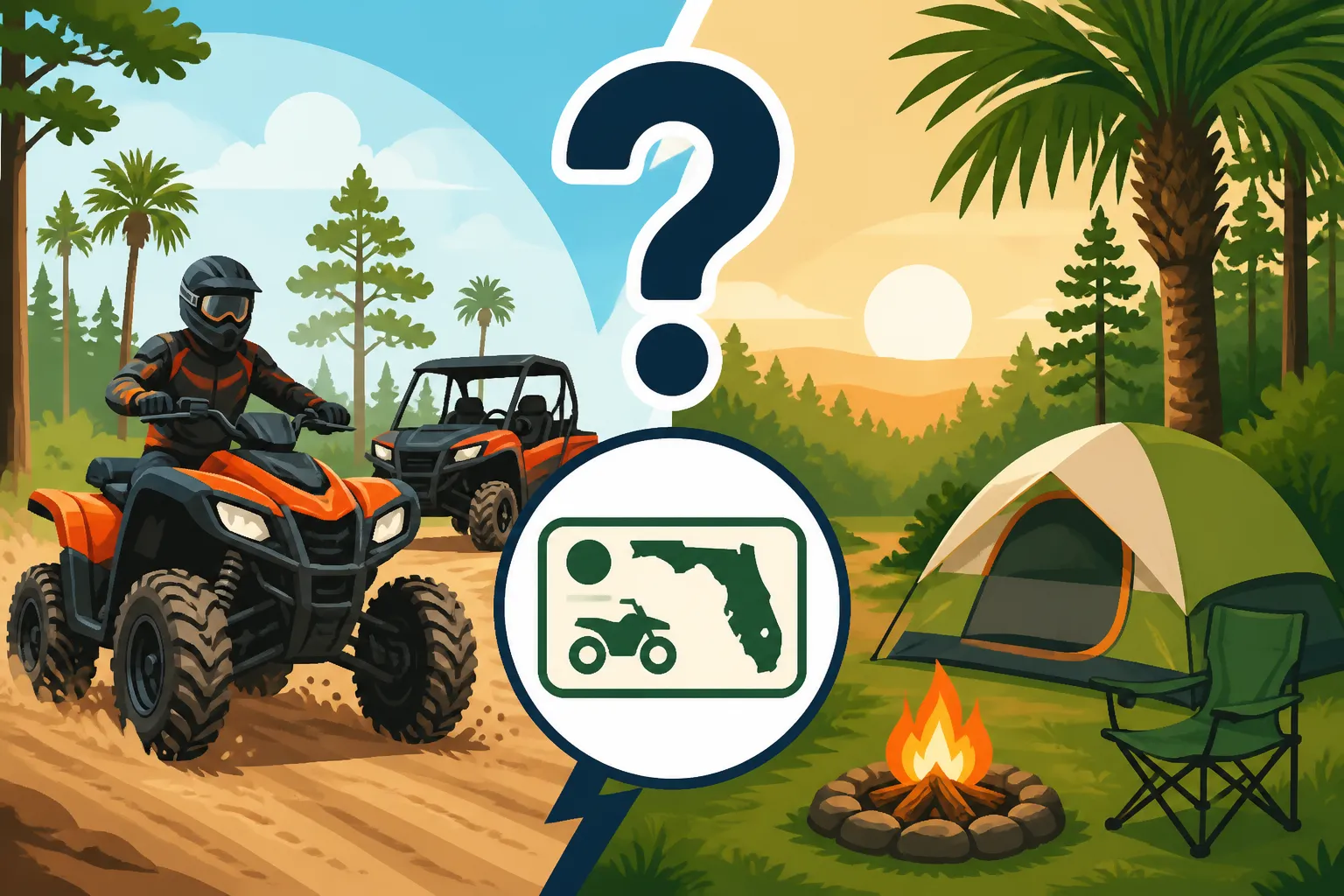
An OHV pass and a campsite reservation at Croom cover different things. If you are planning to camp and ride, it is easy to assume one payment includes both, then discover you have missed a separate requirement. Here’s how to think about the pass, camping costs, and what to confirm before you leave.
What a Croom OHV Pass Covers
Croom Motorcycle Area is a designated off-highway riding area in Withlacoochee State Forest. An OHV pass is for riding there under the area’s rules. It is not, by itself, a reservation for a campsite or a payment for overnight accommodation.
That distinction matters because a camping stay and a riding visit are separate uses of the forest. A campsite reservation gives you a place to camp for the dates and conditions listed in that reservation. The OHV pass addresses the riding requirement for the machine you take onto the designated riding area. One does not automatically replace the other.
| What you need | What it is for | What it does not automatically cover |
|---|---|---|
| OHV pass | Riding an eligible machine in the designated area | A campsite reservation or overnight stay |
| Campsite reservation | Staying overnight at a campground or site | Permission to ride without the required OHV pass |
| Trailer parking arrangements | Parking and staging your tow vehicle and trailer | OHV access or camping authorization |
| Any required riding documents or equipment | Meeting current trail and safety rules | Camping charges or a reserved campsite |
For a larger overview of the riding area, see Croom Motorcycle Area: Florida’s Biggest OHV Park. If you are focused on camping, Croom Camping at Buttgenbach Mine covers the campground side of planning in more detail.
A useful rule of thumb is to treat the pass and the campsite as two separate line items in your plan. If your trip includes both riding and camping, confirm that you have both the riding authorization and the overnight reservation you need. Don’t assume that a campsite booking includes an OHV pass, or that an OHV pass guarantees a place to sleep.
Planning a Camping and Riding Trip
Start by identifying where you intend to camp and what machine or machines you plan to ride. Then check the current requirements for each activity. Croom-area camping information and OHV pass information may be handled through different reservation or purchase processes, so you may need to complete both steps separately.
Reserve the campsite separately
A campsite reservation is tied to the site, dates, and occupancy terms shown when you book. It does not necessarily include riding privileges, extra vehicles, or any other use that requires its own authorization. Read the reservation details carefully, especially if you are bringing a group, multiple tow vehicles, or more than one machine.
If you plan to stay at Buttgenbach Mine, check the current campground information before traveling. Confirm the site’s availability, occupancy limits, check-in instructions, and rules for vehicles and trailers. A campground reservation can be useful for securing a place to stay, but it is not a substitute for checking the forest’s riding requirements.
Arrange an OHV pass for each machine that needs one
OHV passes may be issued by vehicle rather than by rider. That means a group with several machines should not assume that one pass covers everyone. Review the current pass terms and make sure the pass is associated with the correct machine. The details in Florida OHV Annual Passes Are Per Vehicle and Florida State Forest OHV Day Use and Annual Passes can help explain the general Florida state forest pass structure.
A rider who is camping but not bringing or riding an OHV may have different requirements from someone who plans to ride. Likewise, a passenger’s presence does not necessarily mean the passenger needs an individual OHV pass; the relevant question is how the current pass rules apply to the machine. Confirm the terms for your specific visit rather than basing your plan on another rider’s setup.
Check how your stay and riding access fit together
Before booking, make sure the campsite you choose works with your riding plans. Consider where your trailer will be parked, how you will get the machine from the campsite to the riding area, and whether the campground or riding area has restrictions that affect your setup. A pass may authorize riding in a designated area without making every campground road or forest road an approved trail.
For help sorting out trailer logistics, see Florida OHV Pass and Trailer Parking. If you are traveling with several machines and campers, Buttgenbach Campers and the Per-Unit Rule may also help you identify questions to ask before reserving.
What to Confirm Before You Go
Pass products, campground availability, procedures, and restrictions can change. Check the official information for the specific dates of your visit and keep the confirmation details where you can access them at the trailhead. If the pass and camping reservation are made through different systems, save both confirmations.
Use this checklist:
- Confirm that the campsite is reserved. Verify the site, dates, number of occupants, check-in instructions, and any limits on vehicles or trailers.
- Confirm the OHV pass requirement. Check whether your planned machine needs a pass, which pass applies to your visit, and whether each machine needs a separate pass.
- Check where the pass must be displayed or carried. Follow the current instructions; don’t rely on a photo or an old pass if the rules require something else.
- Review Croom’s current riding rules. Check the area’s access conditions, machine restrictions, trail boundaries, and any temporary closures.
- Ask about the space between the campground and the riding area. Confirm where you may ride, where you must trailer, and where you may park.
- Save your documents before leaving. Keep the reservation and pass information available offline in case mobile service is limited.
If anything is unclear, contact the relevant forest or campground office before the trip. Ask a direct question such as: “Does this campsite reservation include any OHV riding authorization, or do I need a separate pass for each machine?” A clear answer helps avoid confusion at check-in.
Do not rely on a campground reservation as proof that an OHV pass has been purchased. The reverse is also true: a valid OHV pass does not guarantee that a campsite is available. If a pass or reservation is lost, or if you need to change plans, review the provider’s current policies. For pass-specific issues, Florida OHV Pass Refund Policy explains why it is worth checking the terms before making a purchase.
Common Planning Mistakes
The most common misunderstanding is treating “access to Croom” as one all-purpose payment. In practice, a trip can involve distinct requirements for riding, overnight camping, and parking or staging. A purchase that handles one part of the visit may not handle the others.
Other easy-to-miss issues include:
- Assuming a campsite includes riding. Confirm the OHV pass requirement even if your campsite is inside or near the riding area.
- Assuming one pass covers multiple machines. Check whether passes are vehicle-specific before bringing a family or group fleet.
- Booking camping without checking trailer space. A campsite may have limits or practical constraints that affect your tow vehicle and trailer.
- Confusing forest access with trail permission. Being in the forest does not mean every road or path is open to OHVs.
- Relying on an old receipt or a friend’s explanation. Requirements can change, and different visit types may have different terms.
The simplest plan is to treat every part of the trip separately: reserve the campsite, arrange the required OHV pass or passes, and confirm where your machines may be ridden and parked. That approach also helps you compare costs accurately. For background on the pass itself, see Florida OHV Pass Cost in 2026, but verify current figures and terms with the official provider before you buy.
Disclaimer
This article is for general informational purposes only and does not constitute professional advice. Laws, prices and regulations vary by location and change over time. Consult a qualified professional for guidance on your specific situation.