Florida Safety Course Cost for Riders Under 16
Florida families trying to budget an ATV or UTV outing often run into a simple but important question: does a rider under 16 have to pay for a safety course? The short answer is that Florida’s official OHV safety course is generally offered at no charge, but course rules depend on where the child will ride. Here’s what to check before signing up or heading to a trail.
What the Florida safety course costs
For a rider under 16, the official Florida OHV safety course is generally free when taken through the Florida Department of Agriculture and Consumer Services (FDACS) or its designated course provider. The course is intended to teach young riders how to operate an off-highway vehicle safely. It is not the same as paying for a riding-area pass, admission, or a private lesson.
That distinction matters because a family may see several separate costs while planning a ride. A safety course can be free while access to a riding area, an OHV pass, camping, or equipment rental is not. Those are separate requirements, and completing the course does not pay for them.
| Item | What it covers | How the cost works |
|---|---|---|
| Official Florida OHV safety course | Safety instruction and course completion | Generally offered at no charge through the official route |
| Riding-area pass or admission | Access to a specific public or private riding area | Set by the land manager or park; check current requirements |
| Private instruction | Coaching or training from a separate provider | Provider sets the price and course terms |
| Equipment and travel | Helmet, eye protection, transportation, and related needs | Depends on what the family already owns and where it rides |
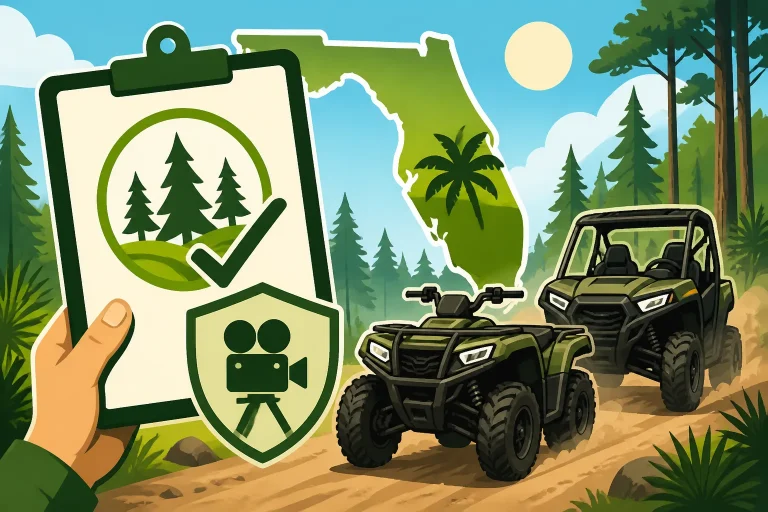
The official course is the starting point for a child who needs safety certification for a public riding area. Begin with FDACS Safety Certification for Young Florida Riders and confirm that the course and certificate are accepted at the destination. Course availability and delivery details can change, so use the official course information rather than assuming an older link or a third-party search result is current.
Some private training providers may charge for instruction, but that does not automatically mean their class is required or accepted for a Florida public-land course requirement. Before paying, ask the provider which agency accepts the course and what proof of completion it supplies. Then check with the riding area directly. The distinction between rules for different lands is covered in Two Different Florida Safety Course Rules.
The cost answer, in practical terms, is: budget nothing for the official course itself unless the current official course page says otherwise, but budget separately for access and trip expenses. If a website asks for payment, verify that it is the official course or a course accepted by the land manager before entering payment details.
When a rider under 16 needs the course
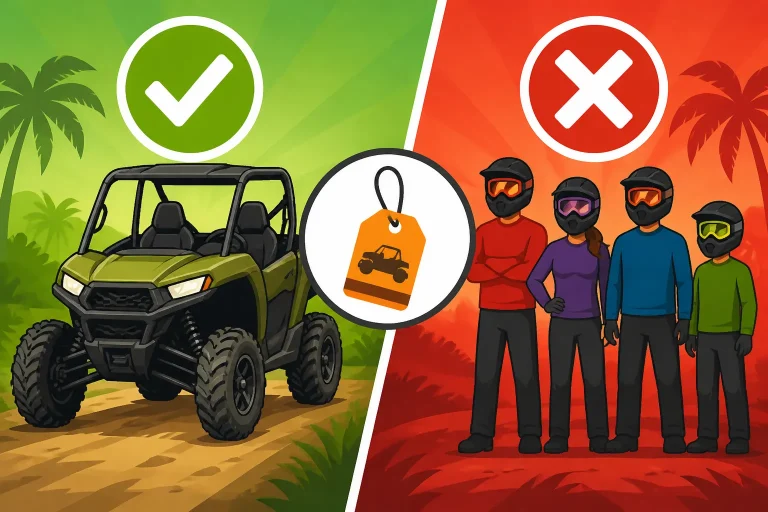
Florida’s OHV safety requirements and individual land-management rules are not one blanket permission to ride anywhere. A course may be required for young riders using certain public riding areas, and the riding location can set additional conditions. National forest and state forest sites can have rules that differ from a private park or a privately owned trail system.
For that reason, first identify the exact place where the child will ride. Check the land manager’s current rules for:
- Whether a rider under 16 must complete an approved safety course.
- Which course or provider is accepted.
- Whether the rider must carry proof of completion while riding.
- Whether an adult must directly supervise the child.
- Helmet and eye-protection requirements.
- Vehicle, trail, pass, and age restrictions.
The public-land requirement is the focus of Florida ATV Safety Course Requirements for Riders Under 16. If the trip is to a national forest OHV area, check Florida National Forest Under-16 Course Requirement as well. A private park may set its own minimum age, supervision, equipment, and course policies, so don’t assume that a certificate alone satisfies its entry rules.
A safety course is also not an ATV or UTV driver’s license. It does not authorize a young rider to use a road, trail, or property where that machine is prohibited. The certificate shows course completion; it does not replace permission to ride or any pass required at the location.
Supervision is another requirement families should verify rather than infer from the course. A child can complete the course and still be required to ride under an adult’s supervision. “Supervision” may be defined by the applicable rule or site policy, so check what the responsible adult must do and whether the adult must be present on the trail. An adult nearby at the parking area may not meet the site’s standard.
Course requirements can also be confused with other safety obligations. Florida rules and riding-area policies may require a properly fitted helmet and eye protection for young riders. Completing a course does not waive those requirements. Review Carrying a Safety Certificate on the Trail and the destination’s equipment rules before departure.
Other costs and common payment mistakes
Even when the official course has no fee, getting ready for a ride can involve other expenses. The largest variable is often the riding location, not the certificate. Public riding areas may require a pass or charge an admission or day-use fee; private areas set their own entry terms. Some locations also have separate camping charges or rules for each vehicle. Check current details with the land manager because fees and pass conditions can change.
A family may also need to account for:
- Safety gear: A helmet and appropriate eye protection may be required. A child needs equipment that fits securely, not simply adult-sized gear that can be tightened.
- Travel and vehicle transport: The ATV or UTV may need to be trailered to a legal riding area. A course certificate does not make public roads an approved riding route.
- Rental expenses: If the family is renting, check age, passenger, supervision, and certificate rules with the rental operator and riding area. Rental policies may be stricter than public-land rules.
- Optional instruction: A paid class can be useful for hands-on practice, but confirm in advance whether it fulfills the specific course requirement.
- Printing or storing proof: A family may choose to print the certificate or save an accessible copy on a phone. Ask the land manager what form of proof it accepts.
One common mistake is paying a third-party site before checking whether the official course is free. Search results can include commercial training, equipment, and registration services alongside official information. Confirm the provider’s identity and the course’s acceptance with FDACS or the riding area first.
Another mistake is assuming that a course listed as “ATV safety” automatically meets every site’s requirements. The machine type, course approval, and proof required can matter. A course designed for general recreational riding may not be the one a particular land manager accepts. If the child will ride a UTV rather than an ATV, state the machine type when checking.
If a certificate is missing, don’t automatically pay to take another course. Check whether the issuing system lets the family retrieve or verify completion. Florida ATV Safety Course Certificate Lookup explains the certificate-checking issue, while Florida ATV Safety Course Requirements for Riders Under 16 helps clarify which young riders may need proof in the first place.
How to confirm the right course before riding
Use this order to avoid paying for the wrong class or arriving without the required paperwork:
- Choose the riding location. Identify the forest, park, trail system, or private property where the child will operate the machine. “Riding in Florida” is not specific enough to determine the site rules.
- Read that location’s current youth requirements. Look for course approval, age limits, supervision, helmet, eye-protection, pass, and vehicle restrictions.
- Check the official course route. Use FDACS information or the course link provided by the land manager. Confirm there is no charge for the official course before considering a paid alternative.
- Confirm the certificate is accepted. If the course provider or certificate wording is unclear, ask the site manager before enrolling.
- Save proof of completion. Keep the certificate or confirmation accessible and follow the location’s instructions about whether to carry it while riding.
- Check access costs separately. Verify current pass, admission, parking, and camping requirements. A free course does not mean free trail access.
- Review conditions before leaving. Trail closures, operating hours, and access rules can change. Check with the land manager close to the trip.
If the family rides at more than one location, do not assume a certificate accepted at one site will automatically satisfy every other site. Keep the proof, but check each land manager’s requirements independently. For a broader look at how young-rider training fits into Florida public-land access, see Florida ATV Safety Course for Public Land Riding.
The practical takeaway is straightforward: the official Florida course is generally free, but the place where the child rides determines whether it is required and what else the family must bring or pay for. Confirm the course, supervision rules, certificate requirements, and site fees directly with the responsible land manager before setting out.
Disclaimer
This article is for general informational purposes only and does not constitute professional advice. Laws, prices and regulations vary by location and change over time. Consult a qualified professional for guidance on your specific situation.