Florida Golf Cart Photo ID Requirement for Adults
It can be incredibly frustrating to keep up with Florida's ever-evolving rules for recreational vehicles, and golf carts are no exception. Just when you think you've got a handle on what's allowed and what's not, the laws shift, leaving many adult riders scratching their heads about what they need to carry to legally cruise their communities. This guide is here to untangle the complexities of Florida's recent photo ID requirement for adults operating golf carts, ensuring you understand the ins and outs, so your next ride is worry-free and compliant.
Understanding Florida's Recent Golf Cart Law Changes
For years, the rules for driving a golf cart in Florida seemed fairly straightforward, especially for adults. You hopped in, drove to the clubhouse or down the street, and generally didn't think twice about official paperwork beyond perhaps your driving proficiency. However, a significant legislative change, House Bill 949, signed into law in 2023 and effective October 1st, 2023, brought a new layer of compliance, particularly for younger riders but with a ripple effect on adults. This bill largely focused on enhancing safety and standardizing regulations across the state, aiming to address the increasing popularity and diverse usage of golf carts.
The Shift in Golf Cart Regulations for Minors
Before October 2023, Florida's law allowed individuals as young as 14 to operate golf carts on public roads where golf cart use was permitted. This was a common sight in many Florida communities, with teenagers zipping around, enjoying a sense of independence and convenience. It was a relaxed approach that many families had grown accustomed to, often seeing it as a safe way for younger members to get around within their neighborhoods or gated communities. The previous statute focused more on the type of road and local ordinances than on the age of the operator.
The new law, however, significantly tightened these rules. Now, to operate a golf cart on public roads or designated golf cart paths, a person must be at least 15 years old and possess a learner's permit, or be 16 years old and possess a valid driver's license. This change brought golf cart operation more in line with the requirements for driving other motorized vehicles on public roadways, even if they're low-speed. For families, this meant a substantial adjustment; that casual ride to the park or friend's house suddenly required formal licensing, ending an era of easier access for many young Floridians. It also sparked a lot of conversation and some understandable frustration among parents and teens alike, who had to quickly adapt to the updated rules. [Florida Golf Cart Age Law Since October 2023] delves deeper into the specifics of these age-related changes.
Why the Adult Photo ID Requirement Was Introduced
While much of the public discussion around HB 949 focused on the new age restrictions for minors, a critical, and often overlooked, component was the explicit requirement for adults to carry a valid government-issued photo identification when operating a golf cart on public roads or paths. For long-time adult riders, who had never needed to show an ID for their golf cart before, this felt like an added bureaucratic step. The "why" behind this requirement ties into several factors, primarily public safety, accountability, and consistent enforcement.
Legislators aimed to ensure that anyone operating a motor vehicle on public thoroughfares, regardless of its speed or size, could be properly identified by law enforcement. This helps in situations ranging from minor traffic infractions to more serious incidents, making it easier to assign accountability and gather necessary information. It also brings golf cart operation under a more formal umbrella, emphasizing that while they might feel like toys, they are indeed vehicles subject to state law when used in public spaces. This move reflects a broader trend to formalize rules around golf carts as they become more prevalent and are used in increasingly diverse settings, moving beyond just the golf course into residential streets and commercial districts. It validates the frustration many feel: you've been doing this for years without an ID, and now suddenly it's a requirement, adding a layer of formality to what was once a very casual activity. The law effectively treats golf cart operators more like drivers of other vehicles, even if the vehicle itself is inherently different from a car or truck. You might find more context in [Adults Carrying Photo ID on a Cart].
The Photo ID Requirement: Who, What, and When
Navigating the specifics of Florida's new golf cart photo ID requirement means understanding exactly what kind of identification is acceptable, under what circumstances you need to present it, and how golf carts are legally defined in contrast to other similar vehicles. It's not just about having any photo ID; it's about having the right one and knowing when to have it ready. Many riders have questions about whether their expired license or a membership card will suffice, or if they need to carry it even when just cruising within their private community.
What Constitutes a Valid Photo ID for Adults
When the law specifies a "valid government-issued photo identification," it's crucial to understand what that entails. This isn't just about having something with your picture on it; it needs to be an official document issued by a governmental authority that verifies your identity and is currently active. The most common and widely accepted forms of ID include a valid Florida Driver's License or a state-issued identification card. These are readily recognized by law enforcement and contain all the necessary information to confirm your identity.
Beyond state-issued IDs, other acceptable forms include a valid military identification card, a passport issued by the U.S. government, or a passport from another country if it's accompanied by a valid visa or entry stamp. The key elements are that the ID must be current (not expired), legible, and clearly show your photograph, name, and date of birth. Relying on an old student ID, an expired driver's license, or a store membership card won't cut it. The intent is to have an official, verifiable document on hand, just as you would if you were pulled over in a car. This ensures consistency and simplifies the process for law enforcement officers who need to confirm a golf cart operator's identity.
When and Where You Need to Carry Your ID
The photo ID requirement specifically applies when you are operating a golf cart on "public roads or streets" and "designated golf cart paths" in Florida. This is where a lot of confusion can arise for riders. If you're solely operating your golf cart within the confines of private property, such as your own backyard, a completely private ranch, or a closed-loop private golf course where there's no public access, then the state ID requirement typically doesn't apply. However, the moment your wheels touch a public road, a sidewalk designated for golf carts, or a multi-use path that is open to public traffic, you are expected to have your valid government-issued photo ID on your person.
Think of it this way: if a regular car could, in theory, drive on the surface you're on (even if it's restricted for golf carts), then you need your ID. This includes crossing public streets, traveling on secondary roads where golf carts are explicitly allowed, or using the extensive networks of golf cart paths found in master-planned communities like The Villages or Sun City Center. If a law enforcement officer stops you for any reason – perhaps a minor traffic infraction or just a routine check – they will expect you to produce this identification. Being unable to do so could result in a citation, so it's always best practice to carry it, even if you're just making a quick run to a neighbor's house in your community. Local ordinances can also add further nuances, so it's always wise to check with your county or city for any specific local rules that might supplement state law.
Distinguishing Golf Carts from Low-Speed Vehicles (LSVs)
A crucial point of clarity often overlooked by riders is the fundamental difference between a golf cart and a Low-Speed Vehicle (LSV), as this distinction significantly impacts rules like the photo ID requirement. A standard golf cart is defined in Florida Statutes as a motor vehicle designed and manufactured for operation on a golf course for sporting or recreational purposes, not capable of exceeding 20 miles per hour. They are typically basic, open-air vehicles with minimal safety features.
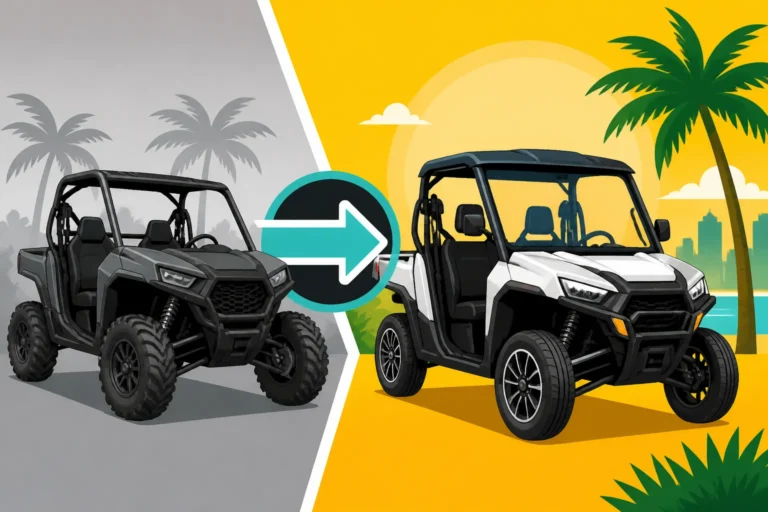
Low-Speed Vehicles, on the other hand, are four-wheeled vehicles whose top speed is greater than 20 miles per hour but not greater than 25 miles per hour. To be classified as an LSV, a vehicle must meet federal safety standards and be equipped with specific safety features, including headlamps, stop lamps, turn signal lamps, tail lamps, reflex reflectors, a parking brake, a rearview mirror, a windshield, seat belts, and a vehicle identification number (VIN). Unlike golf carts, LSVs are titled, registered, and insured just like regular automobiles, and they have always required a valid driver's license to operate on public roads. The photo ID requirement for golf carts now brings them a step closer to the operational formality of LSVs, closing a previous gap where golf cart operators had fewer identification obligations on public roads. Understanding this difference is key because if your modified golf cart now exceeds 20 mph, or if it was manufactured as an LSV, it falls under a completely different set of regulations. You can explore [Florida LSV Registration and Insurance Rules] for a deeper dive into LSV requirements, or learn about [Turning a Side-by-Side Into a Florida LSV].
| Feature | Golf Cart | Low-Speed Vehicle (LSV) |
|---|---|---|
| Top Speed | Designed to not exceed 20 mph | >20 mph but not >25 mph |
| Photo ID | Required for adults on public roads/paths | Driver's License always required on public roads |
| Titling/Reg. | Not titled or registered (generally) | Titled, registered, and tagged |
| Insurance | Not mandated by state for public road use | Mandated by state for public road use (PIP/PDL) |
| Safety Features | Basic (lights often optional/aftermarket) | Head/tail/brake/turn lights, seatbelts, windshield, horn, mirrors |
| VIN | Not required by state for titling | Required, federal safety standards apply |
| Road Access | Restricted to roads with speed limits 30 mph or less, or designated paths | Restricted to roads with speed limits 35 mph or less |
Practical Implications for Adult Golf Cart Riders
The new photo ID requirement, while seemingly simple, does introduce a layer of responsibility and awareness for adult golf cart riders in Florida. It's no longer enough to just know the rules for where you can drive; now you must also be prepared to prove your identity. This shift impacts everything from a casual ride to an unexpected interaction with law enforcement. It calls for a proactive approach to compliance and a clear understanding of the potential repercussions of non-adherence.
Ensuring Compliance: What to Do Before You Ride
For adult golf cart riders, ensuring compliance with the new photo ID requirement is straightforward but essential. Before you even turn the key or press the accelerator, make it a habit to confirm you have a valid government-issued photo ID on your person. This means your Florida driver's license, state ID card, military ID, or passport should be in your wallet, purse, or a secure compartment on your golf cart if it's always with the vehicle. The crucial part is that it must be readily accessible, just as it would be if you were driving your car. This routine check can save you a lot of hassle down the road.
For visitors to Florida or snowbirds who might not have a Florida-issued ID, a valid driver's license or state ID from their home state or country is perfectly acceptable, as long as it's government-issued and current. The law doesn't specify that it must be a Florida ID, just a valid government-issued one. It's also a good idea to refresh your memory on any local ordinances in the specific community you're riding in. While state law applies universally, counties and municipalities often have additional rules regarding golf cart operation, parking, and specific path usage. Being informed about both state and local regulations ensures you're fully prepared and can enjoy your ride without any unexpected interruptions.
What Happens If You're Caught Without ID
Being stopped by law enforcement while operating a golf cart on a public road or designated path without the required valid photo ID can lead to various outcomes, none of which are pleasant. In some instances, an officer might issue a verbal warning, especially if the law is relatively new to the area or if it's your first offense and you can quickly have someone bring your ID. However, don't count on this leniency. More often, you could receive a non-moving traffic citation.
This citation typically carries a fine, similar to other minor traffic infractions. While it might not seem as severe as a speeding ticket in a car, it still means court costs, a mark on your record, and the inconvenience of potentially having to address it in court. Beyond the direct financial penalty, there's the lost time and the frustration of dealing with a situation that could have been easily avoided by simply carrying your ID. Law enforcement officers have the discretion to enforce the law as written, and an adult operating a vehicle without proper identification presents an immediate challenge to their ability to ensure public safety and accountability.
Equipping Your Golf Cart for Florida Roads
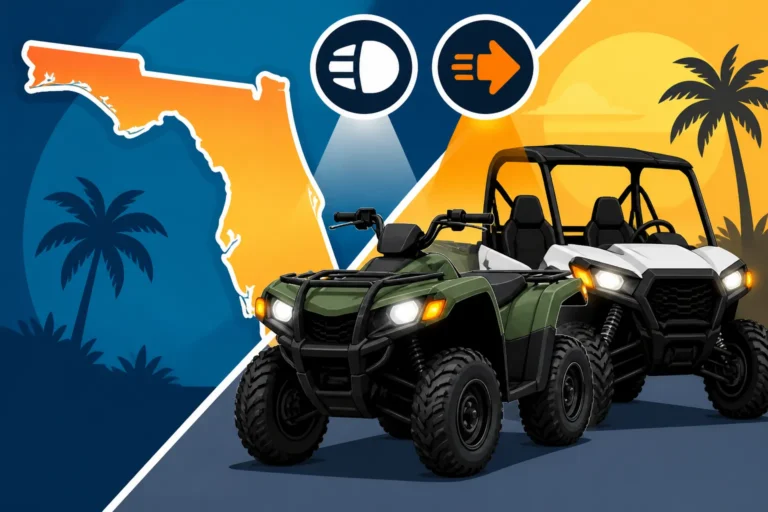
While the photo ID requirement is about the operator, it's also a good moment to consider the overall readiness of your golf cart for public road use. The state of Florida, even with the new ID requirement, doesn't mandate specific safety equipment for golf carts beyond what's defined for LSVs, unless a local ordinance does. However, if you're going to be on public roads, it's just plain smart to ensure your cart is as safe and visible as possible. Essential equipment like working headlights, taillights, brake lights, and turn signals dramatically increases your visibility to other motorists, especially at dawn, dusk, or in inclement weather. A horn is also crucial for alerting pedestrians or other vehicles.
Many riders choose to upgrade their golf carts with these features, even if not strictly required, to enhance safety. For instance, aftermarket lighting kits, mirrors for better situational awareness, and even sturdier tires for varied terrain can make a significant difference. Companies like SuperATV offer a wide range of golf cart accessories and parts, including lighting kits, mirrors, and suspension components, that can improve both the safety and functionality of your cart for road use. Investing in these upgrades, alongside carrying your required ID, helps create a more secure and enjoyable riding experience on Florida's diverse road networks. Remember, [Florida ATV Lights and Equipment for Road Use] talks about similar considerations for ATVs, which often face comparable challenges with visibility and road readiness.
Navigating Florida's Diverse Golf Cart Landscapes
Florida is unique in its embrace of golf cart culture, with everything from sprawling golf cart communities to rural areas where these vehicles are used for practical tasks. This diversity means that while state law provides a baseline, local rules and the nature of the terrain can significantly influence how and where you can legally operate your golf cart, and by extension, when that photo ID becomes a necessity. Understanding these varied landscapes is key to staying compliant and enjoying your ride across the Sunshine State.
Golf Cart Rules in Designated Communities (e.g., The Villages)
Communities like The Villages in Central Florida are famous for their extensive golf cart path networks and a lifestyle built around golf cart travel. In these master-planned areas, golf carts often serve as the primary mode of transportation, connecting homes to shopping, recreation, and even medical facilities. While these communities often have their own comprehensive sets of rules for golf cart operation, including etiquette, parking, and even specific bridge or tunnel usage, the state's photo ID requirement for adults operating golf carts on public roads still applies. This is because many of the paths and connecting roads within these communities, even if privately maintained, are often open to public access or intersect with public rights-of-way, making them subject to state traffic laws.
For residents and visitors in these areas, it means that while you might be accustomed to the internal rules of the community, you also need to remember the statewide mandate. Law enforcement agencies, whether local police or county sheriff's deputies, patrol these areas and can enforce state traffic laws, including the ID requirement. It's a dual layer of regulation: adherence to community standards and state law. The convenience of golf cart living in these unique Florida communities is immense, but it comes with the responsibility of staying updated on all applicable rules. [What ATVs Cannot Do on The Villages Cart Paths] provides a good example of how specific rules can apply to different vehicle types in these unique environments.
Golf Carts on Unpaved Roads and Private Property
The application of the photo ID rule can get a bit murky when it comes to unpaved roads, private property, or unique scenarios. If you are exclusively operating your golf cart on private property where there is no public access whatsoever – imagine a large ranch, a privately owned campground, or a completely fenced-off industrial site – then the state's requirement for a government-issued photo ID generally does not apply. The key here is no public access. The moment that private road connects to a public road, or if the private property is accessible to the general public, the ID requirement kicks in.
Unpaved roads present a slightly different scenario. If an unpaved road is a public roadway, even if it's dirt or gravel, the ID requirement still applies. Many rural areas of Florida have unpaved public roads where golf carts might be permitted, and if you're driving on them, your ID needs to be with you. However, some unpaved tracks might be explicitly private easements or trails. In such cases, if you have the landowner's permission and the path is not considered a public thoroughfare, the ID requirement might not be enforced by state law. It's always best to err on the side of caution and carry your ID, as the distinction between public and private can sometimes be ambiguous to an outsider or law enforcement officer. Remember that ATVs, which often ride on unpaved surfaces, have distinct rules covered in [Florida ATV Road Rules: Where You Can Legally Ride], which can highlight the differences in legal frameworks.
Exceptions and Special Circumstances
While the new photo ID requirement is broad for adults operating golf carts on public roads and paths, there are few explicit exceptions within the statute for general recreational use. The law is fairly clear: if you're an adult and you're on a public thoroughfare with your golf cart, you need your ID. However, special circumstances typically revolve around the type of vehicle or its specific purpose, rather than the ID requirement itself. For example, vehicles used for agricultural purposes on legitimate farm property might fall under different exemptions in broader statutes, but a recreational golf cart operating on public roads for non-farm use would still be subject to the ID rule.
Similarly, if a golf cart is being used for a very specific, permitted commercial activity or a special event on a closed course, the rules might be dictated by the permit itself. However, for the average Floridian or visitor enjoying a leisurely ride, these highly specific exceptions are unlikely to apply. The overarching principle is that increased golf cart usage on public accessways has prompted a move towards more standardized identification requirements, bringing golf cart operators into a framework that emphasizes accountability and safety for everyone sharing Florida's diverse roadways. If you ever have a doubt, consulting local traffic ordinances or contacting your local law enforcement agency directly can provide the most precise guidance for your specific situation.
Disclaimer
This article is for general informational purposes only and does not constitute professional advice. Laws, prices and regulations vary by location and change over time. Consult a qualified professional for guidance on your specific situation.