Florida DUI Law Applied to ATV Riders
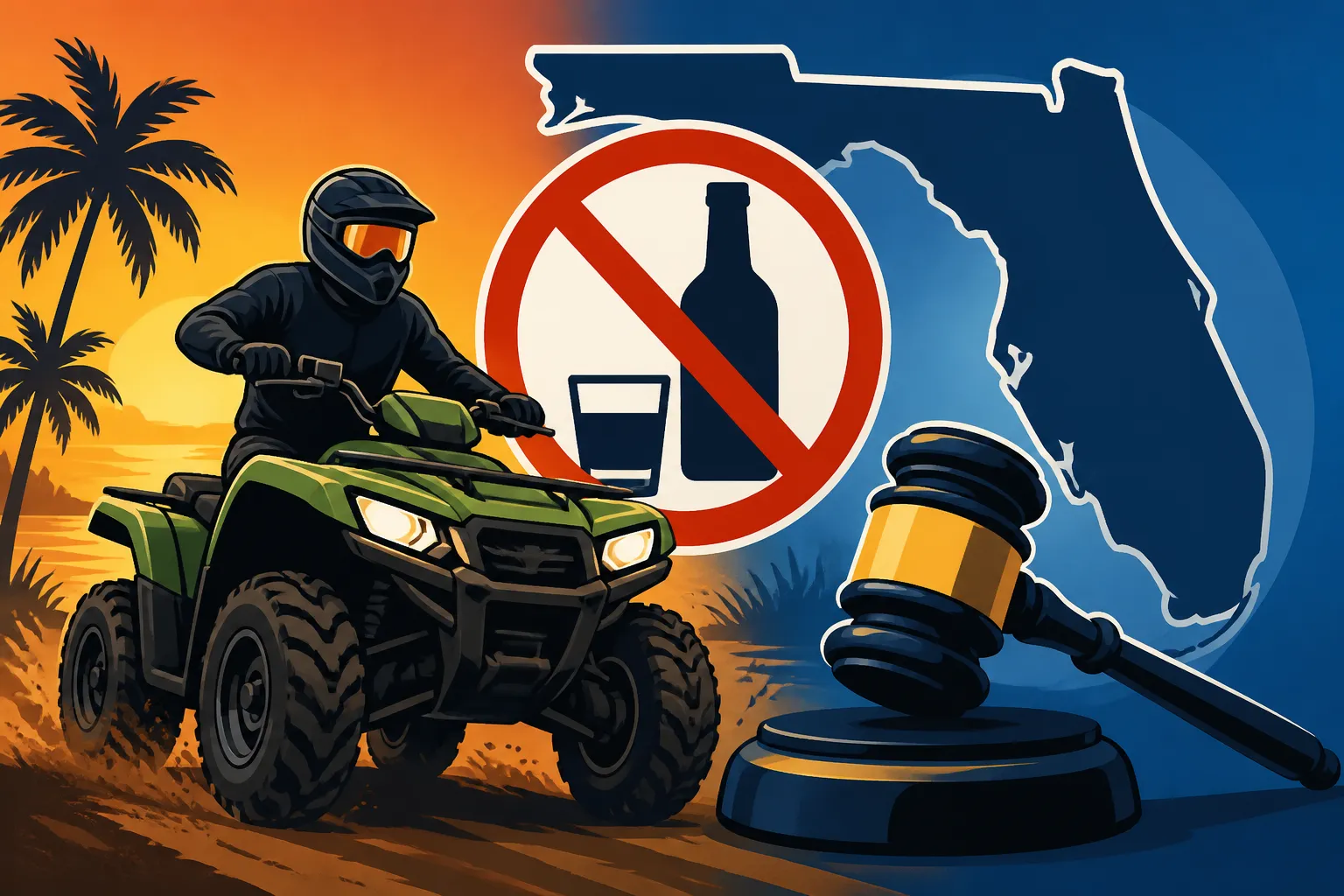
Many ATV and UTV riders in Florida operate under the false assumption that because their off-highway vehicles aren't cars or trucks, they're somehow exempt from serious traffic laws, especially when it comes to operating under the influence. This couldn't be further from the truth. If you ride a quad or side-by-side in Florida, understanding how the state's DUI laws apply to you is absolutely crucial, not just for your safety, but to protect your freedom and your driver's license. This guide is here to shed light on the realities of Florida's DUI law for ATV riders, helping you avoid devastating consequences.
Florida's DUI Law and Off-Highway Vehicles: A Broad Scope
It's easy to think of an ATV as a recreational toy, something you ride on trails or private property, far from the rules of the road. But Florida law sees things differently. The definition of a "vehicle" under Florida Statutes is surprisingly broad, and it extends well beyond cars and trucks to include your beloved quad or side-by-side. This means that if you're caught operating your off-highway vehicle while impaired, you're looking at the same serious charges and penalties as someone driving a sedan down the highway. This often comes as a shock to riders who are used to the freedom of the trails and mistakenly believe that serious "driving" laws don't apply.
What Constitutes a "Vehicle" Under Florida Law
Florida Statute 316.003 defines a "vehicle" as "every device, in, upon, or by which any person or property is or may be transported or drawn upon a highway, except devices used exclusively upon stationary rails or tracks." While ATVs and UTVs aren't typically "transported upon a highway" in the traditional sense, they can be. More importantly, other statutes specifically address off-highway vehicles, bringing them squarely under the umbrella of laws like DUI. The intent of these laws is to ensure public safety, regardless of the mode of transportation. Whether you're on a designated public trail in Ocala National Forest, navigating a dirt road that's open to the public, or even riding within a privately owned mud park that charges an entry fee, you are operating a vehicle in the eyes of the law, and that vehicle is subject to DUI regulations. Even if you don't need a license plate or traditional registration for your ATV to ride it on trails, the fact that it's a motorized vehicle capable of transporting a person means it's covered. For a deeper understanding of how these machines are classified, you might want to read [Florida's Off-Highway Vehicle Title Law Explained].
"Operating" an ATV: More Than Just Driving Down the Trail
The term "operating" might conjure images of speeding down a trail, but in Florida, it's far more encompassing. You don't have to be actively moving your ATV for the law to consider you "operating" it. If you are in "actual physical control" of the vehicle, you can be charged with DUI. What does this mean in real-world terms? It could mean sitting on your ATV with the keys in the ignition, even if the engine isn't running. It could mean being parked on the shoulder of a county dirt road, engine idling, while you chat with friends. Officers look for signs that you have the capability and intent to drive the vehicle. This broad interpretation is designed to prevent impaired individuals from getting behind the controls of any vehicle, preventing potential accidents before they happen. So, don't assume that just because you've pulled over and stopped, you're safe from a DUI charge if you've been drinking.
The Serious Consequences of an ATV DUI in Florida
Getting a DUI on your ATV in Florida isn't just a slap on the wrist or a minor traffic ticket; it's a serious criminal offense with far-reaching implications that can impact every aspect of your life. Many riders are genuinely surprised to learn that an ATV DUI carries the same severe penalties as a DUI in a car, affecting their regular driver's license and freedom.
Standard DUI Penalties: Fines, Jail, and License Suspension
The penalties for an ATV DUI in Florida are harsh and escalate significantly with repeat offenses. For a first offense, you could face hefty fines, mandatory enrollment in DUI school, community service, probation, and even jail time. The minimum fine alone can be substantial, and that's before adding court costs, impound fees, and other surcharges. Beyond that, your normal Florida driver's license will be suspended. Yes, even if you don't need a driver's license to legally operate an ATV on designated trails, a DUI on an ATV will absolutely result in the suspension of your automobile driver's license. This is a critical point that catches many off-guard, suddenly finding themselves unable to drive their car to work or pick up groceries. Imagine the frustration of losing your driving privileges for something you thought was "just a toy." [Florida ATV Impound After a Road Violation] details what happens to your machine, adding another layer of cost and inconvenience.
Florida DUI Penalty Structure (General Overview)
| Offense Number | Minimum Fine | Maximum Fine | Jail Time | License Suspension | Other Penalties |
|---|---|---|---|---|---|
| 1st Offense | $500 | $1,000 | Up to 6 months | Minimum 180 days | DUI School, Community Service, Probation, Vehicle Impound |
| 2nd Offense | $1,000 | $2,000 | Up to 9 months (mandatory 10 days if within 5 years of 1st) | Minimum 5 years (if within 5 years of 1st) | DUI School, Community Service, Probation, Vehicle Impound |
| 3rd Offense | $2,000 | $5,000 | Up to 12 months (mandatory 30 days if within 10 years of 2nd) | Minimum 10 years (if within 10 years of 2nd) | DUI School, Community Service, Probation, Vehicle Impound |
| 4th or Subsequent | $2,000 | $5,000+ | Up to 5 years (felony) | Permanent | DUI School, Community Service, Probation, Vehicle Impound |
Note: These figures are general and actual penalties can vary based on specific circumstances, court discretion, and statutory changes. Consult a legal professional for precise current details.
Aggravating Factors and Enhanced Penalties
Certain factors can make your DUI charge even more severe. If your blood alcohol content (BAC) is particularly high (0.15% or above), or if there was a minor passenger on your ATV, the fines and potential jail time can increase significantly, even for a first offense. Having prior DUI convictions, regardless of the type of vehicle involved, will also dramatically enhance the penalties, potentially leading to felony charges and longer prison sentences. [Florida ATV Passenger Rules] outlines the general rules for carrying passengers, but adding impairment to that situation creates a much more dangerous scenario for everyone involved, especially vulnerable young riders. Beyond the immediate legal repercussions, a DUI conviction will appear on your criminal record, which can affect future employment opportunities, housing applications, and even your insurance rates. It’s a stain that can follow you for years, far beyond the initial court dates.
Impact on Your Driving Privileges: Not Just Your ATV
As mentioned, a DUI conviction on an ATV will impact your ability to drive a car. Florida's implied consent law means that if you operate any vehicle, including an ATV, you consent to blood, breath, or urine tests if an officer has probable cause to suspect impairment. Refusing these tests carries its own penalties, including an automatic suspension of your regular driver's license, even if you are ultimately found not guilty of the DUI charge itself. This is a critical point of frustration for many, as they feel their ATV riding should be separate from their car driving. However, the state views all motorized vehicle operation through the lens of public safety. The Department of Highway Safety and Motor Vehicles doesn't differentiate between your car and your quad when it comes to suspending your license for impairment. This means what happens on the trails can directly affect your ability to get to work or run errands in your daily life.
Understanding Impairment: Beyond Just Alcohol
When we talk about DUI, most people immediately think of alcohol. And while alcohol is a major factor, Florida's law is much broader, covering any substance that impairs your "normal faculties." This includes prescription medications, over-the-counter drugs, and illicit substances.
The Legal Blood Alcohol Content (BAC) Limit
For adults 21 and over in Florida, the legal limit for Blood Alcohol Content (BAC) is 0.08%. If you're caught operating an ATV with a BAC at or above this level, you are presumed to be impaired and can be charged with DUI. For riders under 21, Florida has a "zero tolerance" policy, meaning a BAC of 0.02% or higher can lead to a license suspension and other penalties. It's important to remember that BAC can be affected by many factors, including your weight, metabolism, how much food you've eaten, and how quickly you're consuming alcohol. There's no magic formula for "how many drinks" equals 0.08%, which is why the safest approach is to not drink at all if you plan to ride.
"Under the Influence" of Other Substances
DUI doesn't just apply to alcohol. If you're impaired by prescription medications, over-the-counter drugs, or illicit substances to the extent that your "normal faculties" are impaired, you can also be charged with DUI. "Normal faculties" refers to the ability to see, hear, walk, talk, judge distances, drive, and generally perform the mental and physical acts of which humans are capable. An officer may observe slurred speech, unsteadiness, confusion, or an inability to follow instructions as signs of impairment. This is particularly relevant for riders who might take medications that cause drowsiness or impair judgment, even if they're legally prescribed. Always read warning labels and consult your doctor about how medications might affect your ability to safely operate a vehicle, including an ATV. Riding an ATV requires focus, quick reflexes, and sound judgment – all of which can be compromised by various substances.
Refusal to Submit to Testing: Implied Consent
Florida is an "implied consent" state. This means that by choosing to operate a vehicle, including an ATV, on Florida's roads or certain public lands, you are legally deemed to have given your consent to a breath, blood, or urine test if a law enforcement officer has probable cause to believe you are impaired. Refusing these tests comes with its own set of significant penalties. For a first refusal, your driver's license will be suspended for one year, regardless of the outcome of the DUI charge itself. Subsequent refusals lead to even longer suspensions and can even be a criminal offense. It's a tough situation, but understanding the law beforehand can help you make informed decisions, though it's always advisable to consult with an attorney immediately if you find yourself in such a situation.
Protecting Yourself and Others: Best Practices for Responsible Riding
The best way to deal with Florida's DUI law for ATV riders is to avoid the situation entirely. Responsible riding isn't just about wearing your helmet and staying on marked trails; it's also about ensuring you're sober and clear-headed every time you get behind the controls of your machine.
Zero Tolerance for Impairment: Just Don't Do It
The simplest and most effective advice is a strict "don't drink and ride" or "don't use impairing substances and ride" policy. The risks are simply too high, both for your personal safety and your legal standing. An ATV accident, especially at speed, can have catastrophic consequences, and impairment only increases that danger. Even a small amount of alcohol can affect your judgment, reaction time, and coordination – all critical skills needed for safe ATV operation. It's not just about avoiding a DUI ticket; it's about staying alive and protecting those you ride with. Consider how much effort you put into maintaining your machine and upgrading it with quality parts; the same level of care should apply to your own fitness to ride. Brands like SuperATV offer a wide range of accessories that enhance safety and performance, but no upgrade can replace responsible decision-making behind the handlebars.
Designated Rider System for Group Outings
If you're planning a group ride where alcohol might be consumed afterward (or at a campground), implement a designated sober rider system. This ensures that at least one person in your group remains completely sober to operate the ATVs and, if necessary, transport the machines safely. Alternatively, plan for non-riding transportation options if your group intends to drink. This might involve trailering the ATVs to a base camp and then having a separate designated driver for any road trips, or simply confining alcohol consumption to times when no one will be riding. Being proactive in your planning can prevent a tragic accident or a life-altering legal encounter.
Know the Rules of Your Riding Area
Always be aware of the specific rules and regulations of the land you're riding on. While many private mud parks and off-road parks might seem like lawless zones, they are still typically subject to Florida's DUI laws, especially if they are open to the public. Don't assume that because you're "off-road" you're outside the reach of law enforcement. [Florida ATV Trails: Every Public Riding Area] emphasizes that public lands often have resident park rangers or law enforcement present who are well-versed in enforcing state laws. Even designated unpaved roads in certain counties, while allowing ATVs, still require sober operation. [Florida Sheriff Enforcement of ATV Road Rules] can give you an idea of how seriously local law enforcement takes these matters. It's about respecting the law, the land, and your fellow riders.
Beyond DUI: General Safety and Awareness
Responsible riding encompasses more than just avoiding impairment. It means always wearing appropriate safety gear, including a DOT-approved helmet, eye protection, long sleeves, long pants, gloves, and sturdy boots. [Florida ATV Helmet Law for Riders Under 16] and [Florida Eye Protection Rule for Young Riders] highlight the specific legal requirements for younger riders, but these are best practices for all ages. Regular maintenance of your ATV is also key. Before every ride, do a quick check of your tires, brakes, fluids, and lights. Ensure any modifications, perhaps from SuperATV, are installed correctly and safely. Understanding your machine's limits, riding within your skill level, and being aware of trail conditions are all parts of being a good steward of the sport. While these aren't directly related to DUI, they feed into the larger picture of responsible, enjoyable, and safe ATV riding in the Sunshine State.
Disclaimer
This article is for general informational purposes only and does not constitute professional advice. Laws, prices and regulations vary by location and change over time. Consult a qualified professional for guidance on your specific situation.