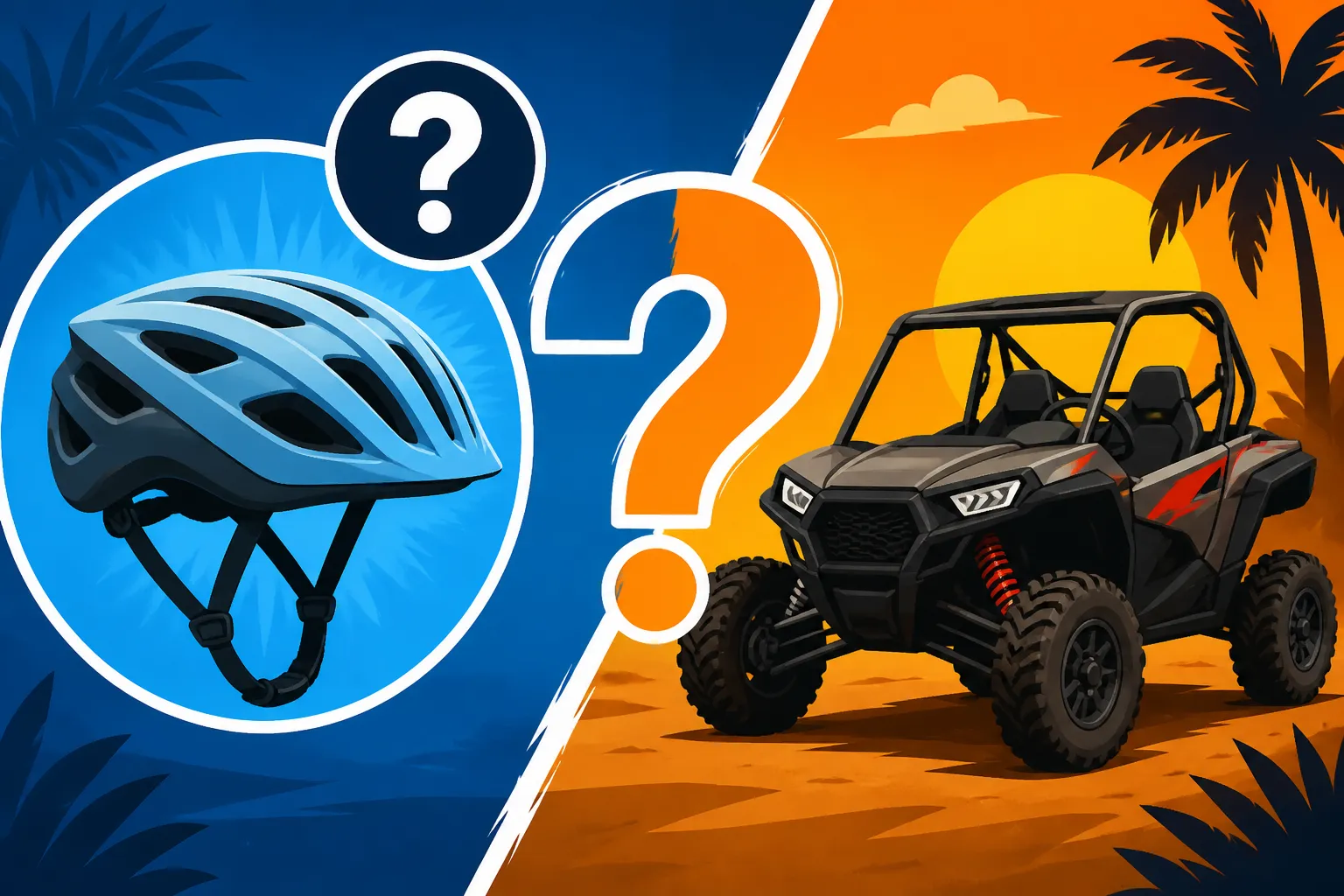
Does a Bicycle Helmet Meet Florida’s ATV Rule?
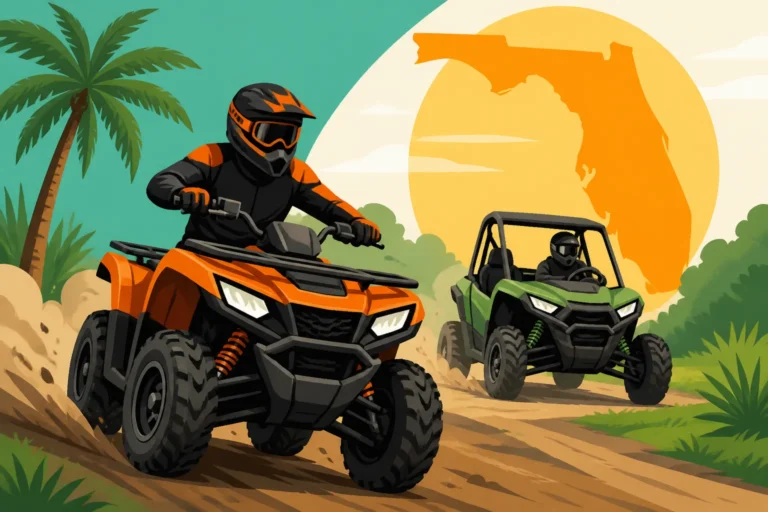
You've got your ATV ready, the trails are calling, but what about your head? Especially in Florida, where the rules can feel like a tangled palmetto thicket, a common question pops up for many riders: Can I just use my bicycle helmet for my quad? It's a question born of convenience and maybe a bit of confusion, and frankly, the answer isn't always what riders hope to hear. This guide will cut through the misinformation and give you the straight facts on Florida's ATV helmet laws, helping you understand the specific requirements for ATV riders, why those requirements exist, and how to choose the right gear to keep you safe and legal on the trails.
Florida's ATV Helmet Law: What the Law Actually Says
It's easy to assume that any helmet is a good helmet, especially when you're just looking for basic head protection. However, Florida law is quite specific when it comes to riding off-highway vehicles (OHVs), which include ATVs and UTVs. The key distinction isn't just wearing a helmet, but wearing one that meets a very particular safety standard. This isn't just about common sense; it's about statutory requirements designed to prevent serious injury.
The main takeaway here is that Florida Statute 316.2123 dictates the rules for OHVs. While the state doesn't require all ATV riders to wear a helmet on private land, things change significantly when minors are involved or when you venture onto public trails or roads where ATV use is permitted. This distinction is crucial, and misunderstanding it can lead to fines, citations, and more importantly, inadequate protection in the event of an accident.
Age Restrictions and Public Land Use: Who Needs a Helmet
Florida law makes it crystal clear: anyone operating or riding as a passenger on an ATV or UTV on public lands, trails, or designated unpaved roads, who is under 16 years of age, must wear a helmet. But it's not just any helmet. The law specifically states that this helmet must be "approved by the United States Department of Transportation (DOT)." This isn't a suggestion; it's a mandatory safety requirement designed to protect our youngest riders from the severe head injuries that can occur during off-road excursions.
This rule extends beyond just children. If you're riding with someone under 16, even if they are a passenger on a two-rider machine, they need a DOT-compliant helmet. It's a common scenario at places like Croom Motorcycle Area or the Ocala National Forest: a family heads out for a day of riding, and rangers will be looking to ensure that all minors are properly equipped. Failing to comply can mean an immediate end to your ride, a citation, and potentially other penalties. You can read more about this in [Florida ATV Helmet Law for Riders Under 16].
The "Under 16" Rule: It's Not Just About ATVs
While the primary focus is often on ATVs, it's important to remember that this DOT-compliant helmet rule for riders under 16 applies to all off-highway vehicles, including dirt bikes. This means if your teenager is tearing up the trails on a motocross bike, or your younger child is on a youth-model ATV, the same strict helmet requirements are in place. The type of machine doesn't change the underlying safety principle or the legal obligation.
This consistent application across various OHV types underlines the state's commitment to protecting young riders. It acknowledges the inherent risks associated with off-road riding, regardless of the specific vehicle. So, whether your child is on a four-wheeler or a two-wheeler, if they're under 16 and on public land, that DOT sticker on their helmet is non-negotiable.
Public vs. Private Land: Where the Rules Apply
Here's where some of the confusion often arises. On private property, if you are an adult, Florida law generally doesn't mandate helmet use for ATV riders. This means if you're riding on your own ranch, a friend's expansive acreage, or a private mud park, the decision to wear a helmet (or what kind of helmet) often falls to the landowner or your personal discretion. However, this freedom comes with significant personal risk. Even on private land, severe accidents can and do happen.
The moment you venture onto public lands, designated ATV trails, or roads where OHVs are permitted, the rules shift dramatically, especially for minors. This includes state forests like Blackwater River State Forest, national forests like Ocala, or any county-designated ATV road. For adults on public land, while a helmet isn't legally required if you're over 16, it is overwhelmingly recommended by every safety expert. Think about it: a branch to the face or a sudden rollover doesn't care about your age or whether you're on public or private land. The smart money is always on wearing a full-face, DOT-approved helmet, no matter where you ride.
Comparing Bicycle Helmets to DOT-Compliant ATV Helmets
When you look at a bicycle helmet next to a true ATV helmet, the differences might seem obvious, but many people don't fully grasp the engineering and safety standards behind each. It's not just about aesthetics; it's about how these helmets are designed to protect your brain from very different types of impacts and forces. This is where the notion of a bicycle helmet meeting Florida's ATV rule completely falls apart.
Bicycle helmets are fantastic for cycling. They are lightweight, well-ventilated, and designed to absorb impacts typical of a bicycle crash – usually a single impact, often from a relatively low height. They do a great job for what they're intended for. However, ATVs operate at higher speeds, encounter more varied terrain, and present a much greater potential for complex, multi-directional impacts and abrasive injuries. The forces involved in an ATV accident can easily exceed what a bicycle helmet is engineered to withstand.
Construction and Impact Protection Differences
The core difference lies in their construction and the specific impact standards they are built to meet. A bicycle helmet typically consists of a thin plastic outer shell and a thick layer of expanded polystyrene (EPS) foam. This foam is designed to crush on impact, dissipating energy. It's effective for a single, moderate blow. However, it's generally not designed for the kind of high-speed, multiple-impact scenarios common in ATV riding.
A DOT-compliant ATV helmet, on the other hand, is a much more robust piece of equipment. It usually features a hard, durable outer shell made from polycarbonate, fiberglass, or composite materials, designed to resist penetration and distribute impact forces over a wider area. Beneath this shell is a significantly thicker, multi-density EPS liner, engineered to absorb more severe impacts and provide protection against repetitive blows. Additionally, most ATV helmets feature a strong chin bar, which is absolutely critical for protecting your jaw and face – an area almost entirely exposed by a typical bicycle helmet. This chin bar protects against impacts from branches, rocks, or direct facial trauma during a fall. You can delve into the specifics of [Helmets That Meet the USDOT Standard].
How to Spot a DOT-Compliant Helmet
Knowing what to look for is key to ensuring you're compliant with Florida law and, more importantly, adequately protected. The easiest way to identify a DOT-compliant helmet is to check for the "DOT" certification sticker. This sticker is almost always located on the back of the helmet, often beneath the clear coat, indicating that the helmet meets Federal Motor Vehicle Safety Standard (FMVSS) 218. This standard includes rigorous testing for impact attenuation, penetration resistance, and retention system effectiveness.
Beyond the DOT sticker, you'll often see other certifications like Snell or ECE. While these are excellent safety standards, the DOT certification is the one specifically mandated by Florida law for OHV use for minors. When you're shopping for a new helmet, whether online or at a dealer, make sure to explicitly look for this mark. Reputable brands that specialize in powersports gear, such as those you might find at a SuperATV store or website, will clearly label their helmets with these certifications. If a helmet doesn't have a DOT sticker, it's not legal for minor ATV riders on public land in Florida, and it's certainly not offering the same level of protection.
The Pitfalls of Using the Wrong Helmet Type
Using a bicycle helmet for ATV riding, especially for a minor on public land, carries both legal and safety risks. From a legal standpoint, a law enforcement officer, such as a Florida Fish and Wildlife Conservation Commission (FWC) officer or a county deputy, can issue a citation if a rider under 16 is found wearing a non-DOT-compliant helmet. This isn't just a slap on the wrist; it can come with fines and court costs, which quickly add up. For example, if you're riding in a national forest, staff will certainly be checking for this compliance.
The safety pitfalls are far more severe. A bicycle helmet simply isn't designed to protect against the types of impacts common in ATV accidents. Imagine hitting a tree limb at 20 mph, or having your machine roll over on top of you. A bicycle helmet would offer minimal to no protection for your face, jaw, or the greater forces involved. The lack of a chin bar means your face is wide open to trauma, and the thinner foam layer might fail to adequately absorb the energy of a high-speed impact. This can lead to devastating and life-altering injuries that a proper ATV helmet is specifically engineered to mitigate.
Why DOT Compliance Matters for Your Safety and Wallet
The United States Department of Transportation (DOT) certification isn't just a bureaucratic hurdle; it's a critical safety standard developed through extensive research and testing. When a helmet is DOT-certified, it means it has passed rigorous tests for impact absorption, penetration resistance, and retention system strength. This isn't just about protecting you from a minor bump; it's about protecting you from life-threatening injuries in the event of a significant crash.
For ATV riders, particularly those who explore Florida's varied terrain, from the sandy scrub of Ocala to the muddy trails of Hog Waller, the risks are substantial. Speeds can be high, surfaces can be unforgiving, and obstacles can appear suddenly. A proper helmet is your last line of defense, and skimping on this essential piece of gear is never worth it.
Understanding the Risks of Insufficient Protection
Riding an ATV exposes you to unique hazards that require specific types of protection. Unlike cycling, where falls are generally forward or sideways from a lower height, ATV accidents can involve rollovers, ejection at high speeds, collisions with fixed objects like trees or rocks, and impacts from other vehicles. These scenarios often involve multiple impacts, rotational forces, and significant trauma to the head and face.
A helmet that isn't built to DOT standards won't be able to effectively dissipate these forces. The outer shell might crack or shatter, failing to distribute the impact. The internal foam might compress completely, offering no further protection. And without a robust chin bar, your face, jaw, and teeth are incredibly vulnerable. We're talking about potential concussions, skull fractures, brain damage, and severe facial injuries. These aren't just theoretical; they are real consequences that occur when riders are inadequately protected. Many riders trust brands like SuperATV for their machine upgrades, and that same level of trust should extend to their protective gear.
Legal Repercussions and Penalties for Non-Compliance
Beyond the obvious safety concerns, failing to comply with Florida's helmet laws can lead to legal trouble. For riders under 16, operating an ATV on public land without a DOT-compliant helmet is a traffic infraction. This means you or your child could be pulled over by law enforcement. The immediate penalty is often a fine, plus court costs. These citations can add up, and repeat offenses might lead to more severe consequences.
Furthermore, if an accident occurs and a minor is found to be riding without the proper helmet, it can significantly complicate legal proceedings and insurance claims. It shows a clear failure to meet a legal safety standard, which can impact liability. While Florida law doesn't issue a specific [Florida ATV Ticket Cost for Illegal Road Riding] just for helmets alone, it's often combined with other infractions or becomes a point of contention after an accident. This makes it an expensive lesson to learn.
Insurance Implications and Liability
Imagine the worst-case scenario: an accident occurs, and a minor rider sustains a head injury while wearing a bicycle helmet on a public trail. If you file an insurance claim for medical expenses or property damage, the insurance company could potentially deny or limit coverage based on the fact that the rider was not in compliance with state helmet laws. This becomes a significant financial burden that could have been avoided with the right gear.
Liability in an accident where a proper helmet wasn't worn can also be heavily influenced. If another party is involved, or if negligence is alleged, the lack of a DOT-compliant helmet for a minor can be used as evidence of contributory negligence. This means that even if another party was partially at fault, your recovery for damages could be reduced or denied because you weren't following the law. It’s a harsh reality, but insurance companies look for reasons to limit payouts, and non-compliance with safety regulations is a very clear one. It’s always best to be completely covered, both literally and figuratively.
Practical Advice for Choosing the Right Helmet in Florida
Choosing the right ATV helmet isn't just about meeting legal requirements; it's about investing in your safety and comfort for countless hours of trail riding. With so many options out there, it can feel a bit overwhelming, but focusing on key features and proper fit will ensure you make the best decision. Remember, this is one piece of gear where you truly don't want to compromise on quality.
Many riders, especially those pushing their machines with aftermarket upgrades from companies like SuperATV, recognize the need for top-tier protective gear. A high-quality helmet is just as important as robust tires or improved suspension when it comes to enjoying your ride safely. Don't let the heat or humidity of Florida deter you from wearing full protection; modern helmets are designed with ventilation in mind.
Sizing, Fit, and Comfort for All-Day Riding
A helmet can only protect you effectively if it fits correctly. An ill-fitting helmet, whether too loose or too tight, can be uncomfortable, distracting, and most importantly, less effective in an impact. When trying on helmets, look for a snug fit all around your head, with no pressure points. It should feel firm but not painful. The helmet shouldn't shift or slide easily when you move your head side-to-side or up and down.
To test the fit, fasten the chin strap and try to rotate the helmet on your head. If it moves significantly, it's too big. If it causes severe pain or a headache after a few minutes, it's too small. Many manufacturers offer sizing charts, but trying it on in person is always best. Pay attention to comfort features like moisture-wicking liners, which are a godsend in Florida's humid climate. An uncomfortable helmet will make you less likely to wear it, defeating its purpose.
Features to Look For Beyond DOT Certification
While DOT certification is the baseline, there are several other features that can enhance safety and comfort. Look for helmets with a wide field of vision, especially important for situational awareness on trails. Good ventilation systems with intake and exhaust vents will help keep your head cool and reduce fogging, which is vital in Florida's heat and humidity. Many higher-end helmets also include removable, washable liners, a blessing after a muddy or sweaty ride.
Consider the weight of the helmet; a lighter helmet can reduce neck fatigue on long rides. Also, think about how it integrates with other gear, particularly goggles. Many ATV helmets have specific grooves or shapes to hold goggle straps securely. If you're a serious rider, look for helmets with additional certifications like Snell or ECE, which often indicate even higher levels of impact protection and stringent testing. While not legally required by Florida, these certifications offer an added layer of peace of mind.
Where to Buy and What to Ask
When purchasing an ATV helmet, always buy from a reputable dealer or online retailer specializing in powersports gear. Places like dedicated ATV dealerships, large sporting goods stores, or well-known online shops that carry brands like SuperATV will have knowledgeable staff and a wider selection of certified helmets. Avoid buying used helmets, as their safety integrity may be compromised from unseen impacts or degradation of materials.
Don't hesitate to ask questions. Inquire about the helmet's materials, ventilation, weight, and any additional safety certifications. Ask about sizing guidance and return policies in case the fit isn't quite right once you get it home. Remember, you're not just buying a helmet; you're investing in a critical piece of safety equipment that could literally save your life. Choose wisely, wear it every time you ride, and enjoy Florida's fantastic trails with confidence.
Here’s a quick comparison of helmet types:
| Feature | Bicycle Helmet | DOT-Compliant ATV Helmet |
|---|---|---|
| Primary Purpose | Cycling, low-speed impacts | ATV/OHV riding, high-speed & complex impacts |
| Outer Shell | Thin plastic | Hard plastic (polycarbonate) or composite |
| Impact Liner | Single-density EPS, designed for single impact | Multi-density EPS, designed for severe & repeated impacts |
| Chin Bar Protection | Generally absent | Essential, integrated for face & jaw protection |
| Penetration Resistance | Low | High, tested to withstand sharp objects |
| Weight | Very light | Moderate to heavy (due to robust construction) |
| Ventilation | Excellent, large vents | Good, with strategically placed vents & channels |
| Field of Vision | Open face | Wide, often designed for goggle compatibility |
| Certification | CPSC | DOT FMVSS 218 (often Snell, ECE too) |
| Legal for Minors (FL) | No | Yes (on public lands) |
Disclaimer
This article is for general informational purposes only and does not constitute professional advice. Laws, prices and regulations vary by location and change over time. Consult a qualified professional for guidance on your specific situation.