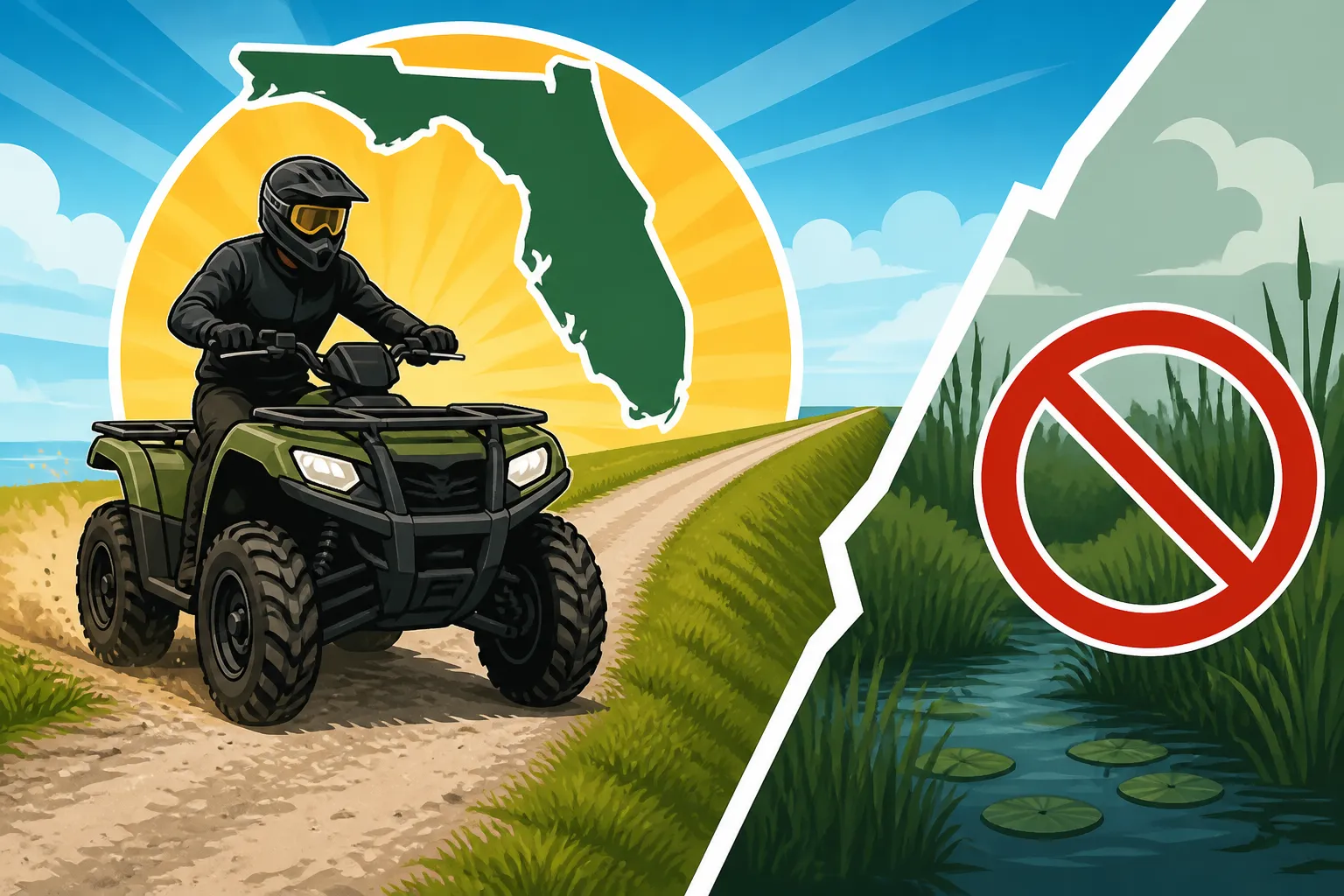
Can You Ride a Quad on the Okeechobee Levee?
It's incredibly tempting to imagine cruising along the expansive, scenic Lake Okeechobee Levee on your quad or side-by-side. The thought of those wide-open spaces, fresh air, and stunning water views often sparks a question in the minds of many Florida ATV and UTV enthusiasts: "Can I ride my machine there?" Unfortunately, this vision often clashes with the reality of regulations and the critical purpose of this impressive structure. This guide will cut through the speculation and clearly explain the rules governing motorized vehicle use on the Okeechobee Levee.
The Lure of the Lake Okeechobee Levee for ATV Riders
Florida's landscape offers a unique blend of natural beauty and outdoor adventure, and Lake Okeechobee, with its vast expanse and the surrounding levee system, represents a significant part of that allure. For those of us who love the thrill of off-road riding, any wide, unpaved path often looks like an open invitation. The sheer scale of the Herbert Hoover Dike around Lake Okeechobee can make it seem like an ideal, sprawling trail perfect for a long ride.
Why the Levee is So Appealing
Imagine the panoramic views – the "Big O" stretching out on one side, and the rich agricultural lands or wild Florida scrub on the other. It's an environment that whispers promises of freedom and exploration. Many riders are drawn to the perceived tranquility and untouched nature of such a massive structure, envisioning leisurely rides with family or adrenaline-fueled adventures with friends. There's a natural inclination to seek out new riding spots, and a structure of this magnitude, which feels so separate from typical paved roads, can seem like a prime candidate for off-highway vehicles. The appeal is undeniable, feeding into the desire for unique riding experiences away from designated parks.
Beyond the aesthetics, the levee offers a seemingly endless, relatively flat, and consistent surface, which can be particularly attractive compared to the often-rugged and challenging terrains of dedicated OHV parks. It's not uncommon for riders to assume that because the surface isn't asphalt, it falls under a different, more relaxed set of rules, perhaps akin to [Florida's Unpaved Road Rule for ATVs Explained]. This perception of an "open road" on a massive scale is a powerful draw, leading many to wonder about the legality before even considering the actual regulations. It's a testament to the allure of Florida's wild spaces and the spirit of exploration inherent in the ATV and UTV community.
Initial Rider Assumptions and Misconceptions
One of the biggest misconceptions we encounter is the idea that if a path isn't a paved road, it must automatically be open to ATVs and UTVs. This isn't just a Florida-specific thought; it's a common assumption among off-road enthusiasts everywhere. Riders often see a dirt or gravel surface and think, "This is perfect for my machine," without considering who owns or manages that land, or what its primary purpose is. The Lake Okeechobee Levee, being such a monumental earthen structure, often falls into this category of perceived open access. People might think, "It's not a highway, so it's not subject to typical vehicle laws," or "It's a big, empty space; who would it hurt?"
Another common assumption is that because some parts of the levee might be accessible for walking, cycling, or even fishing, all forms of recreation are equally permitted. This can lead to frustration when riders are told their powerful machines are not welcome. It's easy to conflate different types of public access and assume a blanket policy. For example, some may think that because [Florida Residents Who Ride Public Land Must Title] their ATVs, the levee would simply be another one of those public lands. However, the distinction between a managed recreational trail and critical infrastructure is vast, and ignoring it can lead to serious consequences. These initial assumptions, while understandable given the outdoor-loving nature of our community, are precisely what we need to clarify to ensure everyone stays safe and legal.
Understanding the Authority: Who Manages the Okeechobee Levee?
To truly understand why riding ATVs and UTVs on the Okeechobee Levee is generally not permitted, we need to look at who is in charge of this massive public works project. The levee isn't just a random dirt path; it's a meticulously managed piece of infrastructure crucial to Florida's environment and safety. Its primary purpose isn't recreation, but flood control and water management, which dictates strict rules regarding its use. The various agencies involved have specific mandates that prioritize public safety, environmental protection, and the integrity of the levee itself above all else.
These managing bodies implement rules to prevent damage to the structure, protect sensitive habitats, and ensure the safety of both the public and their personnel who work on the levee. Understanding their roles helps clarify why recreational ATV use is largely incompatible with the levee's core function. It's not about being restrictive for the sake of it, but about preserving a vital system for the entire state.
South Florida Water Management District (SFWMD) Regulations
The South Florida Water Management District (SFWMD) plays a significant role in managing Lake Okeechobee and the surrounding levee system. Their primary mission is water resource management, including flood control, water supply, and ecosystem restoration across a 16-county region. From their perspective, the levee is a critical piece of infrastructure designed to protect communities and agricultural lands from flooding. It's also a dynamic environment requiring constant monitoring, maintenance, and sometimes active work by heavy equipment and personnel.
Because of this crucial operational role, the SFWMD has strict regulations regarding public access and activity on the levee. Motorized vehicles, including ATVs and UTVs, are generally prohibited from recreational use on most SFWMD-managed lands and structures, including the levee. The rationale is clear: these vehicles can cause erosion, compact soil, create ruts that impede maintenance, and pose safety risks to both riders and SFWMD staff. They also want to prevent any unauthorized activity that could compromise the structural integrity of the dike, which is literally holding back a massive body of water.
U.S. Army Corps of Engineers (USACE) Oversight
Adding another layer of management and regulation is the U.S. Army Corps of Engineers (USACE). The Herbert Hoover Dike, which forms the core of the Lake Okeechobee Levee system, is a federal project, and the USACE is the federal agency primarily responsible for its design, construction, and ongoing maintenance. While the SFWMD manages day-to-day operations and water levels, the USACE holds ultimate authority over the structural integrity and long-term safety of the dike. This federal oversight brings with it an even more stringent set of rules, particularly concerning security and infrastructure protection.
The USACE views the levee as vital national infrastructure. Unauthorized motorized traffic is seen as a potential threat to this infrastructure, both from accidental damage and from hindering access for emergency repairs or routine inspections. Their regulations are designed to prevent any activity that could weaken the dike, interfere with operations, or create unsafe conditions. This means that even if a small segment of the levee might appear to be a tempting riding spot, it's almost certainly under strict federal guidelines that prohibit recreational ATV or UTV use. For anyone contemplating a ride, remember that the USACE's authority on the levee is absolute, and violations are taken very seriously, often resulting in federal penalties beyond state or local fines.
The Hard Truth: Are ATVs/UTVs Allowed on the Levee?
This is where we get straight to the point, because there's a lot of hearsay and wishful thinking out there. For many people, the answer to "Can I ride my quad on the Okeechobee Levee?" is a simple, resounding "no." While the idea of open riding on such a vast, scenic stretch of land is appealing, the reality of its purpose and management makes it largely off-limits for recreational off-highway vehicle use. This isn't a small county road where rules might be flexible; it's a critical piece of infrastructure with a very specific, non-recreational job.
The various agencies managing the levee prioritize its function as a flood control system, a barrier against environmental damage, and a pathway for authorized personnel only. This means that activities that could compromise the levee's integrity, interfere with operations, or create safety hazards are strictly prohibited. It’s important to understand that these rules are in place for serious reasons, not just to spoil a good time.
The General Prohibition and Exceptions
So, let's be crystal clear: recreational ATV and UTV riding is generally prohibited on the Lake Okeechobee Levee. The agencies responsible for its management, primarily the South Florida Water Management District (SFWMD) and the U.S. Army Corps of Engineers (USACE), have explicit rules against the use of off-highway vehicles for recreational purposes. This prohibition is rooted in the levee's function as a critical flood control structure and a vital component of Florida's water management system. Unauthorized vehicles can cause erosion, create unsafe conditions for workers, and impede access for maintenance and emergency operations. It's simply not designed for joyriding.
There are, however, very limited exceptions, but these do not apply to the general public seeking a recreational ride. These exceptions are typically reserved for authorized personnel, such as SFWMD or USACE employees conducting inspections, maintenance, or emergency repairs. Utility workers might also have authorized access to service infrastructure along the levee. In rare instances, specific, highly regulated events might receive special permits, but these are extremely uncommon for off-highway vehicle use and would be publicly announced and tightly controlled. It’s crucial to understand that these aren't loopholes for the average rider; they are operational necessities for those officially tasked with maintaining this vital infrastructure. Do not assume any vehicle you see on the levee is a sign that general access is permitted.
Consequences of Illegal Riding
Ignoring the rules and attempting to ride your ATV or UTV on the Lake Okeechobee Levee can lead to some pretty significant headaches, not just a slap on the wrist. First and foremost, you're likely to face trespassing charges. These aren't minor infractions, especially when dealing with federal land or critical infrastructure managed by the USACE. Trespassing can result in substantial fines, and depending on the specific circumstances and any damage caused, it could even escalate to more serious legal action. Officers from local sheriffs' departments, the Florida Fish and Wildlife Conservation Commission (FWC), and even federal agents have jurisdiction in these areas and are not shy about enforcing the rules.
Beyond legal penalties, there's a very real risk of your vehicle being impounded. This means not only losing your machine on the spot but also incurring hefty towing and storage fees to get it back, if you can. Imagine having your prized quad or side-by-side hauled away, knowing you're on the hook for hundreds, if not thousands, of dollars just to retrieve it. Plus, there's the potential for damage to critical infrastructure. Even seemingly innocuous riding can contribute to erosion or damage to access points, which could then lead to civil penalties or requirements to pay for repairs. For instance, creating deep ruts could make it difficult for official vehicles like service trucks or even specialized SuperATV UTVs used by maintenance crews to access certain areas, directly impacting the levee's functionality. The risks far outweigh any momentary thrill of riding where you shouldn't.
Where Can You Actually Ride Legally Near Okeechobee?
While the Lake Okeechobee Levee might be off-limits for recreational ATV and UTV riding, don't despair! Florida is still a fantastic state for off-road enthusiasts, and there are plenty of legitimate, legal, and often thrilling places to ride your quad or side-by-side. The key is to know where these designated areas are and to always ride responsibly and within the established rules. This means seeking out places that are designed and managed specifically for off-highway vehicles, ensuring a safe and enjoyable experience for everyone.
Exploring the many public and private options available will not only keep you on the right side of the law but also introduce you to diverse riding terrains, from deep sand to challenging mud bogs. It's about redirecting that adventurous spirit to places where it's truly welcomed and supported by dedicated infrastructure. Always remember that riding legally and safely is part of the off-road code of conduct.
Exploring Nearby Public & Private Riding Areas
Instead of eyeing the off-limits levee, turn your attention to Florida's many fantastic, legal OHV riding destinations. We are fortunate to have several options, both public and private, that cater specifically to ATVs and UTVs. For a truly extensive experience, consider a trip to the [Croom Motorcycle Area: Florida's Biggest OHV Park] in the Withlacoochee State Forest, not too far from the Okeechobee area. Croom offers miles of diverse trails, from sandy whoops to challenging technical sections, all within a well-managed environment. Another popular public option is the [Ocala National Forest ATV Trails in Florida], which provides a vast network of trails through the Big Scrub, perfect for long rides and exploring Florida's unique ecosystem.
If mud is your passion, Florida is also home to several exciting [Florida Mud Parks: Where Riders Actually Go]. Places like Hog Waller ATV Resort in Palatka or Redneck Mud Park near Punta Gorda offer dedicated mud holes, obstacle courses, and often host events that create a vibrant community atmosphere. These private parks are designed to handle the abuse and excitement of mud riding, complete with washdown stations and camping facilities. Beyond these well-known spots, don't forget the possibility of riding on private land with explicit, written permission from the landowner. Always check the specific rules and permit requirements for any public or private park before you go, as they can vary widely.
Essential Gear and Rules for Legal Riding
Wherever you choose to ride legally in Florida, safety and preparedness are paramount. It’s not just about having the right machine, but also about having the right gear and understanding the rules of the trail. First and foremost, helmets are non-negotiable for riders under 16, and highly recommended for all ages. [Florida ATV Helmet Law for Riders Under 16] is very clear on this. Beyond helmets, sturdy boots, long pants, a long-sleeved shirt, and eye protection (like goggles) are crucial to protect against branches, debris, and the elements. These aren't just suggestions; they're vital for minimizing injury in case of a fall or collision.
Your machine also needs to be trail-ready. Most public riding areas, like those in state or national forests, require a spark arrestor on your exhaust to prevent wildfires. It’s always a good idea to carry basic tools, a first-aid kit, water, and perhaps even a winch, especially if you plan on tackling mud or challenging terrain – aftermarket accessories from brands like SuperATV can significantly enhance your machine's capabilities and safety for these situations. Remember to carry any required permits or passes (like a [Florida State Forest OHV Day Use and Annual Passes]), and know the trail etiquette. Stay on marked trails, respect wildlife, and always tell someone where you're going and when you expect to return. Being prepared and respectful ensures a safe and enjoyable experience for everyone on the trails.
Here's a quick comparison of activities on the Lake Okeechobee Levee versus designated OHV parks:
| Feature | Lake Okeechobee Levee (General Access) | Designated OHV Parks/Trails (e.g., Croom, Ocala) |
|---|---|---|
| Primary Purpose | Flood Control, Water Management | Recreation, OHV Trail Riding |
| ATV/UTV Riding | Generally Prohibited | Permitted (with valid passes/fees) |
| Hiking/Biking | Often Permitted (check specific areas) | Often Permitted (on designated shared trails) |
| Motorized Vehicles | Only Authorized Personnel | Recreational riders, authorized staff |
| Required Permits/Passes | N/A (for recreational use) | OHV Passes, entry fees, safety certificates |
| Risk of Fines/Impoundment | High | Low (if adhering to park rules) |
| Infrastructure Damage | High concern, strict enforcement | Managed risk, designed for vehicle impact |
Disclaimer
This article is for general informational purposes only and does not constitute professional advice. Laws, prices and regulations vary by location and change over time. Consult a qualified professional for guidance on your specific situation.