Florida ATV Passenger Rules
It’s a common scenario: you’re geared up for an epic day of Florida trail riding, maybe exploring the sandy expanses of Ocala National Forest or tackling the mud at Hog Waller, and your buddy or child wants to come along. You naturally think, "Can I just hop on the back?" But before you double up and hit the throttle, it’s crucial to understand that Florida has very specific, often misunderstood, rules about carrying passengers on ATVs. This guide is here to untangle those complexities, address your burning questions, and ensure your rides are not only fun but also legal and safe.
Understanding Florida's Core ATV Passenger Laws
Navigating the world of off-highway vehicles in Florida can feel like wading through a murky bog sometimes, especially when it comes to passenger rules. Many riders assume that if their ATV has a seat for two, it's perfectly fine to carry a passenger. Others might think that on private land, anything goes. However, Florida law, specifically Chapter 316.2074 of the Florida Statutes, lays out clear distinctions that every ATV owner needs to understand before inviting someone to ride along. These rules are designed for safety, protecting both the operator and potential passengers from the unique risks associated with ATVs.
The Single-Rider Design Standard
One of the most fundamental aspects of Florida's ATV passenger rules revolves around the design of the machine itself. Most All-Terrain Vehicles (ATVs) are, by their very nature, designed and manufactured for a single operator. Think about the typical saddle-style seat, the handlebar controls, and the foot pegs. These are all set up for one person to control and balance the machine safely. The statute explicitly refers to an ATV as a motorized off-highway vehicle designed to travel on four or more low-pressure tires, and here’s the kicker: it’s intended by the manufacturer for use by a single operator.
This manufacturer intent is paramount. Even if you've seen aftermarket seats that bolt onto the rear rack of an ATV, or you’ve jury-rigged a makeshift seat yourself, the original design standard dictates how the state views your machine's capacity. When a law enforcement officer or park ranger looks at your ATV, they’re looking at its factory design. If it wasn't built for two, then carrying a passenger immediately puts you in a legally precarious position, regardless of how secure you feel the passenger is. This distinction is often the root cause of confusion and, unfortunately, citations for many riders who genuinely believed they were doing nothing wrong.
The Definition of an ATV Passenger
So, if most ATVs are designed for one, who exactly counts as a "passenger"? In Florida, a passenger is generally anyone other than the primary operator. This seems straightforward, but it’s important to clarify the implications. If you have someone sitting behind you, even if they’re just standing on the foot pegs for a short distance, they are considered a passenger. The law isn't concerned with the duration of the ride or the intent; it's concerned with the presence of a second person on a single-operator-designed machine.
This also extends to children. Many parents might put a small child in front of them, thinking they are in a safer position. However, this is still carrying a passenger, and it can be even more dangerous as it interferes with the operator's ability to steer, see, and react quickly. The definition of a passenger doesn't change based on their size or their relationship to the operator. It's simply about an additional person on a vehicle designed for one. Understanding this strict definition is the first step toward avoiding potential legal trouble and ensuring everyone's safety out on the trails.
What Chapter 316.2074 Says About Passengers
Chapter 316.2074 of the Florida Statutes is the legal backbone for ATV operation in the state, and it’s where you'll find the explicit rules regarding passengers. The statute clearly states that "An all-terrain vehicle may not be operated on any public land by more than one person, the operator, unless the all-terrain vehicle is specifically designed by the manufacturer to carry a passenger." This is the core rule that governs nearly all public land riding in Florida. The critical phrase here is "specifically designed by the manufacturer."
This means that unless your ATV rolled off the factory line with two distinct, separated seats, designated footrests for a passenger, and typically a backrest or handholds for the passenger, you cannot carry a second person on public land. This often applies to what some manufacturers market as "2-up" ATVs or certain specialized utility ATVs that are built with passenger capacity in mind. If your standard sport or utility quad doesn't fit this description, then you’re limited to solo riding when on public trails, designated roads, or other state-managed areas. Ignoring this specific provision can lead to fines and a potentially dangerous situation. It's also important to remember that these state rules apply broadly; while private landowners can set their own rules for their property, if you're venturing out onto a state forest like Ocala or a state park like Croom, these are the laws you must abide by. For a deeper dive into the overall regulations, check out [Florida Off-Highway Vehicle Title Rules Explained].
Age Restrictions and Supervision for Young Passengers
When it comes to allowing younger riders to join the fun on an ATV, Florida law doesn't just differentiate between machines designed for one or two people; it also puts significant emphasis on age, especially when operating on public lands. Parents and guardians often have the best intentions, wanting to share their passion for ATV riding with their children, but the law imposes strict boundaries to protect minors from potential injury. These rules are not arbitrary; they are the result of extensive safety research and a clear understanding of the risks involved. Ignoring them can lead to serious consequences, both legal and safety-related.
Riders Under 16: The 'No Passenger' Rule
Florida law is particularly stringent when it comes to young riders. For any ATV operator under the age of 16, carrying a passenger on any public land is strictly prohibited, regardless of whether the ATV is designed for a single rider or is a designated 2-up model. This is a blanket rule with no exceptions for public spaces, aiming to minimize the inherent risks for minors. The rationale is clear: younger operators typically have less experience, slower reaction times, and less physical strength to control an ATV, especially with the added weight and dynamics of a passenger.
Think of it this way: a 14-year-old on a 90cc quad, even if proficient, is still developing the judgment and fine motor skills necessary to handle unexpected terrain changes or emergency maneuvers. Adding a second person, even a smaller child, dramatically increases the center of gravity, changes the machine's handling characteristics, and adds another variable to manage. The state has decided that the risk is simply too high, which is why this 'no passenger' rule for minors is so absolute on public land. It’s a crucial point for families planning a riding trip to a place like the Croom Motorcycle Area or the trails within Ocala National Forest, where rangers strictly enforce these rules.
Exceptions for Farm or Ranch Use
While the 'no passenger' rule for minors is ironclad on public lands, Florida law does acknowledge some practical exceptions for ATVs used in specific agricultural contexts. If you’re operating an ATV on a farm, ranch, or grove that is owned or leased by you or your employer, and the ATV is being used for agricultural or horticultural purposes, then the passenger rules can be a little different. In these very specific, private-land scenarios, a minor might be allowed to carry a passenger if the ATV is specifically designed by the manufacturer to carry a passenger.
However, this exception is narrow and should not be misinterpreted as a carte blanche for children to carry passengers on any private property. It's tied directly to agricultural work. For instance, a farmer's child might legally carry a smaller child to help with chores or retrieve tools across a large ranch. But this doesn't apply to recreational riding on private property that isn't primarily agricultural, nor does it override the fundamental requirement that the ATV itself must be factory-designed for two riders. Always remember, if you're off the farm or ranch, the general public land rules apply.
Direct Supervision on Unpaved Roads
Florida law also touches on the supervision of minor ATV operators, especially when they are permitted to ride on certain unpaved roads. While this isn't directly about passengers on the ATV, it's a vital part of the overall safety framework for young riders that indirectly impacts how families might approach riding together. On designated unpaved roads where ATVs are permitted, a minor under the age of 16 must be under the direct supervision of an adult who is at least 18 years old and holds a valid driver's license. This adult must be "in close proximity," meaning they can immediately intervene if needed.
This supervision requirement highlights the state's cautious approach to young ATV operators. The adult supervisor isn't necessarily riding on the same ATV (which, as we've discussed, is often illegal), but they are actively monitoring the minor's operation. This direct oversight helps ensure that if a minor were to attempt to carry a passenger, the supervising adult would be there to correct the behavior. It’s another layer of protection, emphasizing that even when riding solo, young operators need guidance. It also brings into focus the broader rules for where ATVs can legally operate on roads, which is a key distinction covered in [Florida ATV Road Rules: Where You Can Legally Ride].
Road Use Rules and Passengers: A Critical Distinction
The type of terrain you're riding on in Florida profoundly impacts not only your ATV's legality but also the rules surrounding passengers. Many riders lump all riding areas together, but the distinction between public unpaved roads, private land, and paved streets is crucial. Each comes with its own set of rules, and what might be acceptable in one area could lead to a hefty fine or a dangerous situation in another. Understanding these nuances is essential for any responsible ATV enthusiast in the Sunshine State.
Public Unpaved Roads vs. Private Land
When it comes to passengers, the distinction between public unpaved roads and private land is perhaps the most significant. As established, Florida Statute 316.2074 generally prohibits carrying a passenger on an ATV on any public land unless the vehicle is explicitly designed by the manufacturer for multiple riders. This applies to public unpaved roads that might cut through state forests, conservation areas, or even some rural county roads designated for OHV use. If your ATV is a single-rider model, even if you’re just cruising down a public dirt road, a passenger is a no-go.
However, on private land, the rules can be different. If you own the land, or have express permission from the landowner, you generally have more leeway regarding passengers, assuming the ATV can safely accommodate them. On private property, the state's specific passenger prohibitions often don't apply, as long as you're not violating other general safety or liability laws. This means if you're on your own sprawling ranch and your ATV is capable of carrying a second person (even if not factory-designed for it), you might choose to allow it. But this comes with significant personal responsibility for safety and liability. Even then, an inherently unstable setup with a passenger on a single-rider ATV presents real dangers that far outweigh the convenience. Always remember that even on private land, accidents can happen, and the lack of state enforcement doesn't negate the laws of physics or the importance of proper safety gear.
Designated ATV Roads and Passenger Considerations
Florida counties have some limited authority to designate specific unpaved roads for ATV use. These are typically rural, low-traffic dirt roads, and they are clearly marked. When riding on these designated roads, all state ATV laws apply, including those pertaining to passengers. This means that if you're on a county-designated ATV road, you must adhere to the rule that an ATV can only carry a passenger if it was specifically designed by the manufacturer for that purpose.
It’s easy to get confused here. Just because a road is open to ATVs doesn't mean all ATV operations are permitted without restriction. The designation simply allows the vehicle type on that road, not necessarily every possible configuration of rider and passenger. So, if you’re cruising down a designated unpaved road in a county that permits it, and your ATV is a single-rider model, a passenger is still illegal. This is where many riders get caught out, thinking the "ATV road" sign makes everything permissible. It's crucial to check local county ordinances in addition to state statutes, but when in doubt, default to the state's passenger rules for public land. You can find more information about where ATVs are allowed on roads in [Florida's Unpaved Road Rule for ATVs Explained].
Why Paved Roads Are a No-Go for Passengers
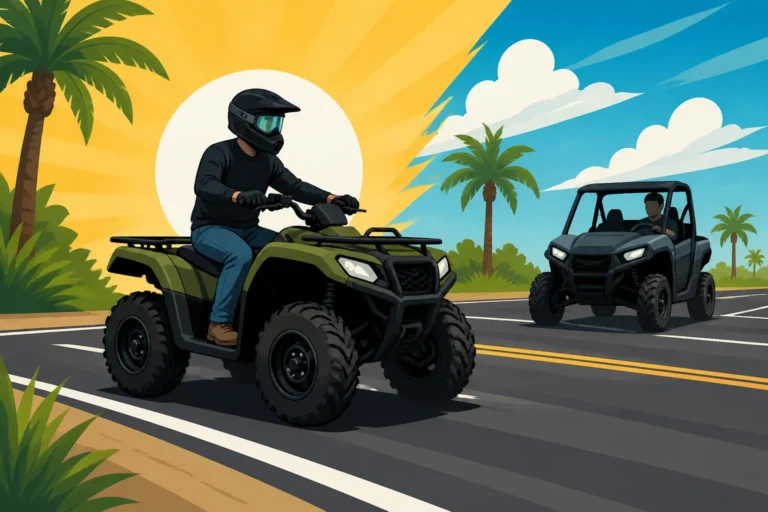
Perhaps the most definitive rule regarding ATVs and roads in Florida is their general prohibition on paved public streets, roads, and highways. With very few, highly specific exceptions (like crossing a highway at a 90-degree angle or agricultural use with proper permits), ATVs are simply not street legal on paved surfaces. This means that if an ATV isn't allowed on a paved road at all, then by extension, neither are its passengers. This rule isn't just about passenger capacity; it's about the fundamental unsuitability of ATVs for highway travel.
ATVs lack many safety features of conventional vehicles, like crumple zones, seat belts (in the traditional sense), and often, even proper turn signals or brake lights for road use. Their high center of gravity and knobby tires are designed for off-road traction, not smooth pavement, making them unstable and difficult to control at higher speeds on asphalt. Adding a passenger to an already unsuitable vehicle on a dangerous surface like a paved road exacerbates all these risks. So, if you're ever wondering if you can take your buddy for a quick spin down a paved neighborhood street to the gas station, with or without a passenger, the answer is a resounding no. For more details on this, you might want to read [Can You Drive an ATV on the Road in Florida?].
Side-by-Sides UTVs and Passenger Capacity
While All-Terrain Vehicles (ATVs) have very strict passenger rules, the landscape changes significantly when we talk about Utility Terrain Vehicles, commonly known as UTVs or side-by-sides. These machines are fundamentally different in their design, purpose, and, most importantly for our discussion, their passenger capacity. The confusion often stems from lumping all off-highway vehicles into one category, but Florida law, much like the manufacturers themselves, makes a clear distinction.
UTVs: Built for Multiple Riders
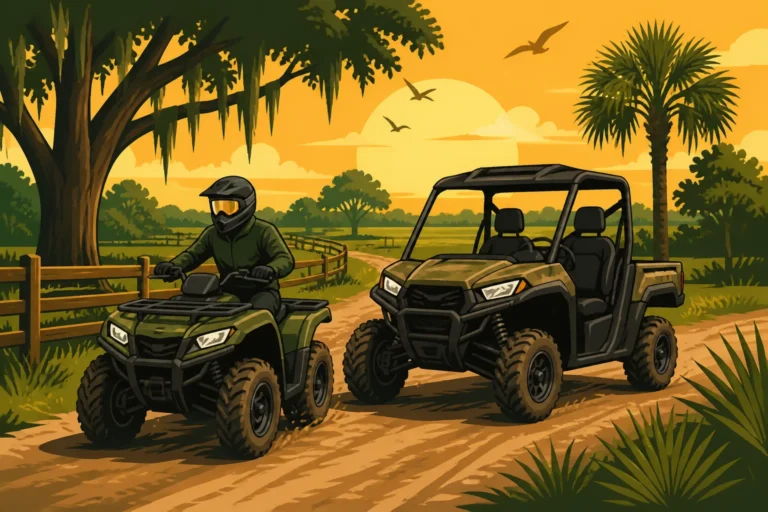
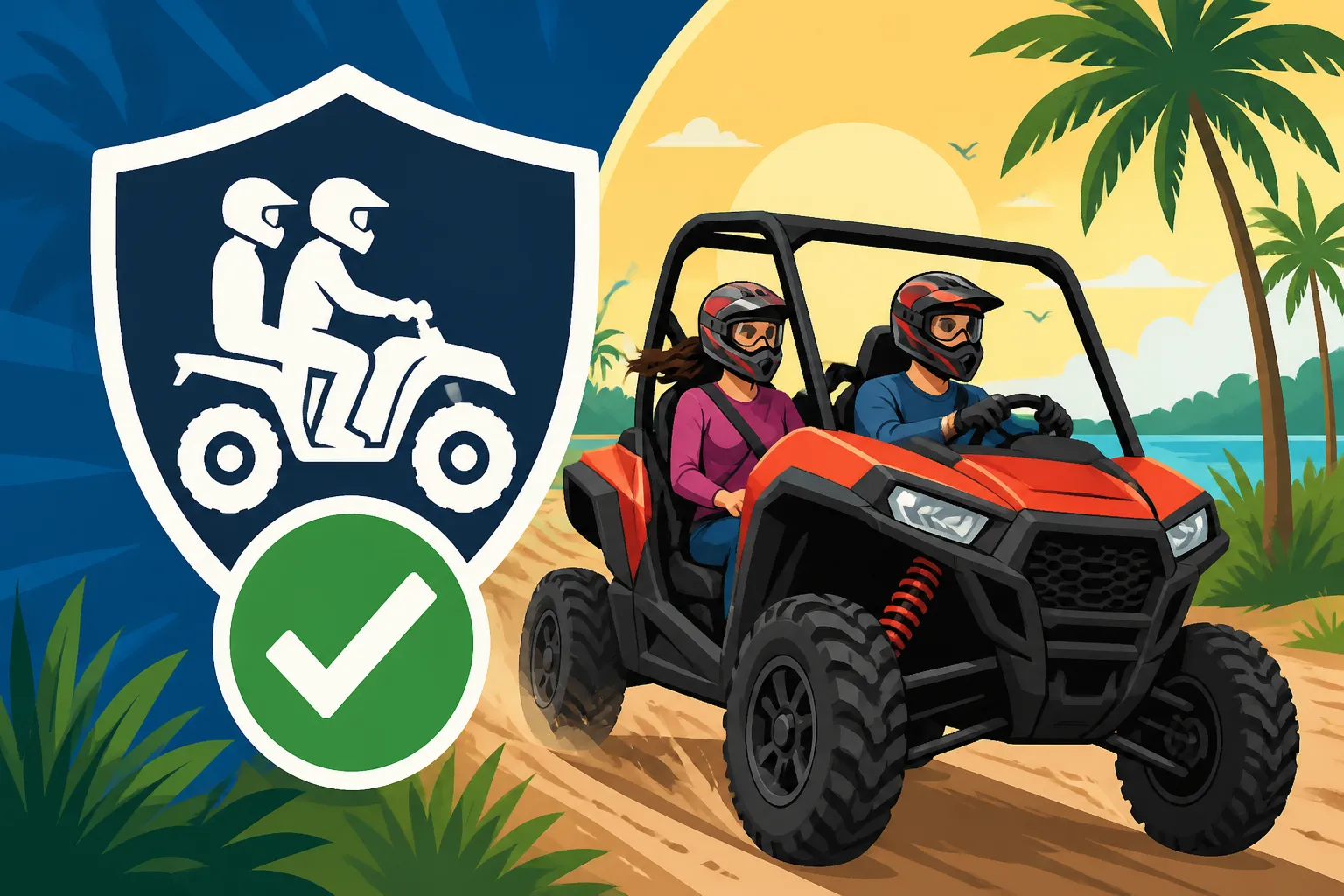
Unlike the vast majority of ATVs, UTVs are specifically engineered from the ground up to carry multiple occupants. They feature bench seating or bucket seats arranged side-by-side (hence the name "side-by-side"), steering wheels instead of handlebars, and typically a roll-over protective structure (ROPS) or cab. These design elements are indicative of their multi-passenger intent. Most UTVs are designed for two, four, or even six occupants, with each seating position often equipped with a seatbelt.
This inherent design for multiple riders means that UTVs generally face fewer restrictions regarding passengers compared to ATVs. If your UTV has two seats and two seatbelts, it's typically legal to carry one passenger. If it has four seats and four seatbelts, you can carry three passengers, and so on, provided everyone is properly seated and belted. This makes UTVs a popular choice for families and groups who want to explore trails together, as they offer a more social and often more stable riding experience for multiple people. Brands like SuperATV offer a range of accessories for UTVs, from windshields to lift kits, that enhance the utility and comfort for all occupants, further highlighting their multi-passenger focus.
The 55-Inch Width Rule and Its Impact on UTV Classification
Florida law defines an ATV based on several characteristics, and width is a significant one. An ATV is generally defined as a motorized off-highway vehicle 55 inches or less in width. Once a machine exceeds this 55-inch width, it typically falls into the category of a Recreational Off-Highway Vehicle (ROV), which is Florida's term for a side-by-side or UTV. This width distinction is critical because it dictates which set of rules applies to your machine.
For ATVs (under 55 inches), the single-rider design standard is paramount. For ROVs (over 55 inches), the multi-passenger design is standard, and the rules are tailored to accommodate that. This means that if you're riding a UTV that's wider than 55 inches, you're usually good to go with passengers as long as they fit in the factory-designed seats and use the provided restraints. This is a key piece of information for anyone trying to figure out if their wider machine counts as an ATV or UTV for titling and passenger purposes. For more on this, you might review [Florida's 55-Inch ATV Definition and Why It Matters].
ROV Definition and Passenger Seating
Let's dive a little deeper into the ROV definition. Florida law defines a Recreational Off-Highway Vehicle (ROV) as a motorized vehicle that is 80 inches or less in width, has a dry weight of 3,500 pounds or less, travels on four or more low-pressure tires, is designed for off-highway use, and is intended by the manufacturer for use by multiple occupants. This last part, "intended by the manufacturer for use by multiple occupants," is what truly sets it apart from an ATV in terms of passenger rules.
Because an ROV is built with multiple occupants in mind, the law explicitly allows for passengers as long as they are riding within the manufacturer's design parameters. This means seated in designated seating areas, often bucket seats or bench seats, and utilizing the seatbelts provided. You won't find the same blanket prohibition on passengers that you see with single-rider ATVs. So, if you're rolling in a UTV, you can comfortably bring your crew, provided your machine has the appropriate seating capacity and everyone buckles up. This makes UTVs the go-to choice for group outings, and you can explore more about their specific definitions in [Florida ROV Definition: 80 Inches and 3,500 Pounds].
Here's a quick comparison of ATV and UTV passenger rules in Florida:
| Feature | ATV (All-Terrain Vehicle) | UTV/ROV (Utility/Recreational Off-Highway Vehicle) |
|---|---|---|
| Primary Design | Single operator, saddle-style seat | Multiple occupants, side-by-side seating (bench or bucket) |
| Width | Generally 55 inches or less | Generally over 55 inches, up to 80 inches |
| Passenger Rule (Public Land) | Prohibited unless specifically designed by manufacturer for a passenger (rare) | Permitted as long as occupants fit in factory-designed seats and use restraints |
| Young Operator (Under 16) Passenger Rule | No passengers allowed for operators under 16 on public land | Generally permitted as long as occupants fit in factory-designed seats and use restraints, and operator meets age/supervision rules |
| Control System | Handlebars | Steering wheel |
| Safety Features | Helmets, eye protection (primary); minimal integrated restraints | Roll-over Protective Structure (ROPS), seatbelts (primary); helmets/eye protection recommended |
| Common Use | Sport, recreation, utility (solo) | Recreation, utility, hunting, family outings (group) |
Safety Gear and Practices for All Passengers
Regardless of whether you're riding an ATV designed for two or a UTV with multiple seats, safety should always be your number one priority. Florida law mandates certain safety equipment for operators, and while it might not always explicitly mention passengers in every rule, common sense and best practices dictate that passengers should be just as protected, if not more so. After all, they are often less experienced and more vulnerable. Skipping essential safety gear or neglecting proper riding practices not only increases the risk of injury but can also make a fun outing turn tragic very quickly.
Helmets Are Not Just for Drivers
Florida law is very clear about helmets for ATV operators under the age of 16. They must wear a U.S. DOT-approved safety helmet. However, it's wise to extend this rule to all riders, regardless of age, and especially to passengers. While adults operating an ATV over 16 are not legally mandated to wear a helmet if on private land, or if riding on public land but not on a public roadway, the risks associated with head injuries in an ATV accident are severe.
A passenger, whether an adult or a child, is just as susceptible to head trauma in a rollover or collision as the operator. They often have less control over their body and might not be able to brace themselves as effectively. Therefore, it's highly recommended that every passenger, regardless of age or the type of off-highway vehicle, wears a properly fitted, U.S. DOT-approved helmet. This is a non-negotiable safety item that provides critical protection for the most vital part of the body. You can learn more about specific age requirements for helmets in [Florida ATV Helmet Law for Riders Under 16].
Eye Protection: Essential for Every Rider
Just like helmets, eye protection is crucial for everyone on an off-highway vehicle, passengers included. Florida law requires ATV operators under 16 to wear eye protection, but again, this is a best practice that should be universally applied. When you're out on the trails, you're constantly exposed to dust, dirt, mud, flying debris from other vehicles, low-hanging branches, and even insects. Any of these can strike an unprotected eye, causing immediate discomfort, distraction, and potentially serious injury.
Imagine a small rock kicked up by the tires ahead of you, hitting a passenger's eye. Not only is that a painful injury, but the sudden reaction could cause the operator to lose control. Goggles or a full-face helmet with a visor are the best options, providing a clear field of vision while shielding the eyes from hazards. Regular sunglasses are simply not enough, as they don't offer the same level of impact resistance or full enclosure. Make sure any passenger you bring along is equipped with appropriate eye protection before the wheels even start turning.
Proper Seating and Handholds for Passengers
For ATVs that are designed for two riders or UTVs carrying multiple passengers, proper seating and the availability of secure handholds are paramount. Passengers on a 2-up ATV should always sit directly behind the operator on the designated passenger seat, utilizing the specific footrests and handholds provided by the manufacturer. Attempting to ride side-saddle, on the front rack, or in any position other than what the manufacturer intended is incredibly dangerous and highly unstable.
For UTVs, passengers must remain seated in their designated seats with seatbelts securely fastened while the vehicle is in motion. Standing up, leaning out, or riding on the cargo bed are extremely risky behaviors that can lead to being ejected from the vehicle, especially over rough terrain. Many UTVs, especially those from reputable brands, will have robust grab handles for passengers. Encourage passengers to use these, especially over bumpy sections, to maintain their balance and security within the vehicle. Emphasize to all passengers the importance of keeping their hands, feet, and head inside the vehicle at all times.
Common Scenarios and Misconceptions About Passengers
The rules surrounding ATV passengers in Florida can sometimes feel like a puzzle, leading to various assumptions and misunderstandings. Riders often encounter specific situations that make them question the legality or safety of carrying a second person. It's crucial to address these common scenarios head-on, dispelling myths and providing clear guidance based on Florida law and safety best practices. What might seem like a quick, harmless decision could have serious repercussions.
Riding Double on a Single-Seat ATV
This is perhaps the most frequent point of confusion and violation. Many ATVs are inherently single-rider machines, designed for one person to straddle a seat, control handlebars, and use their body weight for balance and steering. Yet, it's incredibly common to see two people attempting to ride on one of these machines. Often, one person sits on the very back of the seat or even on the rear rack, while the operator is crammed forward.
The plain truth is: if your ATV was manufactured as a single-rider model, carrying a passenger is illegal on public land in Florida, regardless of how short the distance or how careful you are. The reasons are purely practical and safety-based. An ATV is designed to be dynamically balanced by the operator's shifting weight. Adding a second person significantly alters the center of gravity, making the machine much harder to steer, brake, and control, especially over uneven terrain or in emergency situations. This increased instability drastically elevates the risk of a rollover. Even if you're on private land, this practice is inherently dangerous and highly discouraged. No aftermarket accessory, even from a quality supplier like SuperATV, can truly transform a single-rider ATV into a safe, legal two-up machine if it wasn't designed that way from the factory.
The "Just Around the Corner" Excuse
Another common scenario is the "I'm just going a little ways" or "It's just around the corner" excuse. A child wants a ride from the trailer to the trailhead, or a friend needs a lift a few hundred feet down a camp road. The thinking is that for such a short distance, the rules surely don't apply, or the risk is negligible. This is a dangerous misconception. Florida law doesn't differentiate based on distance or intent; a passenger is a passenger, and an illegal passenger is illegal, whether you're going 20 feet or 20 miles.
Furthermore, statistics show that a significant number of ATV accidents occur at low speeds and over short distances, often when people are less attentive or assume there's no danger. A small bump or a moment of distraction can lead to a quick loss of control. So, whether you're just moving your ATV from one spot to another or embarking on a long trail ride, the rules and safety precautions for passengers remain the same. "Just around the corner" isn't a legal defense, nor is it a magical shield against injury.
What Happens If You're Caught With an Illegal Passenger
Being caught with an illegal passenger on an ATV on public land in Florida can lead to a citation. Operating an ATV in violation of Chapter 316.2074 can result in fines and, depending on the severity and whether other violations are present, potentially more serious consequences. Law enforcement officers, including park rangers in state and national forests, are trained to identify these violations. They look for machines clearly designed for single riders with an extra person onboard, or minors operating with passengers.
Beyond the legal penalties, there are also significant insurance and liability implications. If an accident occurs while you are operating an ATV with an illegal passenger, your insurance company might deny coverage for injuries or damages, leaving you personally responsible for potentially massive medical bills or property damage. This is a huge financial risk. Moreover, if the passenger is injured, you could face civil lawsuits for negligence. The financial and emotional toll of such an event far outweighs the perceived convenience of carrying an extra person. It’s always best to err on the side of caution and adhere strictly to the passenger rules. Remember, [What Florida Deputies Check at a Roadside Stop] often includes passenger compliance.
Modifying Your ATV for Passengers: A Risky Business
The desire to share the ATV experience often leads riders down the path of modifications. After all, if you can buy an aftermarket seat or install extra footrests, surely that makes it okay to carry a passenger, right? Unfortunately, the answer is almost universally no, especially in Florida. While the market offers a wide array of accessories, the legal and safety ramifications of modifying a single-rider ATV for passenger use are significant and often overlooked.
Aftermarket Passenger Seats: Are They Legal?
You’ve seen them: those cushy, bolt-on rear seats designed to give a passenger a more comfortable perch on your ATV’s rear rack. These aftermarket additions can be tempting, promising a simple solution to carry a friend or family member. However, in Florida, these modifications generally do not make a single-rider ATV legal for carrying a passenger on public land. The law is quite specific: an ATV must be "specifically designed by the manufacturer" to carry a passenger.
An aftermarket seat, no matter how well-made or from a reputable brand, does not change the original manufacturer’s design intent for the ATV. It doesn't re-engineer the frame, suspension, or weight distribution characteristics of the machine. Therefore, while it might offer a physical place for a passenger to sit, it doesn't change the legal classification or the fundamental safety profile of the ATV. Using such a seat to carry a passenger on public trails or designated roads would likely still be considered a violation of Florida law, potentially leading to a citation.
Weight Distribution and Handling Concerns
Beyond the legal aspect, the safety concerns of adding a passenger to a single-rider ATV are paramount. ATVs are engineered with a specific weight distribution in mind, typically centered around the operator. The suspension, steering, and braking systems are all tuned for this single-rider configuration. Adding a passenger, especially on the rear rack with an aftermarket seat, drastically alters this balance.
The added weight shifts the center of gravity rearward and upward, making the ATV much more prone to wheelies (lifting the front wheels) under acceleration and rollovers, especially during turns or when climbing hills. It also makes the steering lighter and less precise, reducing the operator’s ability to control the machine effectively. Braking distances can increase, and the entire ride becomes less stable and more unpredictable. Even on flat, smooth terrain, the handling characteristics are compromised, and on rough, uneven trails, the risks are magnified exponentially. This isn't just about comfort; it's about the fundamental physics of safe operation.
The Legal and Safety Ramifications of DIY Passenger Mods
Some riders might attempt even more rudimentary "DIY" passenger modifications, such as adding a makeshift seat or footrests. These improvisations are not only illegal on public lands for the same reasons as aftermarket seats but are also incredibly dangerous. Without proper engineering, secure mounting, and consideration for structural integrity, these homemade additions can fail catastrophically during operation.
Moreover, if an accident were to occur while using such a modification, the legal and insurance consequences would be severe. Your ATV insurance, if you have it, would almost certainly deny any claims for injuries or damages, as you would be operating the vehicle outside of its intended design and in violation of state law. You would be fully liable for any medical expenses for an injured passenger, vehicle repairs, and potential lawsuits. When considering any modification to your ATV, especially one that impacts its fundamental operation or passenger capacity, always prioritize safety and legality over convenience. It's a clear distinction: true 2-up ATVs are built from the ground up for two riders, not simply accessorized to carry an extra person.
Navigating Public Riding Areas With Passengers
Florida boasts an incredible variety of public riding areas, from the vast trails of Ocala National Forest to the dedicated off-road parks. Each of these locations, while governed by state law, often has its own specific rules and regulations that riders must adhere to. When you plan to bring passengers, understanding these localized nuances is just as important as knowing the general state statutes. Showing up unprepared can lead to disappointment, fines, or even being turned away at the gate.
Croom and Ocala's Specific Passenger Rules
Places like the Croom Motorcycle Area within the Withlacoochee State Forest, or the extensive trail system in the Ocala National Forest, are prime examples of public riding areas with specific rules for off-highway vehicles. For ATVs, these areas typically enforce the Florida state law strictly: single-rider ATVs mean no passengers. If you show up with a friend or child sitting on the back of your standard quad, you will likely be stopped and educated, and possibly cited or turned away.
However, UTVs (ROVs) are generally permitted with passengers, provided they are using the factory-designed seating and restraints. For example, Croom's policies clearly distinguish between ATVs and UTVs/side-by-sides. It's not uncommon for park rangers to perform checks at the entrance or on the trails to ensure compliance with passenger limits, helmet laws, and other safety regulations. Always check the specific rules and regulations for the particular state forest or national forest you plan to visit, as they can sometimes have additional requirements or temporary restrictions. The best advice is to assume strict enforcement of the state's passenger laws in these managed public lands. If you're heading to Croom, make sure you're aware of [Croom Motorcycle Area: Florida's Biggest OHV Park] policies.
Private Parks vs. State/National Forests
The distinction between privately owned off-road parks and state or national forests is critical when it comes to passenger rules.
State and National Forests: As discussed, these public lands are managed by state or federal agencies (like the Florida Forest Service or the U.S. Forest Service) and strictly enforce Florida's state statutes regarding ATV passengers. This means single-rider ATVs cannot carry passengers. UTVs (ROVs) are allowed passengers within their design limits. These areas are focused on conservation, safety, and maintaining a consistent regulatory environment for all users. They are less likely to make exceptions. You can explore more about riding in Florida's national forests in [Ocala National Forest ATV Trails in Florida].
Private Off-Road Parks: Private parks, such as Hog Waller ATV Resort or Redneck Mud Park, often have their own sets of rules, which can sometimes be more flexible than public land regulations (though they can also be stricter on other aspects like noise or alcohol). A private park might, for example, permit two people on a single-rider ATV, or allow younger children as passengers, within their own discretion, assuming they have assessed the risks and taken on the liability. However, even in private parks, safety is always paramount, and they will likely have their own helmet and eye protection rules. Crucially, if you leave the private park's property and venture onto a public road or adjacent public land, Florida's state laws immediately apply. Always check the specific park’s website or call ahead to confirm their passenger policies.
Checking Regulations Before You Go
The golden rule for any off-road adventure, especially with passengers, is to always check the current regulations before you go. Laws and park rules can change, sometimes without widespread public notice. A quick visit to the specific park or forest website, or a phone call to their ranger station, can save you a lot of trouble and potential fines.
When checking, be specific with your questions:
- "Can I carry a passenger on my specific model of ATV (e.g., a Honda Foreman 500)?"
- "What are the passenger rules for UTVs?"
- "Are there any age restrictions for passengers in UTVs?"
- "What safety gear is required for passengers?"
Don't rely on anecdotal information from other riders or outdated online forums. Get your information directly from the source. Taking this proactive step ensures that you understand all the requirements for your vehicle type, your passengers, and the specific location, allowing for a safe, legal, and enjoyable ride for everyone involved.
Disclaimer
This article is for general informational purposes only and does not constitute professional advice. Laws, prices and regulations vary by location and change over time. Consult a qualified professional for guidance on your specific situation.