Pasture Roads in Florida and Quad Access
Ah, Florida pasture roads! They beckon with a sense of freedom, don't they? The wide-open spaces, the rustle of palmetto, the promise of an easy ride to check on the herd or just enjoy the scenery. But here's the thing: even on what seems like your own private slice of paradise, the rules for your ATV or UTV can be a little murkier than the local swamp after a summer downpour. Many riders assume that if it's not a public street, anything goes, and that misunderstanding can lead to frustrating run-ins with landowners, or worse, legal headaches. This guide is here to clear the air, breaking down everything you need to know about navigating quad access on Florida's pasture roads responsibly and legally.
The Basics of Private Land vs. Public Roads for ATVs in Florida
It’s crucial to understand that Florida law treats ATV and UTV use very differently depending on whether you're on private land or public roadways. This distinction is the bedrock of responsible riding, especially when you're thinking about those sprawling fields and winding dirt paths that crisscross much of our beautiful state.
What Defines a "Pasture Road" in Florida?
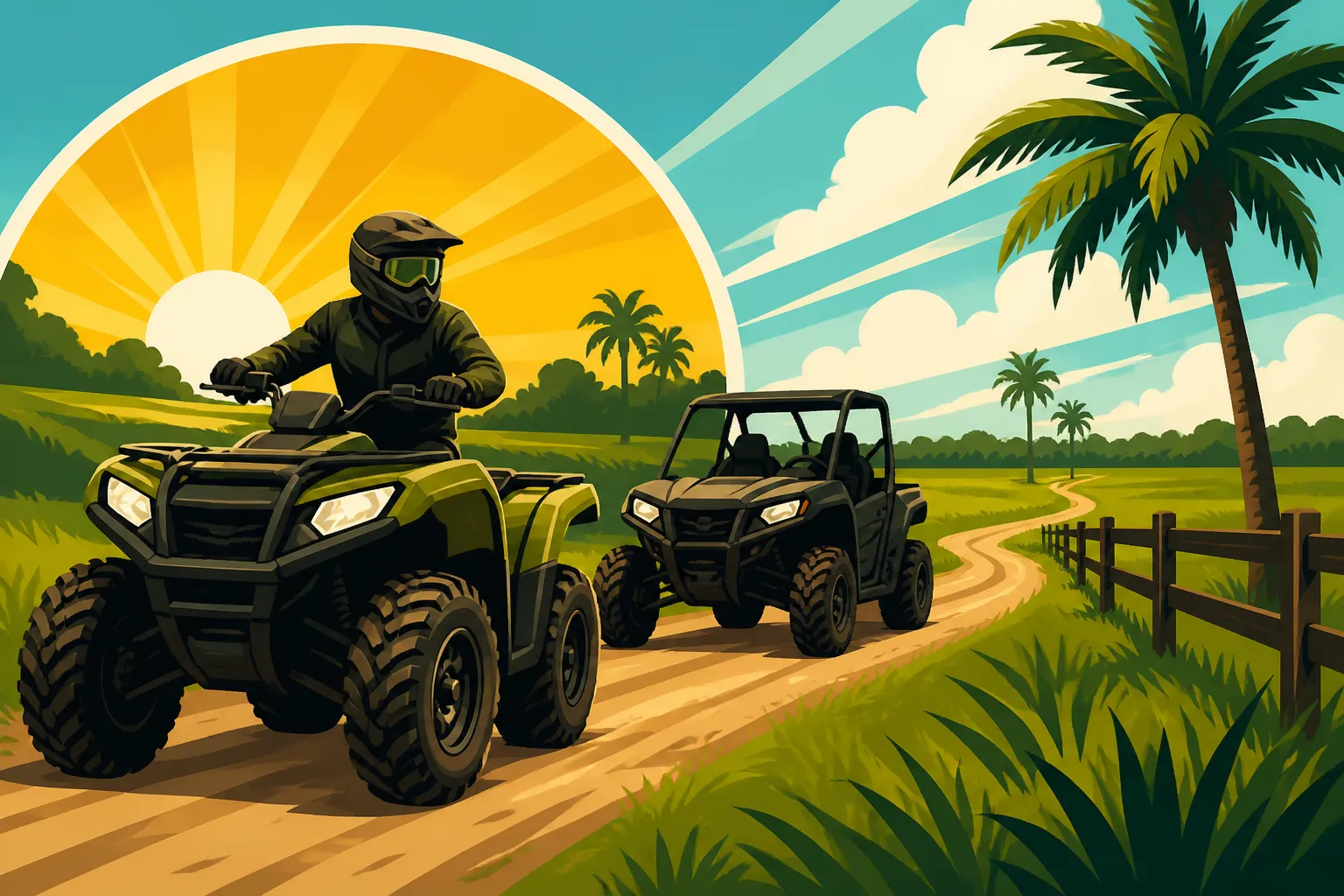
When we talk about a "pasture road," we're generally referring to an unpaved pathway that exists entirely within privately owned land, typically agricultural properties like cattle ranches, citrus groves, or large farms. These aren't built or maintained by the county or state, and they aren't open to general public traffic. Their primary purpose is usually for property owners and their workers to access various parts of the land, manage livestock, irrigate crops, or perform maintenance. You might see these roads winding for miles, connecting different fields, leading to barns, or simply following fence lines.
Unlike a public road, which is dedicated for public use and has a specific right-of-way, a pasture road’s existence and use are dictated solely by the landowner. Even if it looks like a well-traveled dirt track, if it’s on private property and not formally designated as a public easement, it’s a private road. This distinction is critical because it significantly changes the legal framework governing what you can and cannot do with your quad on it. It’s also important to remember that some private roads might have shared easements, meaning multiple landowners have the right to use them, but they still retain their private status, distinct from public thoroughfares.
Why Private Land is Different Legally Speaking
This is where the rubber truly meets the road, so to speak. On private property, with the explicit permission of the landowner, many of Florida's strict ATV laws simply don't apply. For example, if you're riding your quad exclusively on a privately owned pasture road, you generally don't need to worry about things like having a state-issued title for your ATV or UTV, or even whether it's registered. The landowner's consent is the primary gatekeeper for access and operation. This freedom is a huge relief for families who want to enjoy their machines without the bureaucratic hurdles of public road regulations.
Imagine a large cattle ranch in Osceola County; the owner uses their UTV daily to check fences, move irrigation equipment, and haul feed. Their kids might ride their smaller ATVs along the same pasture roads, learning to drive safely within the confines of their property. In this scenario, as long as they stay on their own land, they aren't subject to the same titling, registration, or driver's license requirements that would apply if they ventured onto a public street. This is why a question like [Can You Ride an Untitled ATV on Private Land in Florida] is so common, and the answer is usually a resounding "yes" under these specific conditions. This distinction empowers landowners to dictate the terms of use on their property, fostering a more relaxed environment for recreation and utility, far from the rules governing Florida's public roads.
Navigating Access: Permission and Responsibility on Pasture Roads
Even with the relaxed rules on private land, using a pasture road without proper consideration can lead to serious problems. The key takeaway here is that "private" doesn't mean "free-for-all." It means the responsibility shifts primarily to the landowner and, by extension, to you as the rider accessing their property.
The Absolute Importance of Permission
Let's be unequivocally clear: if you are riding an ATV or UTV on a pasture road that you do not own, you must have explicit permission from the landowner. This isn't just a friendly suggestion; it's a legal requirement. Riding on someone else's property, even if it's an open field with what looks like a well-worn track, without their consent is trespassing. The consequences of trespassing can range from a stern warning to fines, and in some cases, your ATV could even be impounded. It’s a frustration many riders face – seeing an inviting trail only to find out it's someone's backyard – but respect for private property is paramount.
While a verbal "go ahead" from the landowner might suffice in casual situations, especially with trusted friends or family, obtaining written permission is always the safest bet. A simple, signed document outlining the terms of your access – dates, permitted areas, any restrictions – can save a lot of headaches down the line, especially if there's ever a misunderstanding or a new property owner. Imagine you've been riding on your friend's ranch for years with their verbal permission. Then, a new manager comes in, unfamiliar with the arrangement, and you suddenly find yourself accused of trespassing. A simple permission slip, like those discussed in [Written Permission Slips Worth Carrying], can prevent such an uncomfortable scenario. Always remember that what seems like an informal shortcut through a neighbor’s field is still their private property, and without their explicit OK, you’re breaking the law.
Landowner Liability and Your Responsibilities
When you're granted permission to ride on a pasture road, you're not just getting access; you're entering into an agreement, even if unspoken, about responsibility. Florida landowners, like those everywhere, have some duty to keep their property reasonably safe for invited guests. However, ATV riding inherently carries risks, and riders assume much of that risk themselves. It’s a delicate balance, and both parties have roles to play in ensuring a safe experience.
As a rider on private pasture land, your responsibilities are significant. First and foremost, you must adhere to any specific rules the landowner sets. This could include limitations on where you can ride, speed limits, specific hours of operation, or even requirements like wearing a helmet. Beyond explicit rules, common sense and courtesy are paramount. Always close gates behind you to prevent livestock from escaping – this is a huge deal for ranchers. Avoid disturbing any crops, irrigation systems, or sensitive natural areas. And of course, never litter. If you accidentally cause damage to property, such as a fence line or farm equipment, it's your responsibility to report it immediately to the landowner and be prepared to make amends. [Insurance After an Off-Road Collision] might not be legally required for private land riding, but having a personal liability policy could be a lifesaver if an accident on private property causes damage to property or injury to others. Ignoring these responsibilities can quickly sour a good relationship with a landowner and could lead to your riding privileges being revoked, or worse, legal action.
Equipment, Safety, and Common Sense for Pasture Riding
While Florida's specific public road regulations might not apply to riding on private pasture roads, that doesn't mean you should throw caution to the wind. Safety and proper equipment are always paramount, especially given the unpredictable nature of agricultural land. Plus, you might find yourself needing to briefly interact with public roads, which brings a whole new set of rules into play.
Essential Gear for Florida Pasture Conditions
Even though you’re off the main thoroughfare, Florida’s unique environment – from the intense sun and heat to sudden downpours and thick vegetation – demands smart gear choices. While laws like [Florida ATV Helmet Law for Riders Under 16] still apply to minors even on private land, adults might not be legally mandated to wear a helmet off-road. However, it's always, always a good idea. A helmet protects against bumps, falls, and low-hanging branches that can turn a fun ride into a painful memory. Beyond helmets, eye protection is crucial. Dust, bugs, branches, and mud can easily impair your vision, so goggles or a face shield are highly recommended.
Long sleeves and pants, though seemingly counter-intuitive in Florida's heat, offer protection from the sun, scratches from brush, and pesky insect bites. Hydration is non-negotiable; carry plenty of water, especially during the hotter months. For your machine, consider the terrain. Pasture roads can be anything from well-graded dirt to sandy tracks or boggy mud pits after a rain. Good, knobby tires are essential for traction. Basic maintenance like checking your oil, brakes, and tire pressure before each ride ensures your quad runs smoothly and safely. If you’re really putting your machine to work on those long pasture roads, hauling feed or supplies, you might even consider some upgrades from a company like SuperATV for added utility and durability, such as heavy-duty axles or winch kits to get you out of those unexpected muddy spots. A working spark arrestor is also critical to prevent accidental fires in dry fields – an absolute must in Florida's fire-prone landscape.
Crossing Public Roads and Other Exceptions
This is perhaps the trickiest part of pasture road riding: what happens when your private pasture road necessitates crossing a public thoroughfare? Florida law is very specific and quite restrictive when it comes to ATVs and UTVs on public roads. Generally, you cannot simply ride your quad down a paved road, or even a public dirt road, for extended periods. The rules are designed to keep these machines, which lack many safety features of street-legal vehicles, off common roadways.
However, Florida law does make an allowance for crossing public roads. If you need to get from one section of a pasture to another, and a public road separates them, you can generally cross that road at a 90-degree angle. This means driving directly across the road as quickly and safely as possible, not riding alongside it. You must yield to all traffic and ensure the crossing is done without impeding normal traffic flow. Even for these brief crossings, laws regarding [Florida ATV Helmet Law for Riders Under 16] and [Florida ATV Road Use Needs a Licensed Driver] can come into play. It's a very narrow exception, and it's vital to understand the nuances of [Florida ATV Crossing a Paved Highway] or [Driving an ATV on a Florida Dirt Road]. For those tough Florida pasture roads that can get seriously muddy after a summer storm, some riders swear by specialized tires or even a lift kit, with brands like SuperATV offering a wide range of options to tackle those conditions. Always check for specific local ordinances, as some counties may have additional restrictions or designated agricultural exceptions, though these are rare for general public road use. Penalties for violating these rules can be significant, so err on the side of caution.
To help clarify the differences, here's a quick comparison:
| Feature | Private Pasture Roads (with Landowner Permission) | Public Roads/Highways in Florida (Limited Exceptions) |
|---|---|---|
| Title/Registration | Not typically required | Required for operation on public lands, sometimes roads |
| Driver's License | Not typically required | Required for road use (if permitted) |
| Helmet (Adults) | Highly Recommended | Recommended |
| Helmet (Under 16) | Required by law | Required by law |
| Eye Protection | Highly Recommended | Required by law |
| Insurance | Recommended (for liability) | May be required for specific road use or liability |
| Road Crossing | N/A (unless crossing public road) | Highly restricted, 90-degree crossing only |
| Legal Riding Area | Landowner's discretion | Designated trails, specific limited-access roads |
Maintaining your quad for pasture use is key, and if you're consistently bumping over rough terrain, checking out durable components from a trusted source like SuperATV can save you headaches down the line. Remember, even with [Florida Farm and Ranch ATV Road Exceptions], it's important to understand the specific conditions and limitations that apply. Always carry proof of permission, and if in doubt about road crossings, it’s best to trailer your machine to the pasture rather than risking a citation. Being informed about [Florida Penalties for Illegal ATV Road Riding] can help you avoid costly mistakes.
Ultimately, riding on Florida's pasture roads offers an incredible opportunity for both work and recreation. It provides a unique kind of freedom that often isn't found on designated public trails. But with that freedom comes a responsibility to respect private property, understand the specific legal landscape, and prioritize safety. By following these guidelines, you can ensure your time on those scenic, winding pasture roads remains enjoyable and trouble-free for everyone involved. For a deeper dive into the overall regulations, you might want to read [Florida's Off-Highway Vehicle Title Rules Explained]. And if you're concerned about someone misusing your land, understanding [What a Landowner Can Do About Trespassing Riders] can be helpful.
Disclaimer
This article is for general informational purposes only and does not constitute professional advice. Laws, prices and regulations vary by location and change over time. Consult a qualified professional for guidance on your specific situation.