What Florida Deputies Check at a Roadside Stop
Riding your ATV or UTV in Florida can be an absolute blast, but the rules for where and how you can ride can feel like a tangled web of confusion, leading to frustrating and often costly encounters with law enforcement. Nobody wants their adventure cut short by a flashing blue light and a stern lecture, especially when you thought you were doing everything right. This guide is here to clear the air, helping you understand exactly what Florida deputies are looking for when they pull over an ATV or UTV, so you can ride with confidence and keep those wheels turning legally.
Understanding the Basics: Why You Might Get Pulled Over
It's easy to assume that because you own an off-highway vehicle (OHV), you can ride it just about anywhere that isn't a paved highway. Unfortunately, that assumption can quickly land you in hot water. Florida's laws regarding ATVs and UTVs on public roads are quite specific, and deputies are trained to enforce them.
The Misconception of "Street Legal"
One of the biggest misunderstandings among riders is the concept of a "street legal" ATV or UTV. Unlike some other states, Florida does not generally permit ATVs or UTVs to be registered for on-road use like a car or motorcycle. This means that even if you've invested in turn signals, mirrors, a horn, and a windshield – perhaps with a great kit from a company like SuperATV – your machine isn't automatically considered "street legal" in the eyes of Florida law for general road use. The state defines ATVs and UTVs as off-highway vehicles, designed for off-road environments. This core distinction is crucial and often the root cause of roadside stops. While some accessories make sense for safety and visibility, they don't change the fundamental classification of your machine for public road access. [Are ATVs Street Legal in Florida?]
Common Infractions That Draw Attention
Deputies aren't just pulling over OHV riders randomly. There are usually specific reasons that catch their eye. Often, it's something as simple as riding where you shouldn't be, but it can also involve how you're operating the machine or its condition.
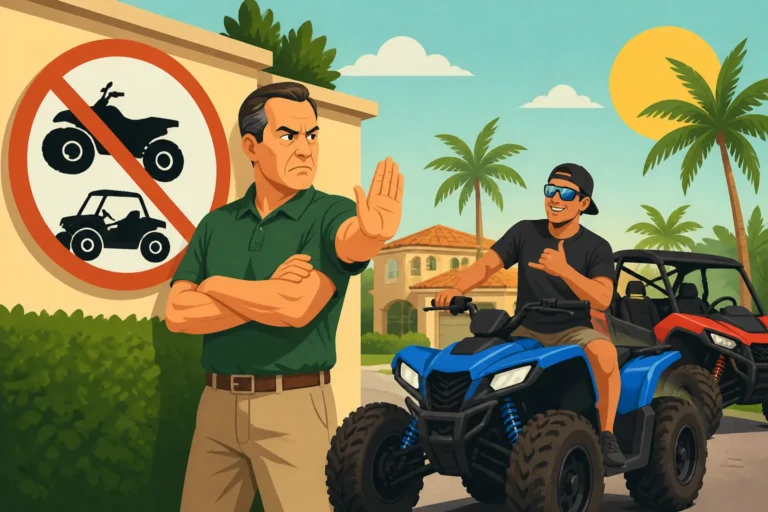
- Riding on Prohibited Roads: This is the most common reason. Paved streets, sidewalks, bike paths, and state highways are generally off-limits. If you're cruising down a city street on your quad, it's almost a guarantee you'll be stopped. Even certain unpaved roads might be restricted depending on local county ordinances. [Florida ATV Road Rules: Where You Can Legally Ride]
- Speeding or Reckless Operation: Just like any other vehicle, operating your ATV or UTV unsafely, speeding, doing wheelies, or driving recklessly will attract law enforcement attention, even in permissible areas.
- Equipment Violations: While street-legal conversions aren't generally recognized, specific equipment might be required even for limited road use, such as proper lighting if you're crossing a highway or riding on certain designated unpaved roads during specific hours. Lack of required safety gear for minors can also be a red flag. [Florida ATV Lights and Equipment for Road Use]
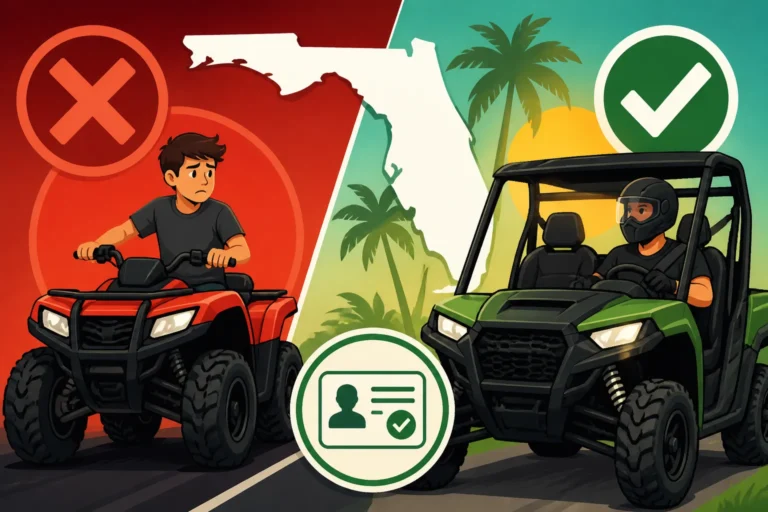
- Underage or Unlicensed Operation: Florida has strict rules about who can operate an OHV and where, especially concerning age and driver's licenses when any road access is involved. A young rider without proper supervision or a license on a public roadway is a definite stop. [Do You Need a Driver's License for an ATV in Florida?]
The Purpose of an OHV Title in Florida
It’s important to remember that simply having a Florida OHV title doesn’t grant you unrestricted road access. The title mainly serves as proof of ownership, just like a car title, and is required for operating on public lands managed by the state or federal government. If you're riding an ATV or UTV on any public lands, including designated trails in state forests or national forests, that title is a non-negotiable piece of paperwork. The title also helps establish ownership in the event of theft or sale. [Florida Off-Highway Vehicle Title Rules Explained]
What Deputies Look For: Your Machine and Your Paperwork
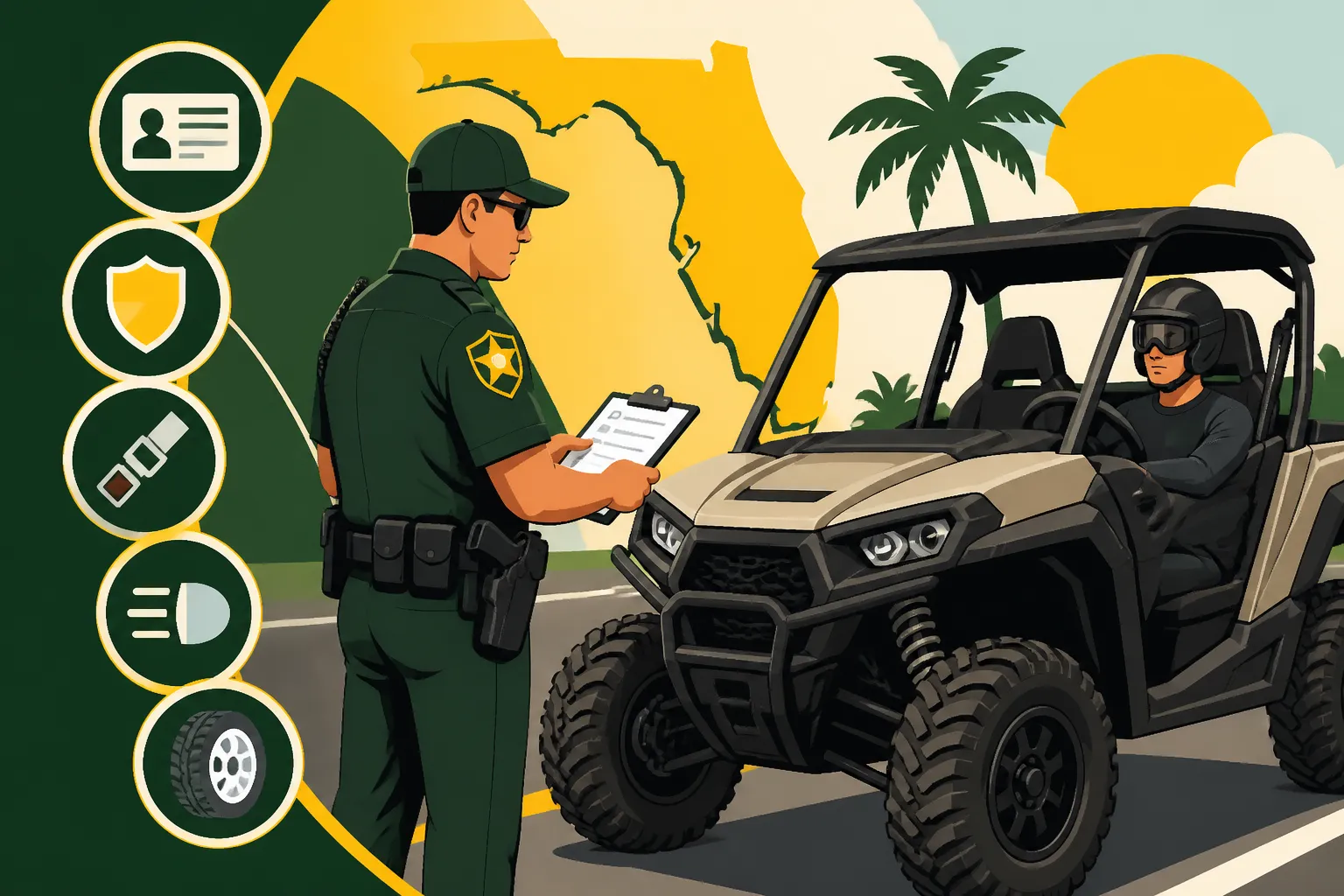
When a deputy initiates a roadside stop, their primary goal is to ensure public safety and compliance with state and local laws. They'll systematically check various aspects of your machine and your personal documents. Knowing what they're looking for can help you be prepared and make the encounter go smoothly.
Proof of Ownership and Identification
This is fundamental. Just as you wouldn't drive a car without its registration and your driver's license, you need to be able to prove ownership of your ATV or UTV.
- Your OHV Title: The most definitive proof of ownership is your Florida Off-Highway Vehicle title. This document should ideally be with you, or readily accessible. If you bought your machine new, you'd initially have a Manufacturer's Certificate of Origin (MSO), which then gets converted to a Florida title. If you're borrowing a machine, having a copy of the owner's title or a notarized letter of permission can be helpful. [Florida's ATV Title Application Explained]
- Vehicle Identification Number (VIN): The deputy will check the VIN on your machine against your title or MSO. This ensures the machine you're operating matches the documentation. Make sure your VIN plate is clean and legible. [Who Can Verify an ATV VIN in Florida?]
- Your Driver's License or Photo ID: Even if you're not on a public paved road, you'll still need to identify yourself. If you're operating on a designated unpaved road where a license is required, you must have it with you.
Rider Qualifications and Age Restrictions
Florida has specific rules regarding who can operate an ATV or UTV, especially on roads or public lands. These are critical checks for deputies.
- Driver's License Requirement: If you're riding an ATV or UTV on any public unpaved road that is open to vehicular traffic, you generally need a valid driver's license. This applies even if the road is just dirt or gravel. For private lands, this rule doesn't apply, but once you hit public property, it's in effect. [Florida ATV Road Use Needs a Licensed Driver]
- Age Limits for Operators:
- Under 16: Riders under 16 cannot operate an ATV or UTV on public roads, even unpaved ones, unless directly supervised by a licensed adult and on specifically designated unpaved roads. They also generally need to complete an approved ATV safety course to ride on public lands. [Florida ATV Safety Course Requirements for Riders Under 16]
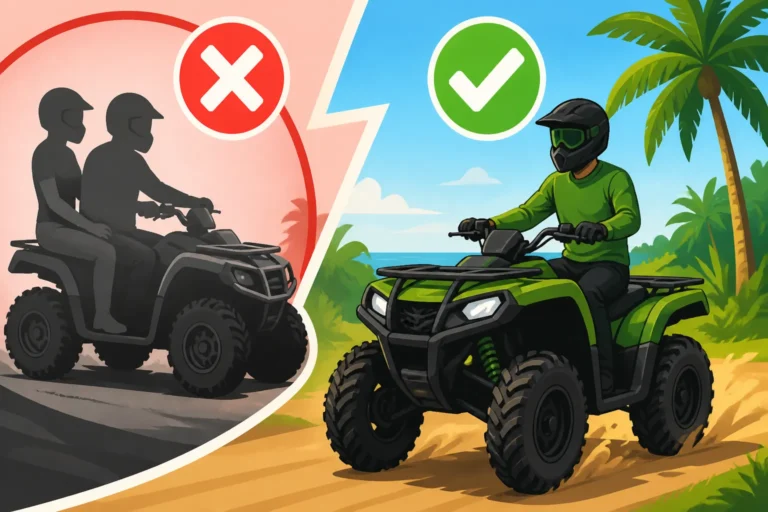
- Passengers: Florida has rules about passengers, especially on ATVs designed for a single rider. Carrying a passenger on a single-rider quad is a common violation. Make sure your machine is designed for two riders if you have someone with you. [Florida ATV Passenger Rules]
Equipment Compliance
While a deputy won't be checking for street-legal conversion parts that don't apply in Florida, they will be looking for mandatory safety equipment, especially for younger riders or if you're operating in low-light conditions.
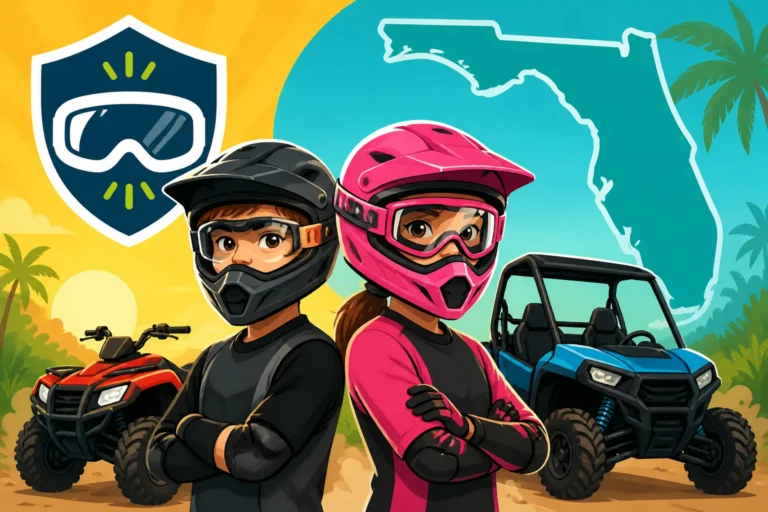
- Helmets: Riders under 16 are legally required to wear a U.S. DOT-approved helmet when operating an ATV in Florida. Deputies will definitely check for this. Even for adults, while not always legally mandated, wearing a helmet is always a smart move. [Florida ATV Helmet Law for Riders Under 16]
- Eye Protection: For riders under 16, eye protection (goggles or a face shield) is also required. Again, it's smart for everyone. [Florida Eye Protection Rule for Young Riders]
- Headlights and Taillights: While not usually required for daytime off-road use, if you're operating on any public roadway (even a designated unpaved one) during times of low visibility, or between sunset and sunrise, your machine needs working headlights and taillights. Some aftermarket kits, like those from SuperATV, provide excellent lighting solutions that enhance visibility and safety, which can be beneficial even if not strictly mandated for every single scenario.
- Spark Arrestor: When riding on public lands, a working spark arrestor is usually required to prevent wildfires. This is often checked by rangers in state and national forests.
The "Unpaved Road" Exception and Its Nuances
Florida law does provide a narrow exception for ATVs and UTVs on unpaved roads, but it's very specific and often misunderstood. Here's a table to clarify:
| Condition | Rule | Deputy's Focus |
|---|---|---|
| Unpaved Roadway | ATV/UTV may be operated on an unpaved road that is not part of the state highway system and is maintained by a county or municipality, ONLY if the county or municipality has authorized such use by ordinance. | Is the road specifically designated by local ordinance? Is it unpaved? Is it NOT a state highway? |
| Daytime Hours Only | Operation is allowed only between sunrise and sunset. | Is it currently daytime? |
| Licensed Driver | The operator must possess a valid driver's license. | Does the driver have a current, valid license? |
| Direct Supervision (Minors) | A driver under 16 must be under the direct supervision of a licensed adult on specifically designated unpaved roads. | Is the minor supervised? Is the adult licensed? Is the road designated? |
| Posted Speed Limits | The ATV/UTV must not exceed any posted speed limit. | Is the rider adhering to the speed limit? |
| Crossing Paved Highways | An ATV/UTV may cross a paved public highway at a right angle, but only if the crossing is made at a safe location and does not interfere with traffic. | Is the crossing done safely? Is it a direct, right-angle path? |
Many counties in Florida have "opted out" or specifically designated roads. You can't just assume an unpaved road is fair game. Deputies often know their local ordinances by heart and will immediately identify if you're on a prohibited stretch of road. [Florida County ATV Opt-Outs: Why Rules Change at the Line]
Navigating the Stop: What to Expect and How to Respond
A roadside stop can be nerve-wracking, regardless of whether you're in a car or on an ATV. Remaining calm, cooperative, and respectful can make a significant difference in how the situation plays out. Remember, deputies are just doing their job, enforcing laws designed (however frustrating they may seem) for safety.
Staying Calm and Cooperative
Your attitude can influence the entire interaction.
- Pull Over Safely: As soon as you see flashing lights, find a safe spot to pull over, out of the flow of traffic. Turn off your engine.
- Keep Your Hands Visible: Place your hands on the handlebars or helmet, visible to the deputy. Avoid sudden movements that might be misinterpreted.
- Be Polite and Respectful: Greet the deputy politely. Answer their questions clearly and truthfully. Avoid arguing or becoming defensive. Even if you believe you are in the right, a roadside stop is generally not the place to debate legal interpretations.
- Do Not Make Sudden Movements: If you need to reach for your wallet or documents, tell the deputy what you are doing before you do it. "Officer, my wallet is in my back pocket, may I reach for it?" is a good practice.
Presenting Your Documents
Having your documents organized and ready can speed up the process.
- Title/MSO: Have your OHV title or Manufacturer's Certificate of Origin readily available. For a UTV, especially if you're trying to meet specific width rules for an ROV, sometimes the MSO or manufacturer's specs are needed.
- Driver's License/ID: Your valid Florida driver's license or other photo identification is essential.
- Safety Course Certificate: If you're a minor riding on public land, have proof of your completed ATV safety course. [Carrying a Safety Certificate on the Trail]
- Proof of Permission: If you're riding on private land with permission, or on a borrowed machine, any written documentation can be helpful, though not always legally required for a stop on a public road.
Potential Outcomes: Warning, Citation, Impoundment
The outcome of a roadside stop can vary widely depending on the severity of the infraction, your history, and the deputy's discretion.
- Verbal Warning: For minor or first-time offenses, you might receive a verbal warning. This is a chance to learn and correct your behavior.
- Written Warning: A step up from a verbal warning, this is a formal record of the infraction but usually doesn't involve fines or points.
- Citation (Ticket): This is the most common outcome for violations. Citations can carry fines, and some may even add points to your driver's license, affecting your insurance. Examples include riding on a prohibited road, operating without a license (if required), or lacking required safety equipment for a minor. [Florida ATV Ticket Cost for Illegal Road Riding]
- Machine Impoundment: In more serious cases, or if you're a repeat offender, the deputy might have your ATV or UTV impounded. This is a costly and inconvenient process, involving towing and storage fees, in addition to any fines. This often happens if the machine is being operated illegally on a paved roadway.
- Arrest: For severe infractions, such as reckless endangerment, DUI (yes, DUI laws apply to ATVs!), or resisting arrest, you could face arrest. [Florida DUI Law Applied to ATV Riders]
Avoiding a Roadside Stop: Best Practices for Florida Riders
The best way to handle a roadside stop is to avoid it altogether. By being a responsible and informed rider, you can enjoy Florida's fantastic off-road opportunities without the stress of law enforcement encounters.
Know Your Local Laws
Florida's ATV laws can be tricky because individual counties and municipalities have the authority to create their own ordinances regarding OHV use on unpaved roads.
- Check County Ordinances: Before you venture out, especially if you plan to access an unpaved road, research the specific county ordinances for your riding area. Many county sheriff's offices or tax collector websites might have information, or a quick call to the county clerk's office can clarify. [Florida County Tax Collector vs Service Center for ATV Titles]
- Look for Posted Signs: Pay attention to "No ATV" signs or other regulatory signage. These are direct indicators of where you can and cannot ride.
- Stick to Private Land or Designated Trails: If you're unsure, the safest bet is always to ride on private property (with permission) or within clearly marked, official public ATV riding parks and trails, such as those in Ocala National Forest or Croom Motorcycle Area. [Florida ATV Trails: Every Public Riding Area]
Equip Your Machine Properly
While we've established that you can't typically make your ATV or UTV "street legal" in Florida, equipping it with certain features can still enhance your safety and reduce the chances of a stop when you are legally operating on approved unpaved roads or crossing highways.
- Visibility Enhancements: Good headlights, taillights, and even turn signals (like those found in universal kits from SuperATV) can make you more visible to other traffic and deputies, especially during low light or dust conditions on unpaved roads where incidental use might be allowed.
- Safety Gear for All: Always wear a helmet and eye protection, regardless of age or legal requirement. It's simply smart riding. Gloves and sturdy boots are also highly recommended.
- Keep Your Machine in Good Repair: A well-maintained machine with working lights and brakes shows responsibility. A loud exhaust or visibly unsafe machine might draw unwanted attention.
Stick to Designated Riding Areas
For hassle-free riding, your best bet is to focus on Florida's fantastic network of dedicated off-highway vehicle parks and trails. These areas are specifically designed for ATV and UTV use, and as long as you adhere to their specific rules, you won't have to worry about road-use laws.
- Public OHV Parks: Places like Croom Motorcycle Area, the Ocala National Forest trails, and Clear Creek OHV Area offer miles of legal riding. These areas typically require an OHV pass and adherence to specific rules (e.g., width limits, spark arrestors, helmet laws). [Florida ATV Trails Open Year-Round]
- Private Mud Parks/Resorts: Florida also boasts several private mud parks and off-road resorts, such as Hog Waller ATV Resort, where you can pay an entry fee and ride on their property without worrying about state road laws. Each of these parks will have its own set of rules, which you should always review upon arrival. [Florida Mud Parks: Where Riders Actually Go]
- Trailer Your Machine: If you need to get to an approved riding area that's not directly accessible from private land, always trailer your ATV or UTV. This completely avoids any ambiguity about road legality. [Trailering a Quad on Florida Highways]
By understanding Florida's nuances regarding ATVs and UTVs on roads, being prepared with your documentation, and riding responsibly in appropriate areas, you can ensure your Florida off-road adventures are memorable for all the right reasons.
Disclaimer
This article is for general informational purposes only and does not constitute professional advice. Laws, prices and regulations vary by location and change over time. Consult a qualified professional for guidance on your specific situation.