Sugar Sand Back Roads in Florida
If you've spent any time riding ATVs or UTVs in Florida, you've undoubtedly encountered them: those seemingly endless stretches of loose, fine, white "sugar sand" back roads that can transform a casual ride into a challenging test of skill and machine. These aren't your typical hard-packed dirt trails; they demand a different approach, and knowing the ins and outs of navigating them – both legally and mechanically – is crucial for an enjoyable and safe adventure. This guide will walk you through everything you need to know about Florida's unique sugar sand terrain.
What Exactly Are Florida's Sugar Sand Back Roads?
Florida is famous for its beaches, and that same fine, white silica sand that makes our coastlines so beautiful is also prevalent inland, forming the very foundation of many of our unpaved back roads. It's a defining characteristic of riding in the Sunshine State, but it's also one of the biggest challenges.
Defining "Sugar Sand" and Its Unique Challenges
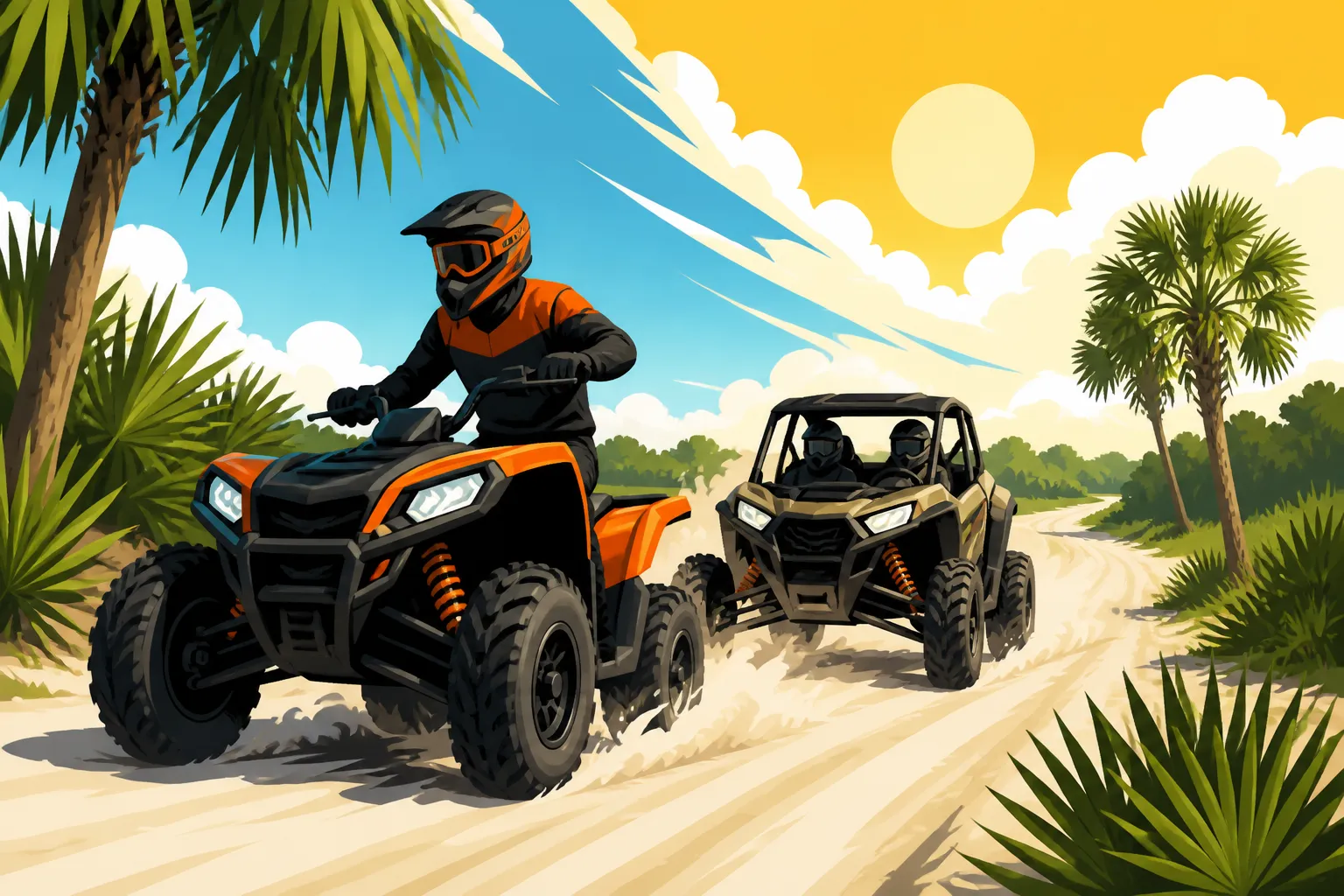
"Sugar sand" is precisely what it sounds like: incredibly fine, powdery sand, often resembling granulated sugar in its texture and color. Unlike loam or clay, it offers very little compaction, which means it doesn't pack down into a solid surface easily. Instead, it remains loose, deep, and shifty. When you drive on it, your tires tend to dig in rather than roll over, creating a constant battle for traction.
Imagine trying to walk through dry, loose sand at the beach – that sinking, energy-draining feeling? That's what your ATV or UTV experiences, but at speed. This can lead to a few specific frustrations for riders. First, it's a huge traction challenge. Your tires can spin freely, creating rooster tails but not much forward momentum. Second, steering can feel vague and unresponsive, as the front tires can easily wash out or dig in unpredictably. Third, it's a powerful force for bogging down your machine; lose momentum, and you're likely to find yourself stuck, wheels spinning futilely in a self-dug trench. It's a completely different riding dynamic compared to rock crawling or muddy trails, requiring constant attention and a light, responsive touch.
Where You'll Find These Unpaved Pathways
Sugar sand roads are a common sight across much of Florida, especially in the central and northern parts of the state. You'll frequently encounter them bordering large state forests and national forests, such as the Ocala National Forest, where vast stretches of pine flatwoods and scrub habitat naturally feature these sandy soils. Rural agricultural areas, old logging tracks, and routes leading to isolated fishing spots or hunting leases are also prime locations for sugar sand.
Often, these roads aren't just short segments; they can stretch for miles, sometimes winding through dense palmetto and pine scrub, making navigation a unique experience. They connect small communities, provide access to utility corridors, and serve as the unofficial arteries of Florida's backcountry. While some might be well-maintained and relatively shallow, others can develop deep ruts and soft spots, especially after periods of dry weather when the sand is at its loosest. Always expect the unexpected when you turn onto one of these intriguing but challenging paths.
Legalities of Riding ATVs and UTVs on Sugar Sand Back Roads
One of the most common questions riders have is, "Can I even legally ride my ATV or UTV on these sugar sand roads?" The answer in Florida is nuanced, governed primarily by state statute and then further refined by local county ordinances. It's not as simple as a blanket "yes" or "no."
The Unpaved Road Rule and Its Nuances
Florida Statute 316.2123 is the key piece of legislation that permits the operation of ATVs and UTVs (defined as "off-highway vehicles" or OHVs) on certain public roads. Specifically, it allows OHVs on unpaved roads where the posted speed limit is less than 35 mph. This is excellent news for many of those sugar sand back roads, which rarely see higher speed limits due to their very nature. However, there are crucial conditions you absolutely must meet.
First, operation is generally restricted to daytime hours. You cannot be out there after dark, even if your machine has headlights. Second, the operator must possess a valid driver's license. No learner's permits or underage operation on these public roads, even if they're unpaved. Third, if the operator is under 16 years old, they must be wearing a helmet and eye protection that meets state and federal standards. While the helmet rule for minors is standard for ATV riding, the eye protection is particularly important on dusty, sandy roads. Remember, this law specifically permits riding on the unpaved road itself, not adjacent ditches, fields, or private property without permission. For a deeper dive, check out [Florida's Unpaved Road Rule for ATVs Explained] and [Florida ATV Road Use Needs a Licensed Driver].
County-Specific Regulations and Opt-Outs
Here's where things get a bit more complicated. While the state statute sets a general framework, it also grants individual Florida counties the authority to regulate OHV use on unpaved roads within their jurisdiction. This means a county can "opt-out" of the state rule or impose additional restrictions. Some counties might designate specific unpaved roads for ATV/UTV use, while others might ban them entirely from all public roads, paved or unpaved, including those sugar sand routes.
For example, you might find that in Marion County, many of the sandy roads around the Ocala National Forest are open to OHVs under the state's unpaved road rule, while a neighboring county might have a blanket ban due to local population density or environmental concerns. This patchwork of regulations means it's incredibly important to do your homework before you ride. Always check with the local county sheriff's office or county commission website for specific ordinances in the area you plan to explore. Ignoring these local rules could lead to fines, impoundment of your machine, or other legal headaches. The phrase "ignorance of the law is no excuse" definitely applies here. For more information on local variations, see [Florida Counties That Designated ATV Roads] and [Florida ATV Road Rules by County].
Gear and Techniques for Conquering Sugar Sand
Riding sugar sand successfully isn't just about legality; it's also about having the right setup and the right skills. This unique terrain demands specific adaptations from both your machine and your riding style.
Essential Machine Setup for Sand Riding
While you can certainly ride sugar sand on a stock machine, optimizing your ATV or UTV can make a world of difference. The most critical component is your tires. Standard all-terrain tires might get you by in shallow sand, but for deep sugar sand, they often lack the paddle-like traction needed. True sand tires, with their distinct paddle design, excel at digging in and propelling you forward without bogging down. However, these are often specialized and not ideal for mixed terrain. Many riders opt for aggressive all-terrain tires with widely spaced, deep lugs that can shed sand effectively and provide a decent compromise. Lowering tire pressure slightly (check your machine's manual for safe ranges) can also increase your tire's footprint, improving flotation and traction.
Another consideration is ground clearance. The deeper the sand, the higher the chance of your frame or suspension getting hung up. A good lift kit can provide that crucial extra inch or two. For instance, aftermarket companies like SuperATV offer a range of suspension upgrades and lift kits that can significantly enhance your machine's capability in deep ruts and soft sand, helping you clear obstacles and prevent getting stuck. Don't forget engine protection; sand can be very abrasive, so a clean air filter is paramount. Consider a pre-filter cover to keep the finer particles out.
| Tire Type | Best For | Pros | Cons |
|---|---|---|---|
| Paddle Tires | Deep, very loose sand (dunes, mud parks) | Unmatched traction and flotation in extreme sand. | Poor traction on hardpack, short lifespan if used on mixed terrain, specialized. |
| Aggressive All-Terrain | Mixed sand/dirt, moderate sugar sand | Versatile, good traction across various surfaces, durable. | Can struggle in very deep or extremely loose sugar sand, may bog down. |
| Standard All-Terrain | Light sand, hardpack, basic trails | General purpose, comfortable ride on varied surfaces. | Easily gets stuck in deep sugar sand, poor flotation. |
Riding Techniques for Optimal Control
Riding sugar sand effectively is less about brute force and more about finesse and momentum. The key is to keep your speed up, within safe limits, to maintain "float" over the sand rather than digging into it. Think of it like a boat planing on water. Smooth, consistent throttle control is essential. Avoid sudden acceleration or deceleration, as these can cause your tires to dig in immediately.
Weight distribution plays a huge role. On an ATV, lean back slightly to lighten the front end and prevent it from digging, especially when accelerating. In a UTV, understanding how passengers and cargo affect the center of gravity is important. When making turns, try to "drift" through them smoothly rather than making sharp, aggressive cuts that can cause your front end to wash out. If you feel your machine starting to bog down, a quick, light blip of the throttle can sometimes help regain momentum. If you do get stuck, try rocking the machine gently while applying light throttle, but if it's really buried, don't just spin your wheels – you'll only dig yourself deeper. Sometimes a small shovel or even your foot can help clear sand from around the tires. Remember, practice makes perfect, and learning how your machine reacts in different sand conditions is vital.
Safety and Preparedness When Riding Sugar Sand Back Roads
Riding Florida's sugar sand back roads can be an incredibly rewarding experience, offering unique scenery and a sense of adventure. However, these remote, challenging environments also require extra vigilance and preparation to ensure your safety and enjoyment.
Personal Safety Gear and Supplies
Just like any off-road adventure, personal safety gear is non-negotiable, but sugar sand riding adds a few specific considerations. A DOT-approved helmet is always the first line of defense, and if you're under 16 and on a public unpaved road, it's a legal requirement. Equally important is eye protection; whether it's goggles or a full-face helmet with a visor, keeping sand and dust out of your eyes is critical for visibility and comfort. Loose sugar sand kicks up an incredible amount of fine dust, especially when riding in groups. Long sleeves and pants, along with gloves, will protect your skin from sun exposure, abrasions, and the occasional branch.
Beyond personal gear, always carry essential supplies. Hydration is paramount in Florida's heat and humidity; water or electrolyte drinks are a must. A basic first-aid kit, a small toolkit for minor repairs (especially for flat tires), and a reliable communication device (cell service can be spotty in remote areas, so consider a satellite messenger) are also critical. A small shovel can be invaluable if you get stuck in deep sand. And don't forget bug spray – Florida's backcountry is home to its fair share of insects.
Navigational Challenges and Getting Lost
One of the often-overlooked challenges of sugar sand back roads is navigation. These routes can sometimes be poorly marked, with few distinguishing landmarks, and many can look frustratingly similar after a while. It's easy to get disoriented, especially if you're focused on riding technique rather than watching your surroundings.
Before you head out, always plan your route. Use a reliable GPS device or a smartphone app with downloaded offline maps. Don't rely solely on cell signal. Inform someone of your intended route and your estimated return time. While exploring is part of the fun, having a general idea of where you are and how to get back is crucial. Remember that many of these roads intersect or dead-end, so knowing when to turn around or which path to take is vital. Keep an eye on the sun and note its position relative to your direction of travel. When you're out there, every fork in the road can feel like a test, so being prepared with proper navigation tools and a sensible plan can save you a lot of worry.
Environmental Awareness
Riding in Florida's natural environments is a privilege, and it comes with the responsibility to protect these unique ecosystems. Sugar sand areas, particularly those in or near national and state forests, often harbor delicate plant and animal life. Always stay on marked trails and designated roads. Going off-trail, even for a short distance, can damage sensitive vegetation, disrupt wildlife habitats, and contribute to erosion.
Be mindful of noise levels, especially when riding near residential areas or wildlife viewing spots. Pack out everything you pack in, leaving no trash behind. Understand that these areas are shared by other users – hikers, equestrians, and other vehicles – so always be courteous and yield the right-of-way when appropriate. By respecting the environment and other users, we ensure that these fantastic sugar sand back roads remain accessible for generations of ATV and UTV riders to come. For more on responsible riding, consider checking out resources like [Florida ATV Trails That Allow Side-by-Sides] to find designated riding areas that cater to your machine type.
Disclaimer
This article is for general informational purposes only and does not constitute professional advice. Laws, prices and regulations vary by location and change over time. Consult a qualified professional for guidance on your specific situation.