Why HB 519 Died in Committee
For anyone who loves the thrill of riding an ATV or UTV in Florida, the restrictions on where you can legally take your machine can feel incredibly frustrating. You've got this powerful, capable vehicle, but most paved roads are strictly off-limits, creating a constant puzzle of how to get from your home or camp to the nearest trail without breaking the law or resorting to trailering. It’s a recurring headache for many riders, and for a brief moment, there was hope that a legislative effort, House Bill 519, might pave the way for more freedom. This guide will delve into what HB 519 proposed, why it ultimately failed, and what that means for Florida's ATV and UTV community today.
Understanding Florida's Existing ATV and UTV Road Rules
Florida's stance on ATVs and UTVs on public roads has always been pretty clear-cut, if not always popular with riders. The law is designed with safety in mind, classifying these vehicles primarily as off-highway machines. This creates a challenging environment for anyone hoping to use their quad or side-by-side for more than just dedicated off-road parks. It’s the reason so many of us spend time planning routes that completely avoid pavement, or constantly loading and unloading machines from trailers, which can certainly take the fun out of a spontaneous ride.
The Core Restriction: Why ATVs Are Generally Off-Limits
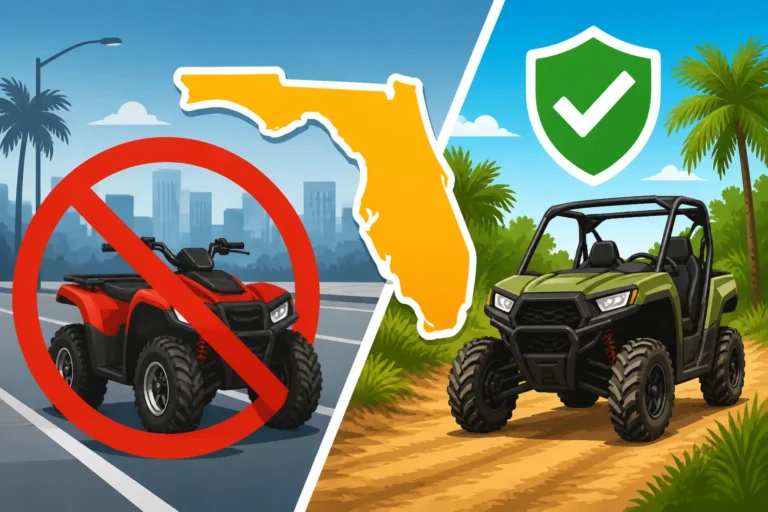
The primary reason you can't just hop on your ATV and cruise down a paved street in Florida is simple: these vehicles aren't built or regulated for on-road use. They lack many of the safety features required for street-legal vehicles, like advanced turn signals, headlights, taillights, and braking systems designed for high-speed road conditions, let alone seatbelts or airbags. Their tires are typically designed for gripping dirt, mud, and sand, not for maintaining traction and stability on asphalt at higher speeds. This fundamental difference in design and intended use is at the heart of Florida Statute 316.2074, which explicitly states that ATVs and other off-highway vehicles cannot operate on public roads, streets, or highways. It’s a frustrating reality when you just need to get to the store or a friend's house.
For many riders, this rule feels overly restrictive, especially when they've invested in aftermarket lights or even different tires to make their machine seem more road-ready. However, the law doesn't make exceptions for these modifications, treating all ATVs and UTVs the same regardless of added safety features. You might think your machine is perfectly safe, but from the state's perspective, it still falls under the "off-highway" umbrella. This is why understanding [Florida's Off-Highway Vehicle Title Law Explained] is crucial, as it clearly differentiates these machines from typical road vehicles.
Limited Exceptions: Unpaved Roads and Agricultural Use
While the general rule is "no public roads," Florida does offer a few very specific exceptions, though they are often misunderstood or misinterpreted by riders. The most common exception is for operation on unpaved roads where a county or municipality has specifically designated them for ATV use. This isn't a blanket permission for all dirt roads; it requires local government action, which can vary wildly from one county to the next. For instance, some rural counties might designate certain roads for agricultural purposes, allowing ATVs to cross or travel on them for farm-related tasks.
Another key exception is for agricultural purposes or "incidental use" to travel from one farm parcel to another, usually on roads that are not state highways. This often applies to farmers or ranchers using their ATVs or UTVs as work vehicles. However, even these exceptions come with strict conditions, such as requirements for daytime operation and, in some cases, adult supervision for minors. It's not a free pass to take your machine anywhere there's dirt. Riders also need to be aware of [Florida's Unpaved Road Rule for ATVs Explained] to understand the nuances of this limited access. These exceptions often come with strict speed limits, typically not exceeding 35 mph, and sometimes require the rider to hold a valid driver's license.
The "Street Legal" Conundrum: What Florida Doesn't Allow
The concept of a "street legal" ATV or UTV is a popular one in many parts of the country, where riders can add specific equipment to make their off-road vehicle compliant with state highway laws. This typically includes things like DOT-approved tires, turn signals, mirrors, windshields, and horns. However, Florida does not currently have a pathway to make an ATV street legal. Unlike some other states where you can title and register a UTV as a "Low-Speed Vehicle" (LSV) if it meets certain criteria, Florida's existing statutes do not extend this option to typical ATVs or even all UTVs.
This means that even if you outfit your UTV with every conceivable road-ready accessory, as offered by companies like SuperATV, it still wouldn't meet Florida's legal definition for street use outside of the very limited exceptions mentioned. The frustration here is palpable for riders who invest significant time and money into making their machines safer and more visible, only to find the law still says "no." Understanding [Florida's Low-Speed Vehicle Rules for Side-by-Sides] highlights that LSV conversion is a very specific process with strict definitions for width, weight, and top speed that many ATVs and UTVs simply don't fit. You can’t just add a windshield and a horn and call it good; the core classification remains.
What Was House Bill 519? Unpacking Its Intent
House Bill 519 (HB 519), introduced during a past legislative session, represented a significant, albeit ultimately unsuccessful, effort to amend Florida's off-highway vehicle laws. For many riders, this bill was a beacon of hope, promising a future where their ATVs and UTVs might have a bit more freedom on certain public roadways. Understanding its provisions helps shed light on the desires of the riding community and the challenges inherent in changing deeply ingrained state statutes.
The Goal: Expanding Where ATVs and UTVs Could Ride
At its core, HB 519 aimed to provide more opportunities for ATV and UTV riders to legally operate their machines beyond strictly designated trails or private property. The bill sought to create a new framework that would allow these vehicles to travel on specific types of public roads, under certain conditions, without the need for trailering them to every single riding spot. This would have been a game-changer for many, especially those living in rural areas or near popular trail systems who often struggle with the "last mile" problem of getting their machine to the trailhead.
The desire for this expansion stemmed from a variety of factors. Many riders use their ATVs and UTVs not just for recreation but also for practical purposes like accessing hunting grounds, maintaining large properties, or even just getting around rural communities where paved roads might be sparse. The existing laws felt restrictive and out of sync with how many Floridians actually utilize their machines. By proposing a pathway for limited road use, HB 519 attempted to bridge this gap, recognizing the versatility of these vehicles.
Key Provisions and Proposed Changes to Existing Law
While the exact language of HB 519 was complex, its primary provisions would have allowed local governments (counties and municipalities) to designate certain roads within their jurisdiction for ATV and UTV use. This meant a shift from the state's blanket prohibition to a more localized, opt-in system. For example, a county might have been able to pass an ordinance allowing ATVs to use specific county roads with speed limits under 35 mph, much like they can with golf carts in some communities.
Beyond local designation, the bill also often included stipulations about the type of equipment required for these vehicles to operate on designated roads. This might have included requirements for headlights, taillights, brake lights, turn signals, mirrors, and even a windshield – essentially the same kind of modifications many riders already make or consider, often purchasing parts from aftermarket suppliers like SuperATV. The bill also typically addressed licensing requirements for operators, passenger rules, and specific operating hours, aiming to balance increased access with public safety. For riders keen on understanding what equipment is needed for certain limited road uses, it's worth reviewing [Florida ATV Lights and Equipment for Road Use].
Who Would Have Benefited Most?
The primary beneficiaries of HB 519, had it passed, would have been Florida's off-highway vehicle enthusiasts, particularly those in rural or semi-rural areas. Imagine living a few miles from a state forest trail system, currently requiring you to load your UTV onto a trailer, drive five minutes, and then unload it. With HB 519, if your county designated that short stretch of road, you might have been able to simply drive your UTV there, significantly improving convenience and accessibility.
Farmers, ranchers, and other individuals who use ATVs and UTVs for work on large properties would also have seen benefits. The bill could have made it easier to travel between parcels of land or access remote parts of their property without constantly relying on trailers or navigating complex agricultural exemptions. Ultimately, the bill sought to empower local communities to make decisions that best suited their unique needs, recognizing that a "one-size-fits-all" state-level ban wasn't always practical or desirable.
The Legislative Journey: From Introduction to Committee Demise
The path of any bill through the Florida Legislature is a winding one, fraught with potential roadblocks at every turn. House Bill 519, like many others before it, embarked on this journey with the hopes of becoming law, only to fall victim to the intricate and often unforgiving legislative process. Understanding this journey helps demystify why even well-intentioned bills sometimes fail to cross the finish line.
How a Bill Becomes Law (or Doesn't) in Florida
In Florida, a bill begins its life when a legislator sponsors it in either the House of Representatives or the Senate. Once introduced, it's assigned to several committees, each responsible for reviewing specific aspects of the proposed legislation. For a bill to become law, it must pass through all assigned committees, be voted on favorably by the full chamber where it originated, then go through the same process in the other chamber. Finally, if both chambers pass identical versions, it goes to the Governor for approval or veto.
This multi-step process is designed to ensure thorough review and debate, but it also creates numerous points where a bill can be delayed, amended into unrecognizability, or simply die. A bill might run out of time, lack sufficient support, or get caught up in political maneuvering. The system requires persistence, compromise, and a clear understanding of parliamentary procedures, making it a challenging environment for any piece of legislation, especially those that touch on potentially contentious issues.
The Committee Stage: Where Bills Live or Die
The committee stage is arguably the most critical juncture for any bill. When HB 519 was assigned to committees, each committee had the power to review, discuss, amend, or even table (effectively kill) the bill. Committee members listen to testimony from proponents and opponents, debate its merits and potential impacts, and ultimately vote on whether to move it forward to the next committee or the full chamber. This is where the real work of legislative compromise and scrutiny happens.
If a bill fails to receive a favorable vote in even one of its assigned committees, it often goes no further. It "dies in committee." This can happen for a myriad of reasons: members might not believe it aligns with their constituents' interests, they might have concerns about its financial implications, or they might simply have other, higher-priority bills they wish to advance. The committee system acts as a filter, ensuring that only bills with substantial support and careful crafting make it to the floor for a full vote.
Specific Committees Involved in HB 519
While the exact committee assignments can vary slightly from session to session, bills concerning vehicles and road use typically go through committees related to transportation, infrastructure, and public safety. For HB 519, it likely faced review by committees such as the House Transportation & Infrastructure Subcommittee, the Commerce Committee, and possibly an Appropriations Committee if it had any fiscal impact. Each of these committees would have examined the bill from their specific lens.
For instance, the Transportation & Infrastructure Subcommittee would assess the practical implications on Florida's roads and traffic safety. The Commerce Committee might look at the economic impact on dealerships, tourism, or other industries. An Appropriations Committee would scrutinize any potential costs to the state for signage, enforcement, or infrastructure changes. Failing to get a "yea" vote in any of these key committees would effectively stop the bill's progress, which is precisely what happened to HB 519. The intricate web of review ensures that a broad range of perspectives are considered, though it can certainly slow down or halt even popular initiatives.
Why HB 519 Stalled: Common Obstacles for OHV Legislation
The demise of House Bill 519 in committee was not an isolated incident, but rather a reflection of several persistent challenges that often face legislation seeking to expand off-highway vehicle access to public roads. These obstacles are rooted in concerns about safety, public opinion, and the complex nature of balancing recreational freedoms with community well-being. It's a tough tightrope walk for any legislator to attempt.
Public Safety Concerns and Road Hazards
One of the most significant hurdles for any bill proposing expanded ATV or UTV road access is public safety. Legislators and their constituents frequently raise concerns about the inherent dangers of mixing off-road vehicles with traditional cars and trucks on paved roads. ATVs and UTVs typically have a higher center of gravity, different braking characteristics, and open cockpits that offer less protection in a collision compared to an enclosed passenger vehicle.
Imagine a busy two-lane road in a Florida town; the thought of ATVs, often ridden by less experienced drivers, sharing that space with high-speed traffic can be alarming. Opponents often highlight accident statistics, the potential for driver inexperience, and the simple fact that these machines aren't designed for typical road conditions. They might point to the possibility of increased accidents, injuries, and fatalities, especially if road users aren't accustomed to sharing the asphalt with such vehicles. These safety arguments often carry significant weight with committee members and the general public, making them very difficult to overcome. This also relates to broader discussions around [Florida ATV Road Rules: Where You Can Legally Ride].
Opposition from Various Stakeholders (e.g., Law Enforcement, Local Governments)
It wasn't just safety concerns from the general public that hindered HB 519. Various influential stakeholders often voice strong opposition to such legislative changes. Law enforcement agencies, for example, frequently express concerns about the practicalities of enforcing new rules, identifying legally equipped vehicles, and dealing with potential increases in road incidents. They might argue that diverting resources to ATV road enforcement would strain already stretched budgets.
Local governments, including county commissions and city councils, can also be wary. While HB 519 aimed to give them the power to designate roads, many might prefer to avoid the responsibility and potential liability that comes with it. They might also fear local backlash from residents concerned about noise, dust, or perceived decreases in property values if ATVs and UTVs become common on neighborhood streets. Environmental groups sometimes raise concerns about potential impacts on sensitive areas if expanded road access inadvertently leads to more off-road activity in protected zones. The collective voice of these opposing groups can create a formidable barrier to a bill's passage.
Competing Legislative Priorities and Time Constraints
The Florida legislative session is a finite period, typically lasting about 60 days. During this time, hundreds, if not thousands, of bills are introduced, covering every conceivable aspect of state governance. This creates an intense environment where bills compete for attention, committee time, and floor votes. HB 519, despite its importance to the ATV and UTV community, was just one bill among many.
When there are more pressing issues on the agenda—such as budget appropriations, hurricane preparedness, or major economic development initiatives—bills like HB 519 can easily get pushed down the priority list. If a committee runs out of time or has a backlog of "must-pass" legislation, bills lower on the totem pole simply won't get heard or voted on. This lack of available time, rather than outright opposition, can be a silent killer for many bills, including those that might otherwise have garnered support. It's a harsh reality of the legislative process that even good ideas can die due to timing.
The Definition Divide: ATVs, UTVs, and LSVs
Another layer of complexity, and a significant point of contention, lies in the precise definitions of various off-highway vehicles under Florida law. The line between an "all-terrain vehicle" (ATV), a "utility vehicle" (UTV or side-by-side), and a "low-speed vehicle" (LSV) can be confusing, even for legislators. Florida statutes define these categories with specific width, weight, and speed limits, and HB 519 likely tried to navigate these existing definitions or propose new ones for road-use purposes.
For example, Florida's 55-inch rule dictates that a vehicle wider than that measurement is generally classified as an ROV (Recreational Off-Highway Vehicle) rather than a traditional ATV. This distinction has implications for titling and, critically, for any potential road-use legislation. LSVs, which are street-legal in many communities, have very strict definitions regarding top speed (20-25 mph), weight, and equipment. Any attempt to grant road access to ATVs or UTVs would inevitably bump up against these existing classifications, leading to debates about whether a specific machine truly fits a proposed new category or if it's simply a loophole being created. This legal minutia can be incredibly difficult to resolve in committee, especially when various groups hold differing views on what constitutes safe and appropriate use. You can read more about [Florida's 55-Inch ATV Definition and Why It Matters].
The Aftermath and What It Means for Florida Riders
The failure of House Bill 519 was a disappointment for many in the Florida ATV and UTV community. While the dream of broader road access remains, the legislative landscape has returned to its previous state. This means riders must continue to adhere to the existing rules, which emphasize off-road use and strictly limit on-road operation. However, understanding the current regulations is key to avoiding penalties and enjoying your machine responsibly.
Navigating the Current Rules: What You Can Do Now
With HB 519 out of the picture, Florida's off-highway vehicle laws remain largely unchanged. This means that, for the vast majority of riders, your ATV or UTV is still intended for off-road use only. Public roads, streets, and highways are generally off-limits, with the very specific exceptions for designated unpaved roads, agricultural purposes, or crossing a highway at a 90-degree angle where it's safe to do so. It's a reality that requires careful planning for your adventures.
Many riders choose to trailer their machines to designated off-road parks and trail systems like the Ocala National Forest or Croom Motorcycle Area. This ensures compliance with the law and provides a safe, dedicated environment for riding. For those who live in rural areas with private land, navigating small private roads or easements is often part of the daily routine, but even then, understanding Florida's trespass laws and obtaining landowner permission is crucial. Carrying proof of ownership, like your title, is also a good practice, as outlined in [Carrying Proof of Ownership on the Trail].
The Future of ATV/UTV Road Legislation in Florida
While HB 519 did not pass, it's unlikely to be the last attempt to address the issue of ATV and UTV road access in Florida. The demand from the riding community for more flexibility is persistent, and legislators often revisit topics that receive significant constituent interest. Future bills might take a different approach, perhaps focusing on specific types of UTVs, or proposing pilot programs in certain counties, or more strictly defining the equipment required for limited road use.
Any future legislative effort would still face the same challenges that derailed HB 519: public safety concerns, opposition from various stakeholders, and the inevitable competition for legislative attention. However, as the popularity of UTVs, in particular, continues to grow, and as manufacturers like SuperATV continue to develop accessories that make these machines more versatile, the conversation is bound to resurface. Riders who wish to see change will need to remain engaged with their local representatives and advocate for safe, sensible reforms that balance access with community safety.
Accessories and Modifications for Off-Road Use
Even without expanded road legality, there's a thriving market for ATV and UTV accessories that enhance performance, safety, and utility for their intended off-road environment. Companies like SuperATV offer a vast array of parts, from lift kits and heavy-duty axles for tackling rough terrain to winches and storage solutions for utility tasks. These modifications are specifically designed to improve your off-road experience, making your machine more capable, durable, or comfortable when you’re out on the trails or working on your property.
For example, upgrading to robust skid plates can protect your machine's undercarriage from rocks and debris, a common concern in Florida's varied terrains. Adding a custom roll cage or stronger doors can enhance safety for you and your passengers on challenging trails. LED light bars provide superior visibility during early morning or late evening rides, critical for spotting wildlife or navigating dense woods. While these accessories won't magically make your machine street legal in Florida, they significantly improve its functionality and enjoyment in the places where it is allowed to be ridden. It's about making the most of your machine within the bounds of current law. For those serious about off-road performance, understanding specific upgrades is key, and you can learn more about [What a Sand Whoop Does to a Stock Suspension] to see how specialized parts can make a real difference.
| Feature/Aspect | Current Florida Law (Post-HB 519 Demise) | Proposed by HB 519 (Approximate Intent) |
|---|---|---|
| Paved Public Roads | Generally Prohibited (State-wide ban with limited exceptions) | Potentially Permitted on Designated Local Roads (Counties/municipalities could opt-in and designate) |
| Unpaved Roads | Limited Exceptions (Designated by county, agricultural use, daytime only) | Similar, but potentially expanded designation powers for local governments with specific requirements |
| Equipment Requirements | Minimal for off-road use (e.g., spark arrestor); no specific road-legal mandate | Likely Would Have Required specific road-legal equipment (headlights, turn signals, mirrors, etc.) |
| Local Control | Very Limited (State law is primary authority) | Increased (Local governments empowered to designate roads via ordinance) |
| "Street Legal" Status | No Pathway for ATVs/UTVs (Unlike LSVs which have strict definitions) | Could have created a limited "street-legal" status for designated roads with specific equipment |
| Operator License | Required for road exceptions (e.g., unpaved roads); otherwise not required off-road | Likely Required a valid driver's license for designated road operation |
Disclaimer
This article is for general informational purposes only and does not constitute professional advice. Laws, prices and regulations vary by location and change over time. Consult a qualified professional for guidance on your specific situation.