Florida ATV Helmet Law for Riders Under 16
There’s a common misconception among off-road enthusiasts and parents in Florida that once you leave the paved roads, all the rules fly out the window. But when it comes to the safety of our youngest riders, nothing could be further from the truth. If you have a child who loves to hit the trails on an ATV or UTV in the Sunshine State, understanding the specific helmet laws for riders under 16 isn't just a good idea—it's absolutely crucial for their safety and for keeping you out of hot water with law enforcement. This guide is here to untangle the specifics, explain the "why" behind these rules, and help you ensure your kids are riding as safely and legally as possible.
Understanding Florida's ATV Helmet Mandate for Minors
Navigating the world of ATV regulations can feel like slogging through deep mud sometimes, especially when you're trying to figure out what applies to your kids. Florida is clear: the safety of young riders is a top priority, and that starts with proper head protection.
The Statutory Age Requirement
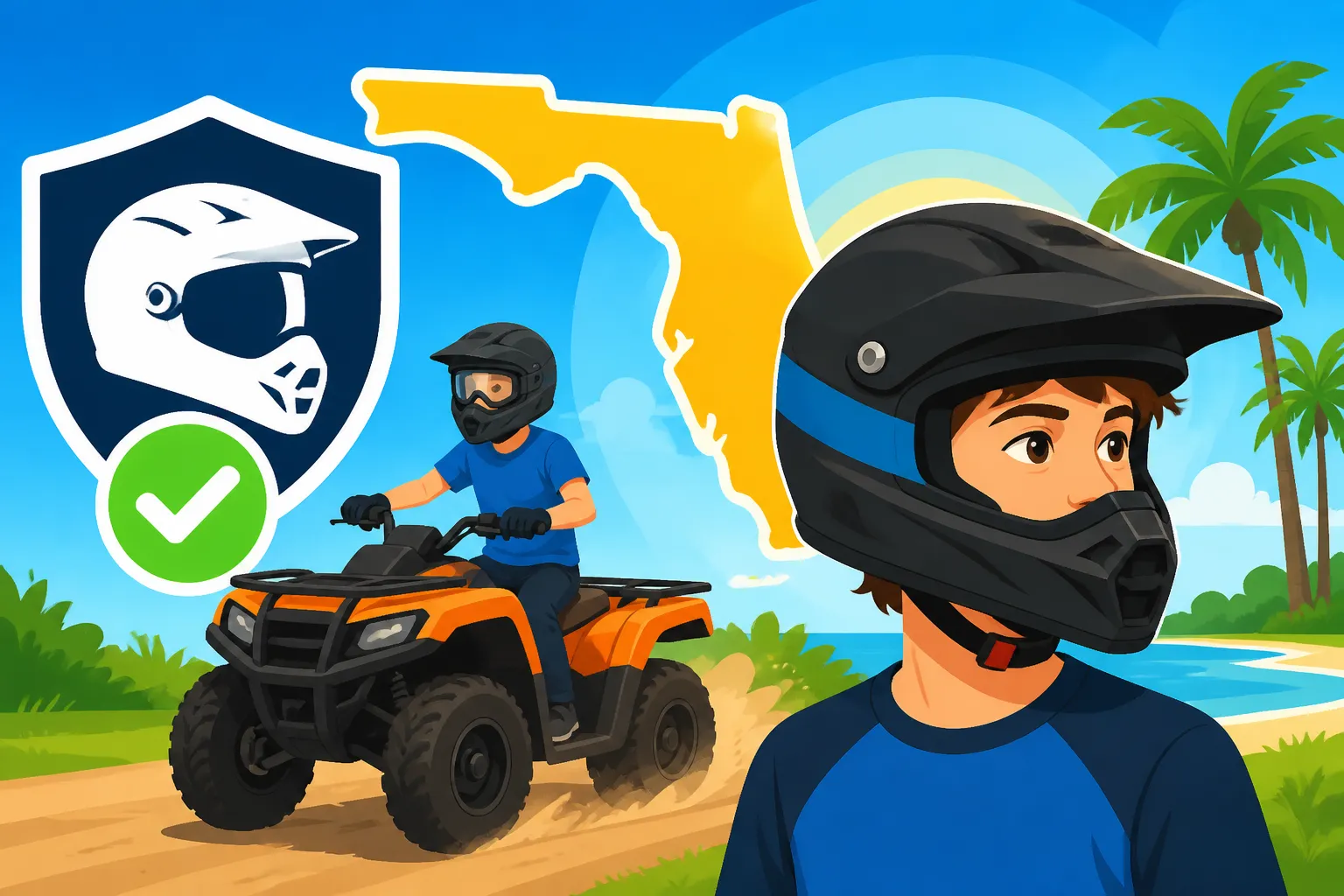
Florida Statute 316.2123 is the key here, and it’s pretty straightforward: any person younger than 16 years of age who operates or rides as a passenger on an all-terrain vehicle in Florida must wear a safety helmet that complies with federal motor vehicle safety standard 218. This isn't a suggestion or a guideline; it's a legal mandate. It doesn't matter if your child is a seasoned rider who started on a [Florida Title for a Youth 90cc Quad] at six years old or if they're just getting into the sport; if they're under 16, that helmet needs to be on and securely fastened.
The reason for this hard-and-fast rule is simple: children, with their developing bodies and often less-developed judgment, are incredibly vulnerable to serious head injuries in the event of a fall or collision. An ATV, even a small youth model, can weigh hundreds of pounds and operate at speeds capable of causing severe trauma. The statute aims to create a blanket of protection for these young riders, recognizing that they often lack the experience or physical strength to react optimally in dangerous situations. Parents sometimes wonder if this applies even if their child is just riding in the backyard, but the law's intent is broad, emphasizing safety regardless of the specific locale.
This regulation stands distinct from other age-related riding rules, such as those dictating when a minor can ride on an unpaved road with direct supervision. While those rules might have specific conditions, the helmet law for those under 16 is constant. It's not about where they're riding, but simply that they are riding. Whether they're on a small 50cc quad or a larger 250cc machine, the helmet requirement remains the same.
What "Approved Helmet" Truly Means
Okay, so your kid needs a helmet. But not just any helmet. Florida law specifically calls for a "safety helmet that complies with federal motor vehicle safety standard 218." What does that mouthful mean in plain English? It means you need a helmet that is DOT-approved.
This isn't the kind of helmet your child wears for bicycling or skateboarding, no matter how cool it looks. Those helmets are designed for different types of impacts and lack the robust construction required to protect against the higher speeds and heavier impacts possible with ATVs. A DOT-approved helmet will have a sticker on the back, usually near the rim, stating "DOT FMVSS No. 218 Certified." This certification indicates that the helmet has met rigorous testing standards for impact absorption, penetration resistance, and retention system strength.
When you're shopping for a helmet, look for full-face models or open-face helmets with a strong chin bar. These provide the most comprehensive protection. A proper fit is also non-negotiable. A helmet that's too loose can shift during an impact, failing to protect effectively, while one that's too tight can be uncomfortable and distracting. The helmet should sit snugly on the head without feeling painful, and the chin strap should be securely fastened so that the helmet doesn't rock excessively when shaken. Remember, a helmet only works if it's worn correctly every single time your child gets on a quad.
Who the Law Protects and Why
At its core, Florida's ATV helmet law for minors is a protective measure. It's designed to safeguard the most vulnerable riders against the potentially catastrophic consequences of ATV accidents. Think about the common scenarios: a rollover on an uneven trail, a collision with an unseen obstacle, or a fall when navigating a tricky turn. In any of these situations, the head is incredibly exposed, and even a low-speed impact can result in severe brain injury, which can have lifelong repercussions.
Children, due to their higher center of gravity, developing motor skills, and often lack of experience, are at a greater risk for certain types of ATV accidents compared to adults. They might misjudge terrain, oversteer, or panic in unexpected situations. The state's proactive stance in mandating helmets for these riders acknowledges these heightened risks. It's not just about preventing scrapes and bruises; it's about preventing traumatic brain injuries, spinal cord damage, and other life-altering harm. This law is an extension of the state's broader commitment to child safety, aiming to ensure that the thrill of off-road riding doesn't come at the cost of a child's future well-being. By adhering to this law, parents aren't just avoiding a ticket; they are making a fundamental choice to prioritize their child's health and safety above all else.
Riding on Public vs. Private Land: Does the Helmet Law Change?
This is a really common point of confusion for many ATV families in Florida. A lot of folks assume that if they're on private land, out of sight of public roads, the rules don't apply. While the enforcement might feel different, the legal mandate for helmets for riders under 16 generally doesn't vanish just because you're behind a fence line.
Public Land: No Exceptions for Young Riders
When your child is riding on public lands in Florida, there is absolutely no wiggle room on the helmet law. Whether you're tearing up the trails at Croom Motorcycle Area, exploring the designated routes in the Ocala National Forest, or navigating a local Wildlife Management Area (WMA), if your child is under 16 and on an ATV, they must wear a DOT-approved helmet. Park rangers, forest service personnel, and county deputies actively patrol these areas, and they are well-versed in enforcing these safety regulations.
These public lands are managed by various state and federal agencies, all of whom prioritize rider safety. They often have clear signage at trailheads outlining all rules, including helmet requirements for minors. If a ranger observes a minor riding without a helmet, you can expect a citation, and potentially even an order to stop riding until compliance is met. Understanding [Florida's Off-Highway Vehicle Title Law Explained] is important for knowing the full scope of OHV regulations, but for minors, the helmet rule is non-negotiable regardless of title status. It's a fundamental part of the state's commitment to responsible recreation and protecting its youngest citizens.
Remember, these aren't just arbitrary rules; they're in place because public lands often feature diverse and sometimes challenging terrain, increasing the risk of accidents. The state wants to ensure that if an accident does occur, the rider has the best possible protection.
Private Property: Parental Responsibility vs. Legal Mandate
This is where the gray area often feels widest, but it’s important to clarify. While the Florida statute broadly applies to anyone operating or riding an ATV in the state, enforcement on private property can vary. If your child is riding on your own private land, far from public view, the chances of a law enforcement officer witnessing a violation and issuing a citation are naturally lower than on a public trail. However, this doesn't mean the law magically disappears.
Legally, the requirement for a DOT-approved helmet for riders under 16 still stands, regardless of whether they are on public or private land. The primary difference lies in the enforcement mechanism. On private land, the onus heavily shifts to parental responsibility. You, as the parent or guardian, are responsible for ensuring your child's safety and compliance with the law. If an accident were to occur on private property and your child was not wearing a helmet, you could face legal ramifications, including negligence claims, even if no law enforcement officer was present at the time of the accident.
Furthermore, many private riding parks, even though they are on private land, will have their own very strict rules. They understand the liability involved and often require helmets for all riders, regardless of age, and specific safety gear. So, while the immediate threat of a ticket might seem reduced on your own acreage, the legal requirement and, more importantly, the moral imperative for safety, remain unchanged.
Riding Areas and Their Specific Rules
Beyond the state laws, specific public and private riding areas in Florida often have their own comprehensive sets of rules, and these can sometimes be even stricter than the baseline state mandates. Take the Croom Motorcycle Area in the Withlacoochee State Forest, for example. While they enforce the state's under-16 helmet law diligently, they also strongly recommend helmets for all riders, regardless of age, and often require specific types of protective gear. The same goes for places like Hog Waller ATV Resort or Redneck Mud Park, which are private facilities.
These venues operate under their own liability frameworks and are acutely aware of the risks involved in off-road riding. Therefore, they frequently institute rules that go above and beyond the minimum legal requirements. This often includes mandatory helmets for every single person on a machine, stringent age limits for certain types of vehicles, and sometimes even requirements for other protective equipment like eye protection or sturdy boots. It’s not uncommon for these parks to have gate staff performing checks to ensure compliance before anyone is allowed to enter the riding areas.
Before you head out to any specific riding area, whether it's a state forest or a private mud park, it is absolutely essential to check their website or call ahead to understand their specific rules. You wouldn't want to drive all the way to a park, only to be turned away at the gate because your child isn't wearing the correct helmet or you're missing other required gear. Compliance with these local rules is just as important as adhering to state law, not just for legal reasons, but for ensuring a safe and enjoyable experience for everyone.
Beyond the Helmet: Other Safety Requirements for Young Riders in Florida
While the helmet law is a critical piece of the safety puzzle for young ATV riders, it's far from the only consideration. Florida has a holistic approach to youth ATV safety, encompassing training, supervision, and other protective gear designed to minimize risks on the trails.
The ATV Safety Course Requirement
This is another non-negotiable for young riders. In Florida, any person under 16 years of age who operates an ATV on public lands must first complete a Florida Department of Agriculture and Consumer Services (FDACS) approved ATV safety course. This is not just a suggestion; it's a legal requirement designed to equip young riders with the fundamental knowledge and skills needed to operate an ATV safely and responsibly.
The course covers a wide range of topics, including pre-ride inspections, basic controls, turning, stopping, climbing and descending hills, traversing obstacles, and understanding riding etiquette. It instills a sense of caution and respect for the machine and the environment. There are both online and in-person options available, and upon successful completion, the child receives a safety certificate. It is crucial to carry this certificate, or proof of completion, with you when riding on public lands, as rangers or law enforcement may ask to see it. Think of it like a learner's permit for the trails. [Florida ATV Safety Course Requirements for Riders Under 16] outlines exactly what's needed and where to find approved courses. Without this certificate, even if your child is wearing a helmet and being supervised, they could still face a citation on public property.
This course isn't just about passing a test; it's about building a foundation of safe riding practices that can prevent accidents and injuries. It emphasizes risk awareness and responsible decision-making, which are invaluable skills for any young rider.
Direct Supervision Rules
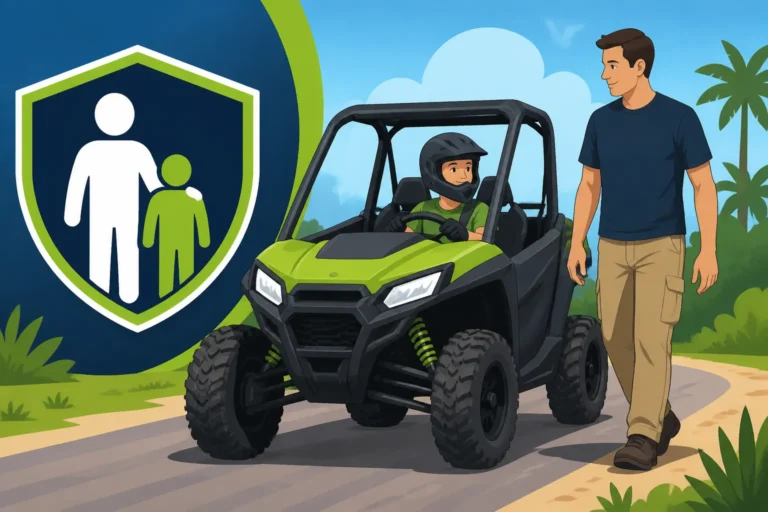
Even with a helmet and a safety course certificate, young riders often need adult guidance. Florida law mandates that operators of ATVs under 16 years of age must be under the direct supervision of a parent or guardian, or another adult who is at least 18 years of age and has a valid driver's license, if they are riding on public land. "Direct supervision" is key here and implies more than just being somewhere in the same park.
It generally means that the supervising adult must be within visual and audible range, able to immediately intervene if necessary. This adult should ideally be an experienced rider themselves, capable of assessing potential hazards and guiding the younger rider through challenging terrain. They should not be distracted and their full attention should be on the minor's riding. This rule acknowledges that while safety courses provide foundational skills, real-world experience and immediate guidance from a seasoned rider are vital for navigating unpredictable trail conditions and making split-second decisions safely.
This supervision requirement adds another layer of protection, ensuring that young riders have an experienced mentor by their side. It's about instilling confidence and good habits, ensuring that a minor doesn't find themselves in a dangerous situation without immediate adult support. The age and experience of the supervisor are critical; someone who just turned 18 and has no ATV experience might not be the ideal supervisor, even if they meet the bare legal requirement.
Eye Protection and Other Protective Gear
While the helmet is king, it's part of a broader kingdom of protective gear. Florida law specifically requires that any person under 16 operating an ATV on public land must wear eye protection. This typically means goggles or a face shield integrated into a full-face helmet. The reason is obvious: flying debris, branches, mud, and dust are common on trails, and impact to the eyes can cause permanent damage. Even a small twig can cause a serious injury.
But beyond the legal requirements, common sense and the advice of seasoned riders dictate even more protective gear. Long pants (like durable jeans or riding pants) and long-sleeved shirts are crucial for protecting against scrapes, scratches, and minor burns from hot engine parts. Sturdy, over-the-ankle boots provide ankle support and protect feet from impacts, crushing injuries, and exhaust heat. Gloves offer a better grip, reduce vibration fatigue, and protect hands from blisters and abrasions. Investing in quality gear, perhaps from a reputable outfitter like SuperATV, is always a wise decision.
Think of it as layering protection. The helmet protects the head, goggles protect the eyes, and the rest of the gear protects the body. An accident on an ATV isn't just about head trauma; it can involve impacts to limbs, abrasions from sliding on rough surfaces, and punctures from sharp objects. Encouraging your child to wear full protective gear every time they ride, even for a short spin, establishes excellent safety habits that will serve them well throughout their riding life.
Enforcement, Penalties, and What to Expect
Ignoring Florida's ATV helmet law for minors isn't just a lapse in judgment; it can lead to tangible legal consequences. Law enforcement takes these safety regulations seriously, especially when children are involved, and they are empowered to issue citations and take further action.
Roadside Stops and Ranger Checks
If your child is riding an ATV without a proper helmet (or without the required safety course certificate or adult supervision, if applicable) on public land, don't be surprised if you encounter law enforcement. This could be a Florida Highway Patrol trooper on an unpaved county road, a county sheriff's deputy patrolling recreational areas, or a state park ranger or forest service officer at a trailhead or deeper within the trail system. They are trained to identify violations and ensure compliance with OHV safety laws. [Florida Ranger Checks at a Trailhead] are a common occurrence, especially during busy riding weekends.
During such a stop or check, the officer will likely ask for identification, proof of the ATV's title, and, if a minor is riding, verification of their age, helmet compliance, and possibly their ATV safety course certificate and proof of adult supervision. They are looking for clear indicators that all legal requirements for safe operation by a minor are being met. It’s always best to be cooperative and have your paperwork readily accessible. Trying to evade law enforcement or being uncocooperative will only worsen the situation and potentially lead to more serious charges.
Remember, these officers aren't trying to ruin your fun; they're enforcing laws designed to protect lives, especially the lives of children. Their primary concern is safety, and their presence serves as a deterrent to unsafe practices.
Fines and Citations for Non-Compliance
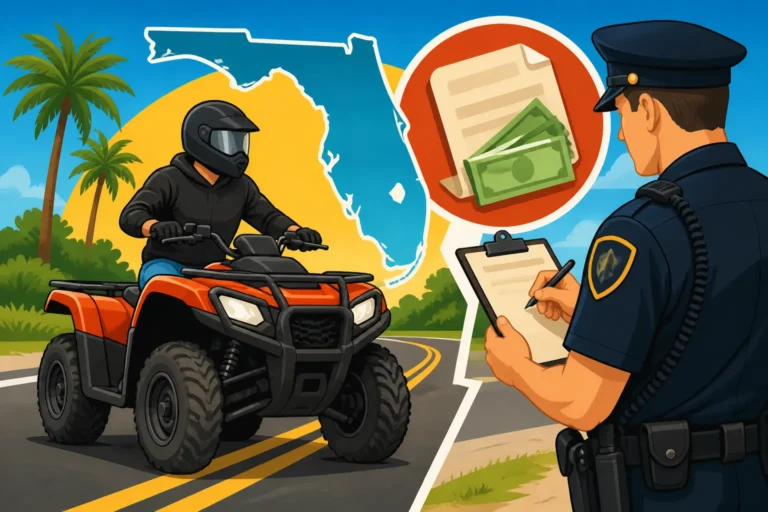
If a law enforcement officer observes a minor riding an ATV without a DOT-approved helmet (under 16 years of age), they will typically issue a non-criminal traffic infraction, similar to a speeding ticket or a seatbelt violation. While these are not criminal charges, they do come with fines and court costs. The exact amount can vary depending on the county and specific circumstances, but it's usually a few hundred dollars. This financial penalty serves as a deterrent and a reminder of the seriousness of the safety violation.
In addition to the fine, there might be administrative fees or requirements to attend a court hearing, especially if it's a repeat offense or if other violations (like lack of supervision or safety course) are also present. The parent or guardian is typically held responsible for these citations. It's important to treat these citations seriously and address them promptly, as ignoring them can lead to escalating penalties, including suspension of driving privileges (for the adult) or even warrants.
The core message here is that the state isn't just issuing a slap on the wrist. They are imposing a financial burden to underscore the importance of these safety rules. It's an incentive for parents to ensure their children are properly protected before hitting the trails.
Impoundment and Parental Responsibility
In more severe or egregious cases of non-compliance, particularly if there are multiple violations or if the riding behavior poses an immediate and significant danger, law enforcement has the authority to impound the ATV. Imagine a scenario where a very young child is riding an inappropriately sized ATV without a helmet, no safety course, and no direct supervision in a dangerous area. In such circumstances, an officer might deem the situation too risky to simply issue a ticket and let the child continue riding. [Florida ATV Impound After a Road Violation] can be a costly and inconvenient consequence.
If an ATV is impounded, the process of retrieving it can be lengthy, involve towing fees, storage fees, and potentially additional fines. This adds a significant financial and logistical burden on the parent or guardian. This outcome underscores the profound legal and financial responsibility that parents carry for their minor children's actions, especially when operating motorized vehicles. The state views the parent as the ultimate guarantor of a child's safety and adherence to the law.
Ultimately, these enforcement mechanisms—from roadside stops to impoundment—are in place to reinforce the critical importance of Florida's ATV safety laws. They serve as a powerful reminder that while ATV riding can be a fun family activity, it must always be conducted with the highest regard for safety and legal compliance.
Navigating Exceptions and Specific Machine Types
Florida's ATV helmet law for minors is broadly applicable, but it’s worth diving into how it interacts with different types of off-highway vehicles (OHVs) and specific riding contexts. The general rule (under 16, wear a DOT helmet) is constant, but understanding the nuances can prevent confusion.
Youth ATVs and Size Restrictions
It's common for children to start riding on smaller, youth-sized ATVs, specifically designed for their age and weight. These machines, often with engine displacements like 50cc, 90cc, or 110cc, are built with lower top speeds and sometimes include features like throttle limiters. However, the smaller size and lower power of these machines do not exempt a rider under 16 from the helmet law. Whether your child is on a tiny beginner quad or a larger, more powerful machine, the helmet requirement remains absolute.
The rationale is simple: even at lower speeds, a fall from any ATV can result in a significant head impact. The ground doesn't care how big the engine is when it comes to head trauma. In fact, youth ATVs can sometimes lull parents into a false sense of security, making them think that because the machine is "for kids," the safety requirements are less stringent. This is a dangerous misconception. Every time a minor under 16 mounts an ATV, regardless of its size, a DOT-approved helmet must be worn. The process of getting a [Florida Title for a Youth 90cc Quad] is the same as for an adult machine, highlighting that even small quads are treated as serious vehicles under the law.
The focus should always be on matching the machine to the rider's age, size, and experience level, but never at the expense of proper head protection. A well-fitting, DOT-approved helmet is as essential for a 6-year-old on a 50cc quad as it is for a 15-year-old on a 250cc machine.
UTVs/Side-by-Sides and Rollover Protection
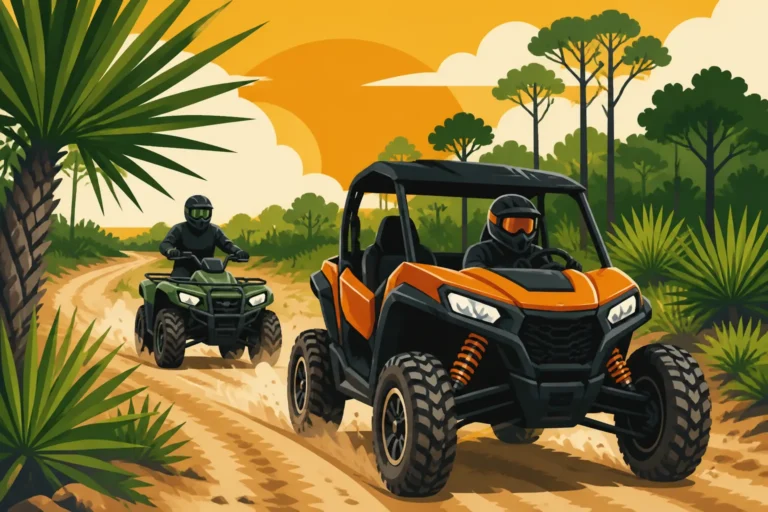
UTVs (Utility Terrain Vehicles), often called side-by-sides, have grown massively in popularity, and many families choose them for their perceived safety due to features like roll cages, seatbelts, and sometimes doors. These machines are often larger and wider than traditional ATVs, with some models designed to carry multiple passengers. While a UTV’s roll cage offers significant protection in a rollover event, it doesn't automatically negate the helmet requirement for minors in Florida.
The state's primary classification of an "all-terrain vehicle" typically refers to the traditional quad bike, but many of the safety principles extend to UTVs, especially for young occupants. While an adult in a UTV with a seatbelt and roll cage might not be legally required to wear a helmet in all situations, any passenger or operator under 16 riding in a UTV on public land still falls under the helmet mandate. The rationale is that even within the confines of a roll cage, impacts can still cause head injuries, and the seatbelts alone might not prevent all head movement and contact with interior structures. Some private parks and all public lands will enforce this strictly.
Furthermore, Florida has distinct definitions for ATVs and UTVs (or ROVs, Recreational Off-Highway Vehicles), especially concerning width and weight. [Florida UTV Titling for Side-by-Sides Over 55 Inches] illustrates how the state differentiates between these vehicles for titling purposes. However, when it comes to the safety of minors, the general principle of head protection overrides these distinctions. Always err on the side of caution: if a minor under 16 is riding in a UTV, ensure they are wearing a DOT-approved helmet. Many UTV enthusiasts even choose to wear helmets for their own safety, regardless of the law, setting a great example.
Incidental Road Use and Helmet Laws
Florida has very specific and restrictive laws regarding where ATVs and UTVs can be operated on public roads. Generally, ATVs are not street legal and are restricted to designated off-road trails and certain unpaved county or municipal roads under very strict conditions. [Florida ATV Road Rules: Where You Can Legally Ride] provides extensive details on this. However, if an ATV (with a minor rider) happens to be legally operating on an approved unpaved road, perhaps to cross a paved highway or access a specific trail, the helmet law for riders under 16 still applies.
There is no exception for "brief" or "incidental" road use when it comes to minors' head protection. The moment a child under 16 is operating or riding on an ATV on any public thoroughfare—even an unpaved one—they must be wearing a DOT-approved helmet. This is because the risks of collision or accident don't disappear just because the rider is briefly transitioning from one trail to another. In fact, interacting with even limited road traffic can introduce new risks not present on dedicated trails.
This underscores the pervasive nature of Florida's commitment to protecting its youngest riders. The helmet mandate is not confined to specific environments but extends across all scenarios where a minor is riding an ATV on public access points or lands. It's an all-encompassing safety blanket, designed to be consistent and unambiguous.
Best Practices for Parents and Guardians
Beyond simply following the letter of the law, parents and guardians play the most critical role in fostering a culture of safety for young ATV riders. It’s about more than just avoiding a fine; it’s about instilling lifelong habits that prioritize well-being.
Leading by Example
One of the most powerful teaching tools a parent has is their own behavior. If you, as an adult, always wear a DOT-approved helmet and full protective gear when you ride your ATV or UTV, your child is far more likely to adopt the same habits. Kids are incredibly observant and often mimic the actions of the adults they look up to. If they see you taking safety seriously, it sends a clear message that it's not just a rule for kids, but a fundamental aspect of responsible riding for everyone.
Discuss why you wear a helmet and protective gear, even if you’re an experienced rider. Explain that accidents can happen to anyone, regardless of skill level, and that the gear is there to protect you. This dialogue reinforces the importance of safety as a family value, rather than just a compliance requirement imposed by the state. While Florida's helmet law for adults on ATVs is different from that for minors, many experienced adult riders choose to wear helmets regardless, recognizing the inherent risks of off-road riding. By doing so, you're not just protecting yourself, you're establishing an invaluable benchmark for your child's safety consciousness.
This leadership by example extends beyond helmets to other safety practices too, like not riding under the influence, respecting speed limits, and staying on designated trails. Your consistent demonstration of responsible riding will speak volumes to your child.
Investing in Quality Safety Gear
When it comes to protective gear, particularly helmets, this is not an area to cut corners. Cheap, uncertified, or poorly fitting helmets offer significantly less protection than their DOT-approved counterparts and can even exacerbate injuries in an accident. Investing in a high-quality, DOT-approved helmet that fits your child properly is one of the best financial decisions you can make as an ATV parent.
Look for helmets from reputable brands that specialize in off-road or powersports gear. Visit a specialized dealer where staff can help ensure a correct fit, as helmet sizing isn't one-size-fits-all. A properly fitted helmet should be snug without being painful, and it shouldn't move around excessively when your child shakes their head. Don't forget other essential gear: sturdy goggles (or a full-face shield), durable long pants, long-sleeved shirts or riding jerseys, gloves, and over-the-ankle boots. Brands like SuperATV offer a range of accessories and gear that can enhance safety and comfort on the trails.
Remember that children grow, so their gear will need to be replaced periodically to maintain a correct fit. Regularly inspect all gear for wear and tear, and replace anything that's damaged, as its protective capabilities may be compromised. Prioritizing quality safety gear is a tangible way to demonstrate your commitment to your child's well-being on every ride.
Continuous Education and Skill Development
ATV riding is a skill that benefits from continuous learning and practice. Completing the initial [Florida ATV Safety Course Requirements for Riders Under 16] is a great start, but it shouldn't be the end of their safety education. Encourage regular practice sessions in a controlled environment, focusing on fundamental skills like turning, braking, handling obstacles, and maintaining balance. As your child grows and gains experience, their abilities will evolve, and they might be ready for more advanced training or challenging terrain.
Discuss trail conditions with them, review potential hazards, and reinforce the importance of riding within their limits and the limits of the machine. Talk about the "what ifs"—what to do if they encounter another rider, an animal, or unexpected obstacles. The goal is to build not just physical skill, but also critical thinking and risk assessment abilities. These conversations can often happen organically on the drive to the trailhead or during breaks on the trail.
Staying informed about changes in Florida's ATV laws and trail regulations is also part of continuous education for you as a parent. The more knowledgeable you are, the better equipped you are to guide your child. By making safety an ongoing conversation and a core part of the riding experience, you empower your child to be a responsible, confident, and safe ATV rider for years to come.
Florida ATV Helmet Law Summary
To help clarify the various helmet and safety requirements for minor riders in Florida, here's a quick overview:
| Requirement Category | For Riders Under 16 | For Riders 16 and Over | Notes |
|---|---|---|---|
| Helmet (DOT-Approved) | Mandatory | Generally not required* | Applies on public & private land for minors. |
| Eye Protection | Mandatory | Recommended | Required for minors on public land. |
| ATV Safety Course | Mandatory (Public Land) | Not required | Required for minors on public land, carry certificate. |
| Direct Supervision | Mandatory (Public Land) | Not applicable | By licensed adult (18+) for minors on public land. |
| Appropriate Gear | Highly Recommended | Recommended | Long pants, long sleeves, gloves, boots. |
| Public Road Use | Highly Restricted | Highly Restricted | Very limited legal use on unpaved roads under conditions. |
*While not generally legally mandated for adults, wearing a DOT-approved helmet is strongly recommended for all ATV/UTV riders for personal safety.
Disclaimer
This article is for general informational purposes only and does not constitute professional advice. Laws, prices and regulations vary by location and change over time. Consult a qualified professional for guidance on your specific situation.