What 316.2123 Actually Permits
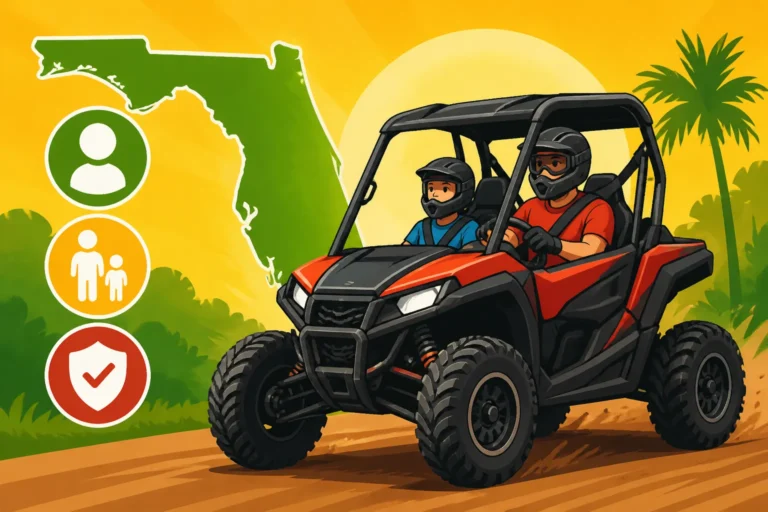
It can be incredibly frustrating trying to figure out where you can and cannot legally ride your ATV or UTV in Florida. Many riders mistakenly believe that any unpaved road is fair game, or worse, that their machine can simply be driven anywhere a car can go. This guide will cut through the confusion and meticulously break down exactly what Florida Statute 316.2123 permits when it comes to operating your off-highway vehicle on public roads.
Decoding Florida Statute 316.2123: The Basics of Permitted ATV Road Use
Florida’s sunshine and expansive natural beauty make it a fantastic state for off-road enthusiasts, but the laws governing where you can actually ride your ATV or UTV are often misunderstood. Statute 316.2123 is the primary piece of legislation that dictates where these vehicles can and cannot operate on public roads, and it’s critical for every rider to grasp its intricacies to avoid fines, or worse, an accident.
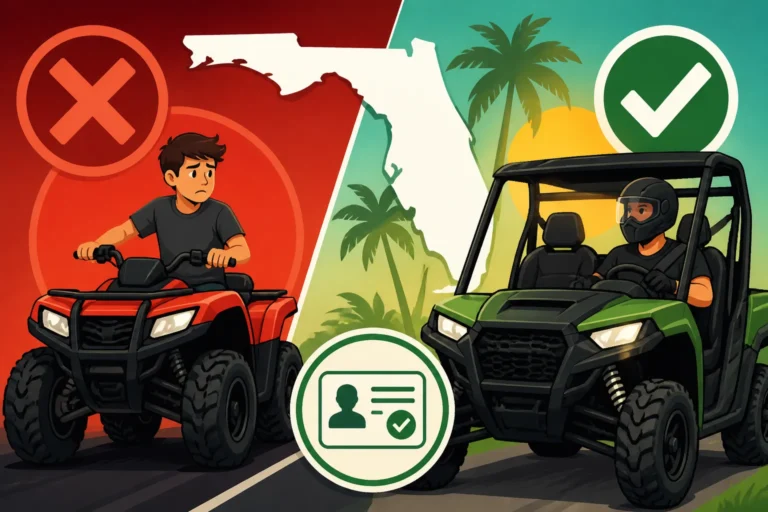
Essentially, the law starts with a broad prohibition: you generally cannot operate an ATV or UTV on a paved public road or highway in Florida. This is a crucial point that many riders overlook, often leading them into trouble. However, like many laws, there are specific, limited exceptions to this rule. These exceptions are what 316.2123 defines, and they are very precise about the conditions under which you can take your machine onto certain public thoroughfares.
The statute aims to strike a balance between allowing limited access for these vehicles and ensuring public safety, particularly given that ATVs and UTVs are not designed with the same safety features as street-legal vehicles. They lack standard safety equipment like turn signals, rearview mirrors, and often have tires not suited for pavement. Understanding these foundational restrictions is the first step toward responsible riding within the law.
The Core Exceptions: Unpaved Roads, Day Use, and Supervision
While the general rule is "no public paved roads," Florida Statute 316.2123 carves out very specific exceptions for certain kinds of roads under particular conditions. This is where most of the rider confusion stems from, because it’s not a blanket "yes" or "no." It's a conditional "yes" for very specific scenarios.
First and foremost, the statute allows for the operation of an ATV or UTV on an "unpaved roadway." This term is absolutely critical and [Florida's Unpaved Road Rule for ATVs Explained] details what this means. It does not mean a dirt path that might look like a road but isn't officially designated as such. It means a road that is explicitly unpaved and maintained as a public thoroughfare, usually by a county or state agency. These are often the backroads, service roads, or even dirt roads within rural communities. The moment that dirt road transitions to asphalt, your legal ability to ride on it typically ends, unless other specific local ordinances apply.
Beyond the type of road, the statute adds time-of-day restrictions. You can only operate an ATV or UTV on these permitted unpaved roadways during "daytime hours." This means from sunrise to sunset. There is no exception for operating these vehicles on public roads at night, regardless of whether your machine has headlights or not. This is a safety measure, as visibility for ATVs and UTVs, and for other vehicles sharing the road, is significantly reduced in the dark.
Furthermore, there are requirements regarding the operator. If you are operating an ATV or UTV on a public unpaved road, you must possess a valid driver's license. This is a common point of contention for younger riders or those who primarily ride on private land and don't hold a license. The moment you enter a public road, even an unpaved one, that license requirement kicks in. For riders under 16, they must be under the direct supervision of a licensed adult who is at least 18 years old. This direct supervision implies that the adult must be physically present and actively overseeing the minor's operation, not just somewhere nearby. You can find more details on this in [Minors Riding Roads Under Supervision in Florida].
Lastly, there's the nuance of crossing a paved highway. Statute 316.2123 does allow an ATV or UTV to cross a paved public highway or street, but only at an intersection where the paved road intersects with an unpaved road. This crossing must be done at approximately a 90-degree angle to the paved road, and the operator must yield to all other traffic. This isn't an invitation to drive down a paved highway for any distance; it's strictly for traversing from one unpaved section to another.
Who Can Ride and Who Can Supervise?
The "who" of riding on Florida's permitted unpaved roads is just as important as the "where" and "when." Florida Statute 316.2123 lays out clear requirements for operators, focusing heavily on licensing and age. Failing to meet these criteria can lead to citations, even if you’re otherwise following the rules of the road.
First, let's talk about the driver. If you're going to operate an ATV or UTV on any public road in Florida, even those unpaved ones permitted by 316.2123, you must possess a valid driver's license. This isn't just a suggestion; it's a legal requirement. This means that if you're a seasoned off-road rider but don't have a standard driver's license for a car or motorcycle, you cannot legally operate your quad on an unpaved public road. This fact often surprises riders who are used to private land where such a license isn't necessary. [Florida ATV Road Use Needs a Licensed Driver] goes into further depth on this.
For younger riders, the rules become even more specific. A person under the age of 16 cannot operate an ATV or UTV on a public unpaved roadway unless they are under the direct supervision of a licensed driver who is at least 18 years old. "Direct supervision" is key here. It means the adult supervisor must be immediately present and capable of intervening if necessary. This isn't just about having an adult in the general vicinity; they need to be actively observing and guiding the minor's operation. This provision is designed to ensure that inexperienced riders are watched over by responsible adults when venturing onto public access points, even if those roads are unpaved.
Furthermore, all riders under the age of 16 operating an ATV or UTV on public lands, which would include these permitted unpaved roads, must wear a United States Department of Transportation (USDOT) approved safety helmet and eye protection. While the statute doesn't explicitly state adults must wear helmets on these roads, it is always a wise safety practice. Companies like SuperATV offer a range of helmets and goggles that meet various safety standards, ensuring you're protected. The [Florida ATV Helmet Law for Riders Under 16] outlines these requirements. These safety measures are in place because ATVs and UTVs present inherent risks, and head injuries are among the most severe.
In essence, 316.2123 doesn't just open up certain roads; it carefully controls who can use them and how. The licensing requirement for adults and the strict supervision and safety gear rules for minors are central to the spirit of the law – allowing limited access while prioritizing safety.
Understanding the Nuances: County Ordinances and Specific Road Types
While Florida Statute 316.2123 provides the statewide framework for ATV and UTV use on unpaved roads, it's crucial to understand that it's not the final word. Florida's system of governance allows for local control, meaning counties often have the ability to either further restrict or, in some cases, specifically permit ATV use on certain roads. This layered approach can be a source of significant confusion for riders who travel across county lines. What's legal in Polk County might not be in Marion County, for example.
Beyond county-specific rules, the definition of an "unpaved roadway" itself can sometimes be ambiguous when you venture into less formal areas like utility easements, canal access roads, or large private ranches. Understanding these nuances is key to staying compliant and avoiding trespassing or other legal issues. It's never enough to simply assume that because a road isn't paved, you're automatically allowed to ride your off-highway vehicle there. Always do your homework before you ride in an unfamiliar area.
The Power of Local Control: Opt-In/Opt-Out Counties
One of the most significant complexities of Florida’s ATV road laws is the role of county ordinances. Florida Statute 316.2123 sets the baseline, stating what’s generally allowed statewide. However, it also grants counties the authority to create their own rules regarding ATV and UTV operation on public roads within their jurisdiction. This creates an "opt-in" or "opt-out" scenario where some counties may designate specific roads for ATV use, while others might ban them entirely from all public roads, even unpaved ones.
This means that simply knowing 316.2123 isn't enough. You must also check the local county ordinances for the specific area you plan to ride in. A county might decide to designate certain unpaved roads or sections of roads where ATVs are expressly permitted, often marked with specific signage. Conversely, another county might pass an ordinance that prohibits ATVs on all public roads, overriding the general permission granted by the state statute. This is why [Florida Counties That Designated ATV Roads] is such an important resource; it highlights how varied the rules can be.
The process for a county to designate or restrict ATV roads typically involves public hearings and votes by the county commission. These decisions are often influenced by local concerns about safety, noise, environmental impact, and traffic flow. Riders who want to see more access, or who want to clarify existing rules, often engage in these local processes.
For example, if you're riding in an area known for its extensive network of unpaved agricultural or forestry roads, it's wise to contact the county sheriff's office or local Department of Transportation office to inquire about specific ATV ordinances. Don't rely on word-of-mouth or outdated information. A quick phone call or a visit to the county's official website can save you a significant headache and potential fine. The phrase "ignorance of the law is no excuse" applies strongly here, especially when local rules can significantly alter the statewide permissions.
Beyond the Statute: What About Utility Easements, Levees, and Private Roads?
While Florida Statute 316.2123 meticulously outlines rules for public unpaved roadways, it's essential to recognize that many places where people ride ATVs and UTVs fall outside this narrow definition. Thinking that any dirt track is fair game just because it's not paved can lead to serious legal problems, including trespassing charges or even impoundment of your machine.
Utility easements, for instance, are strips of land designated for power lines, pipelines, or other infrastructure. While they often feature unpaved access roads, these are typically not "public unpaved roadways" as defined by 316.2123. Use of these easements for recreational riding usually requires explicit permission from the utility company or the underlying landowner. Without that permission, you could be trespassing. Similarly, canal roads and levees, common in agricultural and flood control areas, might appear rideable. However, these are often maintained by specific water management districts or private landowners, and recreational access is almost always restricted and requires a specific permit or written permission. [Canal Roads and Levees Under Florida ATV Law] addresses this specific concern.
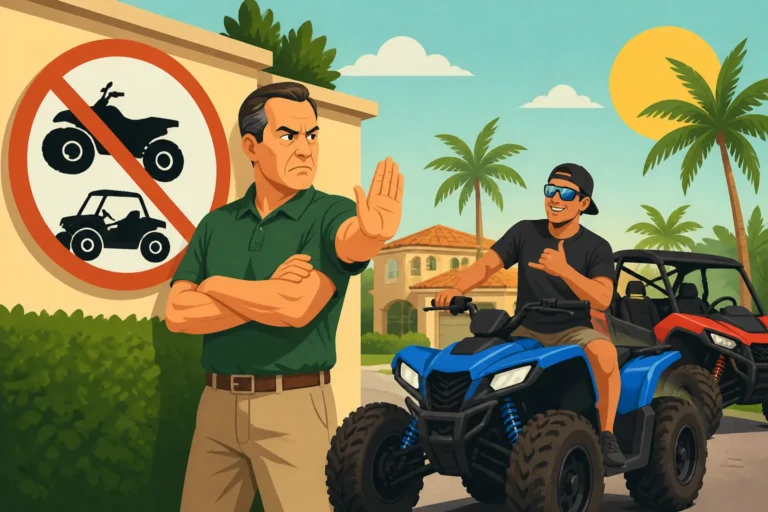
Then there's the broad category of private roads. Many large ranches, farms, timber operations, or even gated communities have extensive networks of private, unpaved roads. The rules of 316.2123 do not apply to these. On private property, the landowner sets the rules. If you have permission from the landowner, you can generally ride your ATV or UTV on their private roads, regardless of whether you have a driver's license or if it's daytime, as long as you're not violating any other laws (like reckless endangerment). The key is "permission." Without it, you are trespassing, plain and simple.
Even within designated public lands, like state forests or national forests, the rules for ATV use are often governed by specific regulations from the managing agency (e.g., Florida Forest Service, U.S. Forest Service) rather than just 316.2123. These areas typically require specific permits or passes to ride, and they have designated trail systems, not just open roads.
The takeaway here is that 316.2123 is your guide for public unpaved roadways. For anything else—from private land to utility easements to designated public trail systems—you need to investigate the specific rules and permissions required for that particular area.
Practical Implications and Avoiding Penalties
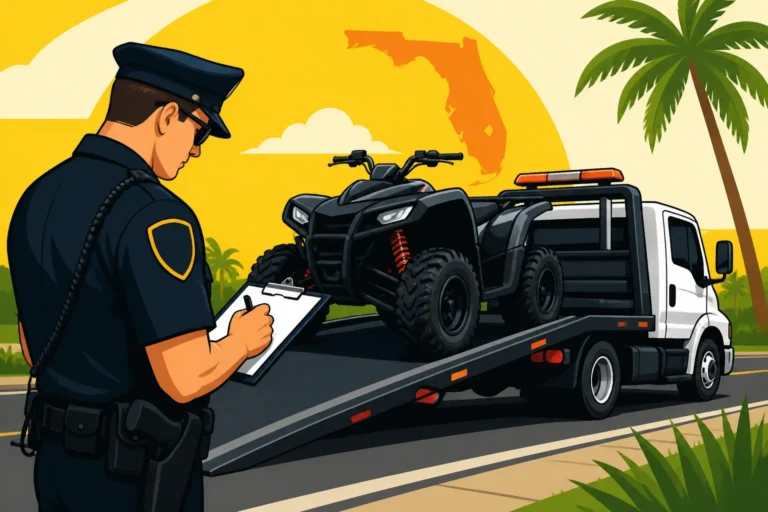
Understanding Florida Statute 316.2123 isn't just an academic exercise; it has very real, practical implications for riders. Non-compliance can lead to hefty fines, legal trouble, and even the impoundment of your beloved ATV or UTV. Beyond the letter of the law, there are practical considerations regarding the equipment your machine needs for any kind of public road use, and common pitfalls that riders frequently stumble into.
Being a responsible rider in Florida means not only knowing the rules but also implementing them. This involves equipping your machine appropriately, being mindful of your speed, understanding passenger limits, and always verifying local ordinances. Nobody wants their riding day to end with a conversation with a sheriff's deputy, and adherence to 316.2123 is your best defense against such encounters.
Equipment Requirements for Permitted Road Use
While ATVs and UTVs are primarily designed for off-road use, venturing onto public unpaved roads under the allowances of Florida Statute 316.2123 does come with some implied and explicit equipment considerations, particularly for safety. Unlike street-legal vehicles, ATVs typically don't need things like turn signals, rearview mirrors, or DOT-approved tires just for the limited road use permitted by 316.2123. However, certain safety gear for the rider is mandatory for minors and highly recommended for everyone.
The most critical explicit requirement under 316.2123, as mentioned earlier, is for riders under 16 years of age. They must wear a USDOT-approved safety helmet and eye protection when operating on public lands, which includes these unpaved roadways. This isn't optional; it's the law. For adults, while a helmet isn't legally mandated by this specific statute for unpaved road riding, it is an absolute no-brainer for safety. A good quality helmet, whether a full-face off-road helmet or a sturdy open-face option, can be a lifesaver. Similarly, eye protection is crucial to shield your eyes from dust, debris, and insects, which can be a major hazard on any road. Many companies, including SuperATV, offer robust windshields for UTVs that can significantly enhance rider comfort and protection against kicked-up debris.
Beyond personal safety gear, your machine itself needs to be in good working order. While 316.2123 doesn't list a specific equipment manifest for ATVs on unpaved roads, it's reasonable to assume your machine should have functional brakes, a working muffler (to avoid noise violations), and lights that are operational if you're riding at dusk or dawn, though remember, true night riding on public roads is prohibited. Some aftermarket accessories like LED light bars, available from retailers like SuperATV, can improve visibility for both you and others, though their primary purpose is usually for off-road trail illumination rather than street-legal compliance.
It's also worth noting that if you’re using your ATV or UTV for agricultural purposes, there might be slight variations or additional considerations, but the core safety and operational rules of 316.2123 still largely apply to any public road access. The bottom line is to prioritize safety and ensure your machine is well-maintained and you (and any minor passengers) are properly geared up.
Common Mistakes and How to Stay Compliant
Even with the best intentions, riders often make common mistakes that can lead to violations of Florida Statute 316.2123. Being aware of these pitfalls is the first step toward avoiding them and ensuring a safe, legal ride.
One of the most frequent errors is riding on paved roads. The temptation to just "hop on the asphalt for a minute" to get to the next dirt trail or gas station is strong, but it's a direct violation. Remember, 316.2123 only permits unpaved roads, with very limited exceptions for crossing paved highways at intersections. Don't push your luck; [Are ATVs Street Legal in Florida?] clarifies this in detail.
Another common mistake is riding at night. The statute explicitly states "daytime hours" only. Even if your ATV has brilliant headlights, operating it on a public unpaved road after sunset or before sunrise is illegal. Visibility is a major safety concern, and this rule is strictly enforced. [Florida's Daytime-Only ATV Road Rule] is clear on this.
Lack of a driver's license for adults, or improper supervision for minors, is another major issue. As discussed, a valid driver's license is mandatory for anyone operating an ATV on a public road, even if it's unpaved. For minors, "direct supervision" means the licensed adult must be present and actively supervising, not just driving ahead in another vehicle or waiting at home. This also ties into [Florida ATV Passenger Rules], as carrying a passenger on a single-rider ATV is generally prohibited, and specific rules apply to UTVs and multi-rider ATVs.
Ignoring local county ordinances is another trap. While 316.2123 gives general permission, a county can restrict or ban ATVs from its public roads. Always check the local rules for the county you're in. What's allowed in one part of Florida might be explicitly prohibited just a few miles down the road.
Finally, speeding or reckless operation on unpaved roads, even where permitted, can still lead to citations. Even if you're on a legal unpaved road, you're still subject to general traffic laws regarding safe operation. An officer can still ticket you for operating unsafely or for excessive speed, especially if posted speed limits apply.
To stay compliant:
- Know your roads: Stick to clearly designated public unpaved roads.
- Time it right: Ride only between sunrise and sunset.
- Be licensed and supervise: Ensure all operators are licensed (if adult) or properly supervised (if minor).
- Gear up: Always wear appropriate safety gear, especially a USDOT helmet and eye protection for minors.
- Check local laws: Before riding in a new area, verify specific county ordinances.
- Ride responsibly: Maintain safe speeds and operate your machine under control.
By following these guidelines, you can enjoy Florida's fantastic riding opportunities without running afoul of the law.
| Feature | Permitted by F.S. 316.2123 | Generally Prohibited by F.S. 316.2123 (or requires specific local ordinance) |
|---|---|---|
| Road Type | Public Unpaved Roadways | Paved Public Roads / Highways |
| Time of Day | Daytime Hours (Sunrise to Sunset) | Nighttime Hours (Sunset to Sunrise) |
| Operator License | Valid Driver's License Required (for adults) | No Driver's License (for adults) |
| Minor Riders | Under Direct Supervision (by 18+ licensed driver) + Helmet & Eye Protection | Unsupervised Minors; Minors without Helmet/Eye Protection |
| Crossing Paved Roads | At an Intersection with another unpaved road, approximately 90-degree angle, yielding to traffic | Driving on a Paved Road for any distance |
| Local Ordinances | Counties may designate specific roads open | Counties may prohibit all public road use, overriding state permission |
| Other Roads | N/A (Does not apply to private roads, utility easements, levees without explicit permission) | Riding on private land or easements without permission; designated public trails without proper permits |
Disclaimer
This article is for general informational purposes only and does not constitute professional advice. Laws, prices and regulations vary by location and change over time. Consult a qualified professional for guidance on your specific situation.